
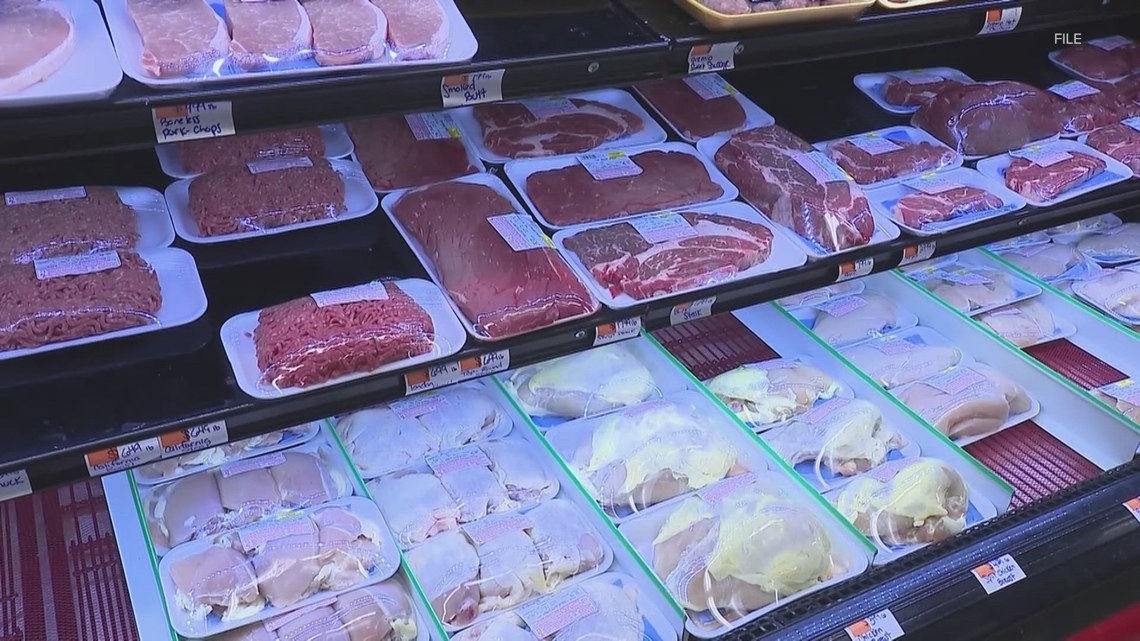
On August 1, tariffs are scheduled to go into affect for dozens of countries, the cost of which is anticipated to trickle down to consumers’ grocery bills.
SEATTLE — Grocery stores across the United States may soon raise prices as the Trump administration’s Aug. 1 tariff deadline approaches. The new trade policy, which imposes steep import taxes on goods from dozens of countries, is expected to hit food retailers especially hard — particularly those that rely on international suppliers.
The tariffs, ranging from 25% to 50%, will apply to a wide range of food products. According to the Tax Foundation, in 2024, nearly 75 percent of all U.S. food imports — worth over $163 billion — will be affected.
RELATED: Senator Murray condemns tariffs as economic ticking time bomb
Brian Kelly, associate professor of economics at Seattle University, says the impact on grocery stores and consumers will be swift and widespread.
“The administration is claiming that there won’t be any more extensions,” Kelly said. “We’ve heard that before and there have been extensions. But it’s very possible the so-called reciprocal tariffs will take place.”
While some countries may strike last-minute deals, Kelly noted that even partial agreements could be enough to delay enforcement.
“The idea of a full-fledged deal in three days is kind of absurd,” he said. “But something that can be called a deal? Yes, that could well happen.”
For grocery stores — especially those serving diverse communities or specializing in international goods — the impact could be immediate and severe. Items like Brazilian coffee, Thai jasmine rice, and Mexican avocados are expected to see sharp price increases. In many cases, domestic alternatives are either unavailable or unable to meet demand, meaning stores will have no choice but to pass costs on to consumers.
“They don’t operate on thick margins,” Kelly said. “They’ll have to pass the tariffs through to consumers. Whether shoppers change their habits depends on how big the price increases are.”
While multicultural stores are expected to be hit hard, Kelly warned, “No one will be unaffected.”
He pointed to sugar as a key example of how tariffs will ripple through the food supply.
“Sugar is in everything,” Kelly said. “With high duties going in place on imported sugar… that’s going to work its way through into food prices quite quickly.”
Kelly emphasized that big-box retailers like Walmart, which serve middle and lower-income Americans, also rely heavily on imported goods.
“If anything, it’s the low-price food stores… that import more than the higher-level, more costly stores,” he said.
Even domestically produced food won’t be spared. Kelly noted that while the U.S. is a major wheat producer, it also imports significant quantities. Tariffs on fertilizer and farm equipment will drive up production costs.
“Tariffs on fertilizer and farm equipment will make U.S. food production more expensive,” he said. “That could end up being substantial.”
Consumers could see food prices increase by 3% to 5% over the next six months, Kelly said, with a longer-term inflationary trend likely to follow.
“Farm equipment will become more expensive because of the enormous steel and aluminum tariffs,” he said. “There will be this long-term sort of increase in the price level that we won’t notice too much, but it will be feeding into inflation.”
And while some consumers may absorb the cost, others will be forced to make tough choices.
“These tariffs… are what we economists call regressive,” Kelly said. “They hit poorer people harder than they hit richer people. And that’s a sad fact.”