
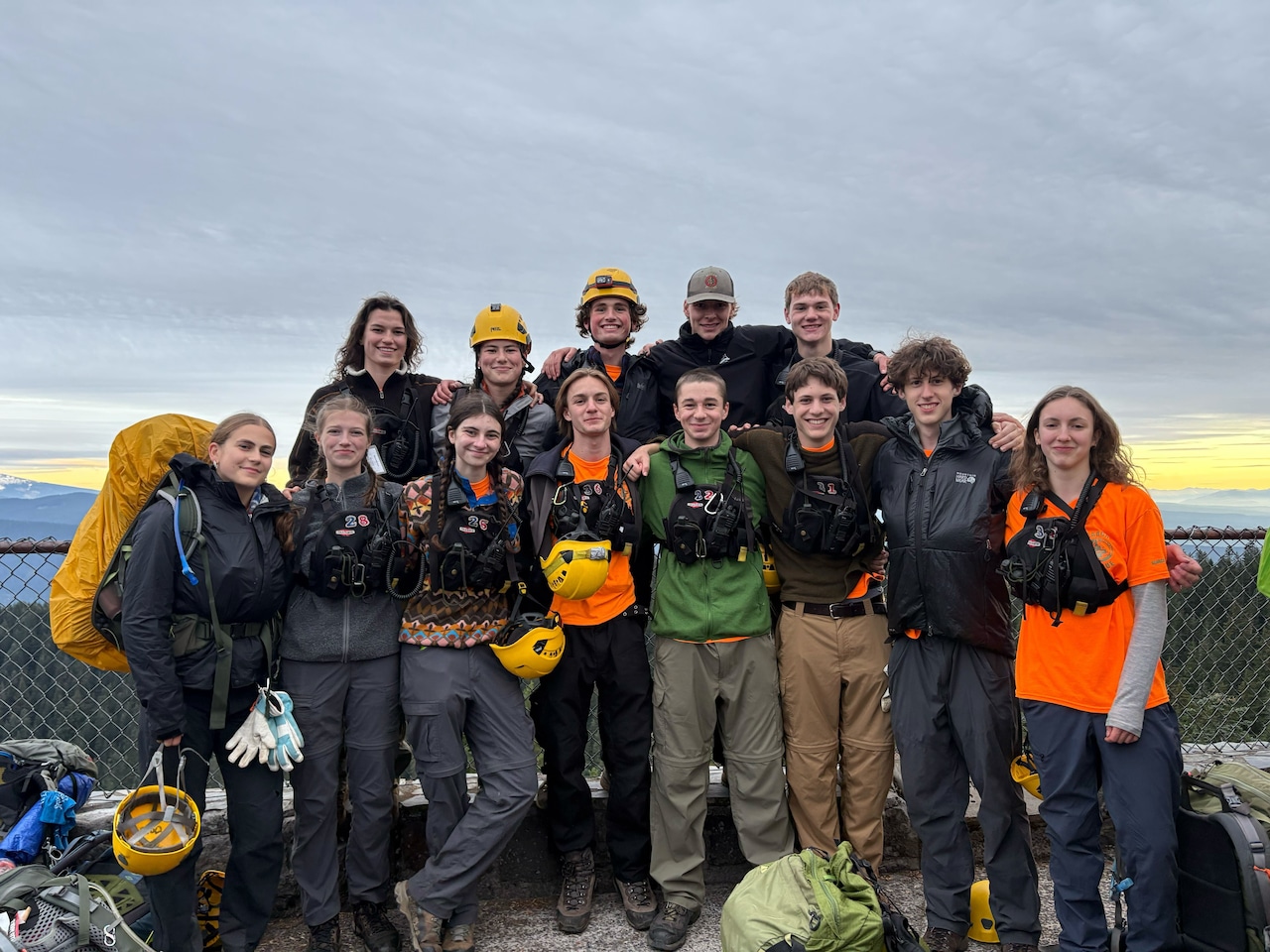
Sadie Walsh was just 16 years old and had been working as a volunteer for the Multnomah County Search and Rescue team for four years when she got the call.
It was early September, and a man had fallen and died during a hike in the Columbia River Gorge. She and other teen volunteers were needed to go help recover his body so that his family could identify him.
Walsh is among the hundred or so teens between the ages of 13 and 18 who spend months training to be part of Multnomah County’s search and rescue program. The teens agree to be available around the clock and at a moment’s notice to search for lost hikers, skiers and others who need help in the Columbia River Gorge, up on Mount Hood and beyond.
Calls like the one about the missing hiker, where Walsh gets to interact with the family and friends of the person she’s looking for, are the most impactful, she said.
“It really reminded me that the work we do matters and has a very direct impact on the community at large and also specific people,” Walsh said.
Formal training to become an EMT paramedic isn’t until 18, but teens who participate in search and rescue go through six months of lessons and hands-on training before they can be dispatched for missions. They are expected to have a “search pack” ready to grab and go at all times, with warm, dry layers, equipment and 48 hours worth of food.
When teens go into the field, they run the show, said Gabriel Macdonald, an assistant team leader, two year volunteer and a student at Cleveland High School.
“It’s just us in the field, it’s almost completely youth, and all of the leadership is youth,” Macdonald said.
Those teens rise to the occasion when facing inherent risks in the field, Multnomah County Sheriff Nicole Morrisey O’Donnell said via email.
“Our search and rescue youth volunteers demonstrate a level of responsibility and maturity that is beyond their years,” Morrisey O’Donnell wrote. “When they are called into action, they consistently exceed our expectations by navigating challenging terrain, supporting mission logistics and working as part of a coordinated team. These experiences teach our youth volunteers accountability and decision-making in real-world situations, and they embrace those responsibilities.”
At school, adults are teachers or parents or coaches, and they are the ones in charge, said Calvin Yalon, a two year member and an assistant team leader, who attends La Salle High School.
But at search and rescue, he said, “it’s not about age. It’s more about the chain of command.”
Yalon, who loves being outdoors, joined in September 2024 after a friend referred him to the program. Now, as an assistant team leader of “Bravo” team, one of four teams within the program, he said he enjoys every mission.
Teens in search and rescue say they offer something different to the job than their adult colleagues.
“It is really beneficial to give power to youth. I don’t think there is really any reason to limit the trust that we put in kids…we do the exact same caliber of work as all the adult search and rescue units,” says Walsh.
Walsh joined the program when she was 13 and is now the president of the county’s search and rescue squad. She can say something not many other teens or programs can: “I am a first responder at 16.”
Walsh says search and rescue has made her a more compassionate and confident person, especially after her experience during the recovery mission of the man who died in the Gorge. After recovering the body, she and her team carefully carried it down in a litter back to the rest of the team who were with the man’s father.
Team members created a circle around the father, turning their backs and giving him privacy with his son. Later on, Walsh said, the man’s father thanked her and other volunteers, both for gently handling his son’s body and for giving him a moment for quiet grief.
Active missions can take just a couple hours or stretch over many days.
“You need to be really good at communicating with your teachers, with your parents, with the school you go to,” said Macdonald.
Many members discuss with their school and teachers ahead of time what it means if they get a call about a mission. When they receive a call, they immediately let their teacher know before leaving. Yalon, Macdonald and Walsh all said that teachers are very understanding, whether that’s getting an extension, or getting class notes later.
Parents and friends help too: Yalon’s mom would drive him to meetings at the beginning of his participation in search and rescue, and his friends would catch him up in classes he missed.
“I’m able to juggle search and rescue because of the help I get from others,” Yalon said.
There are specific times where members do go off call, like at work, or during important tests like the SAT.
Yalon says he usually doesn’t have to drive more than an hour to get to a rescue site, but if there does happen to be a search or rescue further out, the responders are given more notice to prepare and plan.
In addition to learning vital rescue skills, Macdonald said being part of search and rescue has also taught him about time management and how to juggle his commitments:“just keeping that balance is just something you always need to be aware of,” he said.
Ta Adams Keller, the head advisor for the search and rescue program, said she’s enjoyed seeing how much teens who volunteer for the program grow over their years of service.
“It’s not often that youth are given real world responsibility today. We teach self confidence, self reliance, and teamwork. Our members understand the weight of the job we ask them to do, and readily step up year after year,” said Adams Keller.
Editor’s Note: MCSOSAR encourages teens to learn more about their program at their website, applications for the next term will open in August 2026.
Neea Mende is a senior at Ida B. Wells High School in Southwest Portland and an alumna of the High School Journalism Institute.