
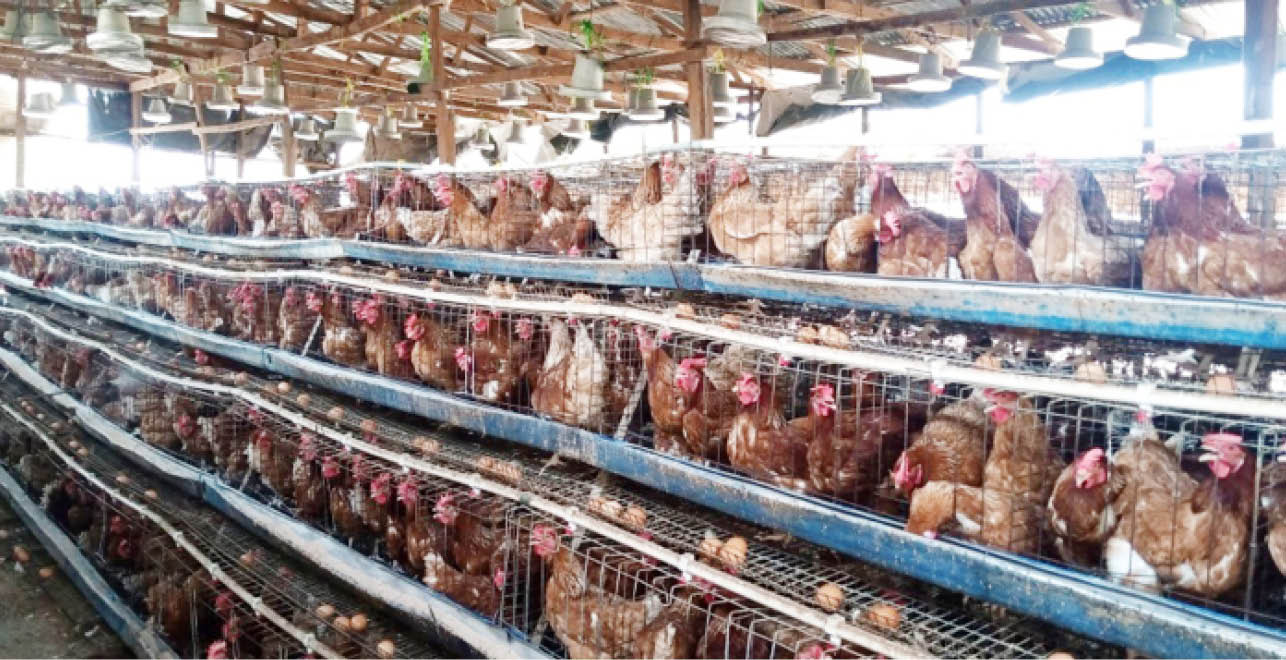
Poultry experts say there are many factors that influence the size of the eggs your birds lay. As a new poultry farmer, it is important to know these factors if you want to get the best eggs from your farm.
Dr James Baba Wagati, a poultry expert, outlined four factors that will influence egg size in your farm thus – age and genetics, body weight, housing conditions and nutrition.
In terms of age and genetics, Dr Wagati said: “The eggs gradually get larger as the laying hen ages. Also, genetics determines the maximum and minimum egg size a hen can lay. Genetics are fixed.
However, you can influence egg size a little with management.”
With regard to housing conditions, issues like water supply, stress, diseases, overcrowding, light programs, intensity and temperature have effect on egg size.
He said, “In hot weather, it is difficult to maintain egg size. When house temperature exceeds 27oc, egg size begins to decline. The higher the ambient temperature, the smaller the egg size and production.”
“Egg size is directly influenced by body weight, which can be affected by many management factors, such as feeding, vaccination, lighting, transferring and beak trimming.”
When it comes to nutrition, Wagati said, “The nutritional value of feed must be optimal for eggs. Important nutritional factors that influence egg size are crude protein, essential amino acids (methionine and fat linolenic acid).”
He advised farmers to “check that the hens are eating enough and the flock is uniform.”
In the same vein, a USA poultry firm, VAL-CO Industries, which has an extensive investment in poultry and other areas of agriculture, highlighted key factors that may influence egg size, some of which have been mentioned by Dr Wagati.
VAL-CO outlined the following as the key factors influencing egg size in layers.
Breed
“Some smaller breeds produce small eggs due to their body size, while some chicken breeds produce medium to large eggs. Individual hens may not lay an egg that consistently falls within the breed’s average egg size. Geneticists work to create commercial lines that have different size ranges, and egg weight is a heritable trait that responds to genetic selection. It is important to select a commercial variety of bird that produces the size of egg you want. However, about 60 per cent of egg size variation is due to non-genetic factors, such as nutrition and management.
Ambient temperature
“The ambient temperature of a house has a substantial impact on the size of eggs produced. The eggs produced in hot conditions are often small. Feed consumption declines if the temperature is too hot, therefore hens lay smaller eggs. When the temperature of the house exceeds 27 degrees Celsius (over 80 degrees Fahrenheit), the eggs are smaller.
SPONSOR AD
Lighting programmes
“Chickens are responsive to changes in day length. Egg size is influenced by lighting programmes in the growing period. Lighting programmes can delay or accelerate sexual maturity in pullets. The age in which a chicken starts laying has a significant influence on the egg size. Light stimulation should be done based on the flock’s body weight and uniformity. Later light stimulation and heavier body weights will delay maturity and increase egg size.
other factors
“The younger the hen, the smaller the egg size. As hens grow older their eggs gradually increase in size. Maximum egg size can be expected when birds reach about one-year-old. Egg size tends to get smaller again before birds stop laying.
“If all the required nutrients are available in correct quantities in the feed – the higher the feed intake, the larger the eggs. Any factor that may inhibit feed consumption, such as crowding or stress, will reduce egg size. Environmental temperatures above a bird’s thermoneutral zone (>33 degrees Celsius) have a dampening effect on a bird’s feed intake
“If a hen does not consume adequate water, it affects the egg size and production. Water quality and temperature are also important. Lower water consumption will mean a reduction in feed consumption too, resulting in smaller eggs.
“Chickens with higher body weights lay larger eggs while those with smaller body weights produce smaller eggs. Body weight is dependent on a variety of nutrients, light and feed intake. Heavier hens also tend to lay more eggs throughout the production period. Body weight can be affected by many factors, including transfer, disease, beak trimming, vaccination, lighting programs, space and nutrition. It is important to reach target body weight with good uniformity before starting light stimulation and achieving sexual maturity.
“Disease, stress, injury and fear can affect the feed intake of chickens and egg production rate. Prevention of disease is an important part of production. Good hygiene, bio-security practices and management will reduce the risk of infection. Prevention and control of disease is not only critical for quality of eggs but also the success of the whole chicken production.
Egg cooling and storage
“It is important to cool eggs as quickly as possible after they are laid and to store them well at a temperature of 50oF to 55oF. If eggs are not stored correctly they will lose weight by evaporation, which may result in poorer grading results; and therefore, a poor economic return,” the industry stated.