
The National Transportation Safety Board is investigating a small plane crash west of Everglades City on Sunday that overturned with two people on board.The NTSB said it is investigating the crash of a 1981 Cessna A185F aircraft in the Ten Thousand Islands. According to the agency, the plane crashed under unknown circumstances, overturned in the water, and was partially submerged.The plane was removed from the water and was at the Goodland Boat Park on Marco Island.The Collier County Sheriff’s Office said deputies, along with fire and EMS crews, responded to reports of a plane in the water near the Port of the Islands resort, between Marco Island and Everglades City. CCSO said there were no initial reports of a crash, only that a plane was in the water, with tail number N7574N.The aircraft is registered to Black Dog Holding, Inc. in Pleasant Valley, New York.The sheriff’s office confirmed there were two people aboard the aircraft, a pilot and a passenger, but their conditions were not immediately known. The agency’s aviation unit searched from the air for anyone else who might have been in the water or nearby.A friend of the pilot told Gulf Coast News on Monday evening that the pilot is alive. We are working to find out the status of the passenger.’We heard the roar’Witnesses at the Port of the Islands Resort said a quiet afternoon was interrupted by the sound of emergency crews rushing to the scene. “We heard the roar of what would be identified as a search and rescue chopper,” said Cat Grega, who was at the resort pool at the time. “We then saw the emergency vehicles congregating on the other side of where my dock is located. We saw a stretcher get pulled out.”“We’re always very sorry to hear about unfortunate circumstances happening out here,” Grega said.Potential factorsRamon Pabalan, a pilot with 40 years of experience, said the Cessna A185F is known for its durability and versatility.“The Cessna 185 is a Skywagon. It’s on floats, meaning it can land on water, or it can land on a regular runway,” Pabalan said.According to flight tracking data from FlightAware, the aircraft’s speed dropped from about 80 miles per hour to zero, a sudden descent that suggests something may have gone wrong during landing.The video below shows the path of the Cessna A185F aircraft.“He either wanted to because something was interesting on the ground he wanted to see, or yes, possibly he could have had a mechanical issue,” Pabalan said.Data shows the aircraft departed from Marco Island Executive Airport before crashing roughly 35 miles away in the remote island chain.Pabalan said both weather and water conditions could have been critical factors.“I’m going to have to guess the weather is going to play a significant factor in this, as well as the water conditions, whether he was trying to land intentionally or whether he felt he had to land for another reason,” he said.With all the speculation, it’s still too early to know exactly what happened without actually hearing from those on the plane.An NTSB investigator arrived at the scene on Monday morning. Once the plane is recovered from the water, the investigator will document the scene and examine the aircraft before it is moved to a secure facility for further evaluation.What the NTSB does after an airplane crashNTSB investigations focus on three primary areas: the pilot, the aircraft and the operating environment.As part of the process, investigators will gather flight track data, air traffic control communications, maintenance records, weather forecasts and actual conditions at the time of the crash, and the pilot’s license, ratings and recent flight experience.The agency will also review the pilot’s activities in the 72 hours before the crash to determine whether any issues could have affected the ability to safely operate the flight. Witness statements, electronic devices and any available surveillance video, including doorbell camera footage, may also be collected.Witnesses or anyone with surveillance video or other information related to the crash are asked to contact the NTSB at witness@ntsb.gov.During the on-scene phase of the investigation, the NTSB emphasized that it does not determine or speculate about the cause of the crash.More information expectedA preliminary report is expected within 30 days. A final report, which will include a probable cause and any contributing factors, is expected within 12 to 24 months.Gulf Coast News has reached out to the sheriff’s office regarding the identity of the pilot and passenger and was directed to the NTSB. The NTSB does not release the identities of those injured or killed in crashes. This is a developing story and will be updated as more information becomes available.DOWNLOAD the free Gulf Coast News app for your latest news and alerts on breaking news, weather, sports, entertainment, and more on your phone or tablet. And check out the Very Local Gulf Coast app to stream news, entertainment and original programming on your TV.
EVERGLADES CITY, Fla. —
The National Transportation Safety Board is investigating a small plane crash west of Everglades City on Sunday that overturned with two people on board.
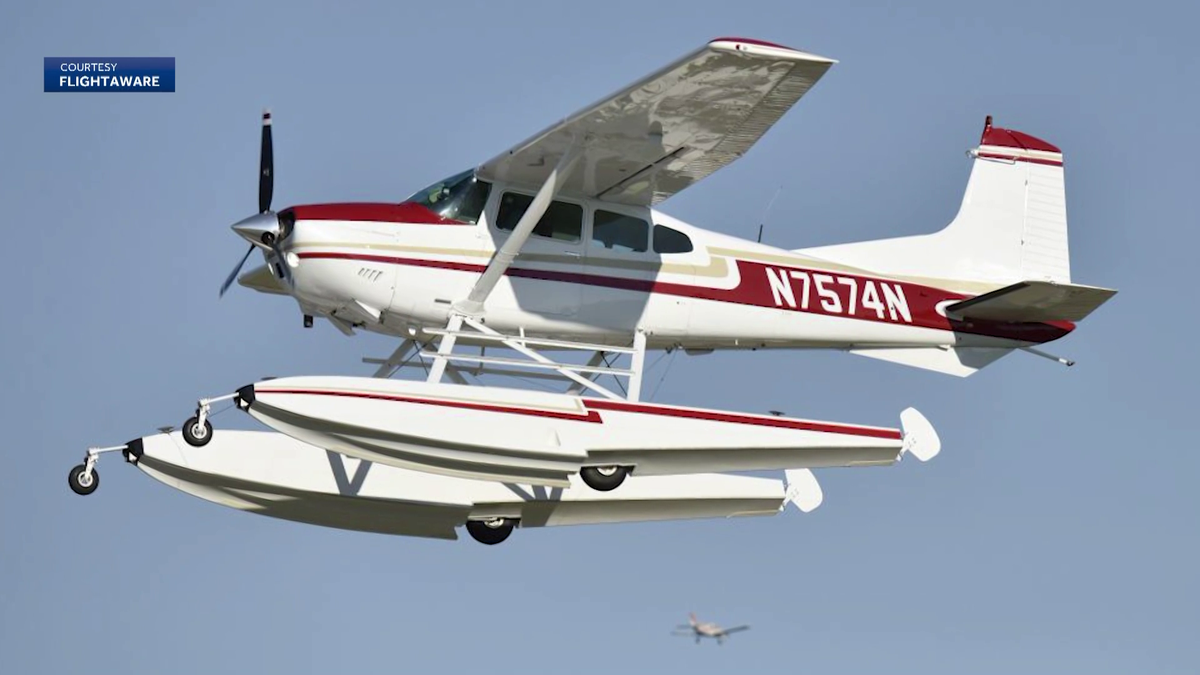
The NTSB said it is investigating the crash of a 1981 Cessna A185F aircraft in the Ten Thousand Islands. According to the agency, the plane crashed under unknown circumstances, overturned in the water, and was partially submerged.
The plane was removed from the water and was at the Goodland Boat Park on Marco Island.
The Collier County Sheriff’s Office said deputies, along with fire and EMS crews, responded to reports of a plane in the water near the Port of the Islands resort, between Marco Island and Everglades City. CCSO said there were no initial reports of a crash, only that a plane was in the water, with tail number N7574N.
The aircraft is registered to Black Dog Holding, Inc. in Pleasant Valley, New York.
The sheriff’s office confirmed there were two people aboard the aircraft, a pilot and a passenger, but their conditions were not immediately known. The agency’s aviation unit searched from the air for anyone else who might have been in the water or nearby.
A friend of the pilot told Gulf Coast News on Monday evening that the pilot is alive. We are working to find out the status of the passenger.
‘We heard the roar’
Witnesses at the Port of the Islands Resort said a quiet afternoon was interrupted by the sound of emergency crews rushing to the scene.
“We heard the roar of what would be identified as a search and rescue chopper,” said Cat Grega, who was at the resort pool at the time. “We then saw the emergency vehicles congregating on the other side of where my dock is located. We saw a stretcher get pulled out.”
“We’re always very sorry to hear about unfortunate circumstances happening out here,” Grega said.
Potential factors
Ramon Pabalan, a pilot with 40 years of experience, said the Cessna A185F is known for its durability and versatility.
“The Cessna 185 is a Skywagon. It’s on floats, meaning it can land on water, or it can land on a regular runway,” Pabalan said.
According to flight tracking data from FlightAware, the aircraft’s speed dropped from about 80 miles per hour to zero, a sudden descent that suggests something may have gone wrong during landing.
The video below shows the path of the Cessna A185F aircraft.
“He either wanted to because something was interesting on the ground he wanted to see, or yes, possibly he could have had a mechanical issue,” Pabalan said.
Data shows the aircraft departed from Marco Island Executive Airport before crashing roughly 35 miles away in the remote island chain.
Pabalan said both weather and water conditions could have been critical factors.
“I’m going to have to guess the weather is going to play a significant factor in this, as well as the water conditions, whether he was trying to land intentionally or whether he felt he had to land for another reason,” he said.
With all the speculation, it’s still too early to know exactly what happened without actually hearing from those on the plane.
An NTSB investigator arrived at the scene on Monday morning. Once the plane is recovered from the water, the investigator will document the scene and examine the aircraft before it is moved to a secure facility for further evaluation.
What the NTSB does after an airplane crash
NTSB investigations focus on three primary areas: the pilot, the aircraft and the operating environment.
As part of the process, investigators will gather flight track data, air traffic control communications, maintenance records, weather forecasts and actual conditions at the time of the crash, and the pilot’s license, ratings and recent flight experience.
The agency will also review the pilot’s activities in the 72 hours before the crash to determine whether any issues could have affected the ability to safely operate the flight. Witness statements, electronic devices and any available surveillance video, including doorbell camera footage, may also be collected.
Witnesses or anyone with surveillance video or other information related to the crash are asked to contact the NTSB at witness@ntsb.gov.
During the on-scene phase of the investigation, the NTSB emphasized that it does not determine or speculate about the cause of the crash.
More information expected
A preliminary report is expected within 30 days. A final report, which will include a probable cause and any contributing factors, is expected within 12 to 24 months.
Gulf Coast News has reached out to the sheriff’s office regarding the identity of the pilot and passenger and was directed to the NTSB. The NTSB does not release the identities of those injured or killed in crashes.
This is a developing story and will be updated as more information becomes available.
DOWNLOAD the free Gulf Coast News app for your latest news and alerts on breaking news, weather, sports, entertainment, and more on your phone or tablet. And check out the Very Local Gulf Coast app to stream news, entertainment and original programming on your TV.