
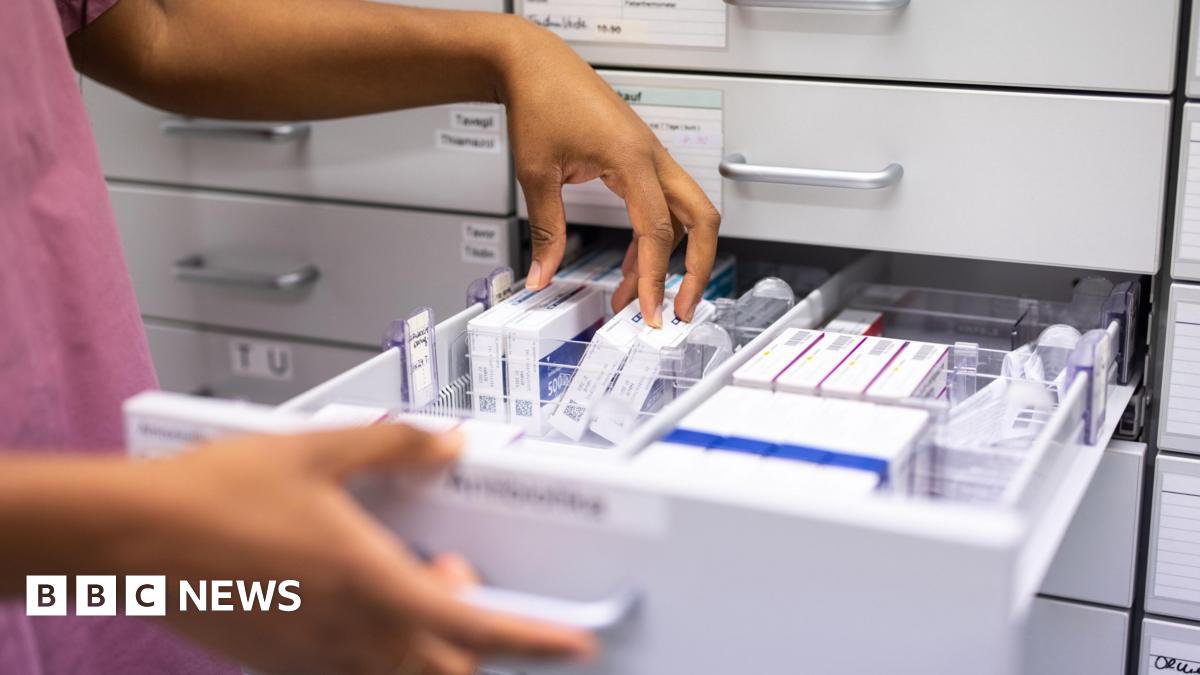
NHS Grampian has listed a similar message, external, saying pharmacists should “use professional judgement to prioritise stocks and quantities supplied to patients.”
However it stops short of the NHS Lanarkshire guidance that people currently taking the painkiller should begin cutting back.
BBC Scotland News understands that delayed authorisation by the Indian government regarding imports of codeine-based active pharmaceutical ingredients (APIs) – which are required for co-codamol – has led to the supply issues.
The Scottish government’s chief pharmaceutical officer Alison Strath said: “Medicine supply is a matter reserved to the UK government. We are aware of limited supplies of the commonly prescribed pain-relief medicine co-codamol and know this may cause some concern.
“Supply issues are expected until June 2026 and we are in regular contact with the UK government to seek assurances they are doing all they can to resolve this.
“We have issued advice to health boards to ensure patients affected receive accurate information and clear advice.
“We would ask that patients do not contact their GP practice or community pharmacy – instead, work is underway to identify those who may be affected, and they will be offered alternative treatment options.”
The UK government’s department of health and social care said the “vast majority” of licensed medicines were in good supply.
A spokesperson added: “We are aware that co-codamol tablets are currently in limited supply due to manufacturing issues, and are working closely with suppliers to resolve current disruptions and ensure continuity of supply.
“We are also engaged with NHS specialist clinicians and have issued comprehensive guidance on how to manage patients during this time, including advice on alternative preparations.”
Generic, non-branded medicines, such as co-codamol 30/500mg are usually manufactured in China and India, with recent stats, external by the manufacturer Actiza saying it exported products to over 200 countries across the world.