
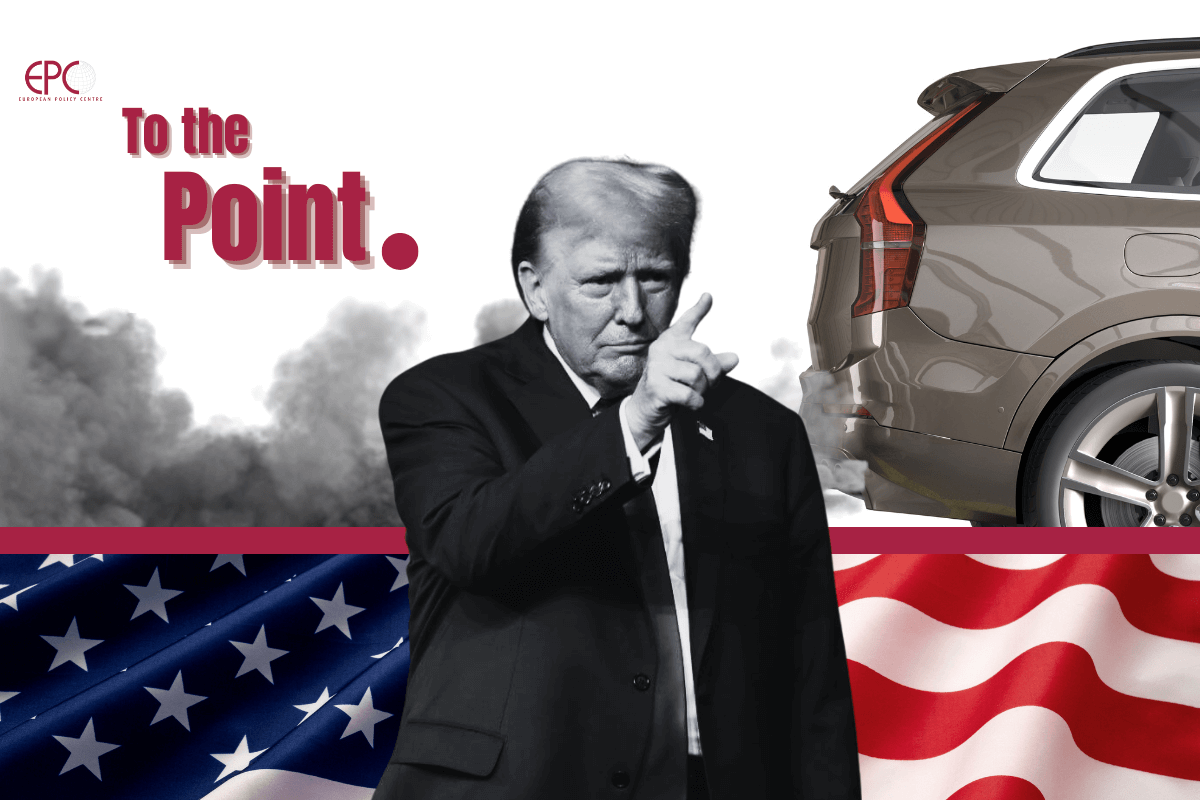
The US’s anti-climate stance under Trump 2.0 has reached a new low after revoking a scientific ruling from Obama’s Presidency that greenhouse gasses endanger public health. Such a decision removes the GHG emission standards for the US industries, including car manufacturing and energy production. As concerning as it may be, this decision does not come as a surprise, given Trump’s overall rejection of the climate agenda and effective dismantlement of the Inflation Reduction Act focused on green investments.
These anti-climate measures are being pushed despite potential economic and political setbacks. Requirements on cars can help reduce fuel consumption, making them more competitive in internal and foreign markets. The Inflation Reduction Act itself offered socio-economic benefits, including job prospects in states dominated by Republican voters. These examples demonstrate the extent to which the decision making in the White House is driven by ideology, rather than strategic thinking, socio-economic calculus or even basic political considerations.
What do the latest developments across the pond mean for the EU? It confirms once again that any transatlantic or EU-US global initiatives labelled as ‘climate’ are off the table as long as Trump is in the office. The EU could still explore ways to collaborate on topics such as disaster management and circular economy, although the window of opportunity appears to be shrinking by the day. Moreover, the EU must assess the effects of the US measures on EU’s leadership on climate, and on its economy, including the automotive sector. It should explore how the EU’s climate action and industrial leadership can be leveraged to boost European influence, competitiveness and decarbonisation at home and worldwide.
Stefan Šipka is Head of Sustainable Prosperity for Europe programme at the European Policy Centre
The support the European Policy Centre receives for its ongoing operations, or specifically for its publications, does not constitute an endorsement of their contents, which reflect the views of the authors only. Supporters and partners cannot be held responsible for any use that may be made of the information contained therein.