
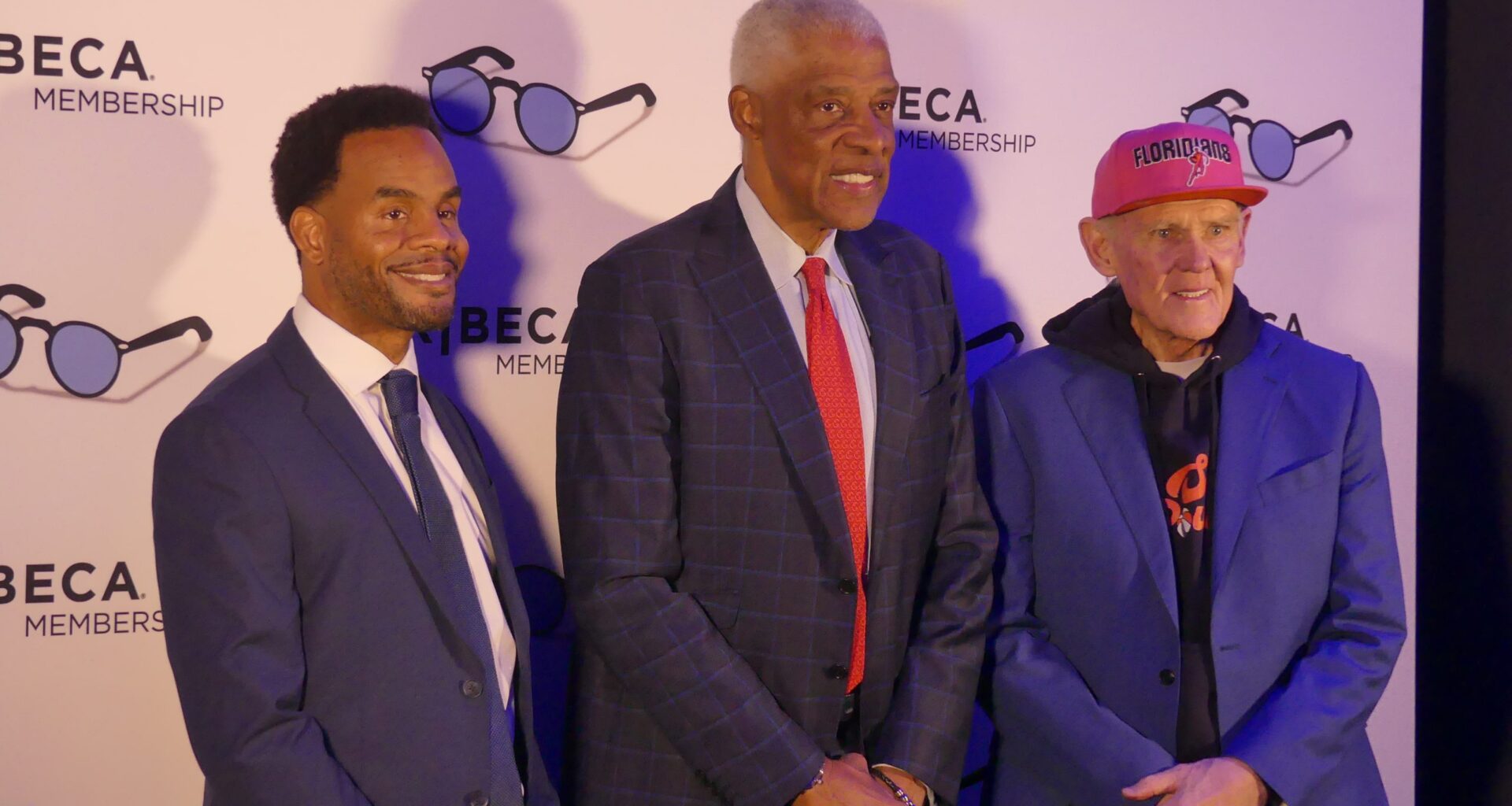
“It was a great league, a fun league. It was a tough league, and it could rival the NBA. It was just a great league because it allowed guys to play in the NBA.”
– Tom Hoover, former Knick and ABA player
“Soul Power: The Legend of the American Basketball Association” has come to Prime Video. The streaming service is airing a four-part docu-series on the renowned ABA, complete with its colorful players, shady owners and cutting edge ideas. In the process, the league, approaching its 50th anniversary, changed professional basketball forever.
Director Kenan Kamwana Holley crafted this sports tapestry with a lot of young talent.“We had a lot of young people on this team,” Holley said. “They didn’t know anything about the ABA, but that’s why I brought them in. I wanted that energy.”
You may remember that some of the greatest NBA players got their start in the ABA like Hall of Famers Julius “Doctor J” Erving, Coach George Karl (co-executive producers along with Common), Brooklyn’s Connie “The Hawk” Hawkins and Olympic star and former Knick Spencer Haywood.
You had players who jumped from the NBA (Rick Barry) to the ABA and back to the NBA and players who came out early (Haywood and Ralph Simpson) which was unheard of back then. The ABA gave basketball the Dunk Competition and the three-point shot. And don’t forget those magnificent afros.
“The name of this documentary is ‘Soul Power,’” said baseball Hall of Famer Bob Costas, who got his start in broadcasting doing play-by-play for the Spirits of St. Louis. “The ABA was a Blacker league than the NBA. The ABA had encouraged guys to grow afros. They had contests to see who had the biggest afro, whereas the NBA actually discouraged their players from growing afros.”
To this day, Erving, the renowned “Dr. J,” remembered the elements that made the ABA stand out. “The afros, the loosey-goosey style, the flash, the persistence of the little guys,” he said. “The NBA wasn’t allowing a lot of very good talented players who were 5-10, 5-11 — with Calvin Murphy being the exception — but the ABA had opened doors. We had guys who picked up the pace.”
Some of the little guys with spunk were Mack Calvin, Billy Keller, Louie Dampier, Freddie Lewis and Monte Towe. The ABA had high wire acts (Hawkins, Erving), tough guys (Warren Jabali and John Brisker), cheap owners (Roy Boe/Nets who brokered the Dr. J sale to the 76ers) and racist owners like trucking magnate Bill Ringsby of the Denver Rockets, as Haywood reveals in the series.
There was also mismanagement in the botched attempt to sign Kareem Abdul-Jabbar. A $1 million check made out to Abdul-Jabbar was never delivered by the commissioner. The episode led to the dismissal of George Mikan, an NBA Hall of Famer. By the way, the last ABA commissioner was former Knick Dave DeBusschere.
The league could have been called the ATA (American Traveling Association) because teams always seemed to be on the move. The Brooklyn Nets used to be the New Jersey Americans who became the New York Nets (based in Commack, West Hempstead and Uniondale, Long Island), then back to New Jersey, and then to Brooklyn.
Still, the ABA pedigree is strong with the likes of George “Iceman” Gervin, Artis Gilmore, Larry Brown (player and coach), Brooklyn’s Roger Brown and Billy Cunningham, Mel Daniels, Dan Issel, Moses Malone (another “hardship” case), George McGinnis, Charlie Scott, and David Thompson — all members of the Naismith Memorial Basketball Hall of Fame.
Like this:
Like Loading…
Related