
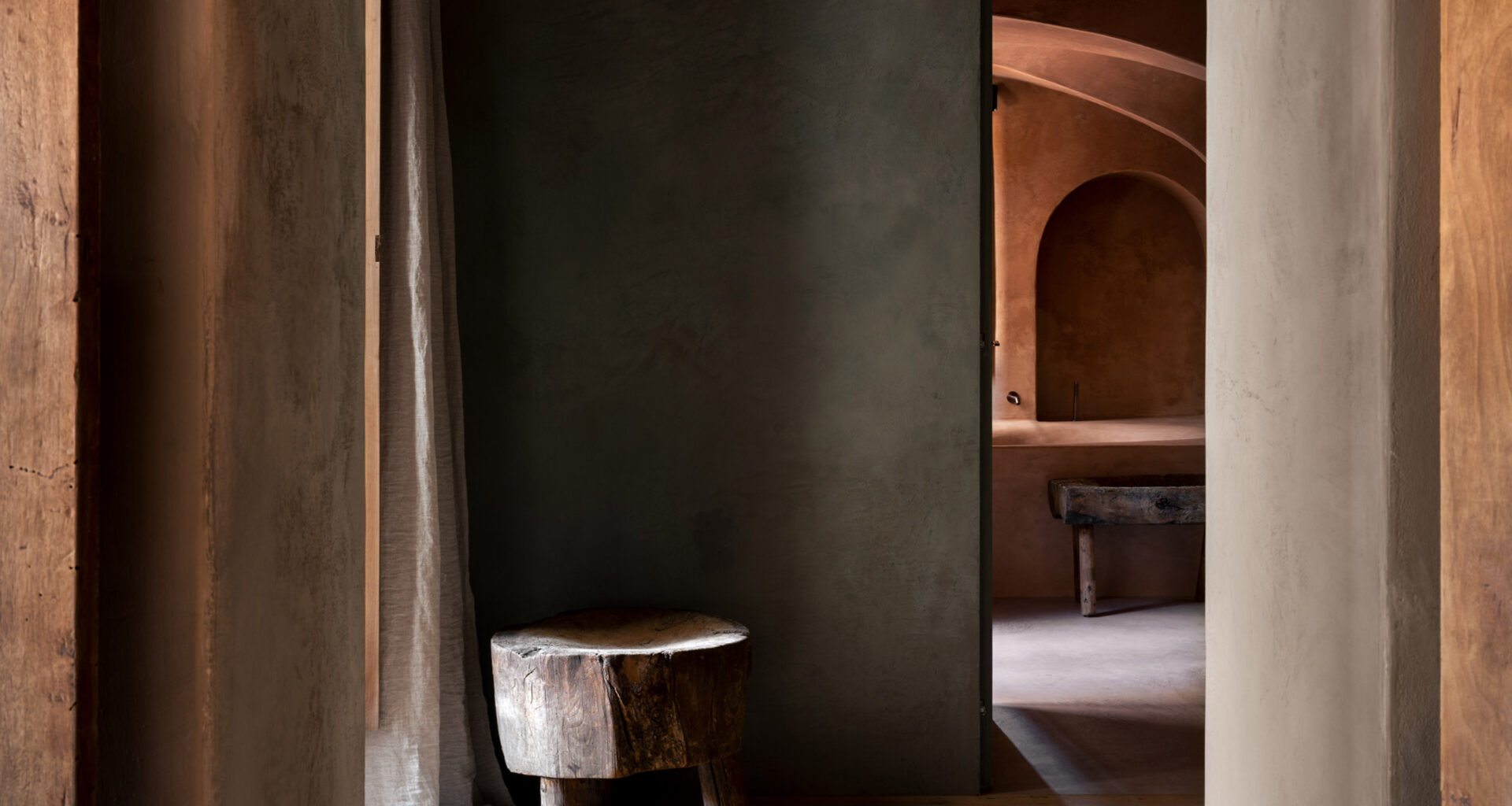
Architect Serena Mignatti has renovated a historic apartment in Rome for musician Thom Yorke and actress Dajana Roncione, utilising a palette of tactile materials to create an aesthetic informed by the Japanese philosophy of wabi-sabi.
Mignatti worked closely with the Radiohead star and his Italian wife to renovate the interior of the 350-square-metre penthouse, using a variety of salvaged elements and textured finishes that complement the original features.
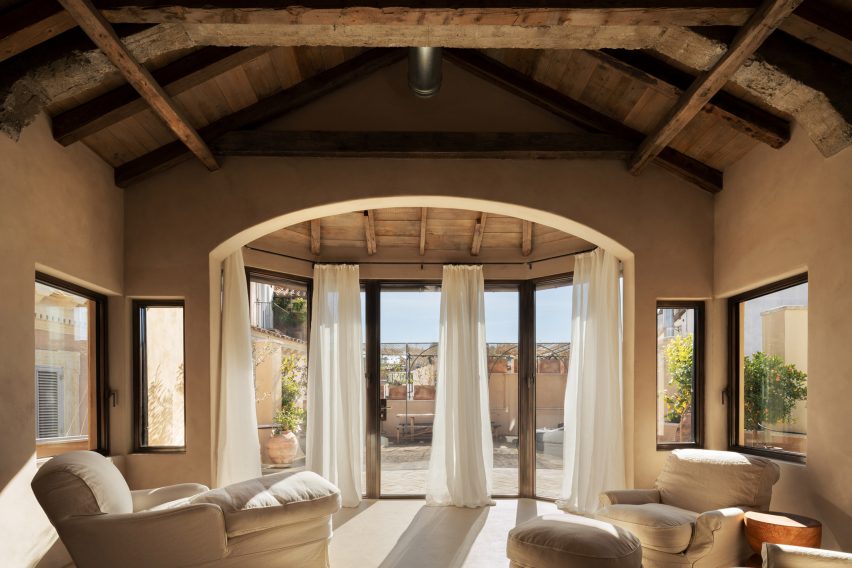 Serena Mignatti has renovated a historic apartment in Rome for Thom Yorke and Dajana Roncione
She told Dezeen that her objective was to create “a quiet balance between the timeworn beauty of the past and the clarity of the present – where every material carries a story and each space feels harmonious, vibrant and timeless.”
The apartment spans two floors of a typical 19th-century building in the city centre and was previously home to the Italian novelist and short story writer Italo Calvino and his family.
 The apartment spans two floors of a typical 19th-century building in the city centre
The residence’s history as a place of creativity and writing, together with the couple’s own artistic sensibilities, helped to define a project focused on generating a unique and meaningful atmosphere.
“We shared a clear vision,” Mignatti said, “to create a space that was special, personal and private – a place for the care of the soul, which is, in essence, what ‘home’ really means.”
 Mignatti was informed by the Japanese philosophy of wabi-sabi
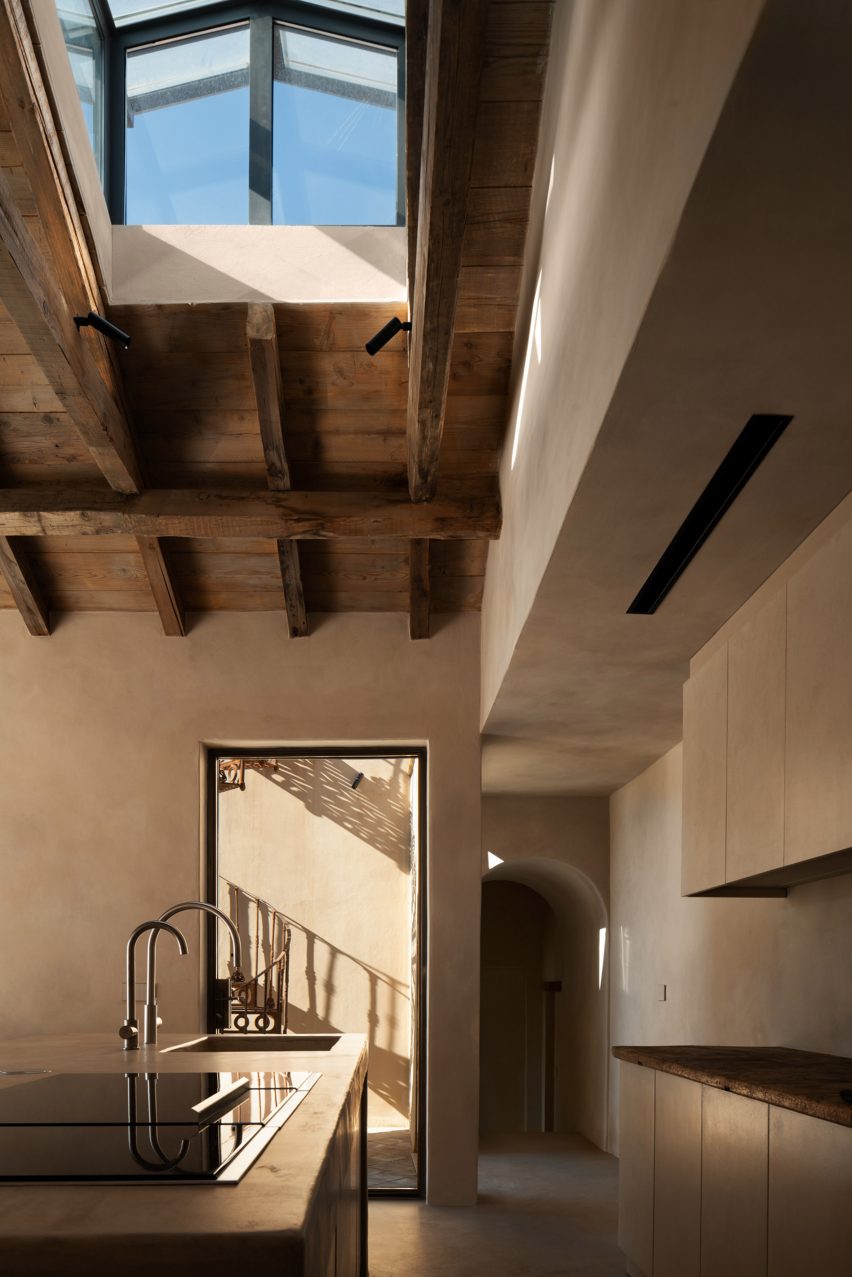
The original apartment building had evolved over time, informing an approach aimed at combining existing details such as the wooden ceiling beams and parquet flooring with contemporary interventions.
Mignatti utilised a palette of natural materials, including lime-based paints in warm tones, to evoke the neighbourhood’s architecture and provide a neutral backdrop for a range of reused and repurposed elements.
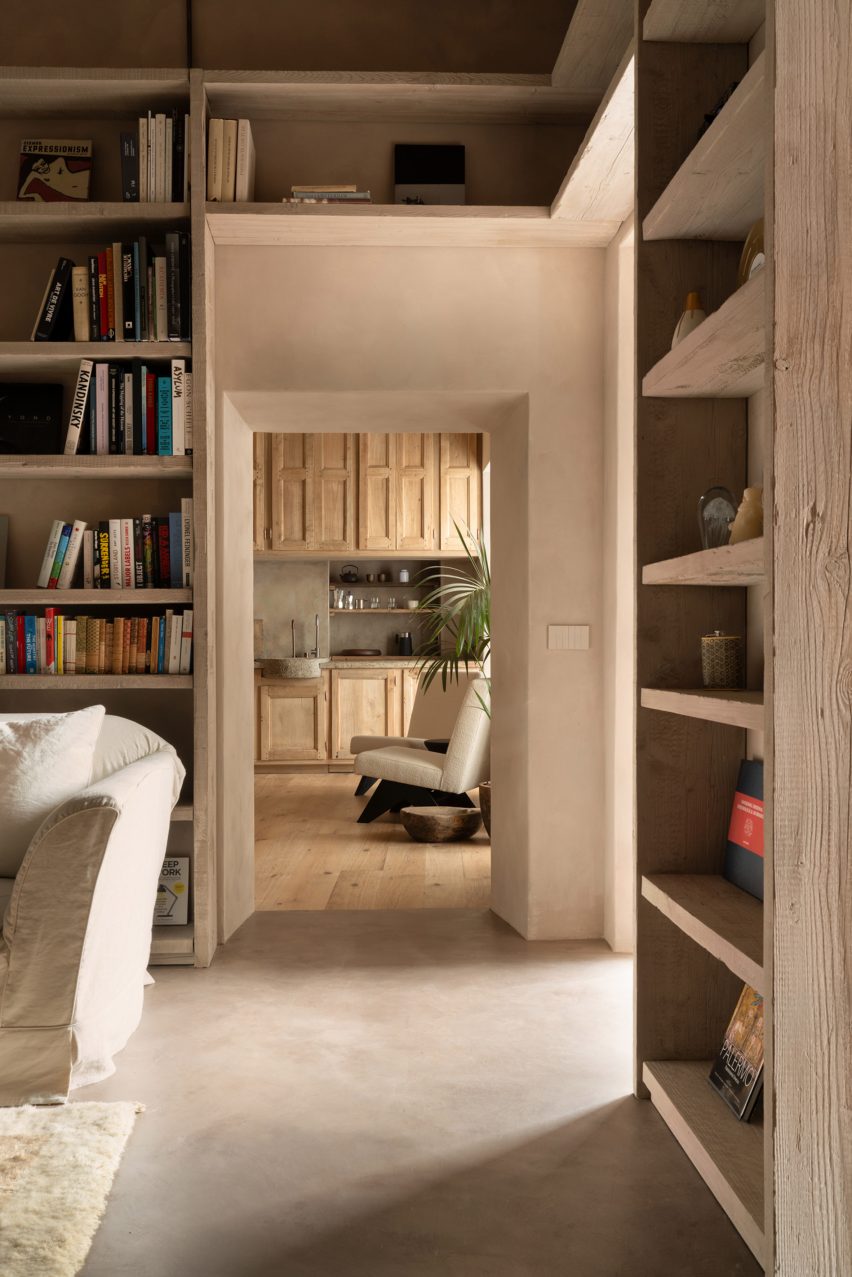 The architect utilised a palette of natural materials, including lime-based paints
“When it came to the furnishings, materials and colour palette, my aim was to remain deeply in tune with the surroundings – with Rome itself,” she suggested.
“I wanted the colours of the city, the tones glimpsed from the windows, to guide our choices. I gravitated towards soft, natural hues – nothing overpowering – colours that could quietly engage with the light, with the textures of the surfaces, and with the spirit of the place.”
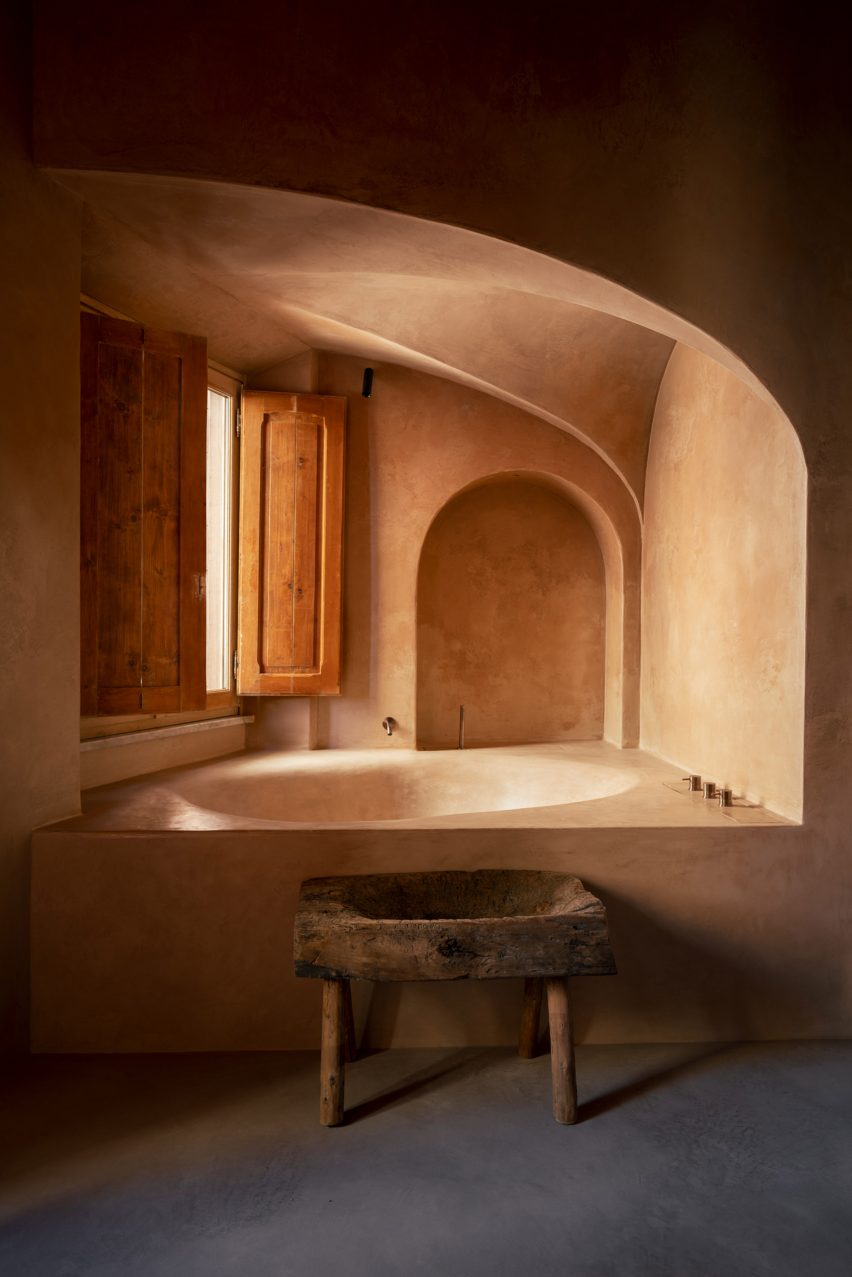
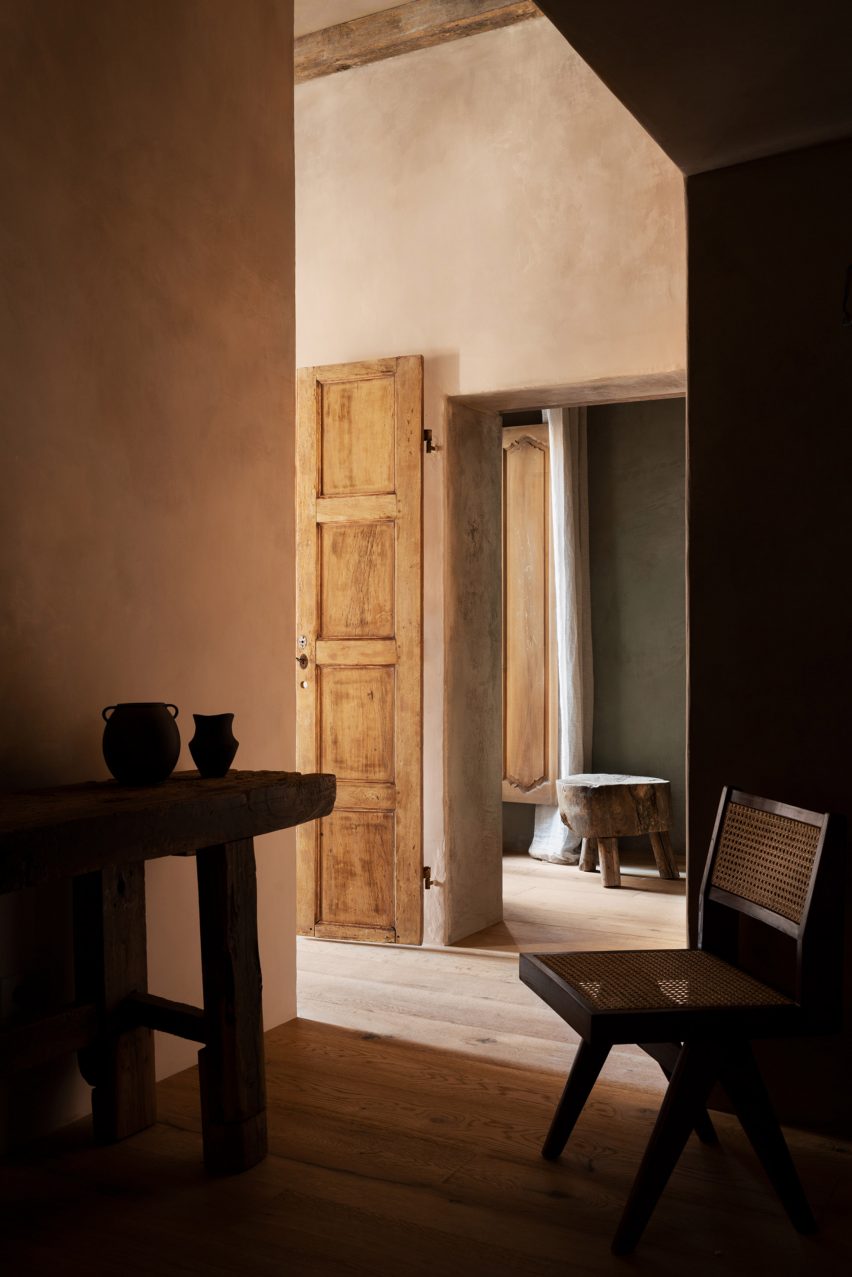 The house’s salvaged features include all of the doors, the wooden tables and benches
The house’s many salvaged features include all of the doors, the wooden tables and benches, the stone sinks, the niches in the vaulted ceiling and a spiral staircase leading to one of several private terraces.
New interventions were created bespoke for the space by a team of local artisans and joiners, while the upholstered furniture was sourced from Belgian antiques dealer and gallerist Axel Vervoordt, who is also known for his wabi-sabi style.
StudioTamat transforms Rome “villino” with glass floors and mirror ceilings
As part of the renovation, the existing utilities were brought up to contemporary standards, with solutions including underfloor heating and air conditioning discreetly integrated to create a more comfortable environment.
The project exemplifies Mignatti’s approach, which involves layering antiques and salvaged objects or materials on top of the existing built fabric.
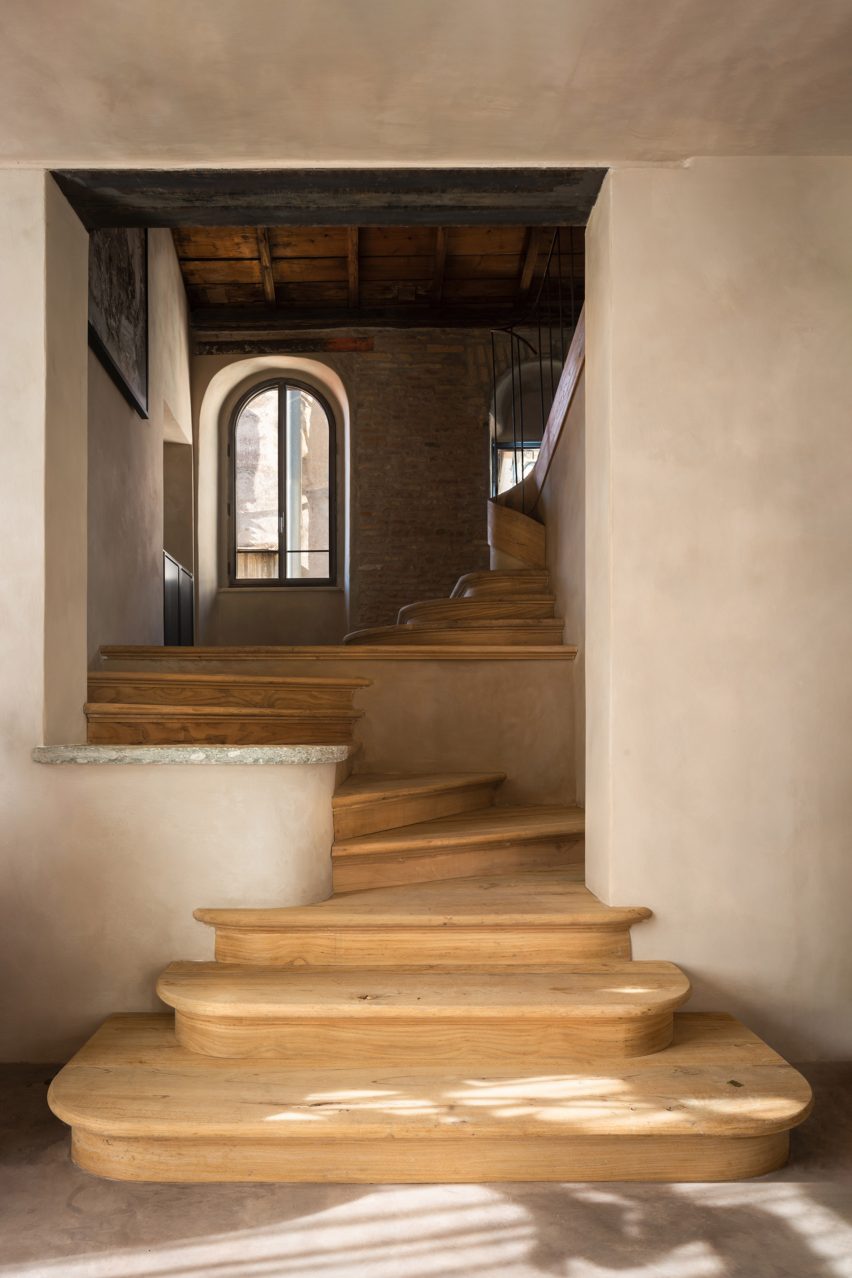 A staircase leads to one of several private terraces
“The idea of salvaging – not just the materials, but also the gestures, the energy behind them – has always fascinated me,” she pointed out.
“I often think of the Tuscan tradition, or the Japanese one, with their philosophy of wabi-sabi, which embraces imperfection and the quiet beauty of ageing things.”
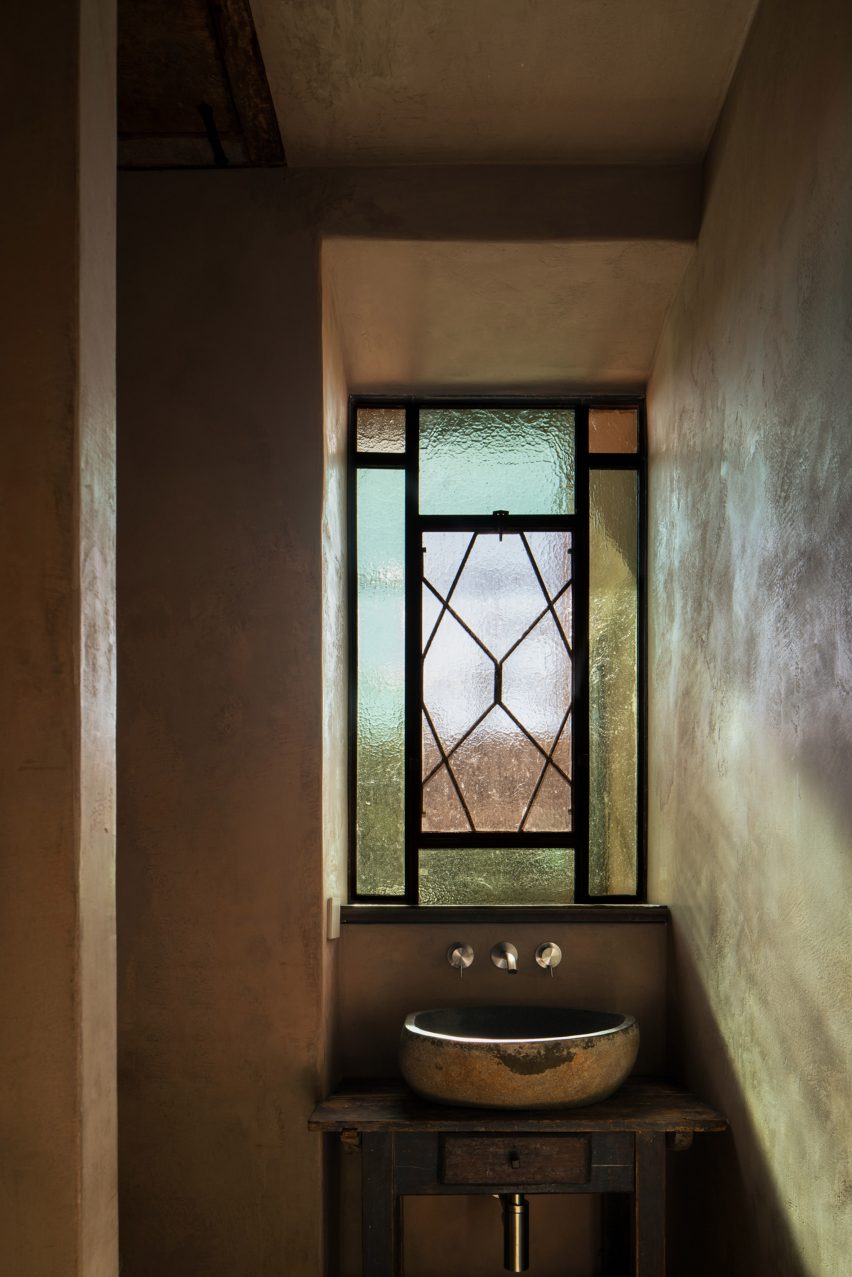 The property was previously home to the Italian novelist and short story writer Italo Calvino
Mignatti studied at the Iuav University of Venice and worked for several international architecture practices before founding her studio, which adopts a circular and regenerative approach to its projects in the residential, hospitality and cultural sectors.
Dezeen’s lookbook highlighting eight interiors informed by the wabi-sabi philosophy includes a Hong Kong residence featuring a palette of naturally flawed materials and a Barcelona apartment informed by its existing rough-textured beams.
The photography is by Danilo Scarpati.