
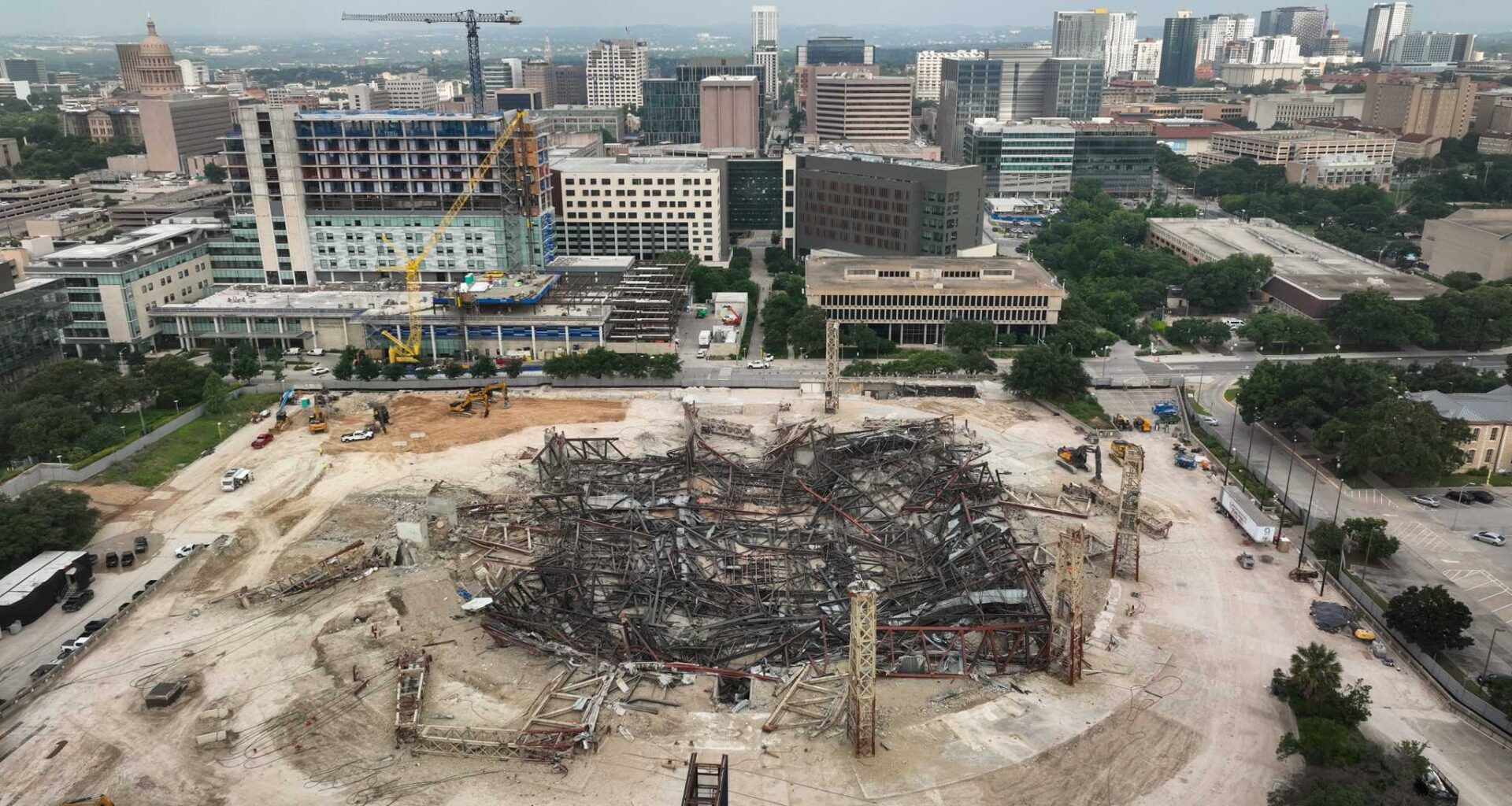
University of Texas System Chairman Kevin Eltife said Wednesday that UT’s new Academic Medical Center will no longer be based downtown at the former site of the Frank Erwin Center, the historic home of UT’s basketball teams.
“As our two institutions continue to work collaboratively over the last year, it became apparent the proposed Erwin Center location would not be as conducive to the fully integrated, patient-centered approach that was being envisioned,” Eltife said at a Wednesday UT Regents board meeting. “There would be limits to future growth on that site… At the board’s request, our teams have studied and have now recommended moving the future medical complex.”
In 2023, UT officials announced plans to build an academic medical center in partnership with cancer treatment center MD Anderson in a bid to significantly expand Austin’s healthcare opportunities and the footprint of UT’s medical presence. The campus will have two hospitals: an MD Anderson Cancer Center and a UT specialty care hospital. Officials said at the time that they expected groundbreaking to begin in 2026.
The new center — a $2.5 billion project — will be “one of the biggest projects of this generation,” Eltife said in November. UT’s website claims Austin is the largest city without an academic medical center.
UT spokesperson Mike Rosen said the university is still on track to open the complex in 2030 but doesn’t know when groundbreaking will start.
UT officials had planned to use the Erwin site for the expansion of the medical campus prior to the 2023 announcement of the MD Anderson partnership. The site was ideal given its proximity to the main campus, Austin’s downtown and UT’s Dell Medical School.
“We couldn’t be more excited about bringing this project forward, uniting UT MD Anderson’s renowned cancer care with UT Austin’s academic medical center and world class research enterprise,” Eltife said Wednesday. “The result of this partnership will allow Texas to harness both institutions’ mission, patient care, education, innovation and research to create a once-in-a-generation opportunity to define the future health care of Texas.”
This is a developing story and will be updated.