
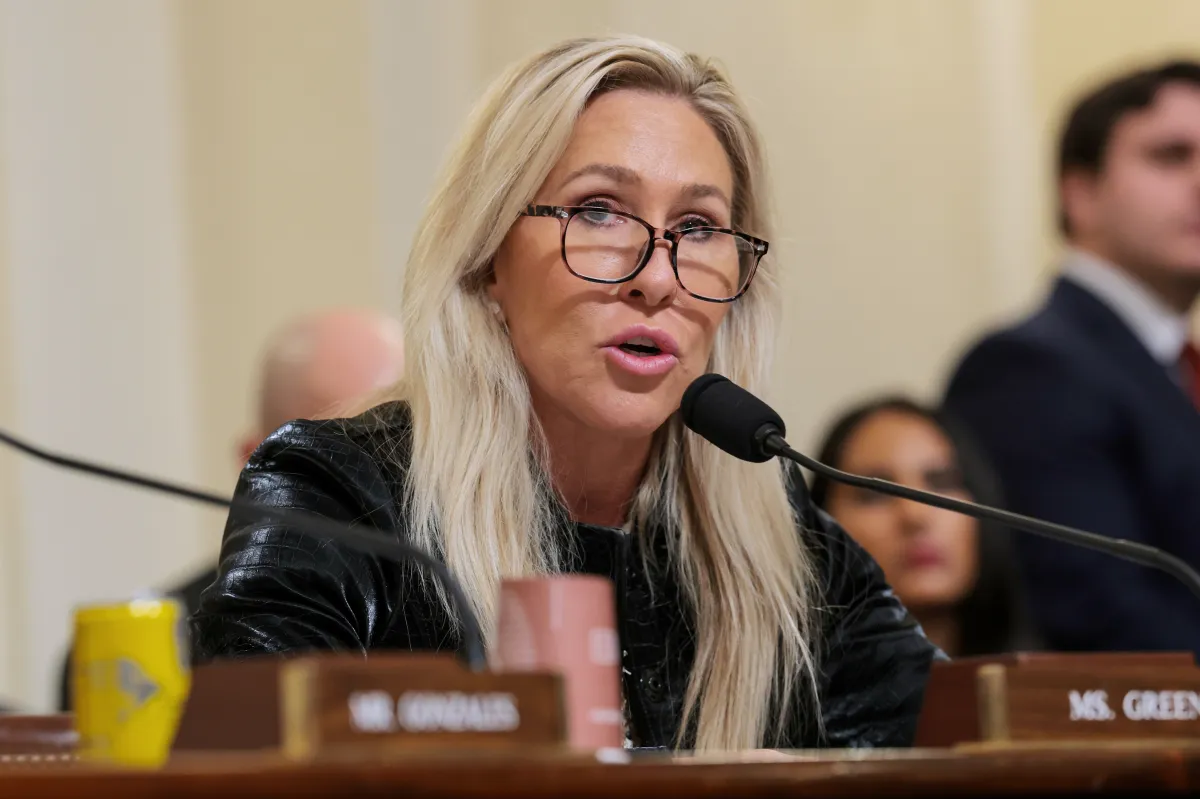
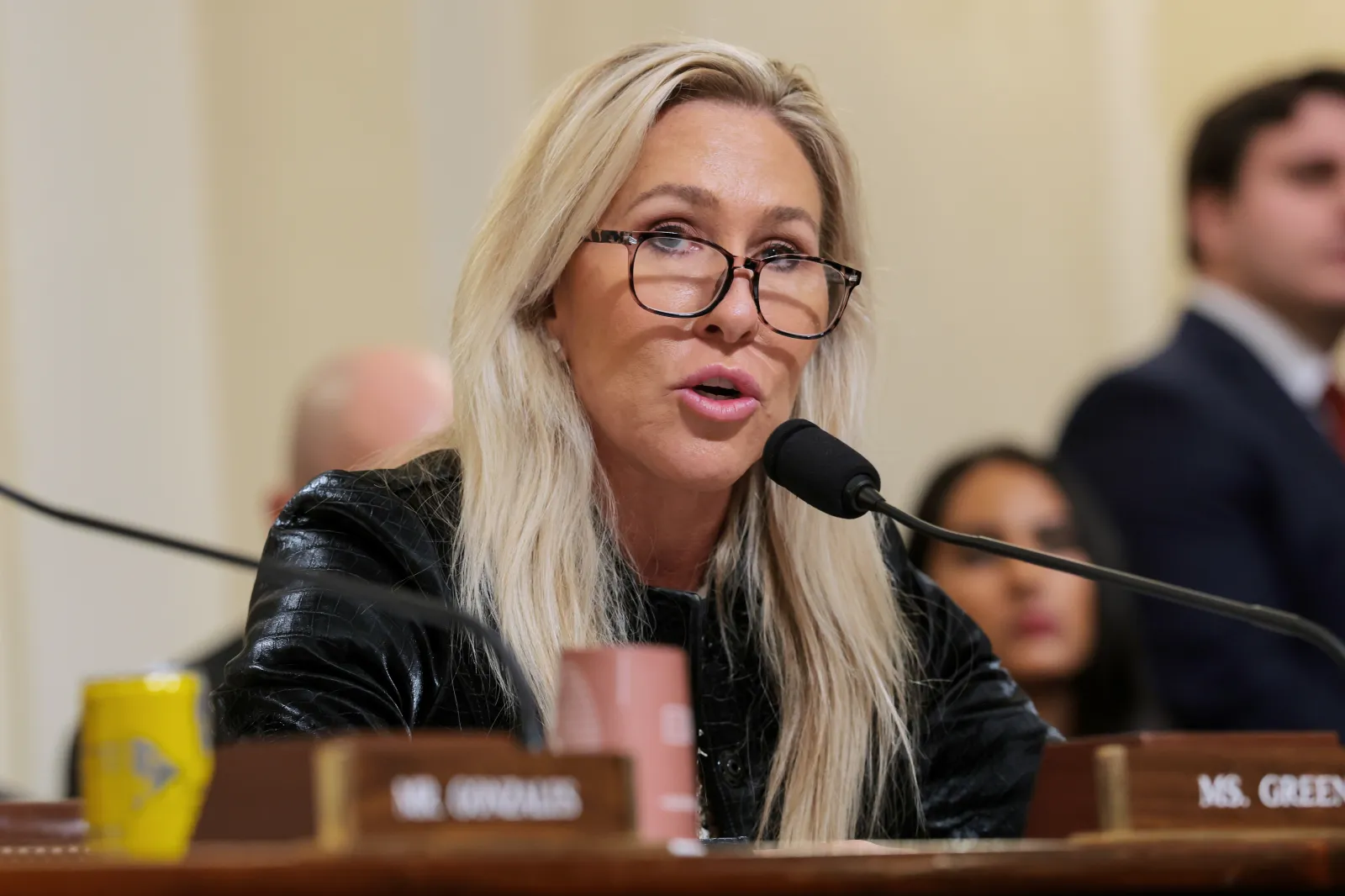
Former GOP Representative Marjorie Taylor Greene of Georgia issued a warning on Thursday over the solvency of the Social Security trust funds.
“Social Security is going to be broke by 2033. I’ve been trying to tell everyone. It’s less than 7 years away,” Greene wrote on X. “Instead of funding foreign wars and foreign countries, Social Security needs to be saved! If seniors can’t collect their SS check the government should be burned down.”
Why It Matters
Social Security is a central pillar of retirement income for millions of Americans, with the Social Security Administration (SSA) sending monthly payments to more than 70 million people.
Greene’s decision to leave Congress earlier this year followed a public split with President Donald Trump in recent months, as she criticized him over his stance on foreign policy issues, health care and the release of government files related to the late convicted sex offender Jeffrey Epstein.
What To Know
Greene’s comments follow a fresh report from the Congressional Budget Office (CBO) that predicts the Social Security retirement trust fund will run out of money in fiscal year 2032, which is one year sooner than previously projected. Estimates from the 2025 Social Security Trustees report put the depletion of the fund in 2033.
If that happens under current law, the program will no longer be able to pay full benefits. Instead, payments would be limited to what is collected from ongoing revenue, mainly payroll taxes and taxes on benefits.
The CBO projects that the funding gap would result in an immediate benefit reduction of roughly 7 percent for all recipients in 2032. Between 2033 and 2036, average cuts would grow steeper, reaching about 28 percent annually.
It is far from the first warning about the trust fund solvency issue.
“Policymakers are running out of time to enact necessary fixes to head off trust fund insolvency,” the Committee for a Responsible Federal Budget said last year. “The longer they wait, the fewer policy options will be available, and the harder it will be to avoid abrupt changes to taxes or benefits or to phase in changes that give workers and retirees time to prepare.”
Lawmakers in both parties have put forward proposals to address Social Security’s projected shortfall. The Fair Share Act, introduced by Senator Sheldon Whitehouse, a Rhode Island Democrat, and Representative Brendan Boyle, a Pennsylvania Democrat, would require individuals earning more than $400,000 to pay payroll taxes on income above that threshold, a change supporters say could extend the program’s solvency for 75 years.
Separately, Senator Bill Cassidy, a Louisiana Republican, and Senator Tim Kaine, a Virginia Democrat, have proposed creating a new investment fund that would allow Social Security to invest in stocks and other assets, beginning with a $1.5 trillion Treasury-backed infusion.
 How Does Social Security Funding Work?
The program is funded primarily through dedicated payroll taxes collected under the Federal Insurance Contributions Act (FICA).
Workers and employers each pay 6.2 percent of wages, for a combined 12.4 percent, up to an annual taxable earnings cap. Self-employed workers pay the full 12.4 percent themselves. In addition, some beneficiaries pay federal income taxes on a portion of their benefits, and those revenues also flow back into the system.
The money collected is deposited into two trust funds managed by the Social Security Administration: the Old-Age and Survivors Insurance (OASI) Trust Fund and the Disability Insurance (DI) Trust Fund.
Wider Repercussions
The CBO also warned that reductions of that scale would ripple through the broader economy. Lower benefit payments would curb consumer spending, slowing economic growth, increasing unemployment and easing inflation. The agency expects the Federal Reserve to respond by cutting interest rates to bolster the economy.
Lower borrowing costs would help cushion the decline in spending, while reduced benefits could prompt some Americans to save more and remain in the workforce longer. Overall, the CBO estimates that in 2033, the year after the trust fund is depleted, real GDP would be about 0.7 percent lower than previously projected, though output would exceed earlier forecasts in subsequent years.

In a polarized era, the center is dismissed as bland. At Newsweek, ours is different: The Courageous Center—it’s not “both sides,” it’s sharp, challenging and alive with ideas. We follow facts, not factions. If that sounds like the kind of journalism you want to see thrive, we need you.
When you become a Newsweek Member, you support a mission to keep the center strong and vibrant. Members enjoy: Ad-free browsing, exclusive content and editor conversations. Help keep the center courageous. Join today.
