
Aussies holidaying in New Zealand are often surprised feral brushtail possums appear bigger, darker, and fluffier than their native cousins back home. One of the largest on record was caught in the 1980s and weighed over 6kg.
To put that in perspective, most brushtails on Australia’s mainland are between 1.5 and 4kg.
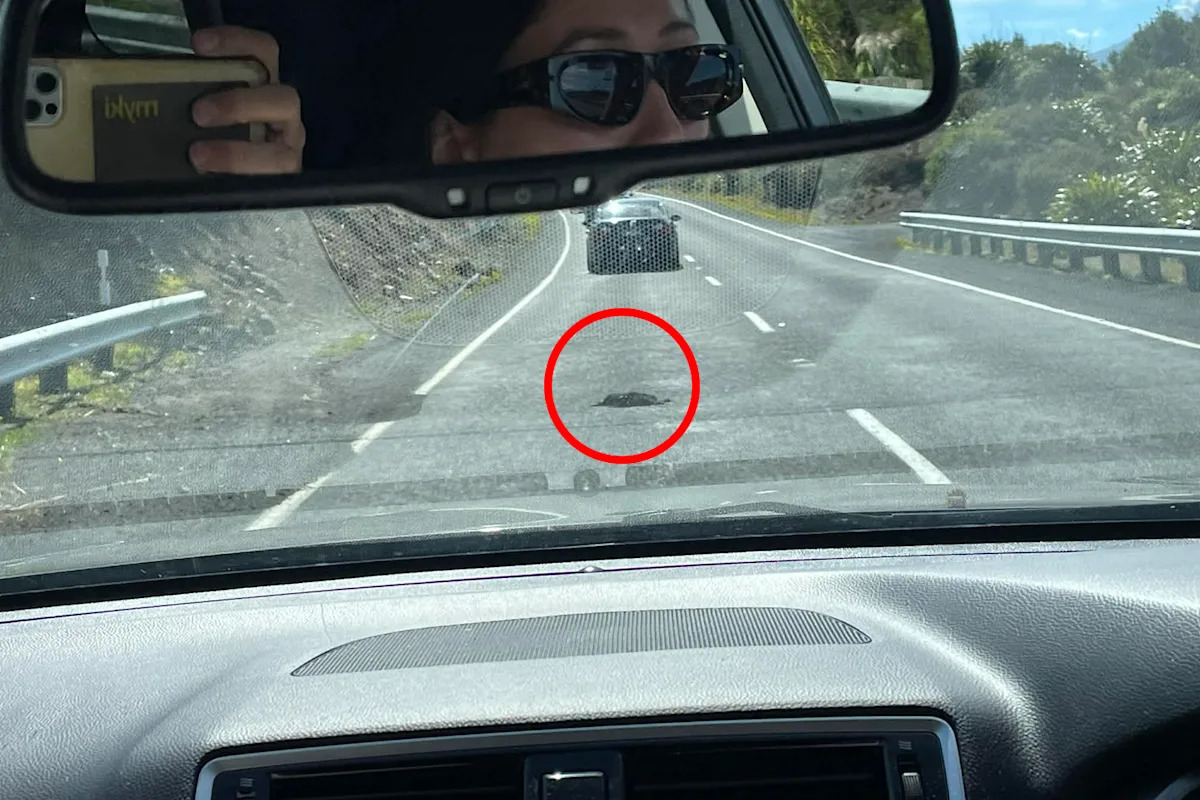
It’s common to see the animals squashed on roadsides, and Kiwis who spoke to Yahoo about the species described them as “fat” and “chonky”.
Bruce Warburton is retiring from New Zealand’s Bioeconomy Science Institute after 48 years specialising as a wildlife biologist and pest controller.
He said there are plenty of smaller brushtails in New Zealand, but he confirmed the presence of large individuals.
“A 4.5kg animal is a big possum, and you really notice them,” he told Yahoo News.
“But 5kg or more is pretty rare. And the 6kg possum was taken from an area where the species was still invading, so there would have been an overabundance of food.”
It’s not the only Aussie animal that’s invaded New Zealand — magpies and wallabies are common in some regions, and there have been regular incursions of the Queensland fruit fly and bogong moth.
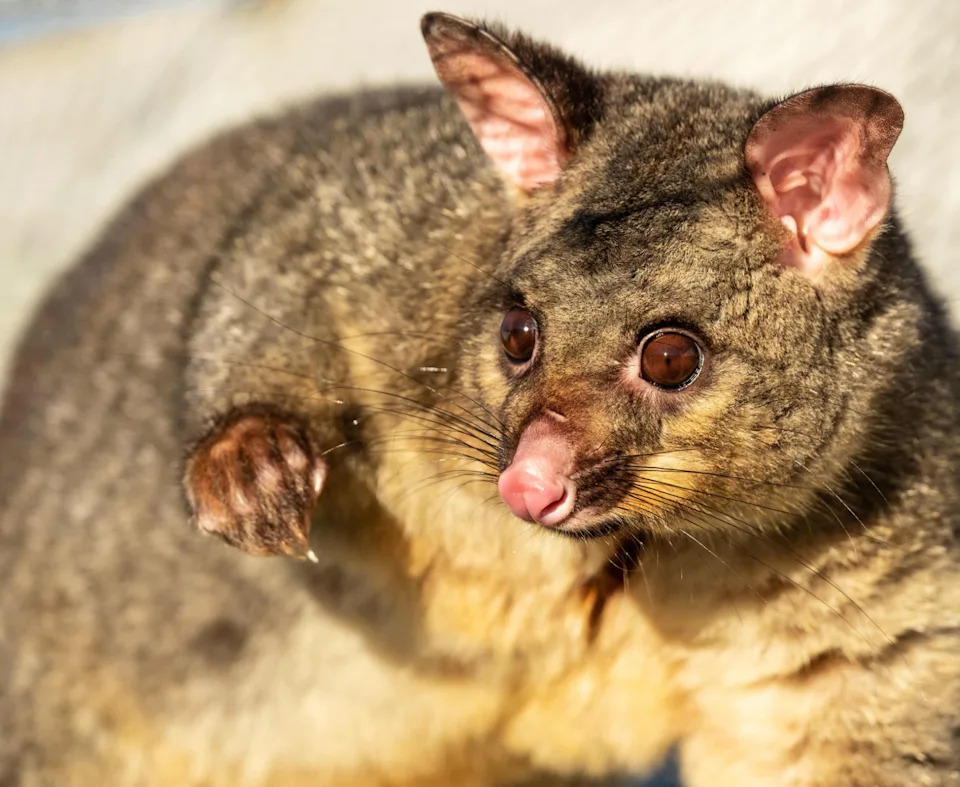
A large feral brushtail possum caught on New Zealand’s South Island. Source: Manaaki Whenua Landcare Research
Why were Aussie possums brought to New Zealand?
The story of brushtails across the Tasman is one of stark differences.
In Australia, their range has declined by 80 per cent because they’ve been killed off by feral foxes and cats. Brushtails thrive in cities like Melbourne and Sydney, but populations in central and arid regions have become isolated or locally extinct.
Over in New Zealand, they’ve thrived, reaching a peak of 50 to 70 million individuals in the 1980s.
Other than seals and bats, New Zealand does not have native mammals, so brushtails were introduced from Australia in the 1800s to establish a fur trade, and it’s still common to find knitwear for sale that’s a blend of wild-caught-brushtail and farmed-merino-wool.
But on the whole, feral possums have been terrible for New Zealand.
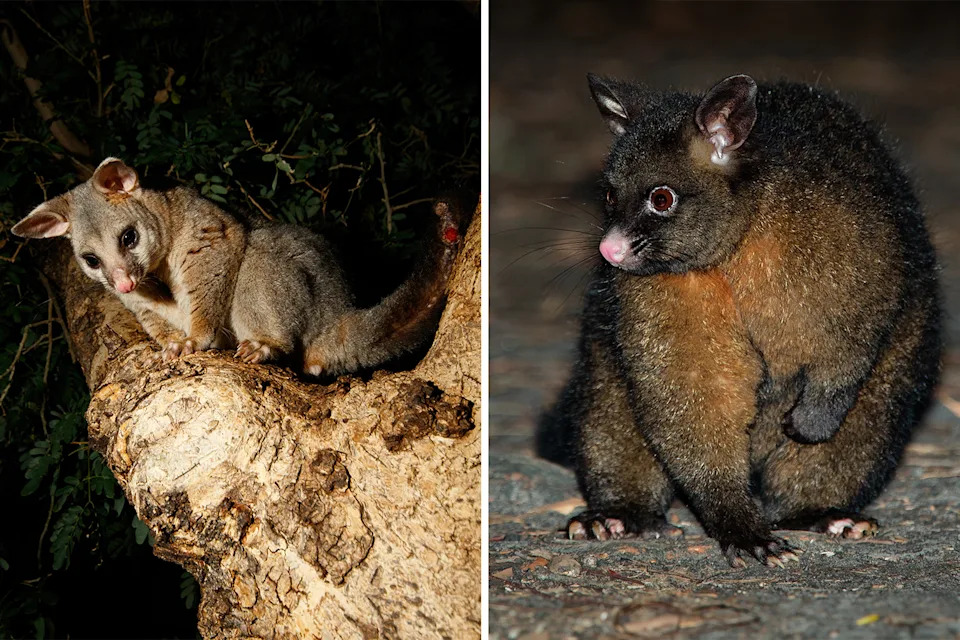
A slender Queensland brushtail possum (left) and large chocolate-coloured brushtail in Tasmania. Source: Getty
They spread tuberculosis in farmed cattle, and have devastated the environment, stripping forests bare, eating adult birds, their eggs and chicks, and consuming large native insects and snails.
Predator Free New Zealand Trust chief executive Jessi Morgan said while brushtails are an amazing animal, they have been brought to the wrong place.
“They have ventured to almost every corner of our country, and at their peak, their numbers rivalled the sheep population,” she told Yahoo News.
“New Zealand is a smorgasbord of food for a brushtail possum, and they can live generally without fear of predation. Their only predator, feral cats, do not have much of an impact, leaving possums free to spend more time feeding and growing.”
Rule that makes cold-climate mammals grow bigger
There’s no simple answer about the discrepancy in size between brushtails on both sides of the Tasman, although there is plenty of speculation.
One possible reason for the difference is Bergmann’s Rule, which states that warm-blooded animals living closer to the Earth’s poles are larger, allowing them to conserve more heat.
New Zealand is closer to the South Pole than mainland Australia, so it makes sense for mammals in its colder and wetter forests to grow larger.
Scientific research published in 1985 found that brushtails in the chilly south of New Zealand were generally larger than those in the north.
“This trend probably evolved during less than 50 years (30 — 35 generations),” they wrote, noting that a similar trend is seen in Australia.
Multiple studies show brushtails weigh in at around 1 — 2kg in northern Australia, and up to 3.5 — 4kg in Tasmania.
However, the data samples are limited, and there is some anecdotal evidence that brushtails on the island state can occasionally grow to the lofty sizes seen in New Zealand.
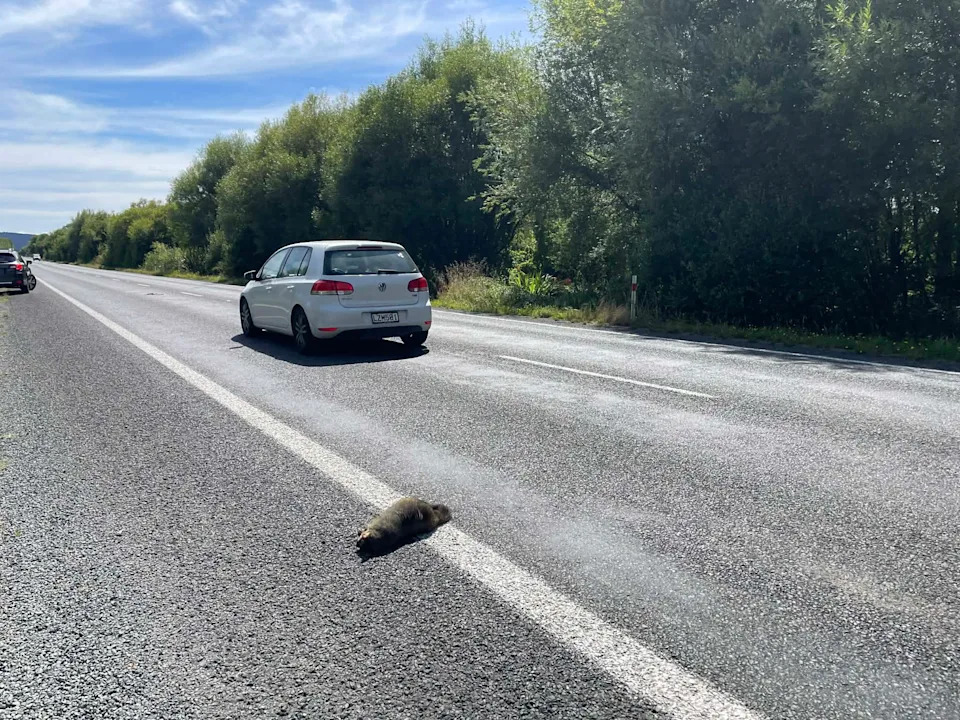
It’s common to see brushtails dead on the side of the road in New Zealand. Source: Michael Dahlstrom
Unique factors that could be creating larger possums
The Tasmanian subspecies was the first to be introduced to New Zealand in 1837.
While there were around 300 subsequent releases, which included mainland animals, Tasmanian genetics are still dominant across large parts of the country.
Because the island state’s brushtails are often larger than those on mainland Australia, their DNA likely contributed to some possums growing large in New Zealand and having dark, fluffy fur.
Therefore, the size of New Zealand possums is likely a combination of location, weather, abundance of food, lack of predators, and genetics.
And for anyone travelling from mainland Australia, the brushtails will appear quite different to what they expect. While Tasmanians are likely to be less surprised.
New Zealand brushtails could further change
Shelby Middleton is a PhD student at Edith Cowan University who has researched differences between Australia’s brushtail subspecies.
In evolutionary terms, brushtails can rapidly change, and so she wouldn’t be surprised if the species’ appearance continues to morph in New Zealand if they’re not eradicated.
She points to the example of Barrow Island, which has been isolated from Western Australia for 6,000 years. Because there are no tall trees, the population has almost lost their tails.
While Tasmania has been isolated from the mainland for around 10,000 years, its brushtail almost looks like another species.
“There might even be changes in New Zealand that we can’t see from the outside, to their teeth and skulls, as they adapt to different foods,” she told Yahoo.
Can feral possums be eradicated?
The number of brushtail possums in New Zealand has decreased to around 28.5 to 48 million today, but they still cost the economy around NZ$110 million a year.
Possums are on the New Zealand government’s target list of invasive species it wants to eradicate by 2050, and there are a range of opinions about whether this can be achieved.
Warburton believes they can be removed from a smaller island, but isn’t confident the same can be achieved on the North and South Islands.
“Not in my lifetime anyway,” the retiree lamented.
Love Australia’s weird and wonderful environment? 🐊🦘😳 Get our new newsletter showcasing the week’s best stories.
