
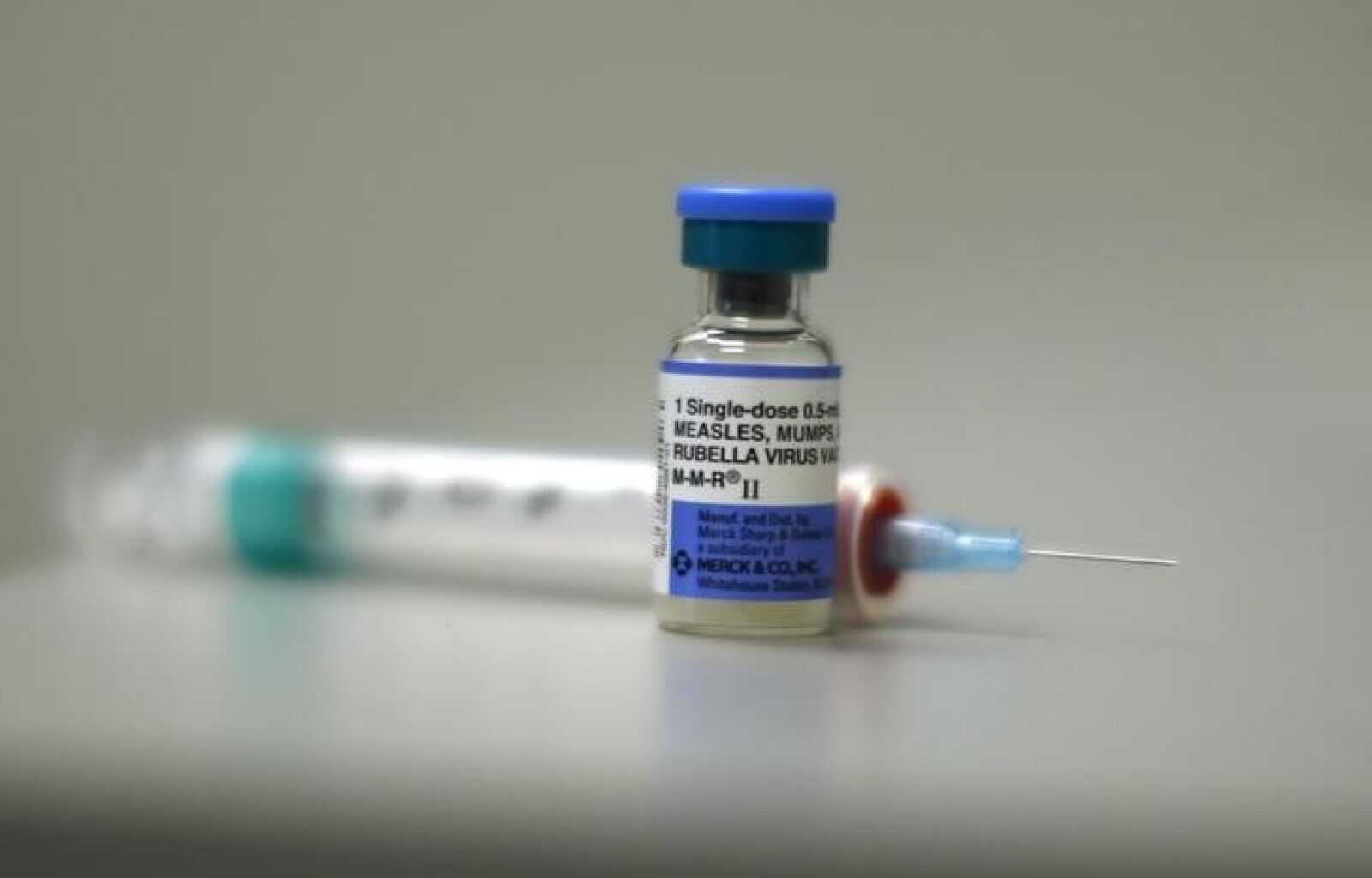
MINOT — For recent generations of North Dakotans, measles wasn’t really an issue. It wasn’t something we had to think about, because medical science has developed a safe and highly effective vaccine against that particular malady.
Though the measles is one of the most infectious diseases known to humankind, our society had essentially corralled it. I use the past tense, because it’s not really corralled any more. Thanks to a small but meaningful segment of our society choosing to believe the stupid things chiropractors and social media creators and religious zealots tell them about vaccines, the number of people using North Dakota’s porous laws to exempt their school-age children from required vaccines is growing.
The number of exemptions has more than doubled since the 2017-2018 school year, increasing by more than 107%. The number of exemptions for medical reasons has declined slightly during that period, while conscientious/religious exemptions, specifically, have increased nearly 119%.
As a result, the vaccination rate has plummeted across all vaccine types. For the measles, mumps and rubella vaccine specifically, North Dakota saw a decline in the kindergarten vaccination rate, from 94.24% in the 2017-2018 school year to 89.98% in the 2024-2025 school year.
Measles outbreaks, once something we only read about in the history books or in news dispatches from other parts of the world, are becoming an annual part of life in North Dakota. The state Department of Health and Human Services is
currently tracking an outbreak,
spending public resources on
and other efforts to protect the public from this preventable disease. They shouldn’t have to do that, but our profoundly inane cultural and political milieu has made it a necessity, so here we are.
Consider all that as context for a supposed controversy being promoted in right-wing circles, wherein a parent is indignant about the Department of Health advising them to take their unvaccinated child away from a wrestling tournament because of a possible measles exposure.
A gentleman named “Stuart” called into the Jay Thomas Show to complain about health officials telling them they should leave the high school event. “He said the Health Department employee told him his son was exposed to the measles at the Northeast Sub-Region Wrestling Dual Tournament at North Border School in Walhalla, North Dakota, the week before,”
WDAY radio reports of the call-in.
“Stuart said his son has a religious vaccine exemption in order to attend school.”
Stuart now claims his son can’t attend classes until sometime in March.
The controversy here is supposedly that state officials have taken these actions, but that’s completely backward. The real controversy is that there is a political/religious movement to convince Americans not to avail themselves of safe and effective vaccines. If Stuart’s family had chosen to vaccinate their child, they wouldn’t be in this situation. Indeed, the vaccine exemption form families sign so that their children can continue attending schools indicates that they may be excluded from classes and school activities in the event of an outbreak.
The fault for that exclusion doesn’t lie with public officials. It lies with the families who have made the daft decision not to vaccinate. I’m sorry Stuart’s son can’t attend classes and participate in school activities, but whose fault is that? Maybe, instead of whining about it on talk radio, Stuart and his family should talk to a medical professional and follow their advice.
And don’t let anyone convince you that a measles outbreak isn’t a serious thing.
During an interview on the Plain Talk podcast last year,
Dr. Paul Carson, an expert on infectious diseases and vaccination and a professor emeritus at North Dakota State University, described measles as a “very dangerous virus,” adding, “people don’t appreciate that because it was so common back in the day.”
It’s less dangerous in modern times because we understand more about it, but it can still kill.
“Some people will point out, rightfully, that mortality from measles started to fall well before the vaccine was released, and that’s because we had better nutrition in the United States,” Carson told us. “People got healthier. And vitamin A deficiency is a known risk factor. We don’t have that, really, anymore, hardly at all in the United States. So if you have adequate levels of vitamin A, you tend to have a lowered mortality.”
“The main thing that killed people was the secondary bacterial infections, so pneumonia was very common, and bacterial pneumonia would kill people,” he continued. “Antibiotics came about in the 1940s and got better and better in the ’50s and ’60s, so mortality was already low.”
Even in a modern health care environment with “good nutrition” and “access to antibiotics, it’s still about 1 out of a thousand will die. Maybe a little higher than that,” he said.
But death isn’t the only risk.
An “inflammation of the brain that can leave you with permanent disability and brain damage” happens about as frequently as death, Carson said. “A similar rate of about one out of a thousand or one out of 1,300 can develop a terrifying complication of measles called subacute sclerosing panencephalitis,” he said. “It’s where the measles stays in a sort of slow dormant state in the brain, and it causes progressive brain damage, severe disability and eventual death over a matter of years to a decade or so.”
Carson also said that even while measles was beaten into submission in America by vaccination and overall better health practices, researchers learned more about its pernicious impact on long-term health. Specifically, measles has an impact on our immunity to other diseases, not unlike HIV.
“What we found since is that measles, in a sort of a lesser way, acts almost like the HIV virus,” he said. “It attacks our immune cells, and it actually kind of wipes out much of our immune memory for about two to three years, so you’re much more susceptible to other infectious diseases. And now we know that children who have had a measles infection are more prone to suffering and dying from other infectious diseases in the two to three to four years after their measles, so it is really something we want to avoid.”
If you or your child gets measles, you might be OK. In fact, you probably will be OK, in the long run. But the risks are far from zero, and when there’s a vaccine widely available that generations of Americans have taken without significant incidents, and when we can demonstrate that the vaccine, when at appropriate coverage levels, can effectively prevent a disease like measles, why would we role the dice?
Why would we gamble with the health of our children?