
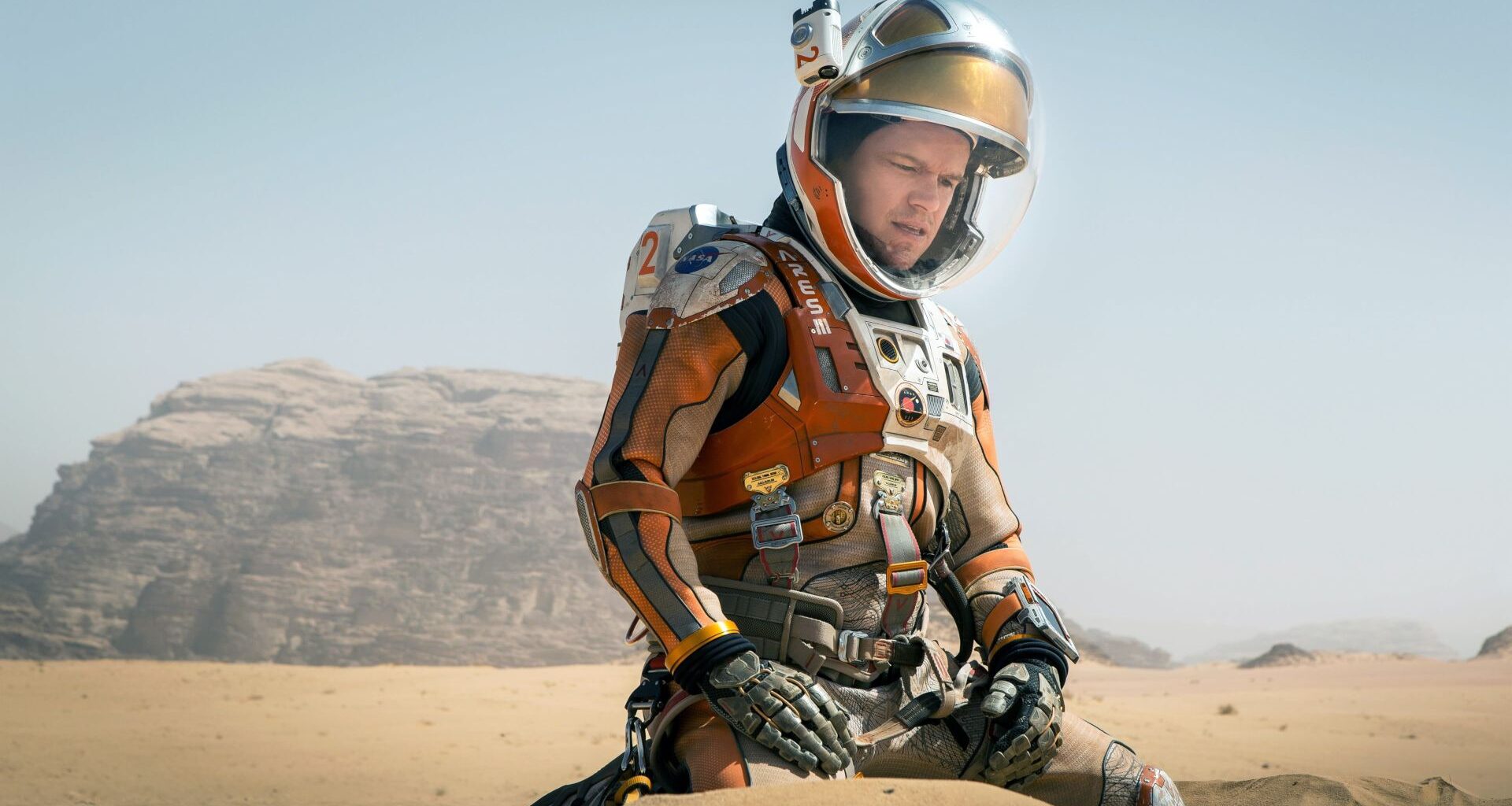
In science fiction movies and shows like “The Martian” or “For All Mankind“, Mars is often depicted as a challenging but ultimately survivable environment for humanity. Though conditions might be difficult, with enough rugged ingenuity and perseverance, mankind is able conquer the Red Planet in these stories in the ways we have the frontiers of Earth.
The reality is a very different story. Exposure to the unmediated Martian environment isn’t just hostile to human beings; it’s immediately lethal. While it may be possible to create a habitable environment on Mars, those habitats would be closer to hermetically sealed space stations or submarines than frontier settlements.
You may like
Myth One: “You could build a colony on the surface.”
(Image credit: iStock / Getty Images Plus)
Reality: Most habitats will likely be buried underground
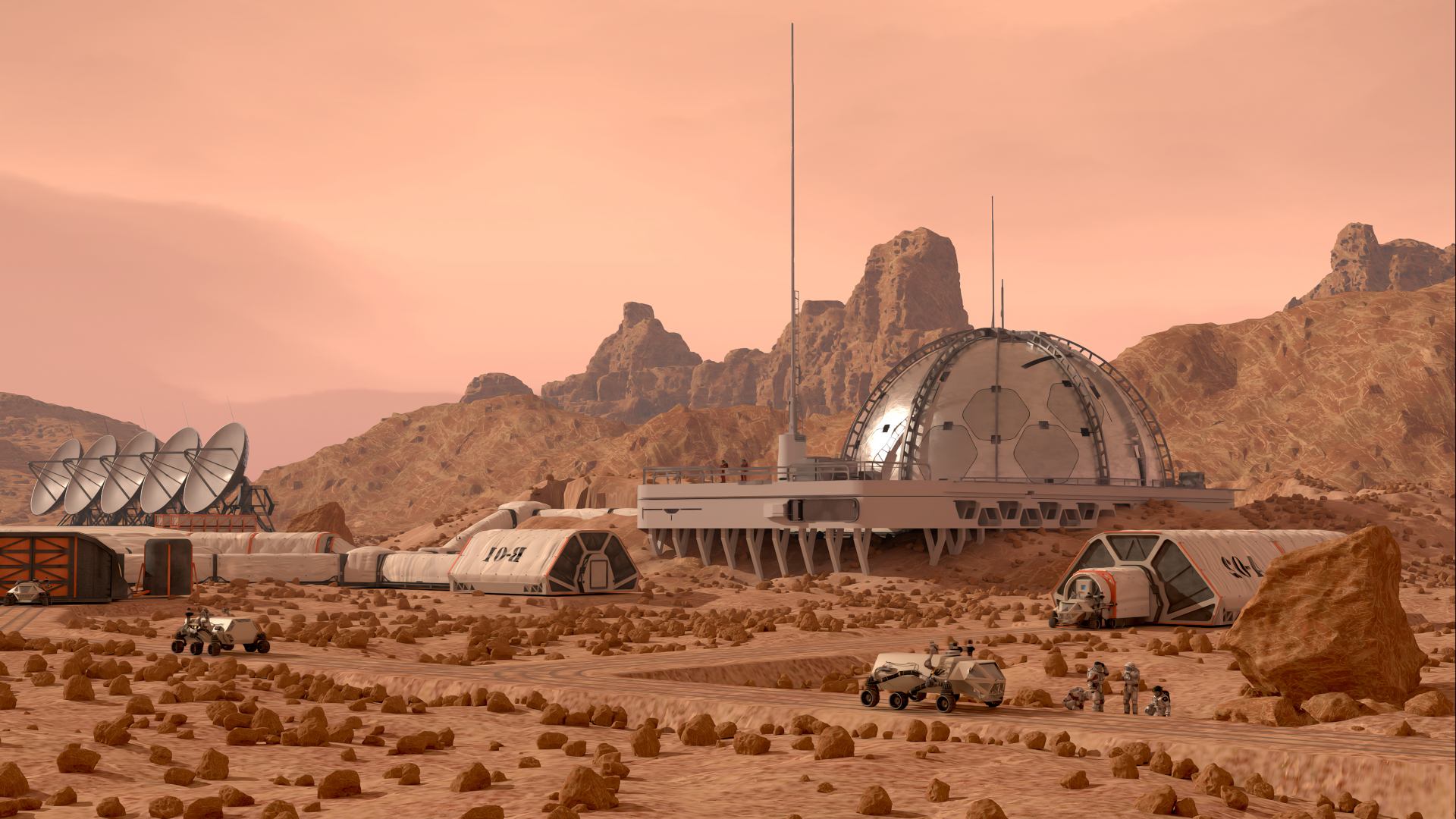
A lot of fiction about settling our solar system involves terraforming a planet or building sustainable settlements on the surface. The reality is that terraforming Mars would be unbelievably challenging.
“The idea is trying to change Mars so that humans could survive on it outside (without spacesuits),” says astrophysicist Dr. Jeffrey Bennett, founder of Big Kid Science and author of “The Scale of the Universe“. “It would require finding a way to increase its air pressure by a factor of almost 200 while ensuring it has the right mixture of oxygen to be breathable and carbon dioxide (or other greenhouse gases) to make the temperature warm enough for us to survive.”
There’s likely not enough carbon dioxide trapped in water, the soil, or locked in minerals on the Martian surface to release and generate a thick enough atmosphere. This means at max, an atmospheric pressure of around 7-12% of Earth’s, and no greenhouse warming that would melt ice and create bodies of water. For humans to survive, an atmospheric pressure of at least ~50% is a necessity.
“If this is even possible (there is scientific debate about whether it is),” Bennett said, “it would probably require centuries at minimum, and more likely many thousands of years.”
Also, the lack of atmosphere and a global magnetic field means the surface of Mars is exposed to extreme levels of cosmic and solar radiation, dozens of times higher than that present on Earth.
For a settlement to be viable, it would likely need to be buried deep underground or situated in a lava tube (an underground tunnel created by the flow of lava). To exist on the surface, any structure would need to be shielded by thick layers of Martian soil or shielded by materials like
You may like
Myth Two: “Mars is basically a cold desert you can adapt to.”
(Image credit: 20th Century Fox)
Reality: Mars will kill you in minutes without a suit
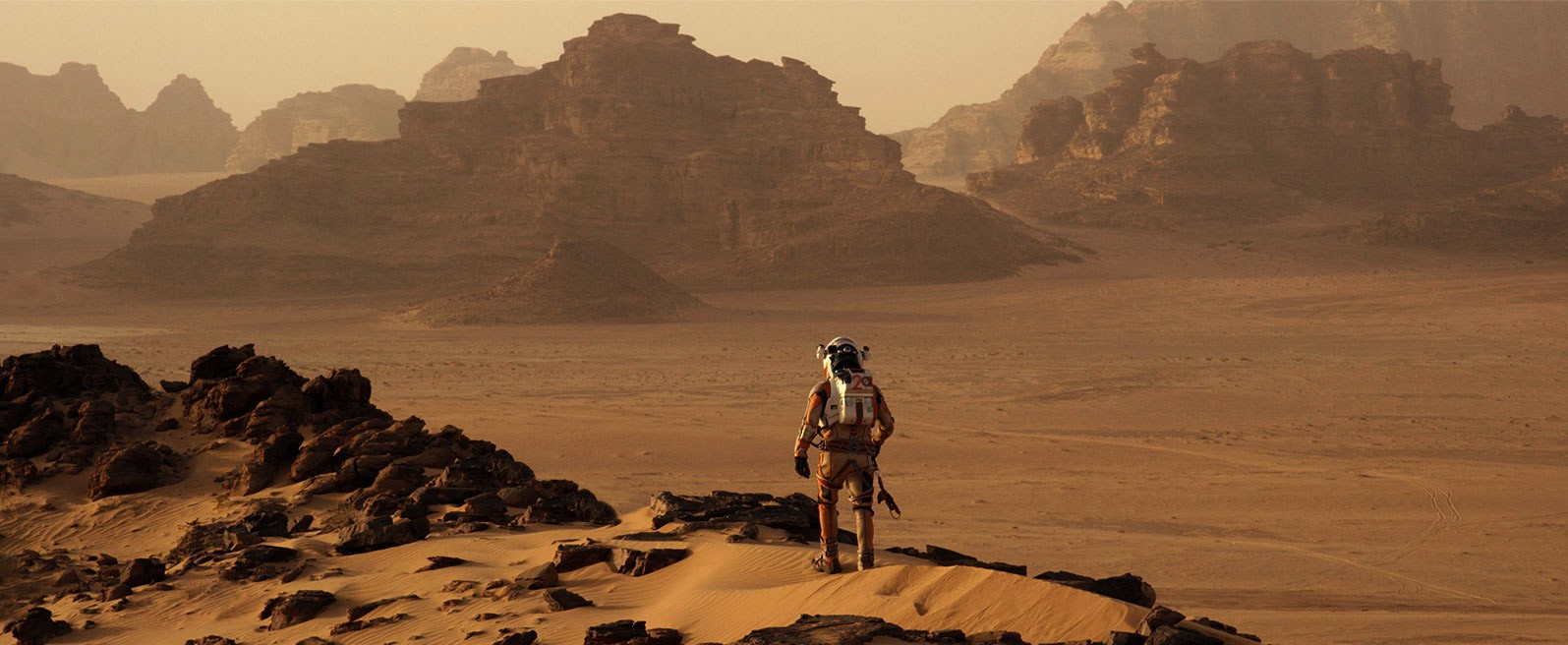
In “Mission to Mars”, a fairly typical Hollywood treatment of the Mars experience, the surface is depicted with manageable temperatures and pressure. Characters are even briefly exposed to it without any lasting negative effects.
The actual planet is much more hostile. The atmosphere on Mars is only 1% as dense as Earth’s, and it’s composed of around 95–96% carbon dioxide. The lack of pressure and total lack of oxygen means that a single breath would kill you instantly … in fact, you wouldn’t be able to even take a breath due to the low atmospheric pressure.
“You’d need oxygen for your habitat and spacesuits,” said Bennett. “The air that exists on Mars is mainly carbon dioxide, which means you can in principle, extract oxygen from this air; a small test of this has been done by the Perseverance rover. But scaling it up to support a group or colony of people would be a challenge.”
Beyond that, Mars isn’t just cold; it’s unimaginably frigid. Surface temperatures average −80°F (−62°C), and on the extreme end can be significantly colder, with nighttime temperatures dipping below −125°F (−87°C). Even if you were able to counter the pressure and oxygen issues, you’d begin to freeze almost immediately. Hypothermia would quickly sap your ability to think clearly and degrade your motor functions, eventually leading to cardiac arrhythmia, loss of consciousness, and cardiac arrest.
To survive on Mars, you’d need a continual source of breathable air and a warm environment or a suit warm enough to sustain your core body temperature at a reasonable level. This also means you’d need a tremendous amount of energy to power heating elements and generate and purify that breathable air.
Myth Three: “Low gravity would be harmless, and potentially an advantage”

(Image credit: Disney)
Reality: Mars’ gravity could permanently weaken the human body
The idea of effortlessly bouncing across the Martian landscape is an appealing fantasy. In films like “John Carter”, you see the hero bounding through the air in massive arcing leaps, and he’s possessed of superhuman strength because he was raised in Earth’s higher gravity.
In reality, the effect a low-gravity environment would have on the human body over time would be withering. Research has shown that astronauts exposed to low gravity for long periods of time lose roughly 1–1.5% of bone density per month.
Long term complications, like cardiovascular changes and balance and coordination issues, would also likely arise without countermeasures. To avoid negative consequences, we’d need an artificial gravity system (technology that currently does not exist), and settlers would need to undertake intensive exercise to avoid muscle and bone density loss.
“The strength of gravity on Mars is only about 1/3 (more precisely, about 38%) of that on Earth,” Dr. Bennett explained. “While that is certainly survivable short-term (some astronauts have been weightless in Earth orbit for more than a year), we have no data on the effects of living many years in low gravity.”
There’s also the question of the effect on future generations, as Bennet notes. “We don’t know what would happen to babies born in that gravity. Would they develop normally? Would bodies that develop in low gravity ever be able to visit the higher gravity of Earth? These questions have no answers at this time.”
Myth Four: “Growing food on Mars will be straightforward”
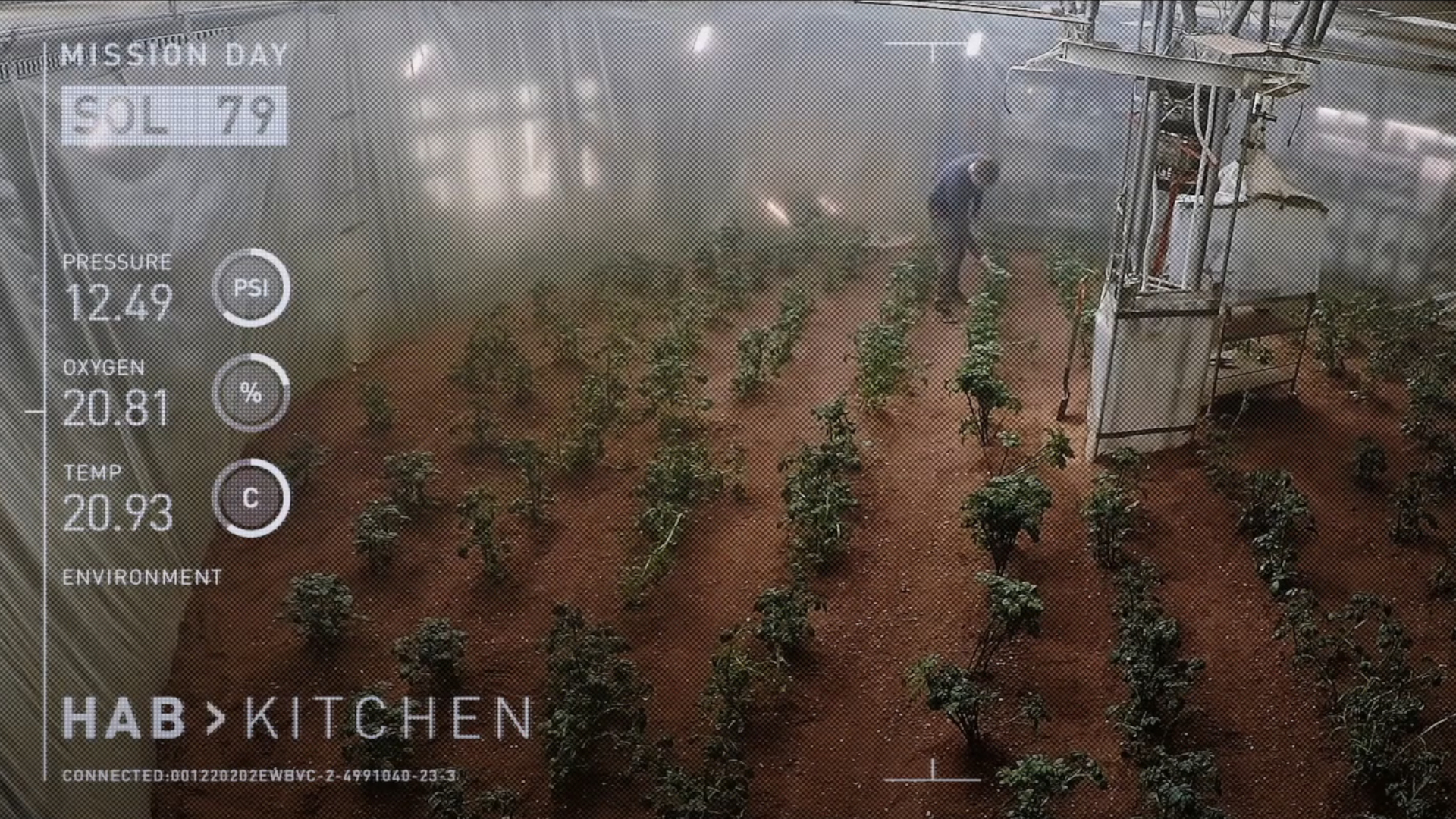
Screenshot from the 2015 movie “The Martian” showing Mark Watney’s potato farm. (Image credit: 20th Century Fox)
Reality: Martian soil is toxic, and farming is experimental
Martian soil is rife with perchlorates, a group of chemical salts derived from perchloric acid. They’re similar to table salt but much more toxic — on Earth, we use them for things like rocket fuel, explosives, and fireworks. As you’d expect, they’re extremely toxic to humans, and any soil would need to be extensively treated before it was possible to grow crops.
Even in “The Martian”, which is one of the more scientifically grounded pieces of science fiction ever written, the protagonist is only able to grow crops successfully because the story sidesteps the issue of perchlorates in the soil. While if clean regolith were available, his method of mixing it with human waste and water would likely be viable, you’d need some process for purifying the soil first.
Beyond that, you’d also likely need extensive hydroponics or aeroponics, as well as the ability to recycle water in a closed loop. To detoxify the soil at scale, you’d also need specially engineered microbes or fungi. An actual Martian farm would look more like a biotech lab than the open fields we associate with farms on Earth.
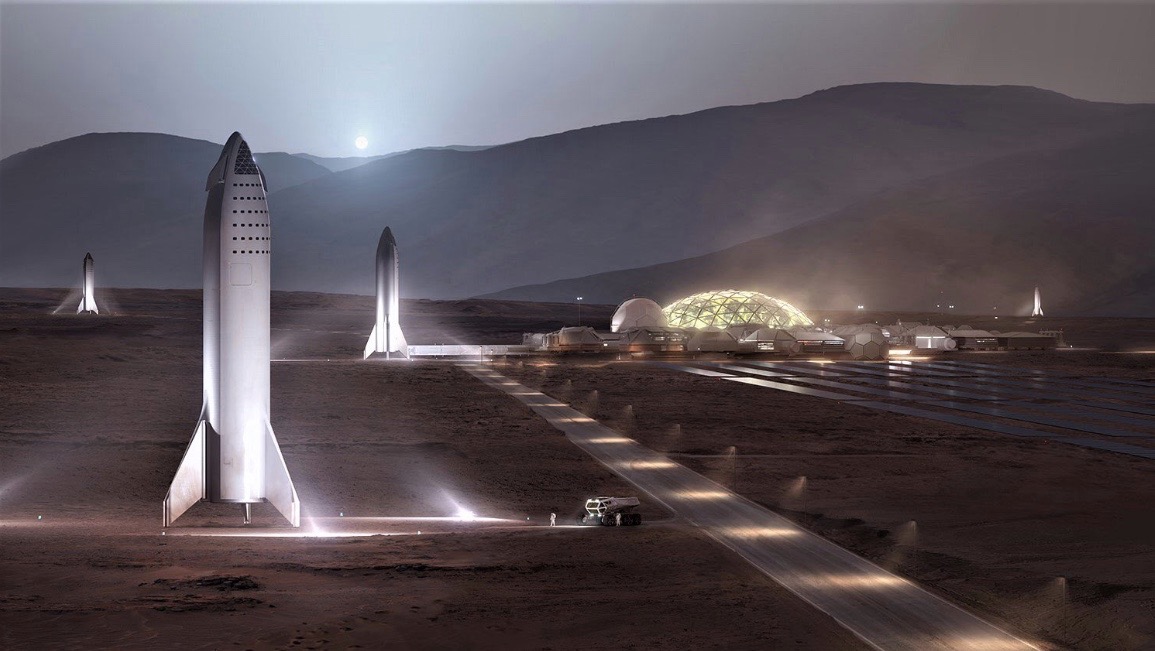
Myth Five: “The biggest challenge is getting there”
(Image credit: SpaceX)
Reality: Surviving psychologically may be just as difficult as physical survival
A Mars mission could last two or three years minimum round-trip, and would likely include extreme isolation and communication delays, especially for the earliest pioneers. Managing the sleep disruption, confinement stress, and mood and cognitive effects, all with limited or no human contact, would be as vital to survival as taking care of physical needs.
It’s a topic Bennett covered in his book, “The Scale of the Universe”. In it, he wrote:
“Despite all these challenges, it seems likely that humans will find a way to
reach Mars successfully, perhaps even within the next decade or two. This
leads to the question of whether we will actually “colonize” Mars. It’s fairly
easy to envision a permanent research station, with astronauts heading to
Mars for two-year stints. But would anyone actually want to live there per-
manently? Personally, I’m doubtful. You’d never be able to go outside with-
out a spacesuit, and the danger of radiation on the surface means you’d most
likely be living underground. While it might sound adventurous to live on
an entirely new world, I suspect that once people got there, they’d quickly
discover that they’d rather head back home.”
There’s a phenomenon called “Earth-out-of-view” that would apply to a Mars mission, where settlers would watch Earth dwindle to a tiny blue dot and then utterly disappear. This would lead to psychological stresses like a profound sense of detachment, as well as the knowledge that help isn’t just far away, it’s completely non-existent. If something goes wrong, no one’s coming to rescue you.
There’s also a level of sensory poverty and extreme monotony from existing in a small environment, repeating the same actions, eating the same bland rehydrated food, breathing the same recycled air, all the time, every day, that may lead to irritability, depression, and a decline in cognitive performance. To counteract this effect, NASA has experimented with what it calls “veggie pods.” Even the scent of a single, real tomato can have a positive impact on mental health and help combat the grey monotony of living in space.
Could humanity actually survive on Mars?
(Image credit: 20th Century Fox)
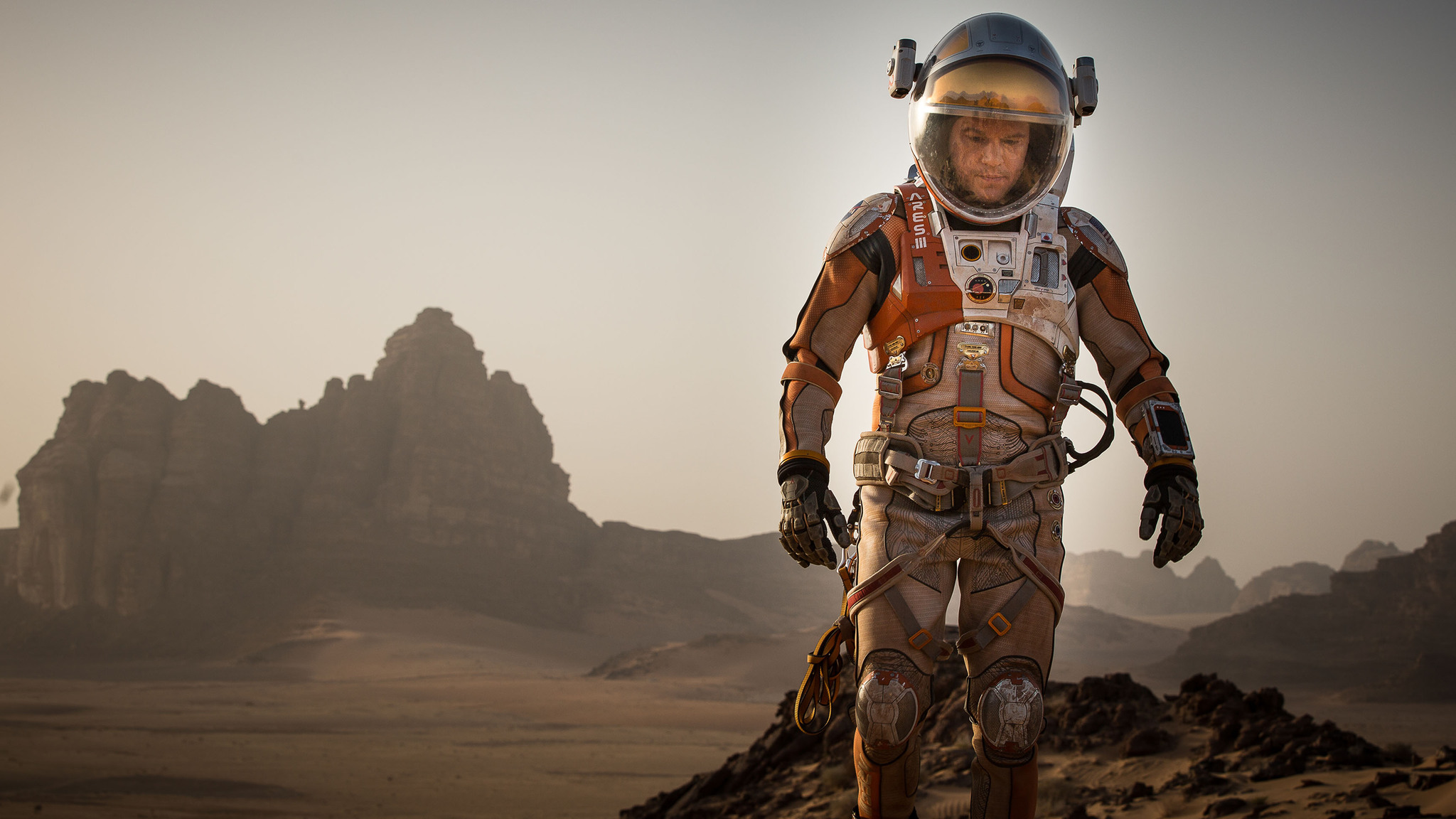
Yes, it is technically possible for mankind to carve out an existence on Mars. But as challenging as survival looks in “The Martian”, even that novel/film takes serious liberties with science to make it more possible, and real survival would require massive injections of resources from Earth.
The reality is that survival would only be possible in highly engineered habitats. They’d require continuous life-support systems to provide breathable air and a livable climate, along with extensive radiation shielding, closed systems for water and food, and reliable energy sources for everything.
You’d also want multiple redundancies for as many systems as possible, because a single breakdown could have immediate, fatal consequences. The reality of a settlement on Mars wouldn’t be much like actually living on the Red Planet; it would be more like living inside a habitat designed to keep Mars out.
In Dr. Bennett’s words, “given that we already have a world with a functioning ecosystem (Earth) and we’re having a hard time keeping it that way (e.g., global warming and other forms of ecosystem damage), it seems rather presumptuous to think we might do better starting from scratch on Mars.”