
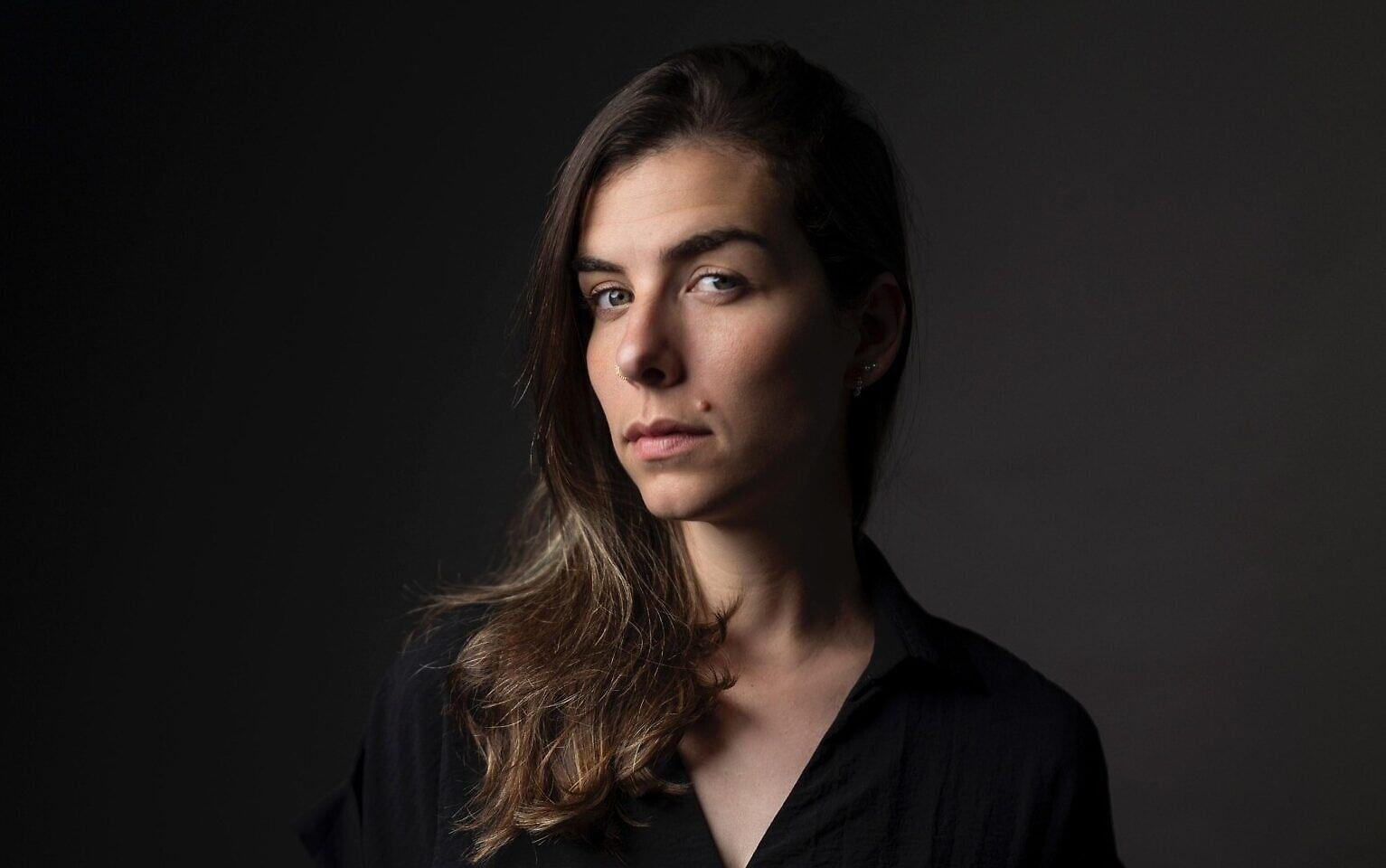
It was a cold, wintry day in Paris, and photographer Avishag Shaar-Yashuv was focused on capturing the delicate folds of the croissant she hadn’t yet bitten into.
She was in the City of Light celebrating a friend’s birthday along with another dear companion, food influencer Chen Koren.
Viewers of both women’s Instagram accounts could ogle the delicate flans, avocado toasts, and crepes Suzette they were eating, gaze upon the chic housewares stores, elegant chocolateries, and quaint Parisian boutiques they visited, all impeccably photographed by Shaar-Yashuv and, sometimes, Koren.
It was a far cry from what Shaar-Yashuv recorded for the last two-plus years, photographing bereaved families, returning hostages, protests, war, and destruction for publications that include The New York Times, Ha’aretz, Makor Rishon, Germany’s Dir Zeit and several others.
The trip to Paris was a form of therapy that Shaar-Yashuv is now allowing herself, with no hostages in Gaza for the first time in 14 years, and the war there, perhaps, limping to a halt.
“Now I understand how much the war took out of me,” said Shaar-Yashuv during a recent phone interview with The Times of Israel. “The adrenaline is high, and you’re in it, and then when things calm down, you feel like you’re in rehab or you need to be.”
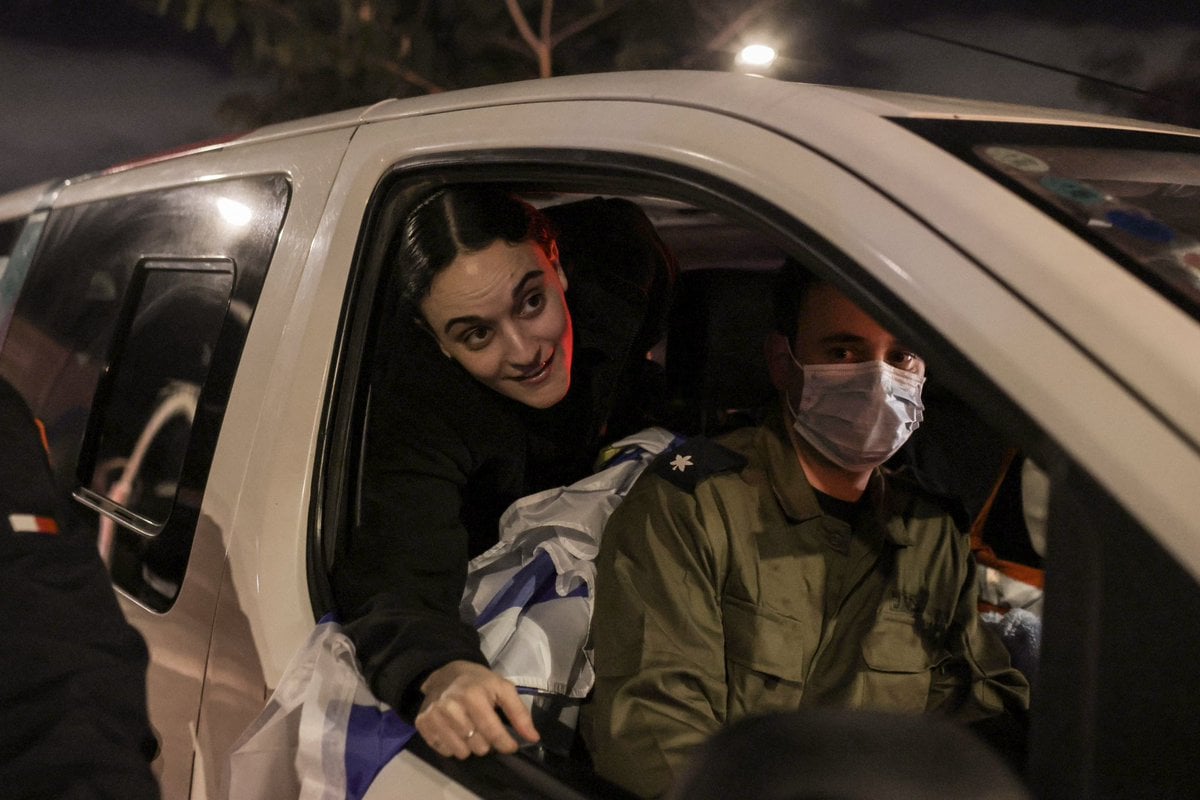
Former hostage Emily Damari arriving back in Israel in January 2025 (Avishag Shaar-Yashuv)
On the morning of Saturday, October 7, 2023, Shaar-Yashuv, who is religiously observant and doesn’t use the phone on Shabbat, didn’t know until much later that day about the Hamas massacre unfolding in the south.
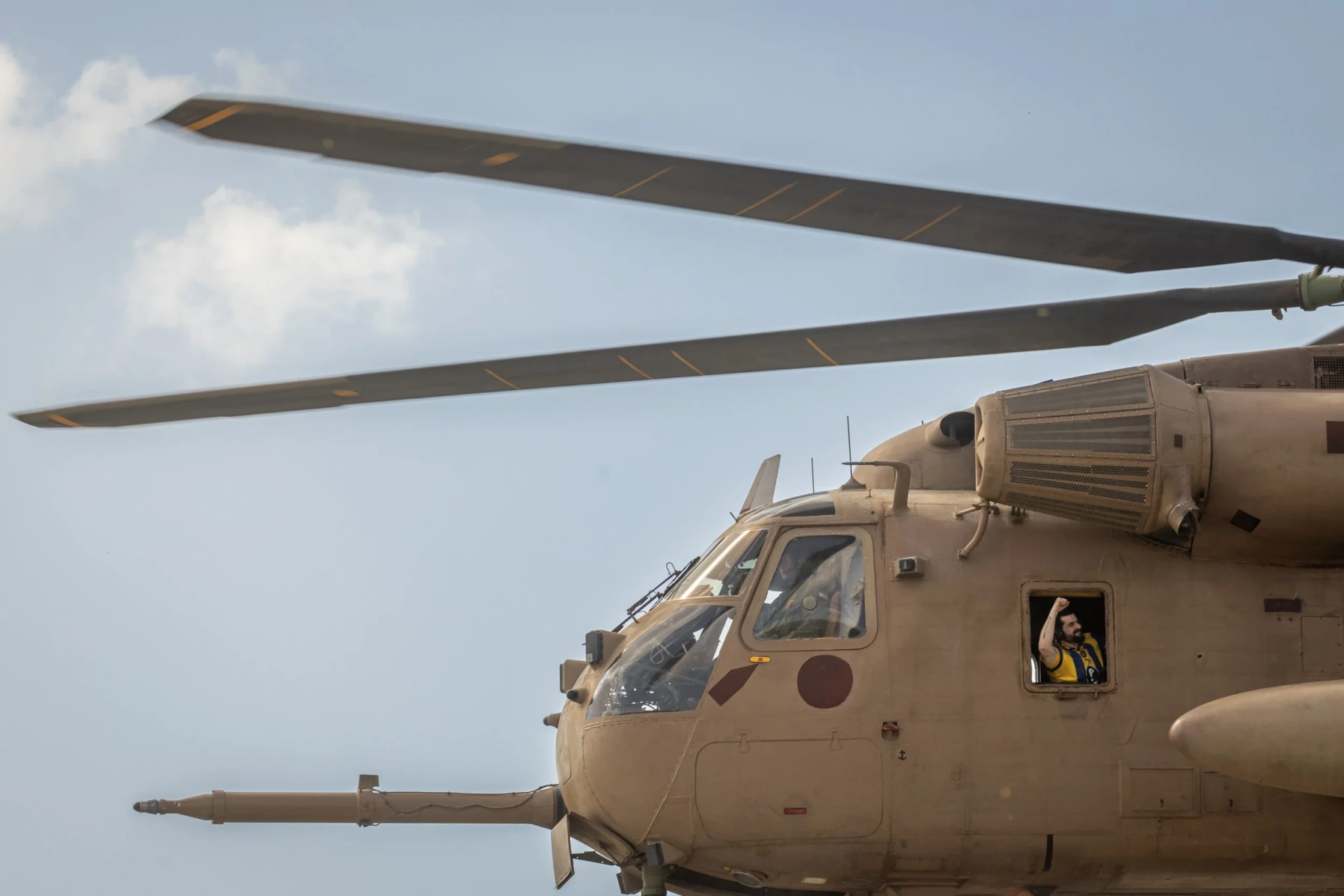
Hostage Ziv Berman is released from Hamas captivity and brought home to Israel on October 13, 2025 (Avishag Shaar-Yashuv for The New York Times)
The Hamas-led terror invasion of southern Israel by land, air and sea saw some 1,200 people slaughtered and 251 abducted to the Gaza Strip.
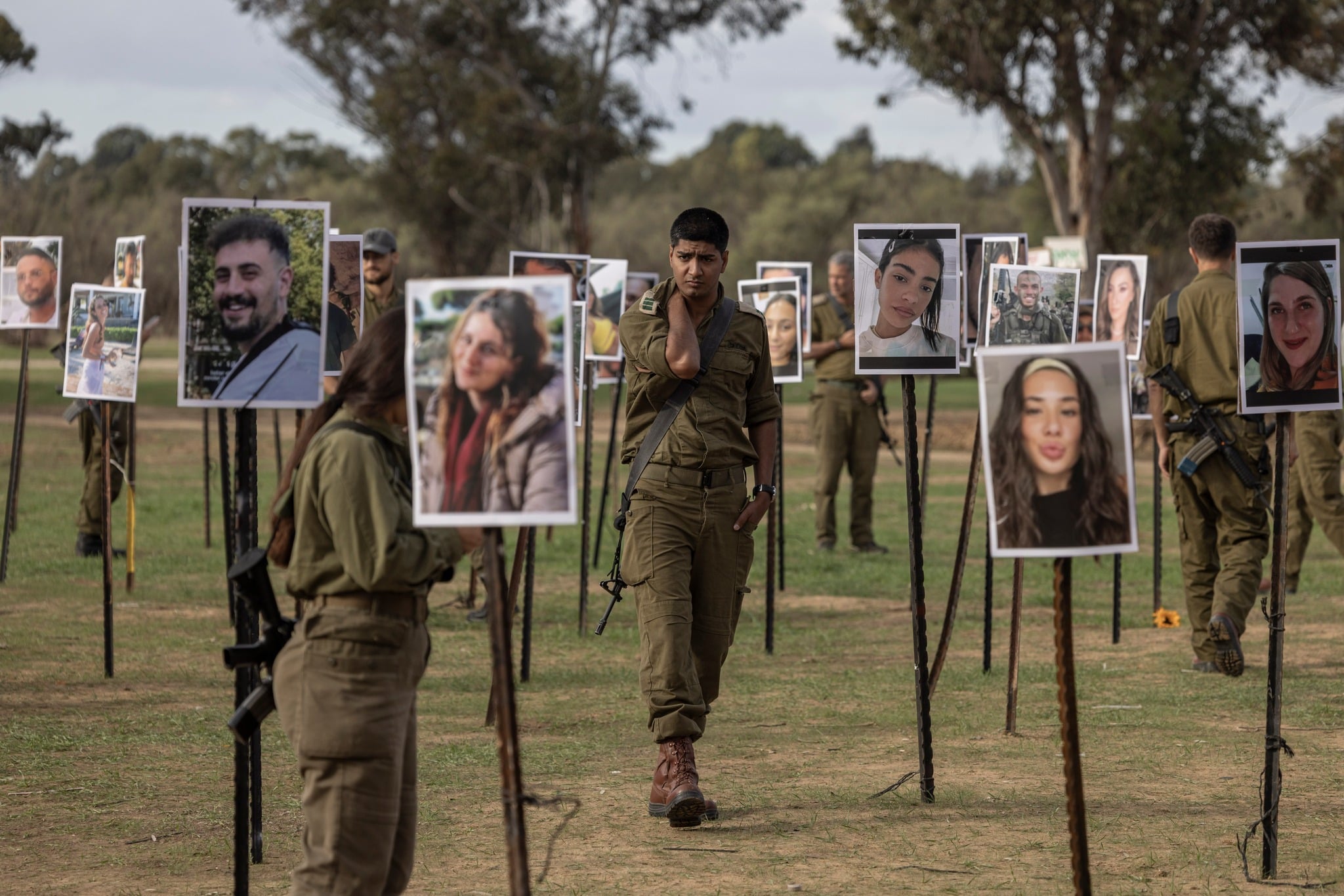
IDF soldiers at the emerging memorial for those killed at the Nova rave on October 7, 2023 (Avishag Shaar-Yashuv)
“I only saw my husband later that afternoon, and when he told me a war had broken out, I didn’t really know what he meant. I couldn’t process what he was telling me,” she said.
Shaar-Yashuv only found out on Sunday that her close friends, the Koren family (Chen Koren’s in-laws), had survived the attack on Kibbutz Kfar Aza, but that the Kutz family, Aviv and Livnat Kutz, their daughter, Rotem, and sons, Yonatan and Yiftach, were found dead on a bed embracing each other in their Kfar Aza home.
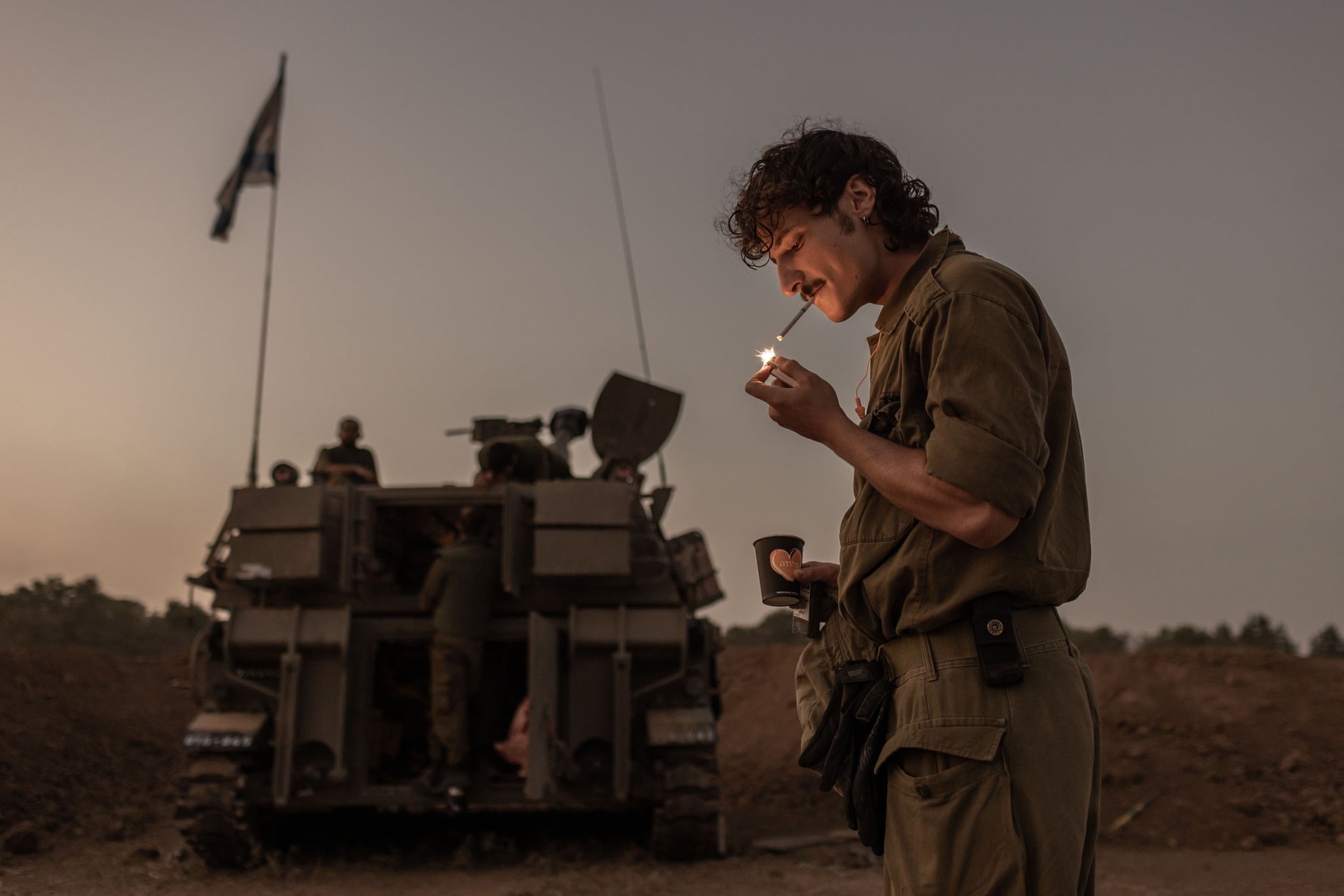
Israeli soldier lights a cigarette in an artillery unit near the Gaza border on November 2, 2023 (Avishag Shar-Yashuv for The New York Times)
She met both families through the world of photography and had long since become friends.
“It prepared me for having to deal with a lot of things like that, things that were simply unbearable,” said Shaar-Yashuv.
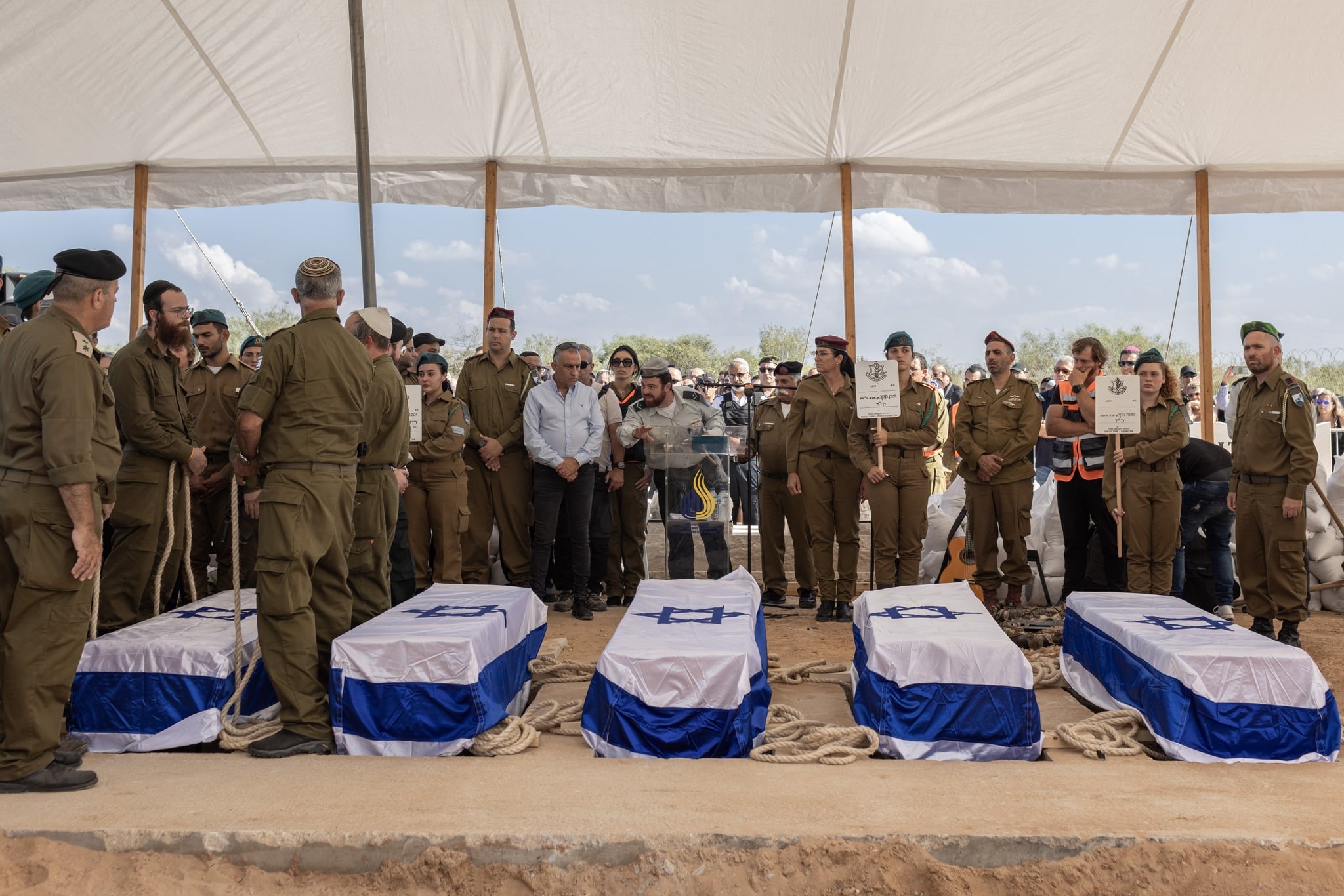
The funeral for the five members of the Kutz family in Gan Yavne on October 17, 2023. (Avishag Shaar-Yashuv for the New York Times)
Shaar-Yashuv headed south after October 7 to photograph what happened, recording the devastation in the kibbutzim, capturing reservists heading to war, witnessing the pain and anguish at an endless number of funerals, including those of people she knew and loved, such as the Kutzes.
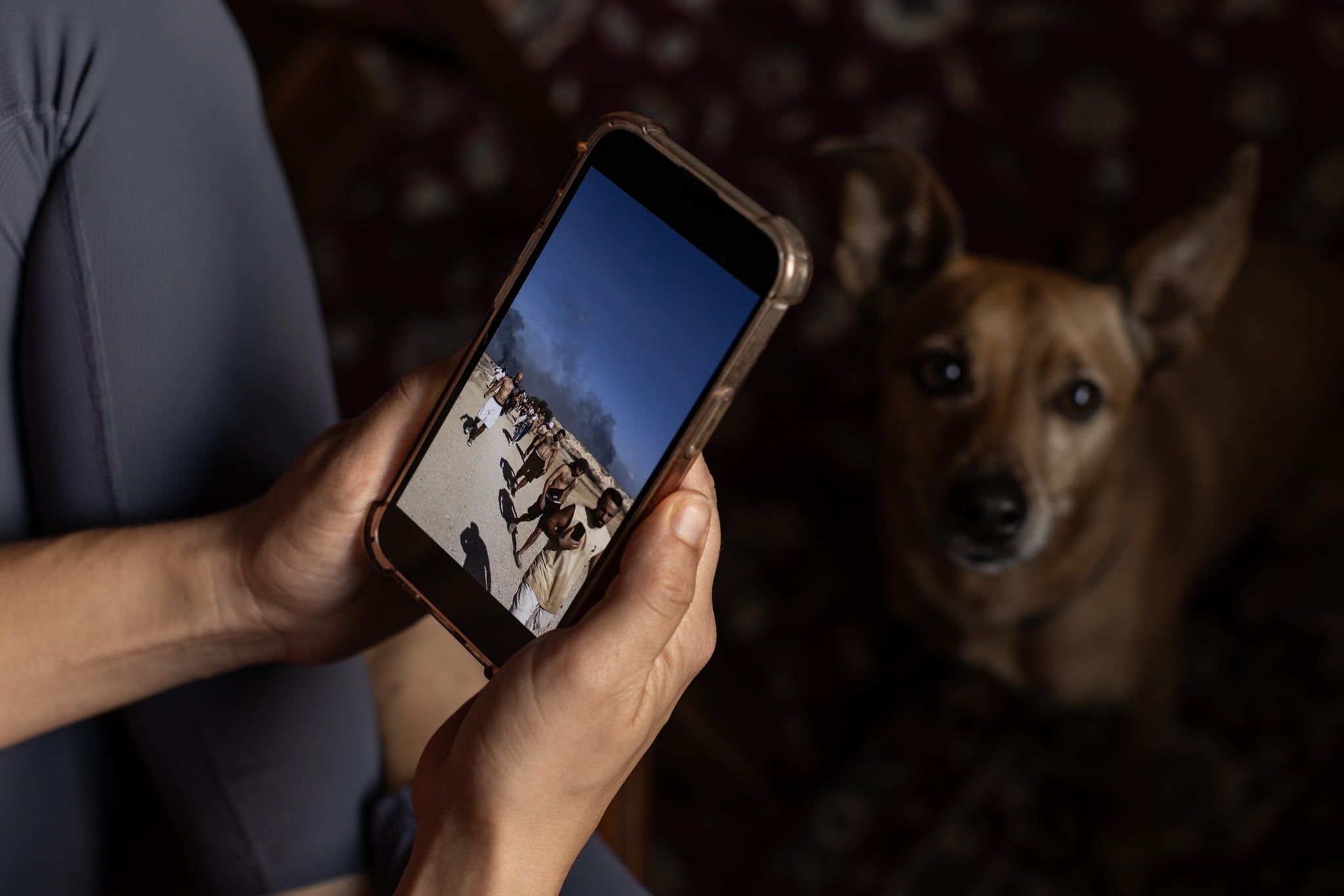
Hila Fakliro, a survivor of the October 7 Hamas terrorist attack watching the video he took when fleeing from the terrorists, photographed on October 11, 2023. (Avishag Shaar-Yashuv)
Now 35, she had been working as a photographer since her late teens, when she sold her first photos to Ynet, becoming their photographer in Haifa and the north.
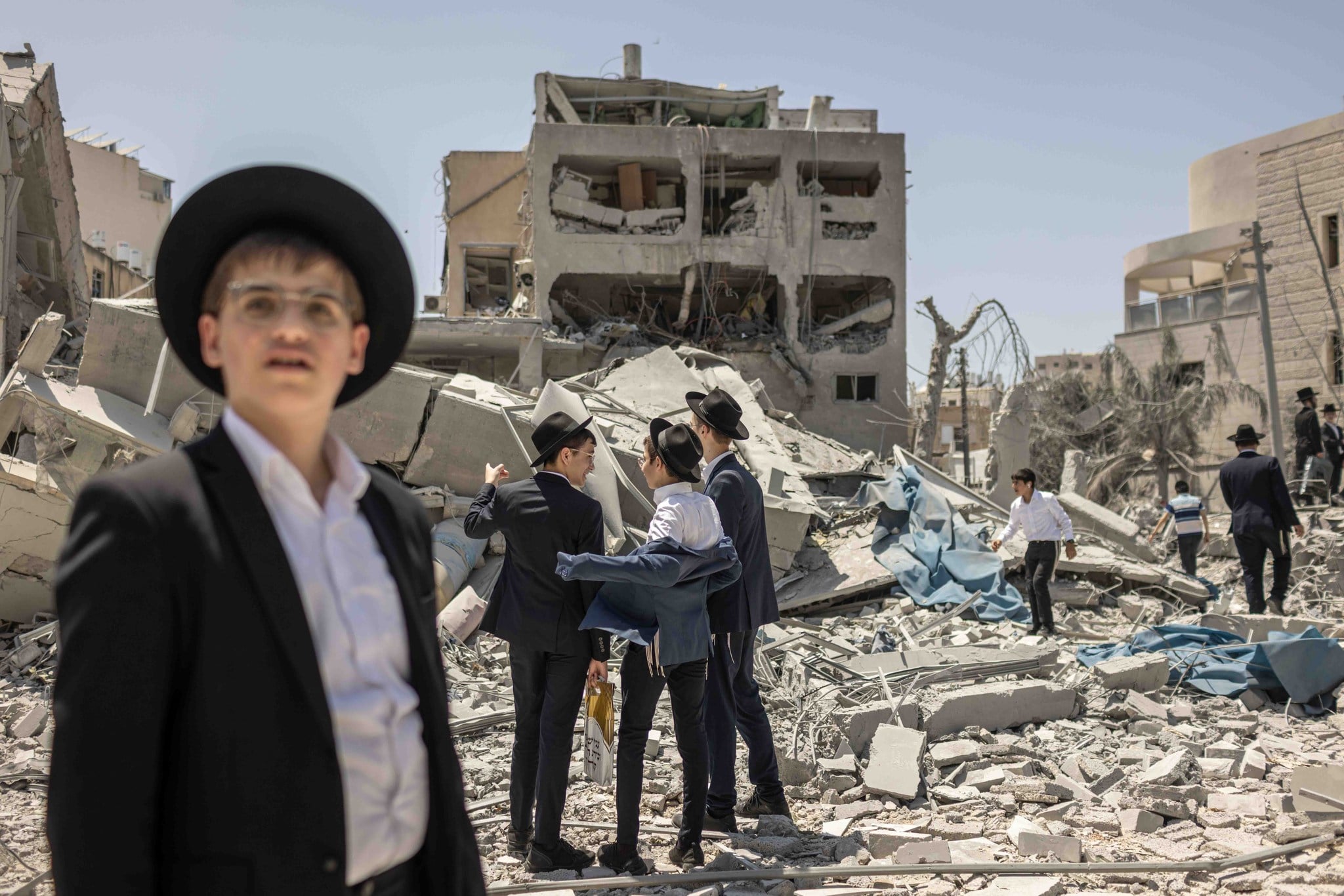
Ultra-Orthodox young men look over the scene of a damaged building and school hit by an Iranian missile strike in Bnei Brak on June 16, 2025 (Avishag Shaar-Yashuv for The New York Times)
Shaar-Yashuv soon found herself covering the deadly 2010 Carmel forest fire, and described it as her first time “running to the place that everyone is running away from,” she said.
“It was a dark realization, but I felt deeply engrossed in it; it offered me a deeper understanding of this profession I was discovering.”
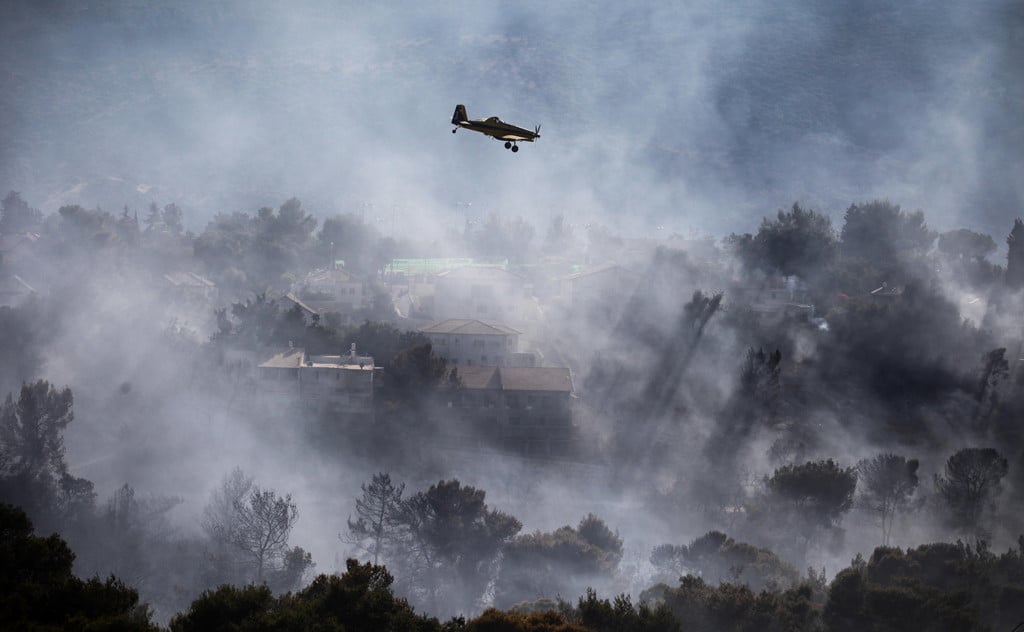
Avishag Shaar-Yashuv’s image of fires being put out across Israel. (Courtesy)
A New York Times editor saw Shaar-Yashuv’s work and contacted her, asking her to be in touch with their Middle East editors.
“I thought he was just being polite, but he sent me an email that said their editor was waiting to hear from me,” said Shaar-Yashuv.
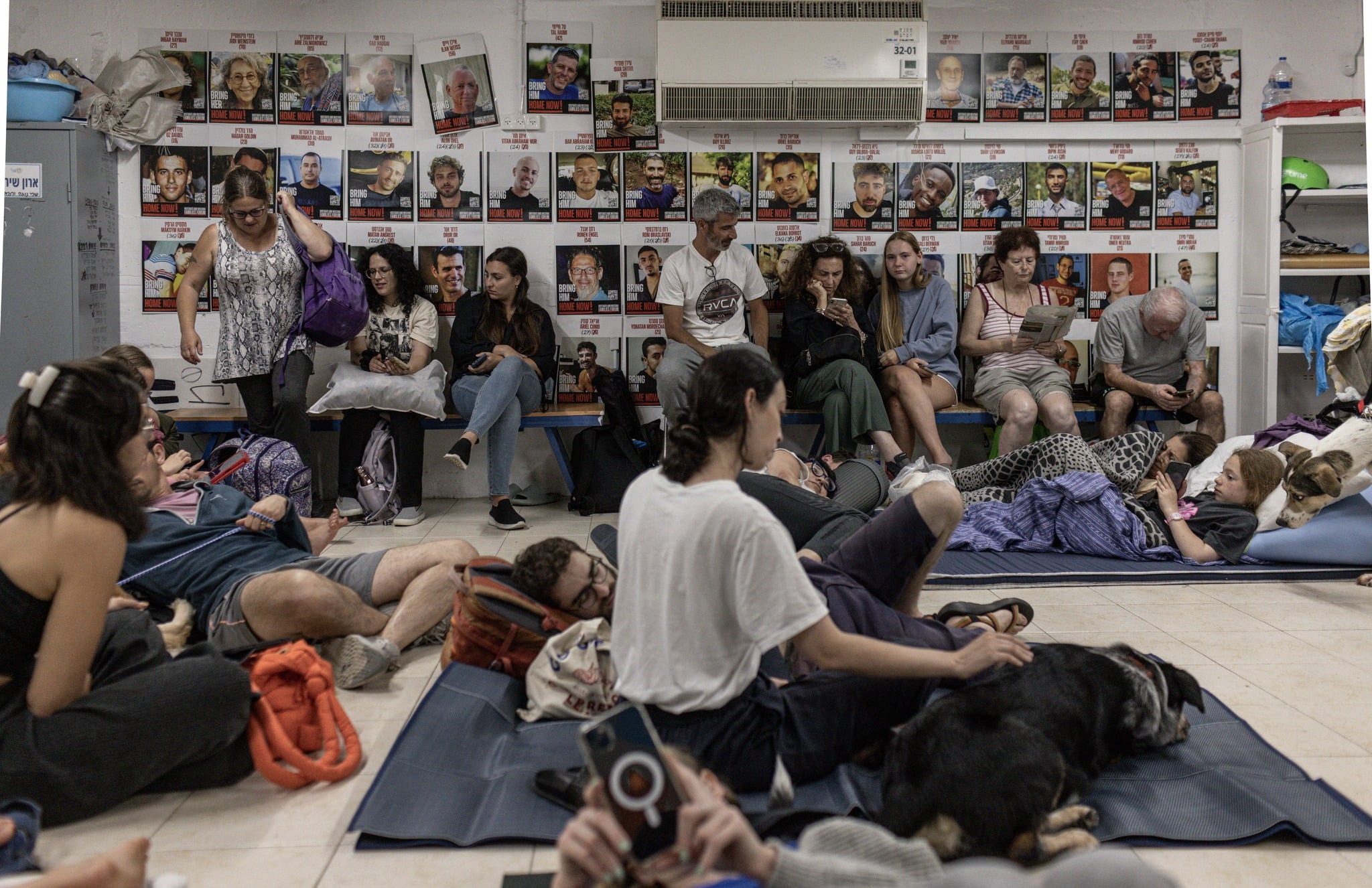
Israelis take shelter in June 2025 during a rocket strike from Iran (Avishag Shaar-Yashuv)
Though Shaar-Yashuv is not as comfortable in English, she screwed up her courage and responded, and from that point on, began working with the paper on a freelance basis.
“I don’t have any professional training, just my portfolio, and I’m a Sabbath observer and not available for 25 hours a week, but they accept that limitation and honor it,” said Shaar-Yashuv.
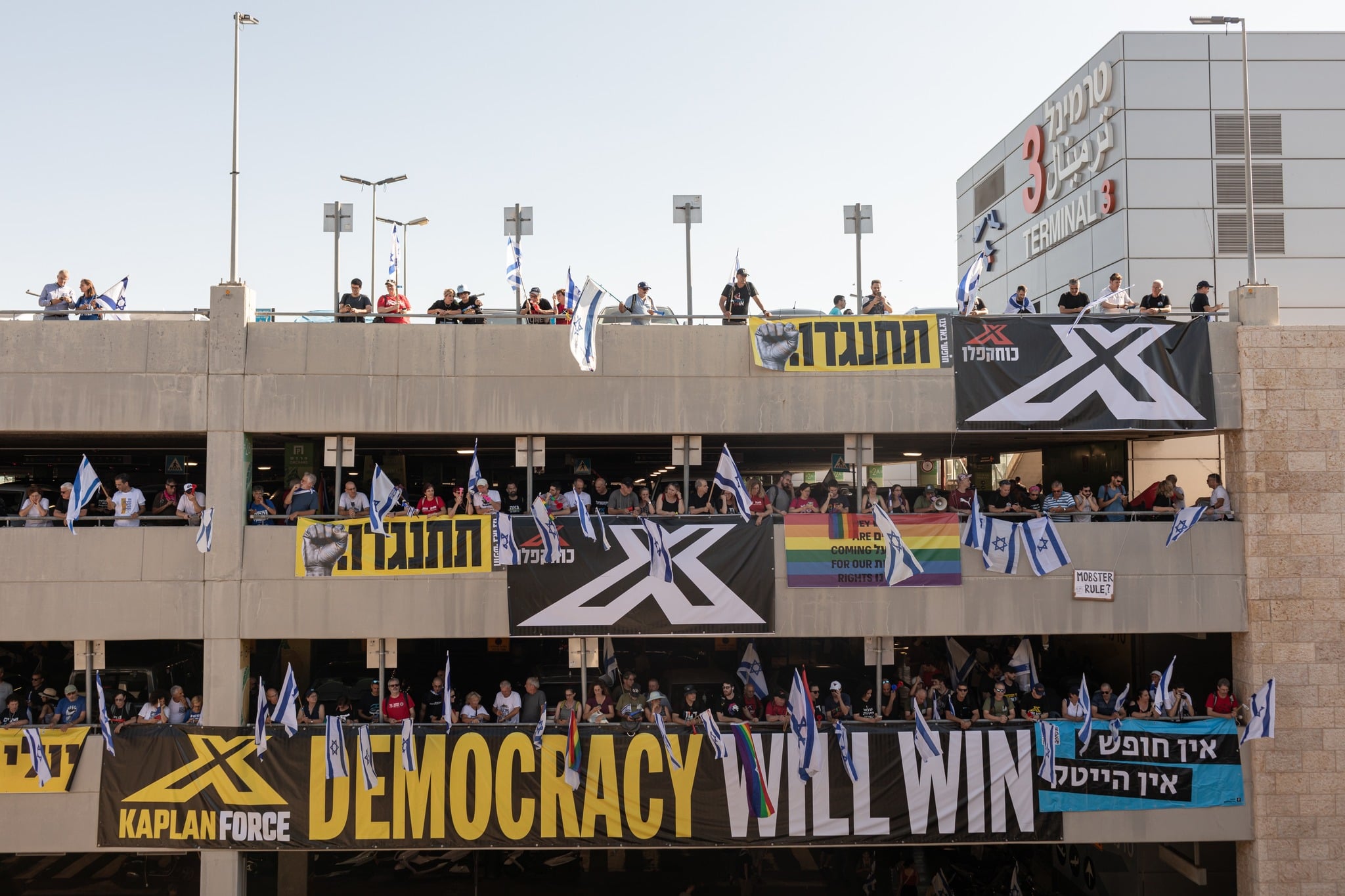
During the 2023 anti-government, anti-judicial overhaul protests. (Avishag Shaar-Yashuv)
Shaar-Yashuv was primarily shooting portraits for The New York Times features, but the work became more news-focused when the judicial overhaul began in Israel in 2023, with massive protests on the streets of Tel Aviv.
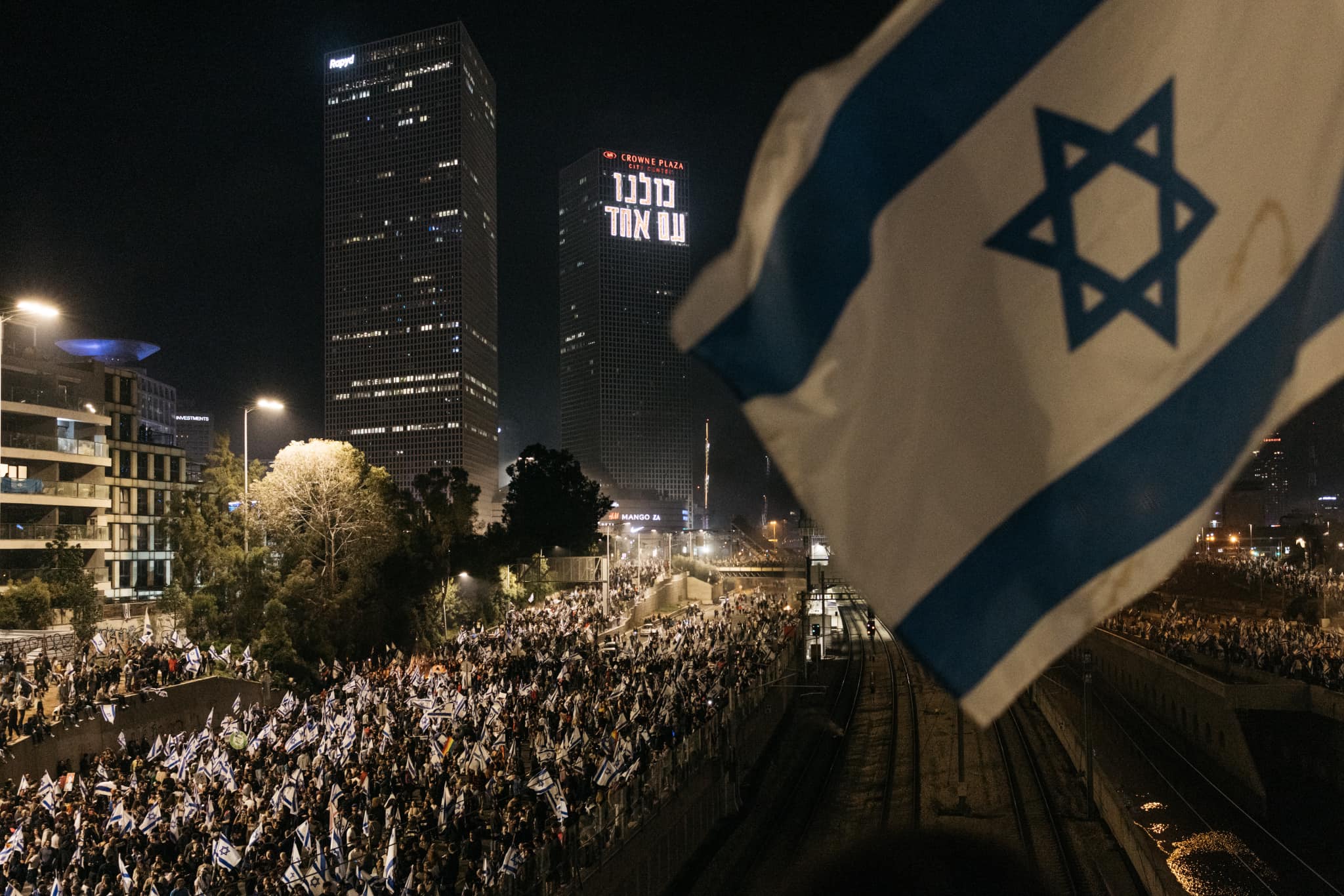
At an anti-government rally in Tel Aviv in March 2023. (Avishag Shaar-Yashuv)
“The work with The New York Times gives me the sense that I have someone backing me, and in a situation like this war, it’s very important to have that,” said Shaar-Yashuv. “They told me that if something feels too dangerous or unsafe, don’t do it, and I never heard that from an Israeli paper. It allowed me a safer space to work.”
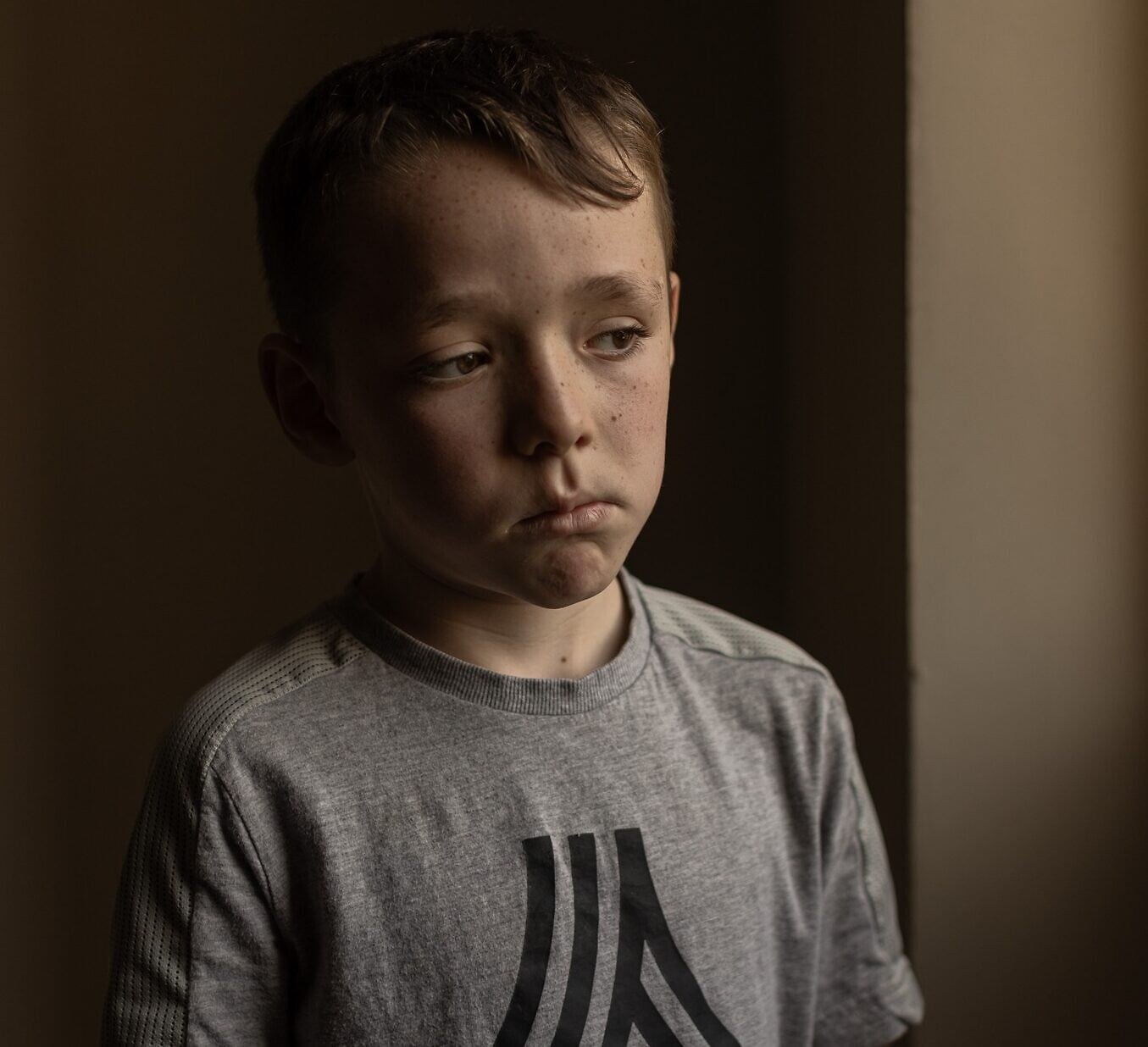
This photo of Stav Nitzan, 8, a survivor of the October 7, 2023 Hamas attack was taken at Kibbutz Maale HaHamisha on October 22, 2023, and won Shaar-Yashuv first prize in UNICEF’s 2024 Photo of the Year (Avishag Shaar-Yashuv for The New York Times)
Now, nearly two and a half years later, after the Hamas terrorist attack of October 7, Shaar-Yashuv is still covering the hostages, chronicling their stories and their return to everyday life.
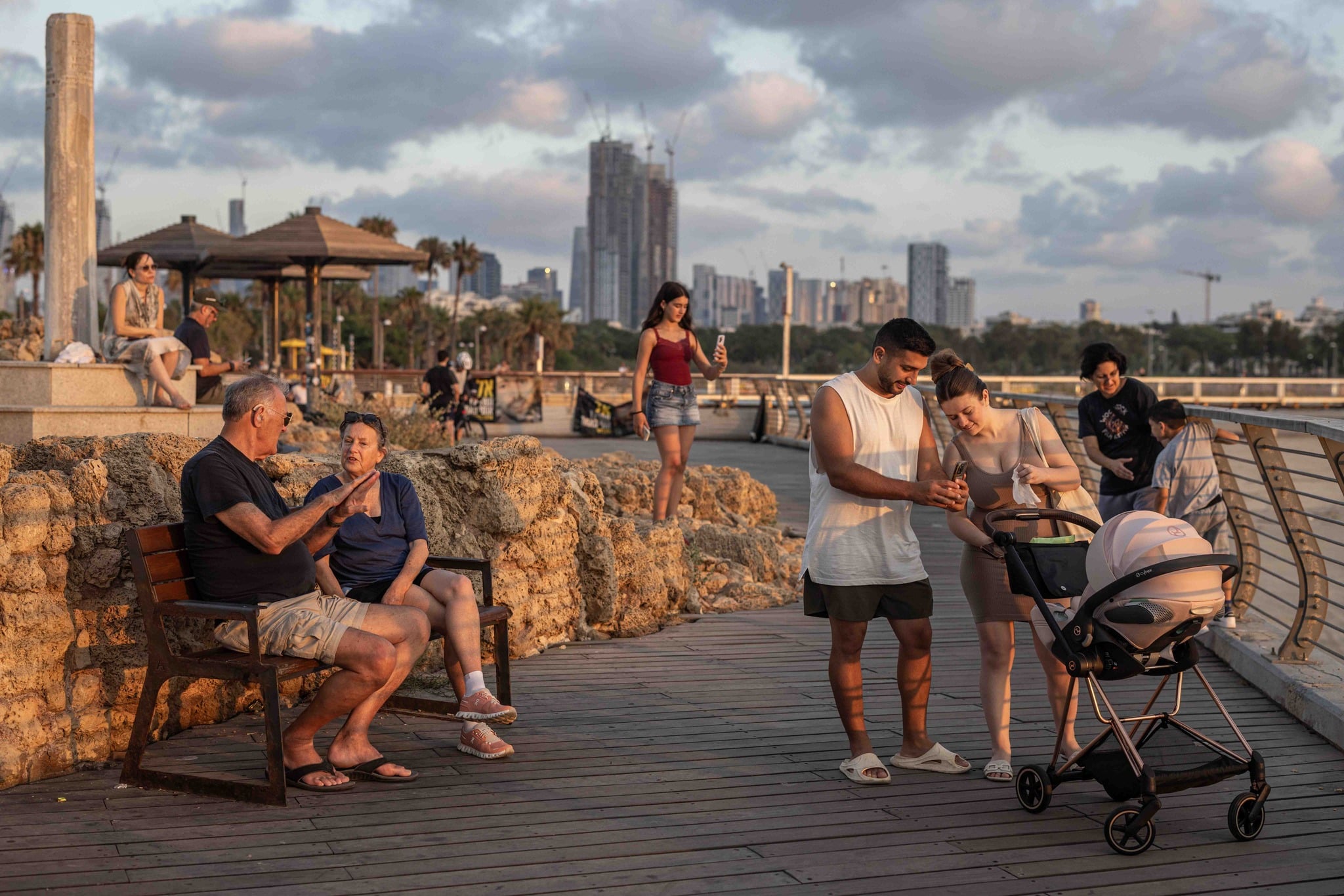
People hanging out near the Tel Aviv beach after the ceasefire between Iran and Israel took effect on June 24, 2025 (Avishag Shaar-Yashuv for The New York Times)
“I pushed things off, I postponed my life and put it on hold, because you put everything into documenting this story,” said Shaar-Yashuv.
She realizes the emotional price she paid over the last two years, and is slowly allowing herself a return to some of her other projects, including her other Instagram page that displays images of cakes and other confections, part of “Ugaleshabat” (“Cake for Shabbat”), Shaar-Yashuv’s coffee table book published before October 7.
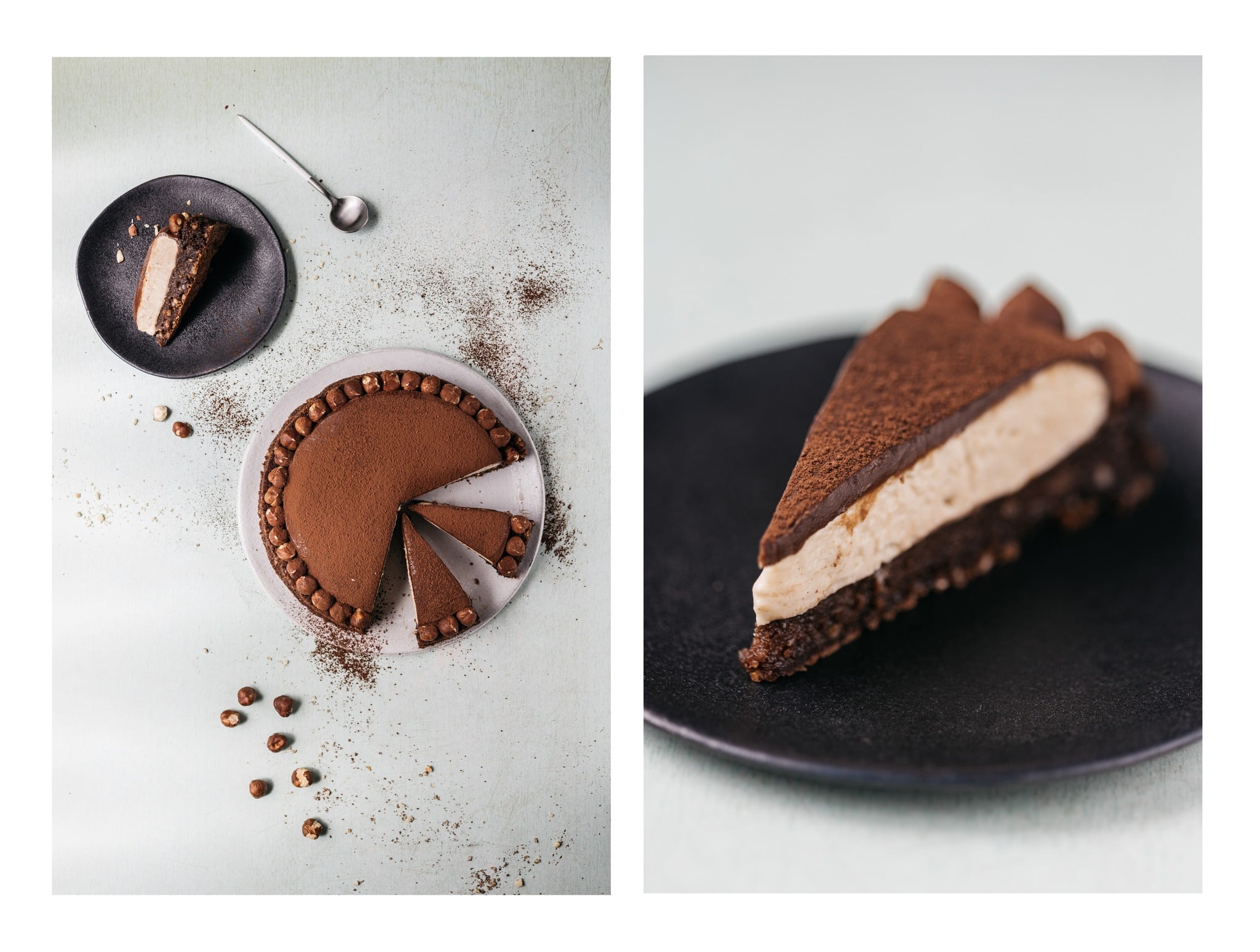
From ‘Ugaleshabat,’ (Cake for Shabbat), the coffee table book by photographer Avishag Shaar-Yashuv (Courtesy)
And yet, even that coffee table book of fantastical cakes connects back to the subjects at hand.
“What’s completely strange is that I would be at funerals and people would tell me that they’d read my book,” said Shaar-Yashuv. “This would be in really tough situations, but it reminded me that working on that is therapeutic for me and for others. Something about war is very black and white, and I’m returning to color. I need more of it, we all seem to.”