
NEW CARLISLE, Ind. – Rounding into downtown, a hand-painted mural declares New Carlisle, Indiana “a nice place to visit, a great place to live.”
One of the largest tech companies in the world thinks so.
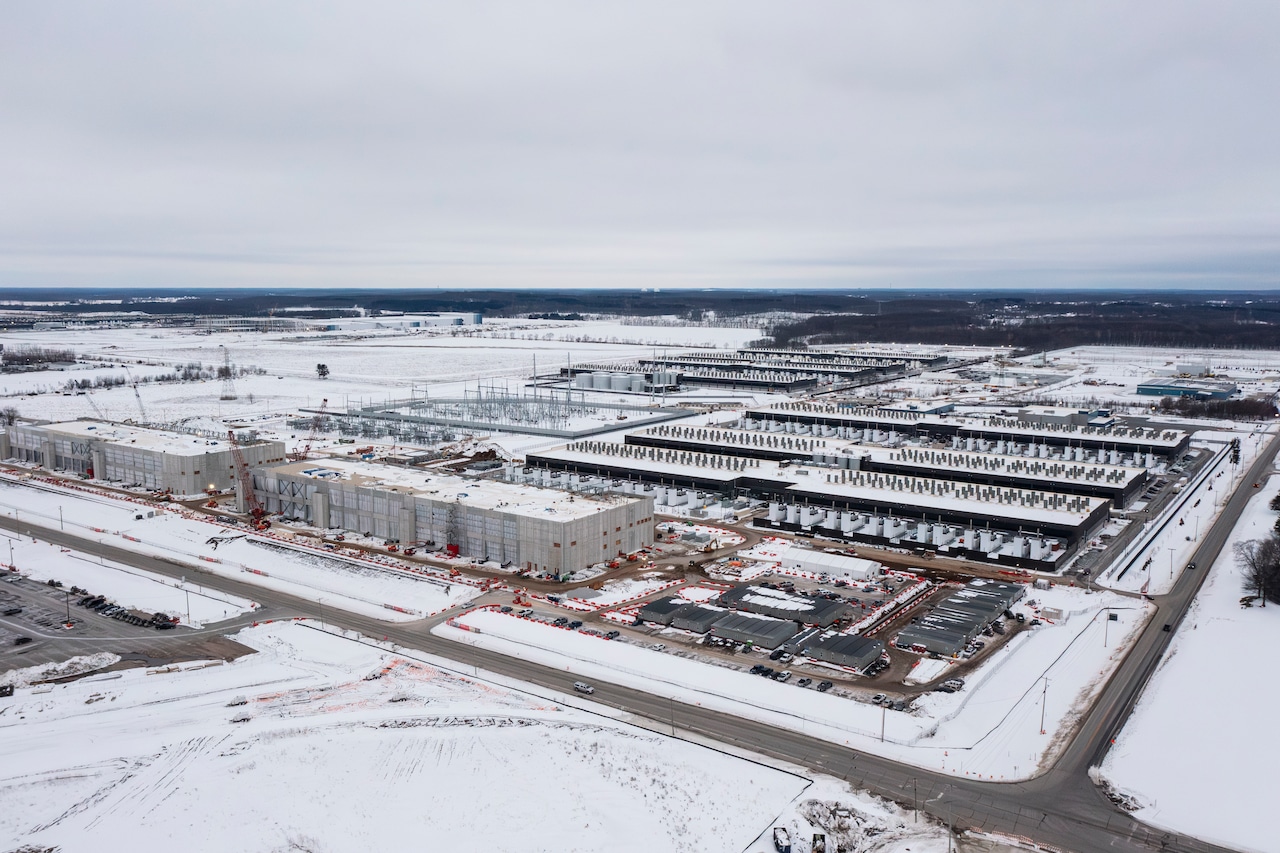
Just outside the tiny community with roots in the fertile prairie soil, corn and soybean fields are rapidly giving way to more than 30 Walmart Supercenter-sized warehouses.
They’re monuments in a new artificial intelligence revolution ripping across the nation – data centers packed with computer chips for Amazon Web Services, AWS, the globe’s largest cloud computing company.
On New Carlisle’s one main drag and inside the few remaining farmhouses near the megaproject, Amazon’s arrival has few full-throated cheerleaders.
“It isn’t our little town anymore,” said Judy Myer, who still tends to goats, donkeys and a mule at her home of 60 years while the super-sized data centers rise near her.
MLive visited the community less than 10 minutes from the Michigan state line as the Great Lakes State stares down its own wave of massive data center projects. It has none like Amazon’s “Project Rainier” site — part of a new generation of large-scale data centers built for AI — yet.
Interviews with more than 20 New Carlisle-area residents, business owners and officials offer its northern neighbors a glimpse at what life could be when Big Tech comes to town.
More than anything, residents reported inconvenience tied to the yearslong construction project of epic proportions – snarled traffic, accidents, noise and road construction.
But at the same time, locals struggle to see the immediate benefits of the $11 billion project displacing the farmland they love, pitched as the largest in Indiana’s history and a boon to their community. While some businesses benefit, other storefronts remain empty. Few around town can name a friend or acquaintance who works at Amazon.
Given the traffic headaches, years of construction and loss of beloved farmland, many residents in New Carlisle told MLive they aren’t convinced the sacrifices are worth it.
Others say it’s far too early to make final judgments about the data centers, which will ultimately demand as much electricity as 1.5 million households and millions of gallons of water. Only portions of them are now actually up and running.
AWS pledges to be a good neighbor, touting job growth and economic contributions from its project as well as new tax revenue eventually flowing to schools and social services.
It points to the key role data centers play underpinning technologies we use every day, from streaming Netflix shows to online banking.
“Without them, the Internet as we know it wouldn’t exist,” said Josh Sallabedra, cluster leader for data center operations at AWS, in a statement.
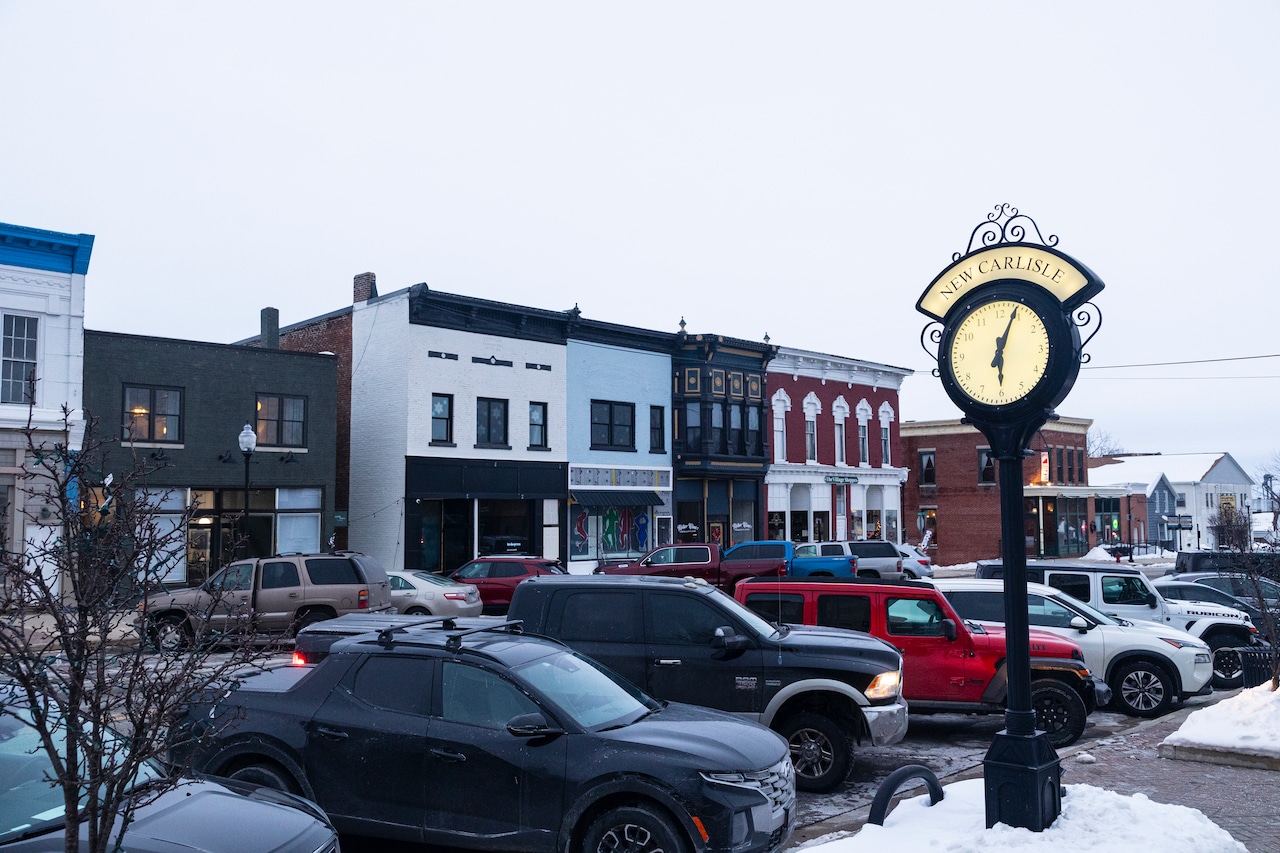 Downtown New Carlisle, Ind. on Wednesday, Feb. 4, 2026. Joel Bissell | MLive.com
But New Carlisle residents fear their town won’t continue to live up to its roadside billing for the next generation with the project. As relative guinea pigs in America’s large-scale data center boom, they’re anxious.
“It’s all very precarious where we feel like it’s this balancing act to try to incorporate some new business and industry,” said Marcy Kauffman, a retired school teacher who grew up in New Carlisle and now serves as town president.
To her, New Carlisle is “Mayberry-like.” “You don’t want to compromise the very reason why you love this quality of life here,” she said.
Army of construction workers comes to town. ‘Nobody was ready for it’
At 6 a.m. every morning, half asleep with a doughnut in hand, Dan Caruso used to breeze through the half-hour drive from his home in New Carlisle to his job as a mail carrier in Mishawaka, a city on the other side of nearby South Bend.
He’s retired now, but those days might be gone for another reason.
New Carlisle, with a population of about 2,000 — small enough that town residents must drop by the post office to pick up their mail — now sees an influx of two to three times that number of construction workers flood into the area each day.
Amazon has four construction firms working simultaneously on its data centers. Sprawling parking lots fill up daily with cars and trucks with license plates from as far away as Texas and Florida.
At the same time, General Motors is working with Samsung SDI to build a hulking electric vehicle battery plant next to the data centers.
“It was just too much at once, and we weren’t ready for it. Nobody was ready for it,” said Caruso.
Mention the data center, and traffic is frequently the first word from New Carlisle residents’ lips. Some worry about their safety while chatting with neighbors in the street or going to get their mail. Others have changed their commute or even gone so far as to cut Indiana State Road 2, running south of town and into South Bend, from their travel plans entirely.
The local school district had to reroute buses to avoid dangerous left turns crossing the highway, meaning it takes longer for students to get to school, according to Paul White, superintendent of the New Prairie United School Corporation.
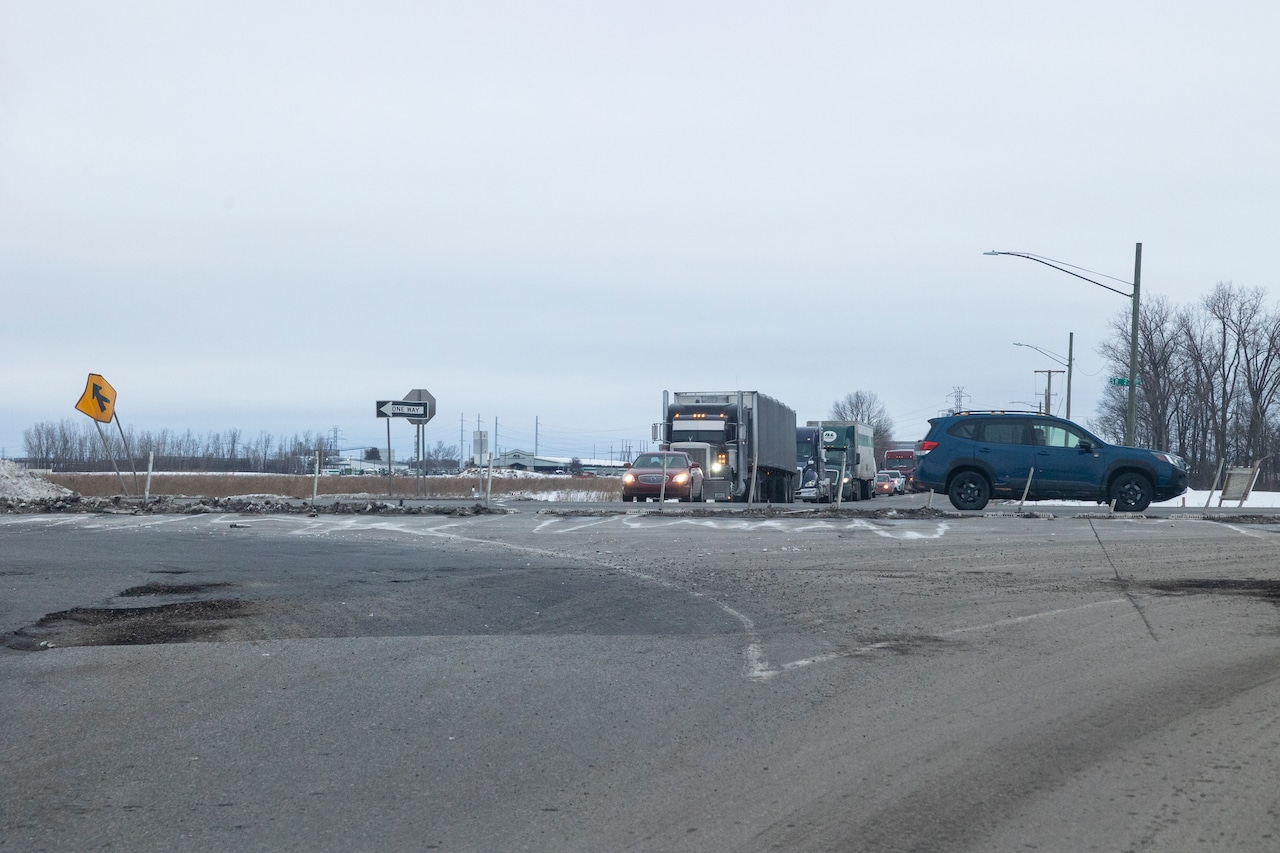 The Indiana State Road 2 and Strawberry Road intersection dividing two sites of Amazon Web Services’ Project Rainier spanning 1,200 acres in New Carlisle, Ind. on Wednesday, Feb. 4, 2026. The $11 billion-dollar project is one of the world’s largest AI compute clusters with Anthropic AI models using custom Trainium 2 chips, eventually drawing over 2.2 gigawatts of power. Anthropic is using Project Rainier to build and deploy its AI model, Claude. Joel Bissell | MLive.com
AWS agreed to pony up $120,000 for extra police patrols. Amid mounting complaints and severe accidents, the money lasted less than half the time expected. A major $50-million road project is in the works to ease safety concerns, with Amazon putting in $7 million, but it won’t be finished until 2027.
In the meantime, the local fire chief, Joshua Schweizer, reports his department’s call volume is up 33%, a chunk of it traffic accidents.
New Carlisle firefighters have responded to everything from an arc flash explosion that resulted in two workers being airlifted to minor sprained ankles, according to the chief.
Those who have visited the construction site compare it to the runway at Chicago’s O’Hare Airport, a hive of activity.
“This has all been at lightning speed. Remember about two years ago, at this point, those were still farm fields,” Schweizer said. His department is looking to build a new fire station.
It also hired a full-time fire marshal to keep up with inspections at the data centers. Amazon is about 80% of the marshal’s workload.
The fire chief knows construction is temporary but plans for additional data centers on the AWS campus keep coming. In his view, support is not.
“We’re constantly asking them for additional resources, and quite honestly we’ve gotten none of it,” he said. “We would like to see that partnership, but to this point, we have not.”
An Amazon community fund has awarded the fire department $10,000 for two AED stations, and it is slated to receive more than $500,000 “throughout the construction lifecycle” to offset the impact of the project through a development agreement with the county, said Sallabedra, with AWS.
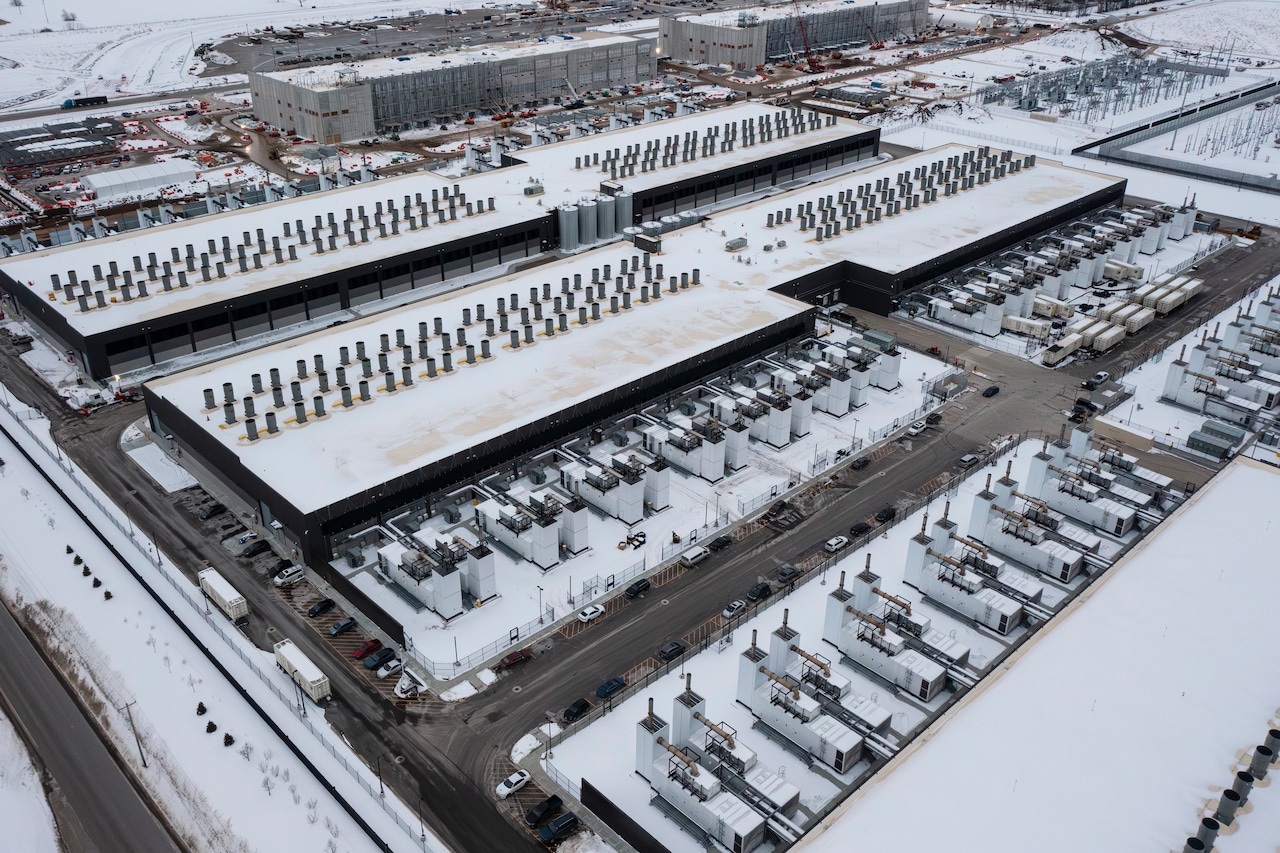 An aerial image showing one of one of the operational sites of Amazon Web Services’ Project Rainier spanning 1,200 acres in New Carlisle, Ind. on Wednesday, Feb. 4, 2026. The $11 billion-dollar project is one of the world’s largest AI compute clusters with Anthropic AI models using custom Trainium 2 chips, eventually drawing over 2.2 gigawatts of power. Anthropic is using Project Rainier to build and deploy its AI model, Claude.Joel Bissell | MLive.com
But Schweizer says that’s barely enough to cover the fire marshal’s salary, let alone the millions involved in purchasing a new fire engine or planning a new station. And his department has so far seen none of that money, which is distributed at the discretion of a county commission.
“Deals are negotiated without any input from the people who will have to protect these structures,” he said.
Michigan might soon see something similar.
On farmland outside Ann Arbor, crews are clearing land for a data center for ChatGPT creator OpenAI and cloud computing giant Oracle, which blazed through the approval process last year.
State officials anticipate the “Stargate” project will require its own army of construction workers, bringing with it 2,500 jobs as it gets built. The traffic complaints have already begun.
Pace of growth has some residents worried
The AWS project is being built on about 1,200 acres east of New Carlisle long targeted by county officials for industrial development and already home to a steel facility and power plant.
Why are new AI centers looking to join them?
New Carlisle has long thrived as a way point, first in the 1830s as part of the Michigan Road, one of Indiana’s earliest byways, and later along rail lines. Now, major electric transmission lines crisscross the area as they loop under Lake Michigan.
Data centers see a path to power, but Caruso sees an unchecked appetite for resources.
From his Jeep, he points out the server facilities that were completed first, nondescript gray-blue rectangles fenced off from the road. It’s impossible to see all the data centers from the ground. It takes some 15 minutes to drive around them all.
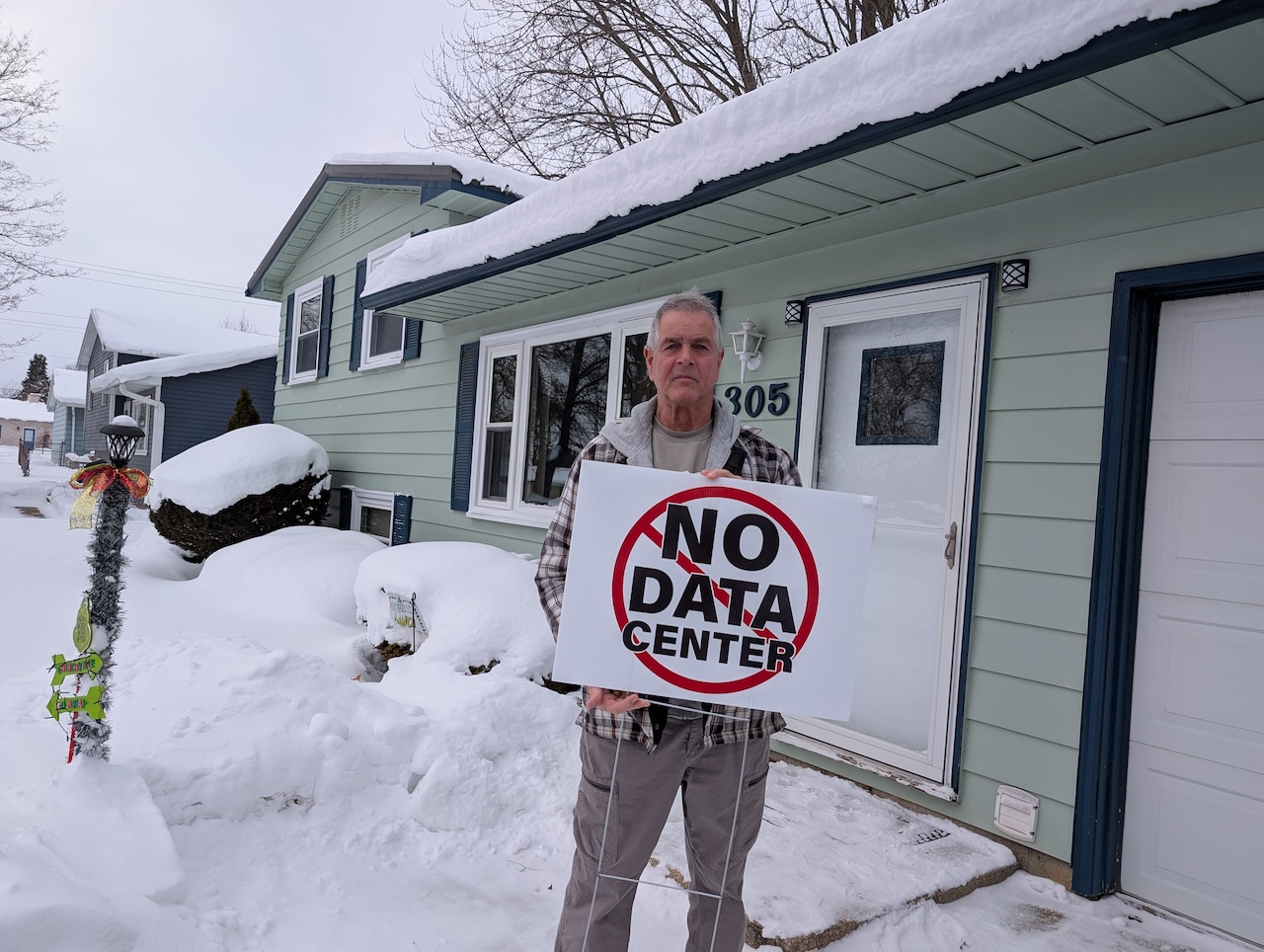 Retired mail carrier Dan Caruso stands outside his home in New Carlisle, Ind. on Tuesday, Jan. 27, 2026, showcasing signs he had printed to oppose further data center development in the area. Outside New Carlisle, Amazon Web Services is building more than 30 artificial intelligence data centers on roughly 1,200 acres.Lucas Smolcic Larson| MLive.com
About eight years ago, he joined a group of local environmentalists, farmers and residents pushing back on the county’s efforts to bring industry to the area, known as the Indiana Enterprise Center.
At the time, he was in the minority in the group, believing his town needed some sort of growth. “The next generation of farmer isn’t coming along. The kids are all leaving,” he said. “They see what their parents and their grandparents went through, and how they’ve just always been dirt-covered farmers.”
“I said if we don’t do something, this is going to be a ghost town. There will be nothing here,” Caruso remembered.
Now, he apologizes to his friends who warned development, once begun, would only continue to spread.
Initial plans for the AWS data centers showed some 16 buildings, Caruso said, but the company is now aiming for more than 30, each about 200,000 square feet. He’s led campaigns to protect wetlands in its path and emerged as critic of the project.
“I was for some of this growth, certainly not what’s happened,” he said.
Neighbors lament loss for ‘rural sanctuary’
Courtney Nichols likes that she can let her dogs out without worrying they might bark.
She moved to a rural road surrounded by farm fields a few miles outside New Carlisle for the space and quiet. For the past year, she’s instead tolerated the hum of heavy machinery. A few football fields away are the data centers.
“You’re trying to float in the pool and all you hear is beep, beep, beep, constant trucks backing up. That’s a little annoying,” she said.
Still, she’s adapting to the construction. Lights from the project shine on her home at night, she said, but thankfully her bedroom doesn’t face the data centers.
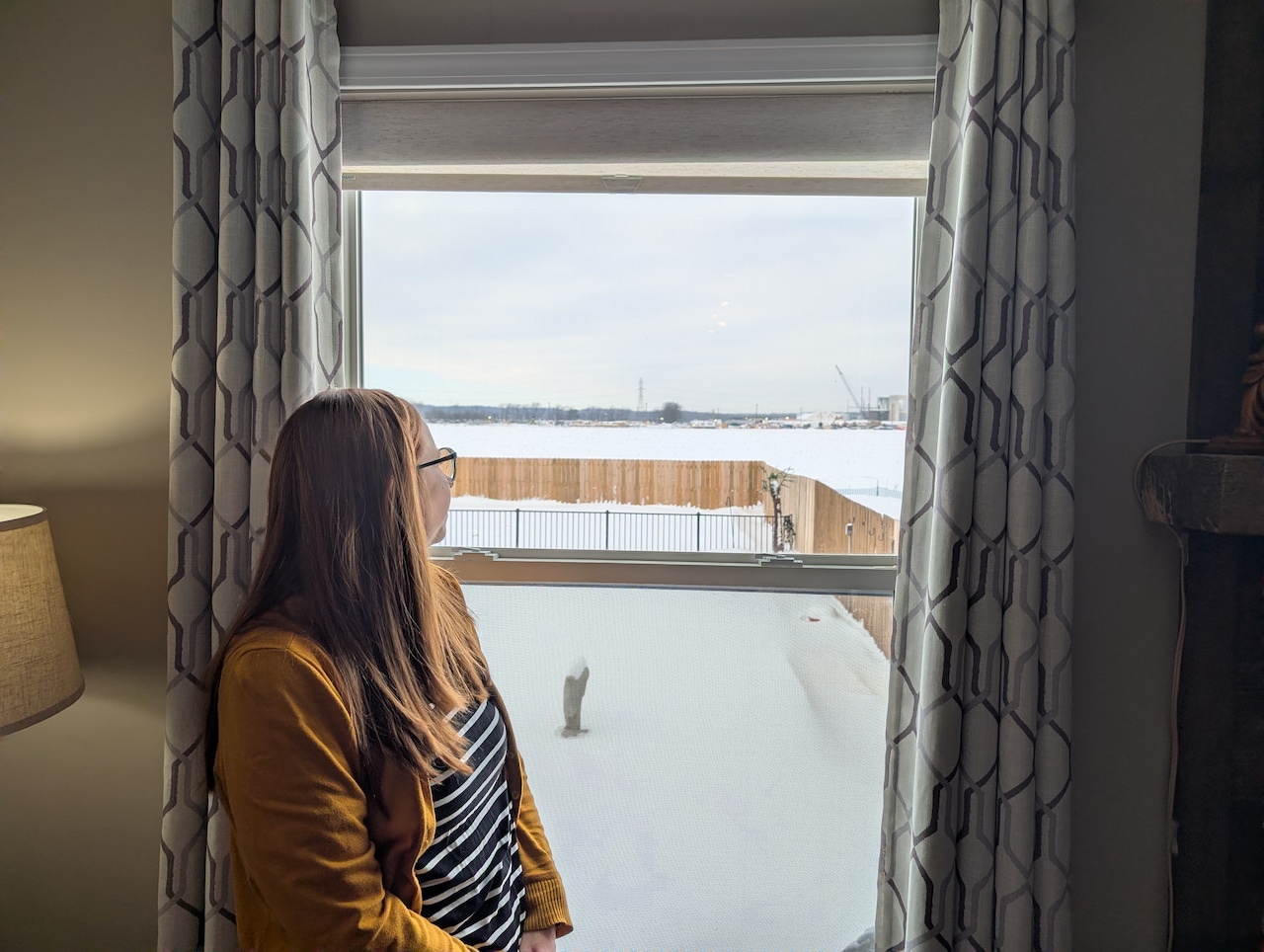 Courtney Nichols looks out her back window over her pool at construction on Amazon Web Services data centers being built near her home outside New Carlisle, Ind. on Wednesday, Jan. 28, 2026.Lucas Smolcic Larson| MLive.com
As a real estate agent, she knew some kind of industrial project was possible when she bought her home a few years ago. The long-term plan isn’t to stick around but rather move to Florida once she and her husband retire.
“I feel bad for the people, like the farmers who this is their family land, people who this was going to be their retirement sanctuary,” she said.
Myer has lived a few minutes away for some 60 years. She and her husband built the house on land farmed by his family, though he’s since died, leaving her alone.
Ask the 78-year-old how it’s been lately, and she makes a retching sound. “It’s horrible, it really is,” she said.
She used to see a car every two or three hours on the road outside her house, but last summer, sitting out on her rocker, Myer came to expect a stream of vehicles every half hour.
While workers are given strict instructions on the building site, she says there aren’t enough police officers to tamp down speeding and reckless driving when they leave.
An intersection with stop signs near her home is being converted to a roundabout. She’ll lose some land, though she’s negotiating to save a 100-year-old pine tree and have her granary rebuilt elsewhere on the property.
Other landmarks are long gone, like a house on the corner owned by a Polish family where Myer and her family would go to get eggs.
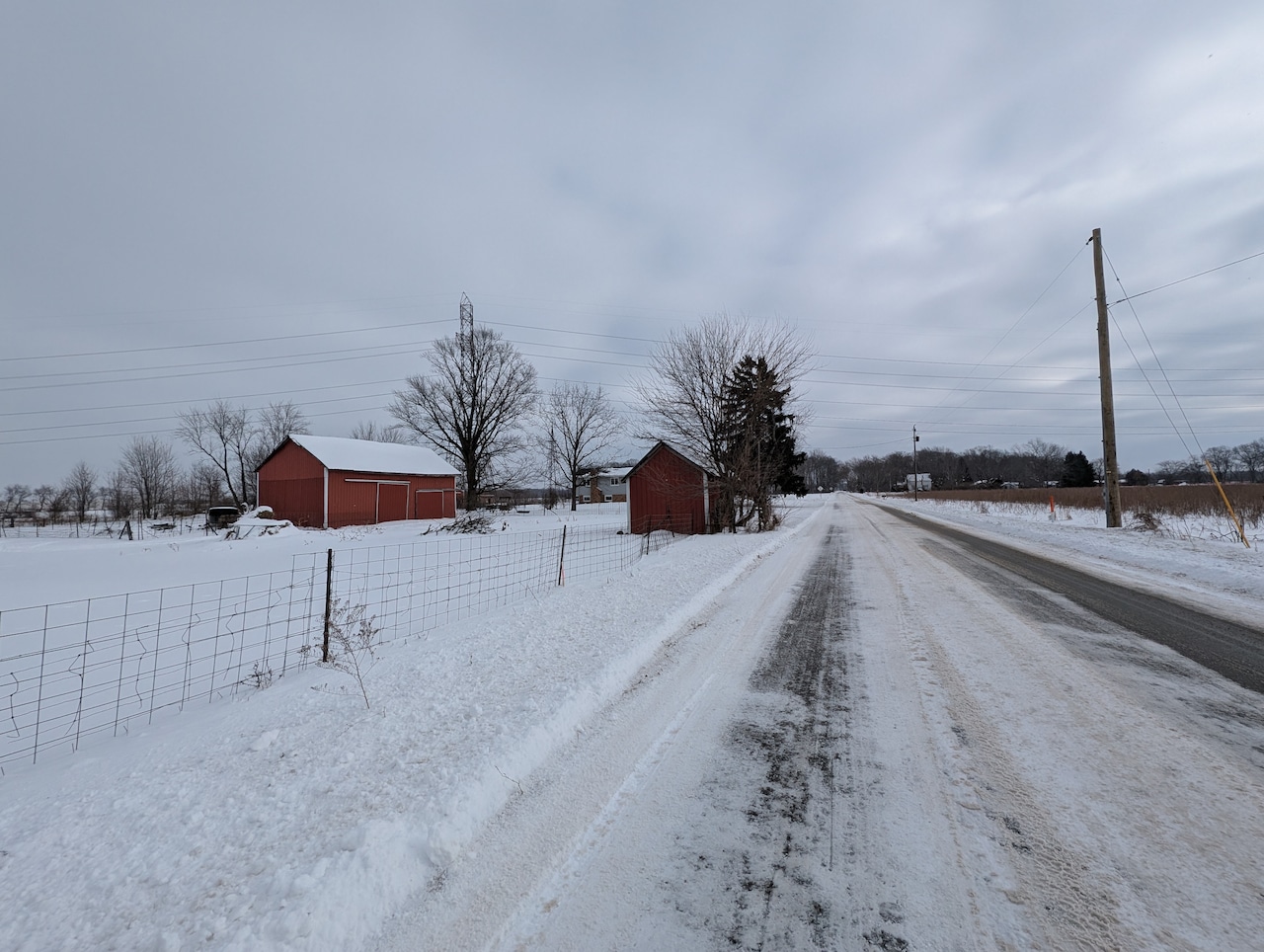 Barns stand on Judy Myers’ property outside New Carlisle, Ind. on Wednesday, Jan. 28, 2026. Nearby, massive Amazon Web Services data centers and an electric vehicle battery plant are being built, and a road project will occupy some of Myers’ land.Lucas Smolcic Larson| MLive.com
“They would roll over in their graves if they knew what was happening to their farm, but their grandchildren, they’re not interested in farming. They’re not farmers,” she said.
Sallabedra, with AWS, said local governments determine “land-use compatibility.”
AWS meets all local noise regulations and operates its facilities in accordance with federal guidance for health and welfare of surrounding communities, he said, working to incorporate setbacks, landscaping and design features to minimize impacts.
“We also work hard to ensure our data centers do not negatively impact our neighbors during construction and once we’re operational,” he said.
Myer understands why others have sold family land for the project, but it doesn’t make the change any easier. She feels like moving is out of the question – she needs a spot to keep her goats and other animals. She’s not willing to take on new debt at her age.
“I doubt that I’ll ever live to see the end of this construction,” she said.
Despite protections, residents anxious about power and water
As the data centers are built, worries about power and water use are also simmering in New Carlisle, echoing concerns across the country.
The plentiful aquifer in the area is attractive to data centers that draw from it to cool computer equipment, but many residents worry it could be over-taxed.
“I can buy a generator for my house. I can’t sink a well deep enough to get water if these guys drain it all,” said Caruso.
In the early stages of construction, when crews were pumping water from the ground to make way for infrastructure, a handful of residents near the data centers reported well troubles, though state officials later said the construction was not to blame.
As the data centers transition to regular operations, AWS seeks to soothe the water worries.
It reports its data centers will use outside air for cooling about 98% of the year and completely between October and April. Water will be drawn only on the hottest days, amounting to 18 million gallons a year for the entire project, said Sallabedra.
That’s about equal to 162 Indiana households and less than a typical golf course, he said.
The Town of New Carlisle’s system is providing that water, and Kauffman, the town president, said officials are confident the system can handle it. A county agreement limits water use in the development area to about half of what the aquifer can safely provide.
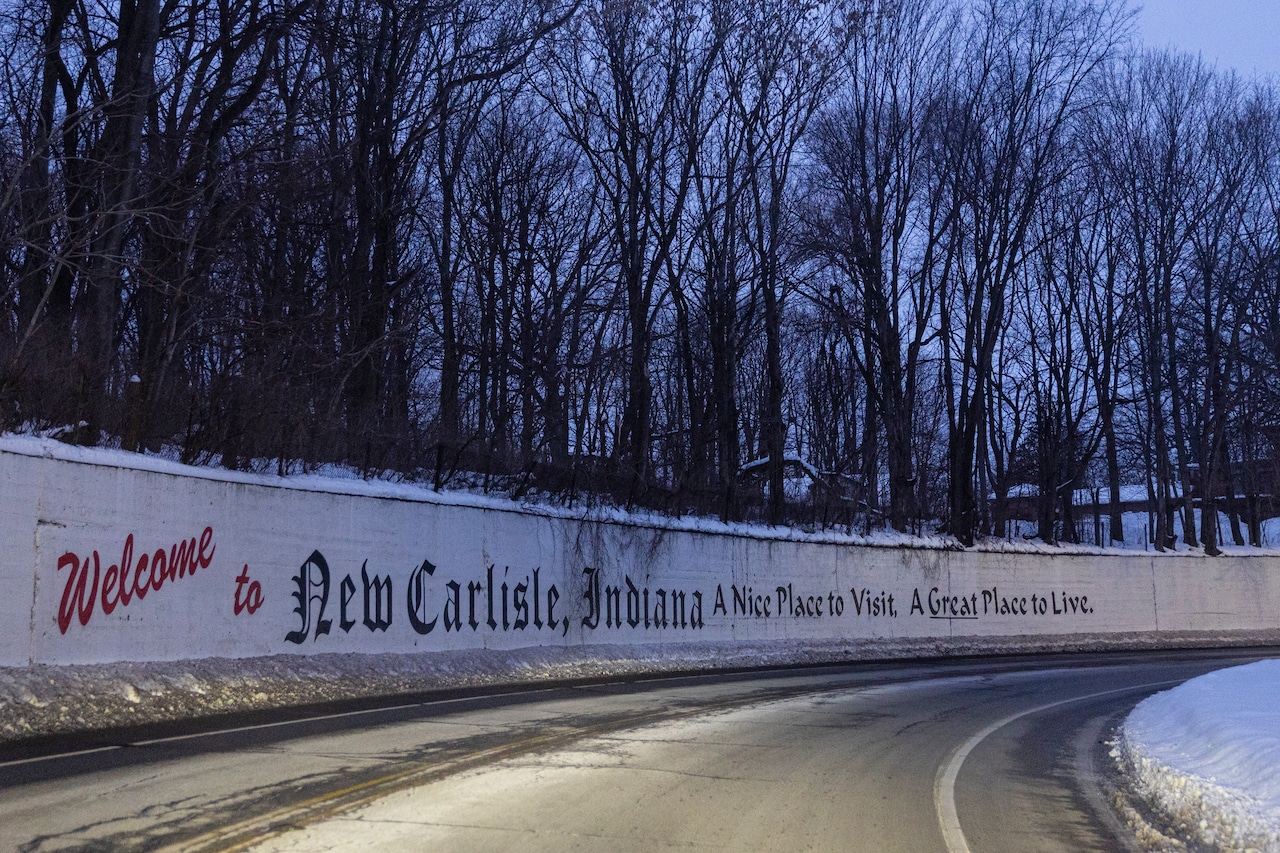 “Welcome to New Carlisle, Indiana— A nice place to visit, a great place to live” heading into New Carlisle, Ind. on Wednesday, Feb. 4, 2026. Joel Bissell | MLive.com
Electricity is another story. Like many large-scale data centers focused on AI, the AWS project will suck power on massive scale, some 2.2 gigawatts, helping more than double utility Indiana Michigan Power’s peak demand by 2030. The utility suggested the site to Amazon in the first place.
“It’s the largest I’ve heard of in Indiana by far,” said Ben Inskeep, program director with Citizens Action Coalition, an Indiana consumer and environmental advocacy group active in utility regulatory proceedings.
That comes with big costs – new power plants, lines and substations – and worries existing ratepayers could share the burden.
The utility, often abbreviated I&M, points to a 2024 settlement offering protections like minimum billing for the data center, longer contract terms and exit fees requiring it to pay if it decides to reduce power demand or shut down.
Since, Michigan utilities have struck similar arrangements to serve data centers.
Advocates hailed the deal as a “landmark” step, but Inskeep says its effectiveness will need to be evaluated over the coming years. He’s worried residential customers will share the cost of pricey transmission grid upgrades and power generation, increasingly expensive as demand grows.
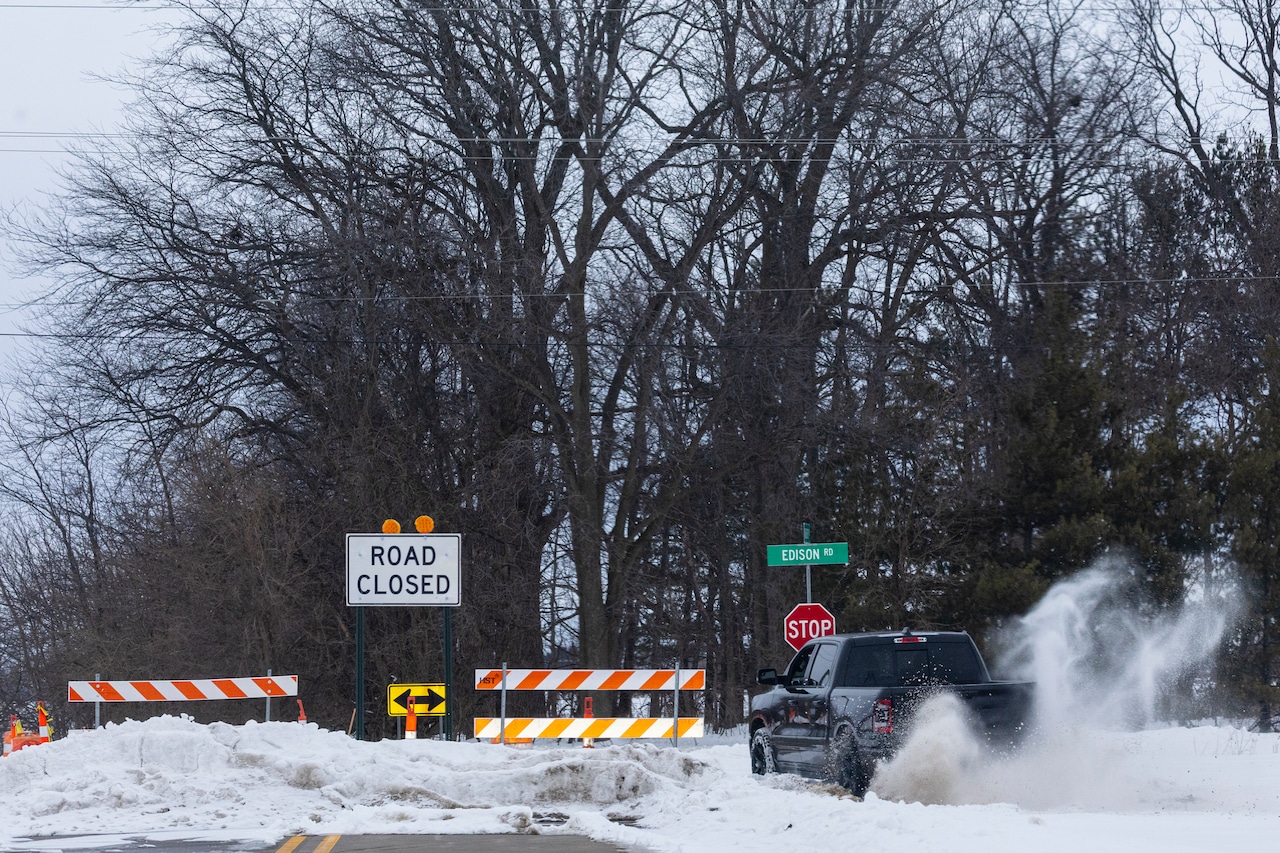 A pickup truck attempts to go around road closed sign near one of two operational sites of Amazon Web Services’ Project Rainier spanning 1,200 acres in New Carlisle, Ind. on Wednesday, Feb. 4, 2026. The $11 billion-dollar project is one of the world’s largest AI compute clusters with Anthropic AI models using custom Trainium2 chips, eventually drawing over 2.2 gigawatts of power. Anthropic is using Project Rainier to build and deploy its AI model, Claude.Joel Bissell | MLive.com
On the bright side, the addition of new power demand could also potentially lower costs or limit rate hikes for other customers by increasing utility sales. The computing power of Amazon’s New Carlisle data centers is being used by AI company Anthropic, creator of AI chatbot Claude. It recently pledged publicly to cover electricity price increases from its data centers.
But the devil is in the details, worked out in the jargon-filled and technical world of utility regulation. It’s a long game.
“Maybe it could result in a cost decrease right away, but then it could result in a cost increase two years from now or five years from now,” Inskeep said. “There’s just lots of unknowns at this moment in time. That’s why we have concerns.”
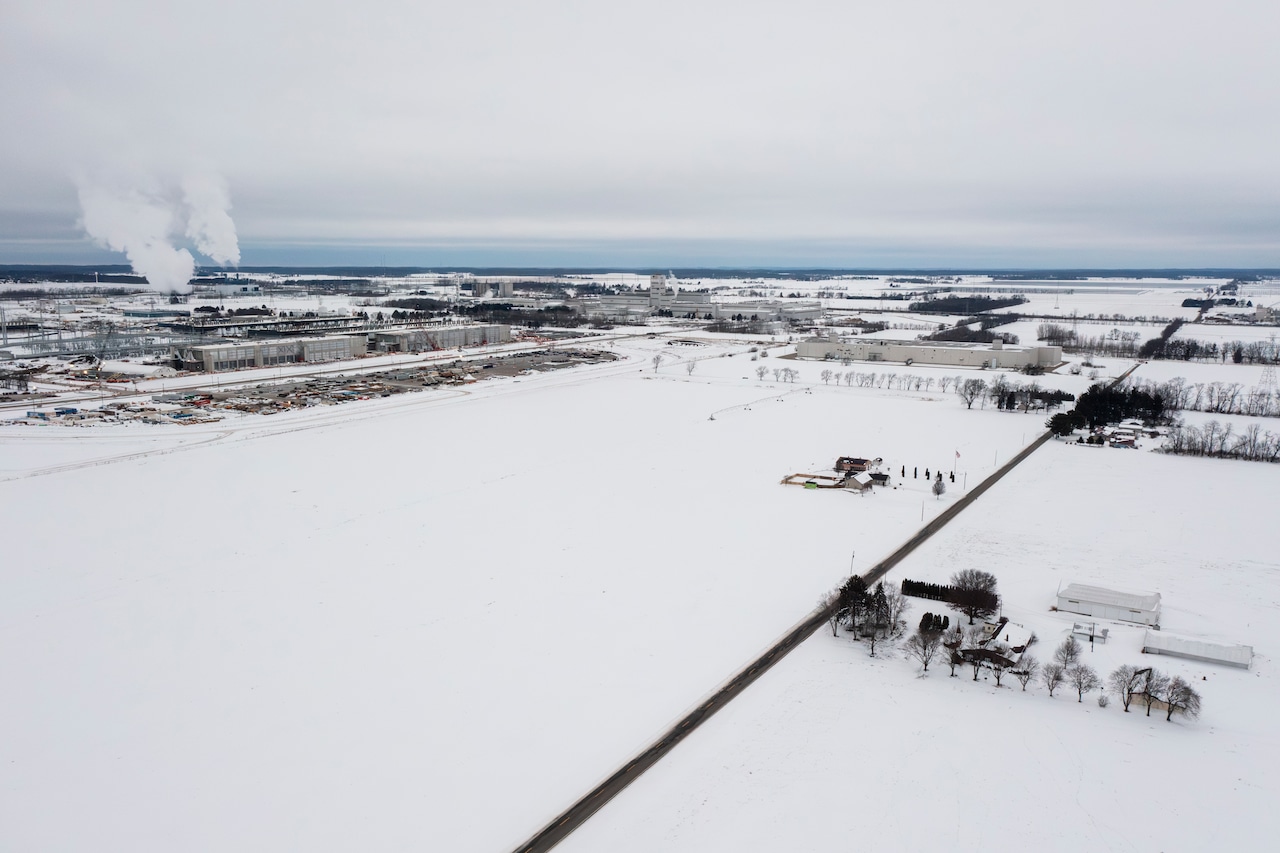 An aerial image showing two farm houses near one of one of two operational sites of Amazon Web Services’ Project Rainier spanning 1,200 acres in New Carlisle, Ind. on Wednesday, Feb. 4, 2026. The $11 billion-dollar project is one of the world’s largest AI compute clusters with Anthropic AI models using custom Trainium2 chips, eventually drawing over 2.2 gigawatts of power. Anthropic is using Project Rainier to build and deploy its AI model, Claude. Joel Bissell | MLive.comOn the cutting edge of the data center boom, uncertainty rules the day
The various concerns of neighbors echo the attitudes of many in the area toward the data centers, according to Will Miller, the elected trustee of Olive Township, which surrounds New Carlisle and hosts the project.
“We moved away from the city area because we wanted a quieter life. We appreciate seeing the stars at night. We appreciate not as much traffic, the small town feel and being able to know a lot of your neighbors,” he said, summarizing the views.
“This is the life that we bought into and if you bring in too much industry, that’s going to change what we bought into, which isn’t what we’d prefer to see.”
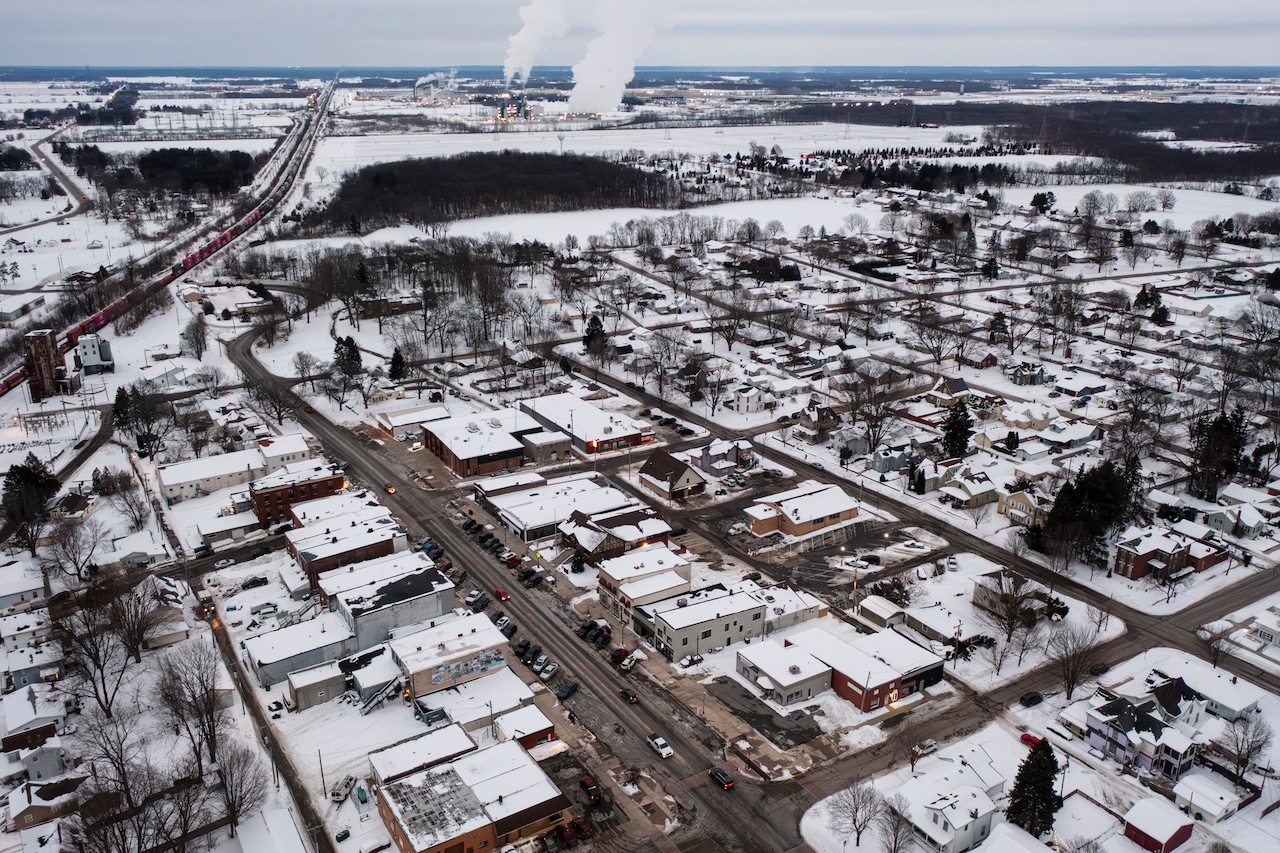 An aerial image of downtown New Carlisle, Ind. on Wednesday, Feb. 4, 2026. In the background by the rising steam, is Amazon Web Services’ Project Rainier spanning 1,200 acres. The $11 billion-dollar project is one of the world’s largest AI compute clusters with Anthropic AI models using custom Trainium 2 chips, eventually drawing over 2.2 gigawatts of power.Joel Bissell | MLive.com
Unlike in Michigan where townships often have the deciding say on the siting of big projects, the county OK’d Amazon’s data centers. Olive Township felt it was a “losing battle” to fight the project, according to Miller.
Compared to other heavy industry, data centers seemed like a decent option. They were pitched as low-impact for the local aquifer, school system and traffic patterns. But have they lived up to that promise?
“I think the jury’s still out,” said Miller, adding it’s hard to assess the benefits and drawbacks while the project isn’t yet complete.
He and other local leaders credit Amazon’s community fund for providing grants to local projects, which the company says totaled $250,000 across 31 initiatives in 2025. Amazon has supported local food banks, community gardens and other nonprofits with funding and volunteer hours.
At the school district, AWS is helping renovate a “think space” for its robotics team and career readiness programs, according to White, the superintendent, who called the company’s involvement a “major positive.”
But in hindsight, Miller wishes he had pushed harder for more large-scale investment from AWS into the community up-front, like helping with a new fire station or community center.
“When you look at the big picture of what they’re investing… it’s not even a fraction, it’s not even a blip on the radar,” he said.
Miller is aware his area is on a vanguard with the sprawling data centers. With that comes uncertainty.
“We feel like we’re a trial, like hey let’s learn from this project,” he said. “Well, nobody wants to be the project that you learn from.”