
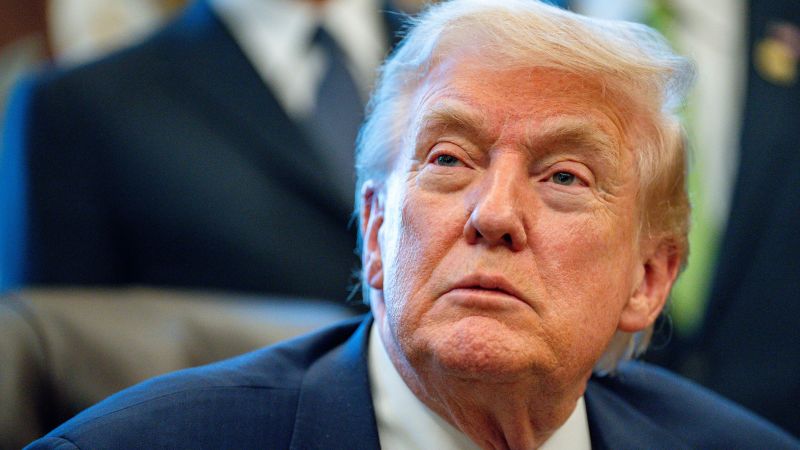
Chief Justice John Roberts brought the drama Friday as he ascended the courtroom bench to declare — at long last — President Donald Trump’s tariffs unlawful.
For 10 gripping minutes, he methodically laid out the case against Trump’s signature economic initiative, one that has yielded billions of dollars for the national treasury yet roiled world markets and hit US consumers hard.
The announcement in the white marble setting was classic Roberts.
The chief justice, now in his 21st year in the center chair, latched onto his choice standard-bearers of the law. He emphasized the limits of the question at hand, saying nothing about refunds. And he was a study in composure — a contrast to the scene at the White House later in the day as Trump denounced the justices in vitriolic, highly personal terms.
Roberts’ voice was steady, his words measured, as if to minimize this outsize clash between the judiciary and executive. (He emphasized that the justices had similarly rejected major initiatives of then-President Joe Biden.)
“We claim no special competence in matters of economics or foreign affairs,” Roberts elaborated in his 21-page written opinion. “We claim only, as we must, the limited role assigned to us by Article III of the Constitution. Fulfilling that role, we hold that (the International Emergency Economic Powers Act) does not authorize the President to impose tariffs.”
For those at the scene, Roberts invoked, by name, the revered Chief Justice John Marshall, who wrote the milestones on judicial authority and constitutional separation of powers. Two centuries ago, in 1824, Marshall had deemed the authority to impose tariffs “a branch of the taxing power,” which is firmly the domain of Congress.
Read more from inside the room here.
Correction: A previous version of this post included a video that misstated the amount of money generated by Trump’s emergency tariffs. The tariffs brought in billions of dollars.