
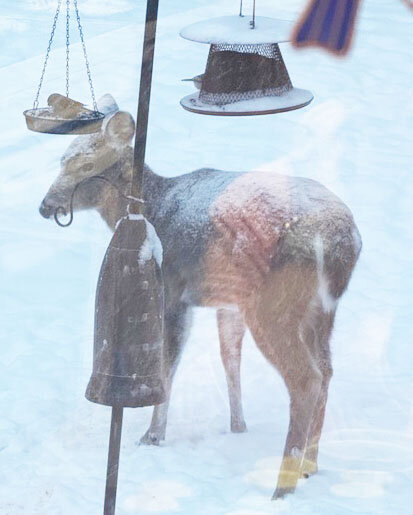
Winter brings food shortages, frigid temperatures and heavy snowfall to St. Lawrence County, but North Country wildlife are equipped with physical and behavioral adaptations that help them endure the season, according to the state Department of Environmental Conservation.
Staying warm is one of the biggest challenges for animals during the winter months, according to DEC officials. Many mammals grow thicker coats to protect against cold, wind and moisture. Deer and moose develop hollow hairs that trap air for added insulation. River otters have the densest winter coat in New York, with tightly packed, oil-coated fur that traps air and keeps their skin dry during winter swims, the DEC said.
Some species also change color. Snowshoe hares and ermine transition from light brown to white in winter, helping them blend into snowy landscapes and avoid predators, according to the DEC. Snowshoe hares’ large hind feet act like snowshoes, allowing them to move more easily across deep snow.
Beyond growing thicker fur, many species seek shelter in milder environments within their habitat. White-tailed deer gather in dense conifer stands, sunny south-facing slopes and sheltered suburban areas during periods of deep snow, a behavior known as “yarding,” the DEC said. Yarding allows deer to share food sources, shelter and established trails. Residents may notice larger herds in neighborhoods during prolonged cold spells.
Deep snow also creates an insulated space for small animals. When snow reaches 6 inches or more, temperatures at ground level beneath it typically remain just below 32 degrees Fahrenheit, even when air temperatures drop well below zero, according to the DEC. This stable area, known as the subnivean zone, provides shelter from wind and extreme cold.
Ruffed grouse dive headfirst into soft snow to create protective snow roosts, the DEC said. Ermine, martens, shrews and small rodents build tunnel systems beneath the snowpack. Predators, however, continue to hunt them. A fox seen listening intently before pouncing into a snowy field is likely tracking rodents moving below the surface, according to the agency.
Food storage is another survival strategy. Squirrels, chipmunks and other rodents create caches of food in the fall to sustain them through winter. Beavers remain active throughout the season, storing food and maintaining open water near their lodges to allow access beneath the ice, the DEC said.
Black bears rely on fat reserves accumulated in autumn, according to the DEC. They enter dens in November or December and reduce their activity, metabolism and body temperature in a state known as torpor. Bears typically emerge in March or April. Females give birth to one to four cubs in January or February while in the den, and the cubs nurse and grow until spring, when they leave the den with their mother, the DEC said.