
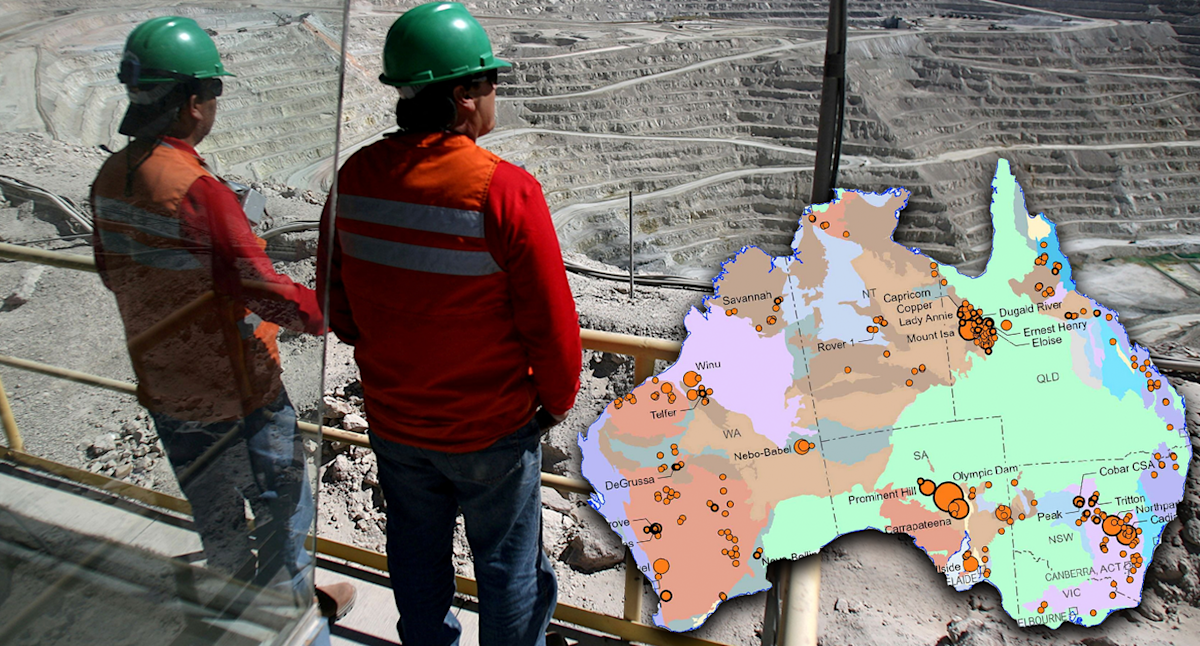
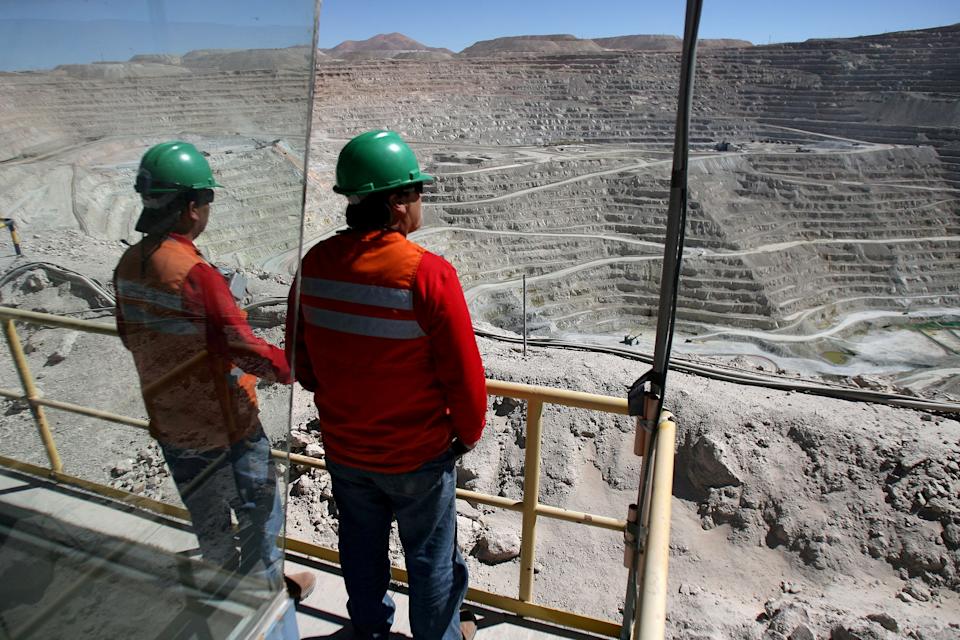
 Workers of BHP Billiton’s Escondida, the world’s biggest copper mine. (Source: AAP) · Reuters
Guess which country has the second biggest copper reserves in the world but is only the eighth biggest producer? That’s right – Australia. Sure, we export millions of dollars worth of the orangey metal, but our copper mines are relatively quiet compared to the mega-operations unearthing iron ore, gold and coal.
We could do a lot more copper mining. And that simple fact opens the door for mining boom round two.
Because everywhere you look, copper demand is through the roof. Copper is in electric vehicles, solar panels, AI data centres, and in the missiles exploding over Ukraine. As we electrify, embrace AI (or endure its embrace), and re-arm, we need lots of copper.
Markets are well aware. In Late January copper prices hit their highest level ever.
RELATED
 Copper has been on a tear with plenty of demand pressures. (Source: Comex futures)
As Australia’s economy has begun to pivot away from coal we are now opening copper mines. And re-opening them, in some cases.
Have no doubt the copper boom is changing the world. BHP, the great iron ore miner, made more profit on copper than iron ore in its most recent financial report to the market last week. Rio Tinto, BHP’s great rival, is scrambling to open more copper mines around the world.
Australian copper exports are at record highs. But most of our copper still remains in the ground. Which leaves a lot of work to be done, and a big question – where will we find the workers?
The task of mining is highly automated these days. Building new mines is another story. Australia’s lowest-ever unemployment rates were achieved during the early stages of the last mining boom, back in 2007-08.
At that point in time, vast sums were being spent digging up resources for export to China. Coal was a major target, especially the coal used in steel-making. Iron ore too. The price of our resource exports had tripled over the decade to 2012, and it caused a lot of new mines to be dug.
Are we about to see another spike? (Source: CBA)
Copper was more of an afterthought at that time. Now though, copper is front of mind. Huge new mines are being built, and that means lots of jobs. The big new copper mine in central Queensland – Eva – is expected to create 1,000 new jobs during construction, which will start in earnest early next year.
And that is not the only example. NSW is already expanding one copper mine called Tritton, adding 125 jobs. South Australia has Australia’s biggest copper deposits and it is trying its hardest to get them out of the ground and onto boats.
Story Continues
“Ramping up production from existing and new deposits takes risk, effort and long-term commitment from private sector explorers, investors and developers,” said Tom Koutsantonis, South Australian Treasurer
“Right now, South Australia has a chance to ride a global wave of demand to greater prosperity. We’re doing everything in our power to seize this significant opportunity.”
This is not unlike the gold rush that made Melbourne rich nearly 200 years ago. The world’s attention is focussed. Many new projects are in the planning phase.
A company called Caravel is planning to dig up one of the world’s largest copper deposits just 150km north of Perth. The construction phase for its enormous open cut mine will create 600 jobs too.
A company called Cooper Metals is mapping and sampling as it searches for copper near Mount Isa in Queensland, and it is not alone. Many more companies are crowding into the space and the higher the copper price rises the more willing their investors will be to fund the fast-tracking of their projects.
One difference from the last mining boom is the geography of copper deposits. As the next map shows, unlike gold and iron ore, Western Australia does not dominate copper deposits. If there’s a lot of FIFO work happening it might happen out of Adelaide, Brisbane and Sydney rather than just Perth. I’m not saying Adelaide house prices will do what Perth’s did, but you never know!
Australian copper deposits and operating mines, 2022. For clarity, only major or significant deposits are labelled. (Source: Geoscience Australia)
The economic enthusiasm for copper is great news for workers who can find high-paid jobs in these sectors, and for anyone who owns real estate that goes up. But it raises issues for the rest of us.
Last time we had a mining boom it coincided with the global financial crisis and it was an extremely welcome counterbalance in the Australian labour market. Unemployment in this country never rose above 5.9 per cent while in America it soared above 10 per cent.
This time is different. The copper price cycle is heating up while unemployment is at 4.1 per cent. Workforce participation is far higher than it was in 2008. Precisely where the workers will come from for all these copper mines is unclear – perhaps lots of accountants and paralegals made redundant by AI?!
A booming copper sector could put extra pressure on the RBA to raise interest rates – cooling the economy in the cities in order to provide the workers needed for the projects in the remote copper regions. If that were to happen it would be a cruel double blow to any white collar worker forced to compete with AI.
Get the latest Yahoo Finance news – follow us on Facebook, LinkedIn and Instagram.