
This article was originally published at The Conversation. The publication contributed the article to Space.com’s Expert Voices: Op-Ed & Insights.
The mushrooms spread out on the chopping board seemed normal enough. They were rich and dense, and had a strong earthy aroma. In the saucepan, they melted – along with the cheese – to form a creamy pasta sauce.
You may like
This was the first meal we made with these unique mushrooms. They were gourmet, but not from any grocery store you can find on Earth.
These special fungi had travelled to space, lived aboard the International Space Station for more than a month, returned safely to Earth, and eventually came back to Australia in 2025.
Mushrooms launch into space
In August 2024, we launched a set of 36 small vials into space aboard a SpaceX Falcon 9 rocket. In these vials were three edible fungi species in the form of mycelium – small file filaments that act like the root network of mushrooms.
The species we tested were lion’s mane (Hericium erinaceus), turkey’s tail (Trametes versicolor) and cordyceps (Cordyceps militaris). These have shown benefits for brain function, gut health, and immune health – all important areas for long term space flight.
This experiment was our sixth payload to the International Space Station (ISS), thanks to the microgravity experimentation program we lead at Swinburne University of Technology.
It was designed and prototyped with the help of 12 high school students from Haileybury College in Melbourne. And it was made possible thanks to professional mushroom growers and suppliers who ensured the fungal strains were not only food grade but healthy enough to survive the extreme environment of space.
Our fungi may have stayed on the ISS with astronauts. But the mushrooms’ experience was very different to the astronauts’. Science experiments have special storage areas depending on what is being done and how much time astronauts have to be involved. Our mycelium was sealed up tight in special packaging to help keep them at a stable temperature and to ensure they weren’t damaged.
You may like
They stayed like that for close to a month, before they returned with the change of crew on the ISS.
We didn’t get much in the way of updates while our mushrooms were travelling – just some pictures and videos from NASA of the outside of the safely sealed experiment.
On their return, we waited with bated breath to see if they would survive once opened.
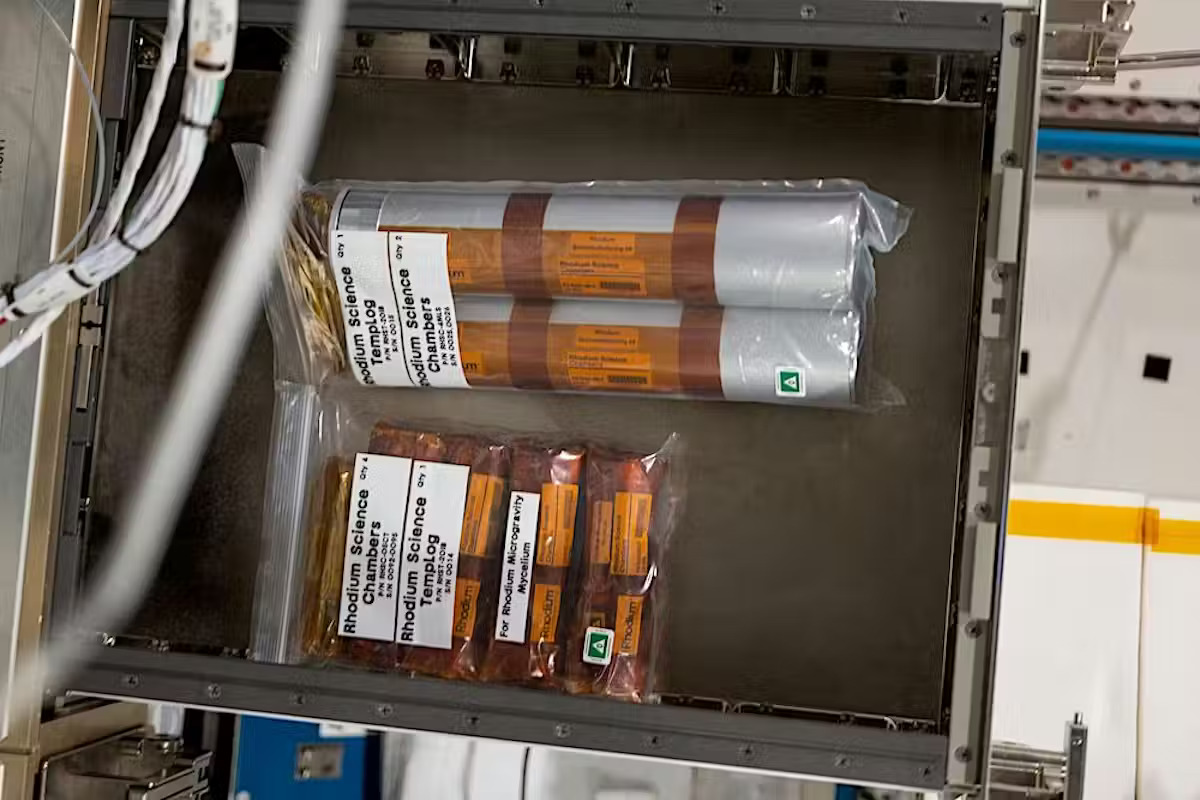
The mushrooms on board the International Space Station. (Image credit: NASA, CC BY-SA)Mushrooms return to Earth
When our mycelium returned to Earth, and eventually Australia, they got a new home in rich, nutritious substrate. We then moved it into grow kits so we could watch and see whether any fruiting bodies (that is, mushrooms) would appear.
We created several grow boxes and placed them in different environments to see what conditions were best – from kitchen benches, to staff room tables, to laboratory fridges.
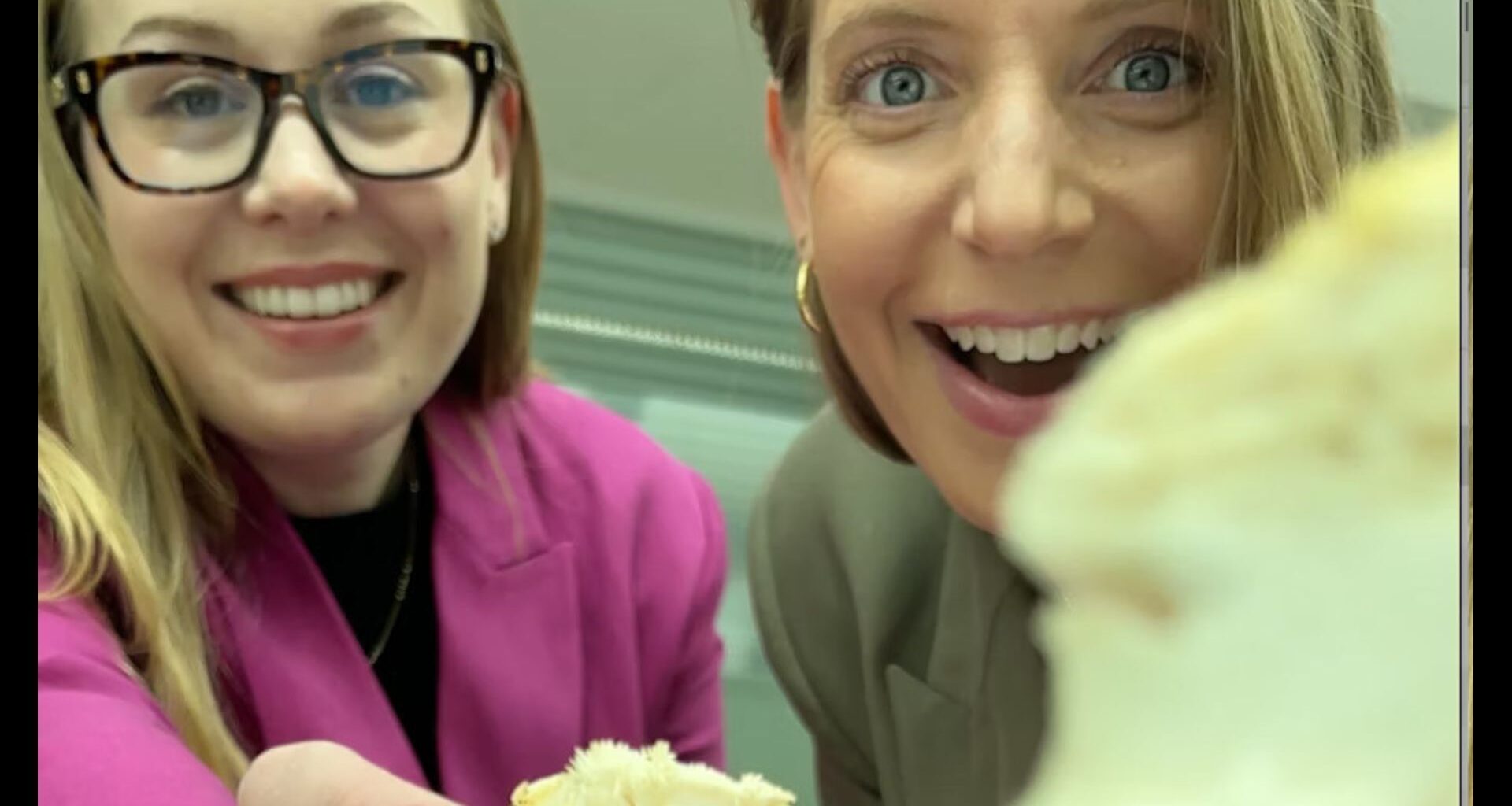
To our delight, within a few days we saw signs of the mushrooms emerging and within a week we had beautiful lion’s mane ready to be cooked up and enjoyed. Once they were ready, we harvested them and tried different recipes.
As well as eating these mushrooms, we’re also in the process of analysing them closely. But we can say now that the reduced gravity environment did not negatively impact our mycelium. In fact, they seem to be so happy that they continued to produce several rounds of mushrooms.
Mushrooms for long-term space missions
Artemis II – NASA’s crewed mission to the moon – is right around the corner. But there is still a lot that we need to understand to provide the best conditions for astronauts as they venture further into space than ever before.
For example, how will we continue to nutritionally support astronauts for weeks to months on long duration missions?
We know that a low gravity environment has a profound impact on human bodies, and one of the best ways to support astronauts in orbit is with nutritional foods.
Another outstanding question we need to answer is whether food produced in space environments be affected by radiation and other stresses, rendering it less valuable.
Our work – and these special mushrooms – are helping to provide crucial answers.