
New non-performing asset formation was S$599 million in Q4, slowing from S$838 million in Q3
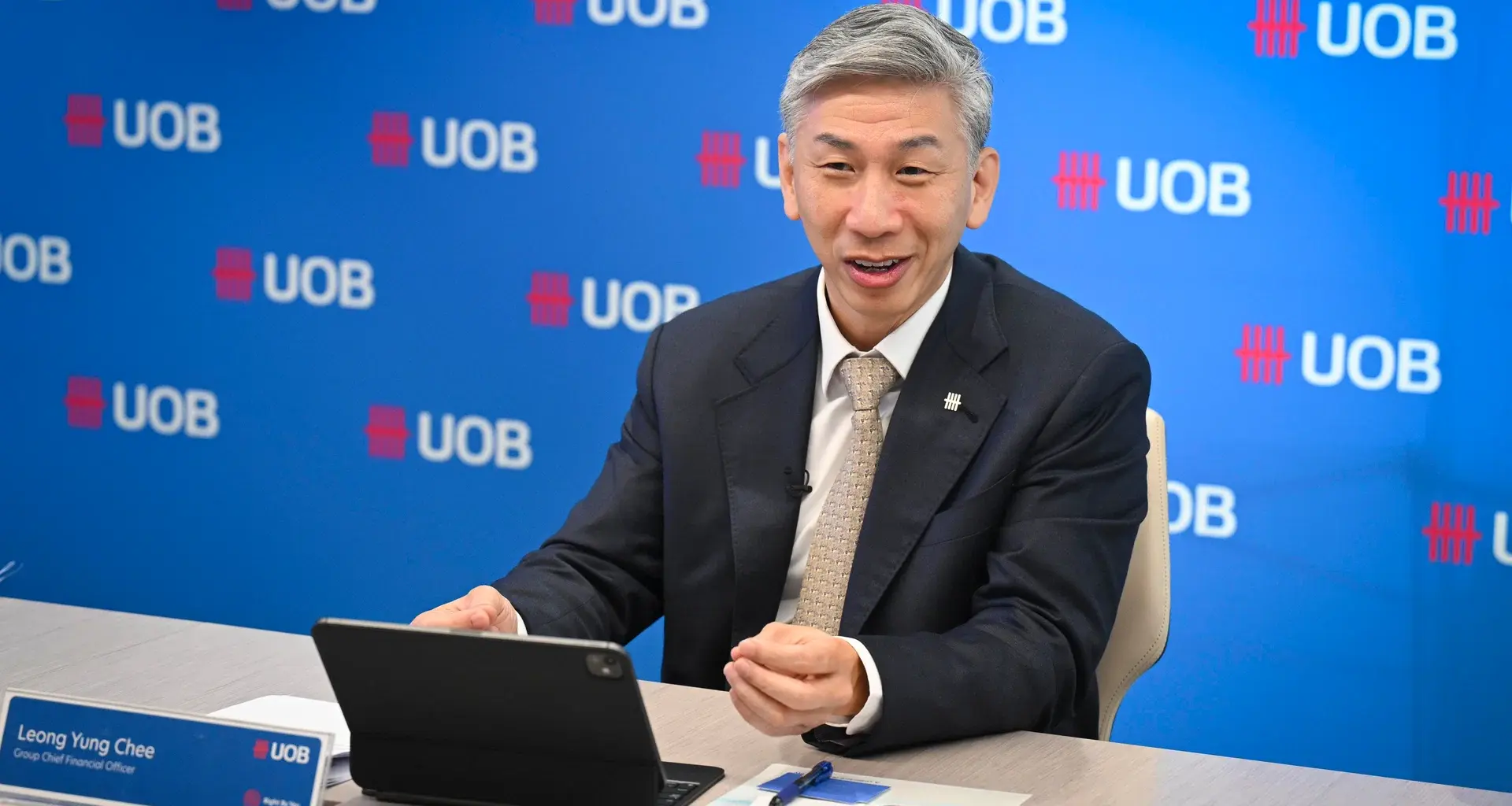
[SINGAPORE] The provisions that UOB has pre-emptively set aside for commercial real estate “hot spots” in Greater China and the United States are “more than adequate” buffers against potential bad debts, group chief financial officer Leong Yung Chee said on Tuesday (Feb 24).
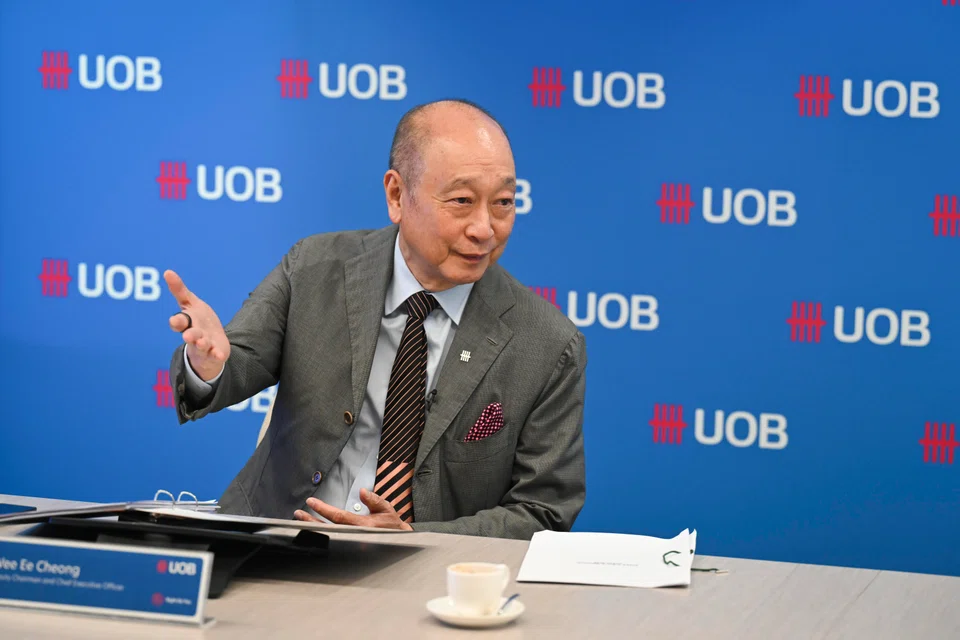
He was speaking alongside UOB deputy chairman and chief executive officer Wee Ee Cheong at the lender’s fourth-quarter earnings briefing for the period ended Dec 31, 2025.
The lender stressed that exposure remains limited, with problematic US commercial real estate loans accounting for about 1 per cent of its local portfolio.
It maintained its credit cost guidance of 25 to 30 basis points, leaving its asset quality outlook unchanged.
UOB’s non-performing loan (NPL) ratio, which measures the proportion of loans that are in default or close to being in default relative to total loans, remained unchanged at 1.5 per cent in Q4.
Allowances for credit and other losses came in at S$113 million in Q4, down from S$227 million in the same period a year earlier, due to lower specific allowances.
Navigate Asia in
a new global order
Get the insights delivered to your inbox.
For the full year, however, allowances totalled S$2 billion, more than double the S$926 million set aside in FY2024.
This was largely attributable to S$1.2 billion in provisions that were booked in the preceding quarter for the period ended Sep 30, 2025.
The sharp rise in FY2025 allowances, together with margin pressures from lower benchmark rates, were the main factors behind the 23 per cent decline in full-year net profit to S$4.7 billion, from S$6 billion a year earlier.
SEE ALSO
At the Q3 earnings briefing in November, Wee and Leong had said that the S$1.2 billion set aside in Q3 included higher specific allowances on loans, mainly linked to commercial real estate exposure in the US and Greater China.
Allowances for credit and other losses refer to provisions that banks set aside to cover expected losses on loans and other financial assets.
Specific allowances are provisions made against identified loans where there is objective evidence of impairment.
As at Dec 31, 2025, UOB’s general allowance on loans as a percentage of performing loans in Greater China – a buffer set aside for potential losses on loans that are still being serviced – stood at 2.1 per cent, up from 1 per cent a year earlier.
For the US, the corresponding ratio was 4.7 per cent, compared with 0.8 per cent previously.
Leong said that this should help to “reassure investors” that the provisions put aside for these two hot spots are “more than adequate” for UOB to navigate any potential issues.
The NPL ratio for Greater China customer loans – which stood at S$45 billion as at Dec 31, 2025, compared with S$52 billion a year earlier – was 3.3 per cent, up from 2.1 per cent the previous year.
In the US, the NPL ratio on a total loan book of S$17 billion, versus S$14 billion the year before, was 3 per cent, easing from 3.6 per cent.
At the group level, new non-performing asset formation was S$599 million in Q4, slowing from S$838 million in Q3, but higher than S$514 million a year earlier.
Total non-performing assets stood at S$5.4 billion as at Dec 31, 2025, compared with S$5.2 billion the year before.
Total credit costs for FY2025 rose 28 basis points year on year to 55 basis points.
Bloomberg Intelligence analysts Sarah Mahmud and Diksha Gera said in a Tuesday post-earnings note that UOB’s asset quality should “remain relatively stable”, as the pace of bad-debt formation eased quarter on quarter.
“Though risk remains in Greater China and US real-estate books, higher coverage puts UOB in a strong position to manage credit stress,” the analysts wrote.
Decoding Asia newsletter: your guide to navigating Asia in a new global order. Sign up here to get Decoding Asia newsletter. Delivered to your inbox. Free.