

The stock market sell-off triggered by a Substack article about a doomsday artificial intelligence future is the latest signal that technological hype is morphing into hysteria in America.
The article, published on Sunday by Citrini Research, a little-known research outfit in New York, set out the hypothetical scenario in which by June 2028, the bullish case for AI becoming more intelligent than humans leads to a wipeout of white-collar jobs, declining consumer spending, software-backed loan defaults and a struggling US economy.
It went viral on social media and by the end of trading on Monday billions of dollars had been wiped off the value of software and financial firms cited in the article, including Visa, Mastercard, DoorDash, ServiceNow and Blackstone.
The sell-off, triggered by an imagined scenario, highlights the huge uncertainty around what the AI market means for the broader economy and how little understanding there is about what the advancing technology means for companies and the way we work.
One reason for this uncertainty is the gap between tech executives’ fantastical predictions about the capabilities of AI and the reality of how most people are experiencing the technology so far.
The latest proclamations from leaders at the AI Impact Summit in Delhi last week included Sam Altman declaring that his technology could soon replace chief executives and would do a better job than him at running OpenAI, and Dario Amodei, the head of Anthropic, predicting that we were only “a small number of years” away from AI models “surpassing the cognitive capabilities of most humans for most things”.
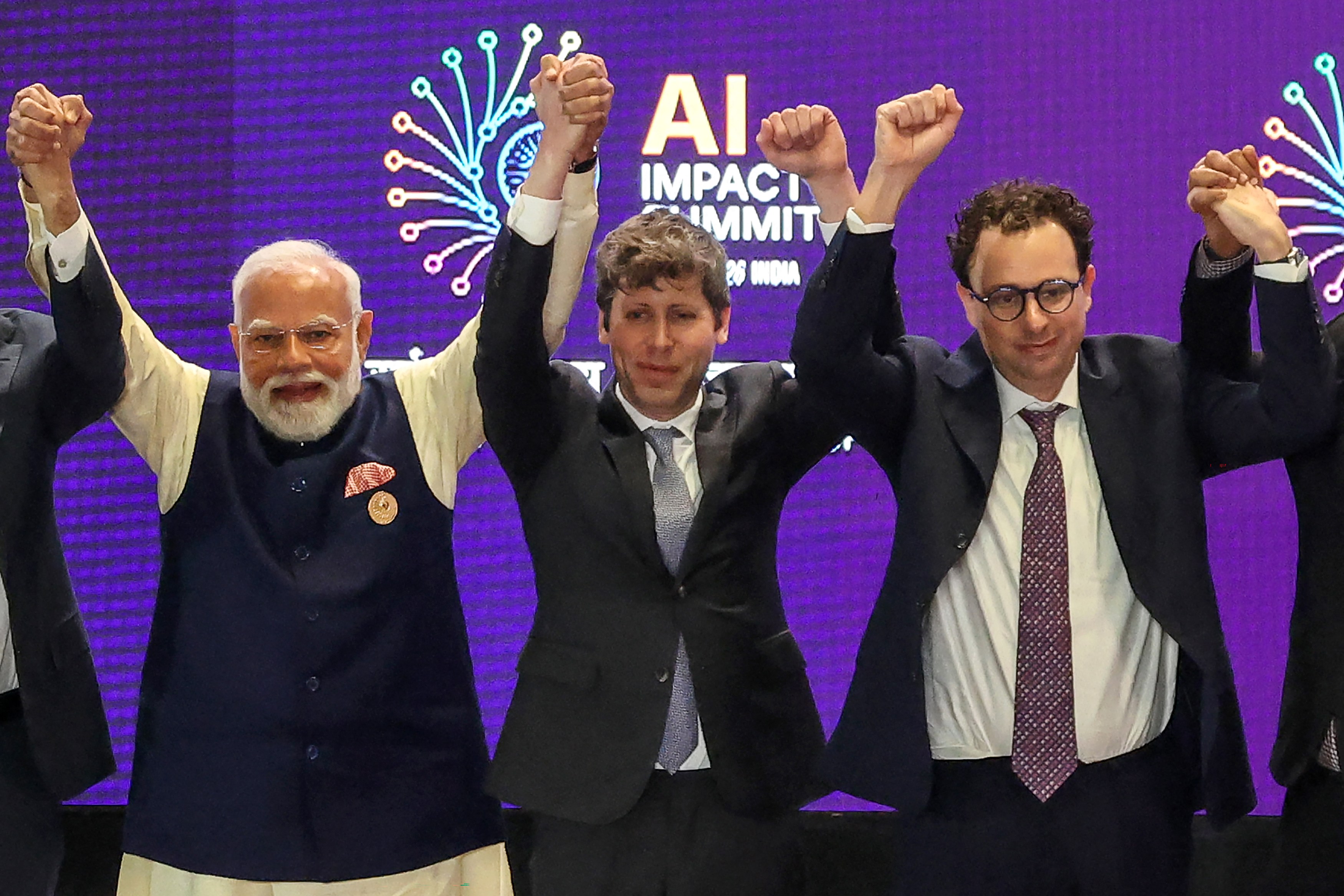
Narendra Modi, the Indian prime minister, with Sam Altman, centre, and Dario Amodei, the heads of OpenAI and Anthropic
LUDOVIC MARIN/AFP/GETTY IMAGES
Should we believe the salesmen who are motivated to exaggerate the transformative powers of their products as they seek to raise money at ever-higher valuations to build out AI infrastructure? Not to mention obvious questions such as how could an AI chatbot, albeit with impressively broad knowledge, replace the depth of wisdom and judgment derived from human experience.
Back in our present reality, a survey of about 6,000 executives by the National Bureau of Economic Research published this month found that more than 80 per cent of companies reported no effect on either employment or productivity from AI in the past three years.
Another cause of uncertainty is the vacuum of US government regulation of AI which seems unlikely to hold indefinitely.
• Stuart Russell: We can coexist with superintelligent AI — but who wants to?
Among the broader public, uncertainty about the economic impact of AI is fuelling a growing backlash to the technology.
Anti-AI signs have been plastered around New York. One satirical billboard hanging over commuters in midtown Manhattan from ReplacementAI, a parody of an AI company, reads: “Thank you artists for donating your life’s work to our AI. Your generosity hasn’t gone unnoticed. Just uncompensated lmao [laughing my ass off].”
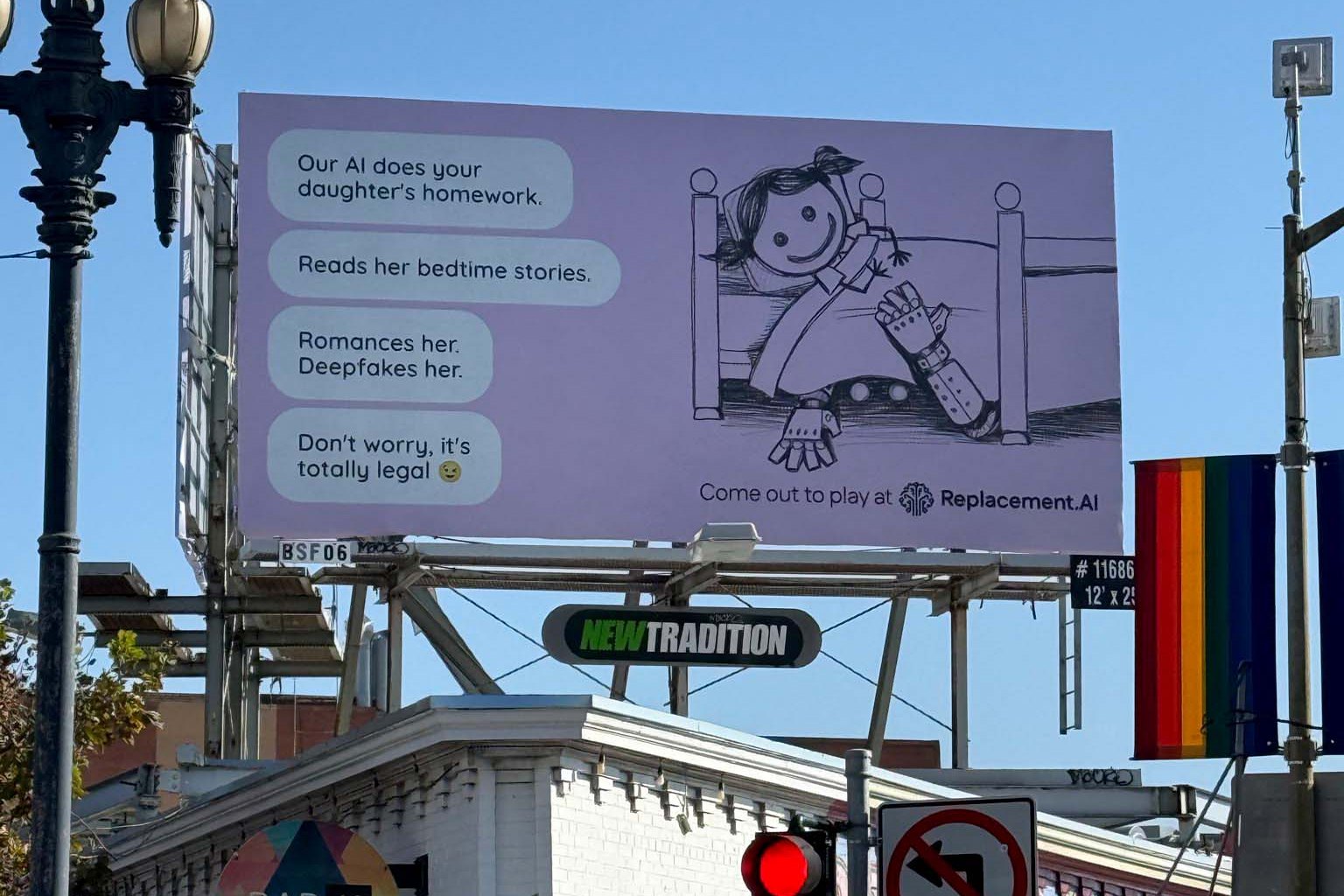
Replacement.AI has put up satirical billboards in New York and San Francisco
In New Jersey last week, residents in New Brunswick voted to remove data centres from the list of permitted uses in a plan to redevelop several parcels of land. “We don’t want these kinds of centres in here that are going to take resources from the community,” one attendee at the meeting said, according to a Business Insider report.
The opposition in New Jersey followed similar community protests in the state including Oklahoma and Texas. Will Manidis, founder of the AI company ScienceIO, found that 188 groups across more than two dozen states were “co-ordinating legal strategies, expert testimony and messaging against data centre development”, while two thirds of tracked projects under protest were blocked or delayed.
• Silicon Valley wants Americans to like data centres. Will it succeed?
In a Substack, he wrote on Monday: “It is my belief — and I say this having worked in AI my entire career — that we should expect widespread asymmetric violence against AI infrastructure in the United States in the near future.”
The only thing we have learned from the plethora of hot takes published about AI in the past few days is that there is deep confusion and fear about what this advancing technology means for businesses, workers and the economy.
Nobody knows what the future of advanced AI will bring. In the short term, the only thing traders can bank on is volatility.