
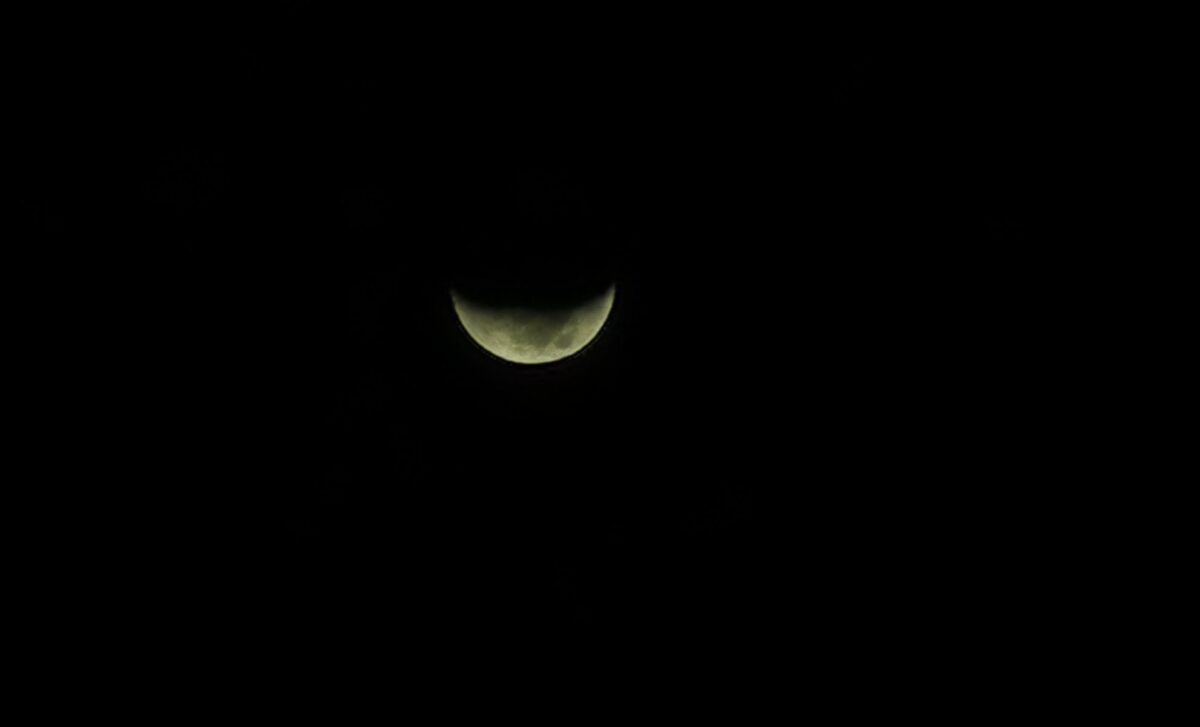
The next new moon will occur soon, providing an ideal opportunity for stargazers to observe celestial objects typically hidden by the moon’s brightness. While the new moon itself remains invisible to the naked eye, its presence marks an important phase in the lunar cycle.
As the new moon marks the start of the lunar cycle, which lasts about 29.5 days, its position between Earth and the sun creates conditions for clearer skies, perfect for observing distant stars and planets.
A Guide to the Moon’s Phases
A new moon occurs when the moon is directly aligned between Earth and the sun, with the side facing Earth completely shadowed. The next one will occur on March 18, 2026 at 9:23 p.m. EDT (0223 GMT, March 19).
This phase is invisible because the sunlight reflects away from our perspective, leaving the moon’s surface unlit. According to Space.com, this alignment only becomes visible during a solar eclipse when the lunar conjunction passes directly in front of the sun. While this event marks the beginning of the lunar cycle, it gradually transitions into the waxing crescent, first quarter, waxing gibbous, full moon, and back to a waning gibbous before completing the cycle.
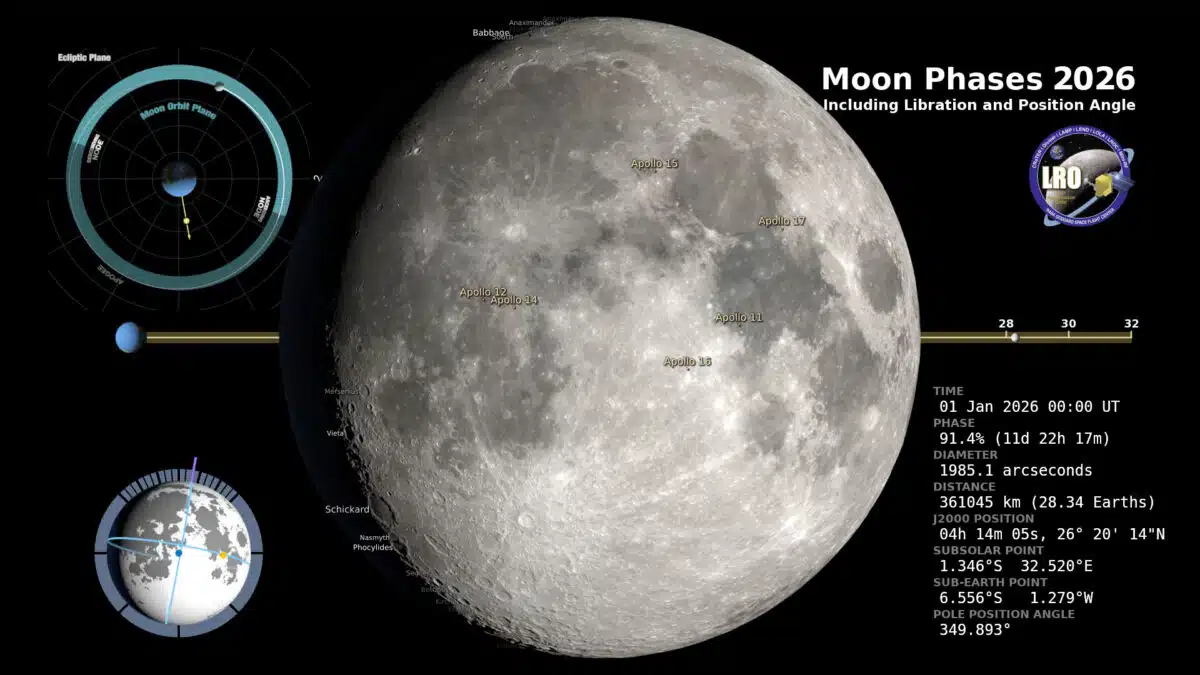 A detailed view of the Moon’s surface, showing key Apollo landing sites and the current moon phase for January 1, 2026. Credit: Space.com
The Glow of the New Moon
While the new moon itself may be invisible, it can still have an intriguing effect on observers: Earthshine. As explained by NASA, Earthshine occurs in the days before and after the celestial event, when the moon appears as a faint, dimly illuminated disk, often with a bluish-gray hue. This effect happens when sunlight reflects off Earth’s surface and illuminates the dark side of the moon.
According to Joe Rao, Space.com’s skywatching columnist, this phenomenon can be most clearly seen during the thin crescent phase of this shadow phase, and it is sometimes referred to as “the old moon in the new moon’s arms.”
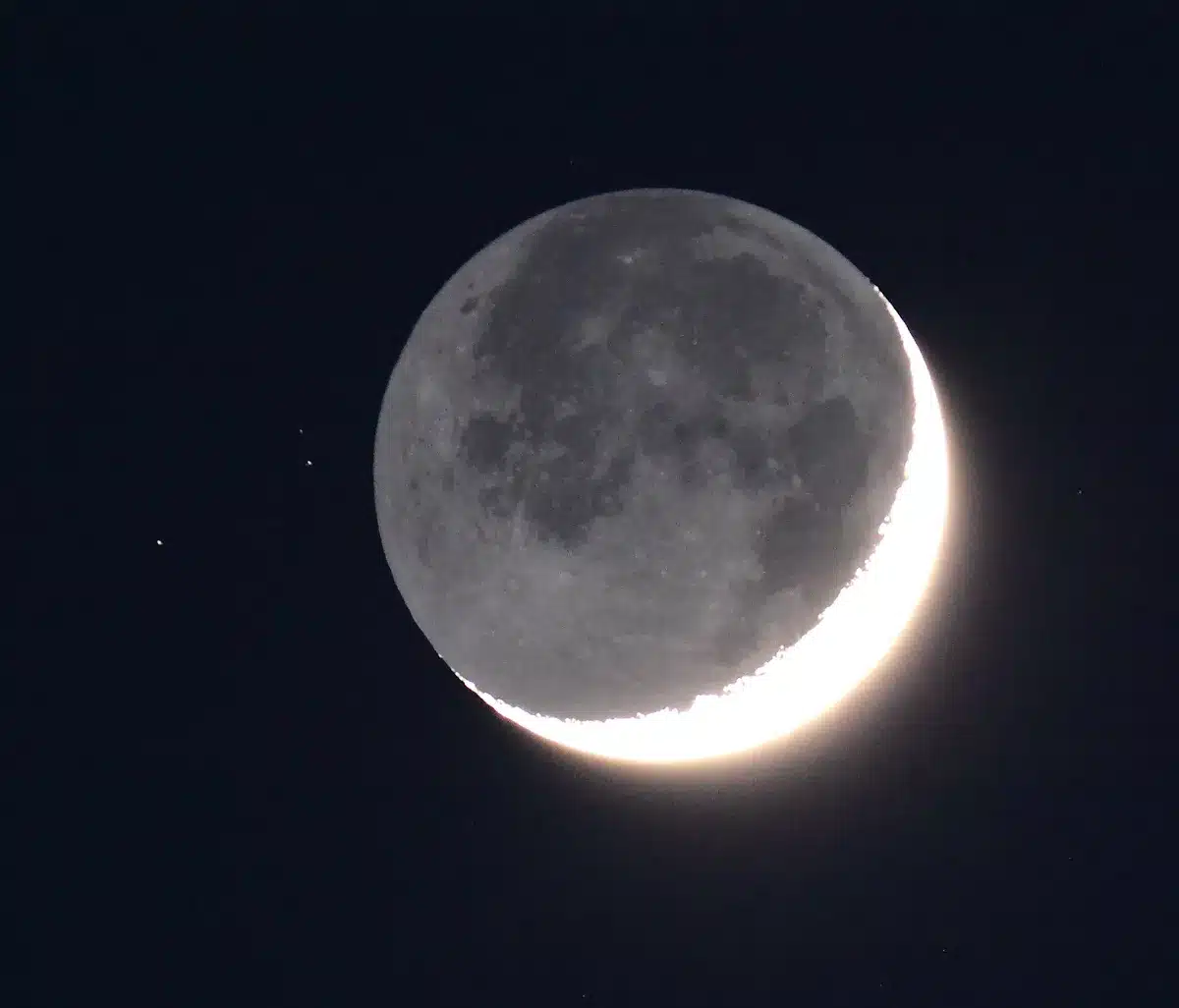 A breathtaking view of Earthshine lighting up the shadowed side of the crescent moon. Credit: Brian M. Johnson
The Black Moon: A Rare Lunar Event
Occasionally, a new moon is called a “Black Moon,” a term that refers to a rare event within the lunar cycle. While not an official astronomical term, a Black Moon can be defined in two ways: it can either be the second new moon in a single calendar month or the third new moon in a season of four new moons. As reported by Time and Date, the next Black Moon will occur on August 31, 2027, as the second new moon of the month.