
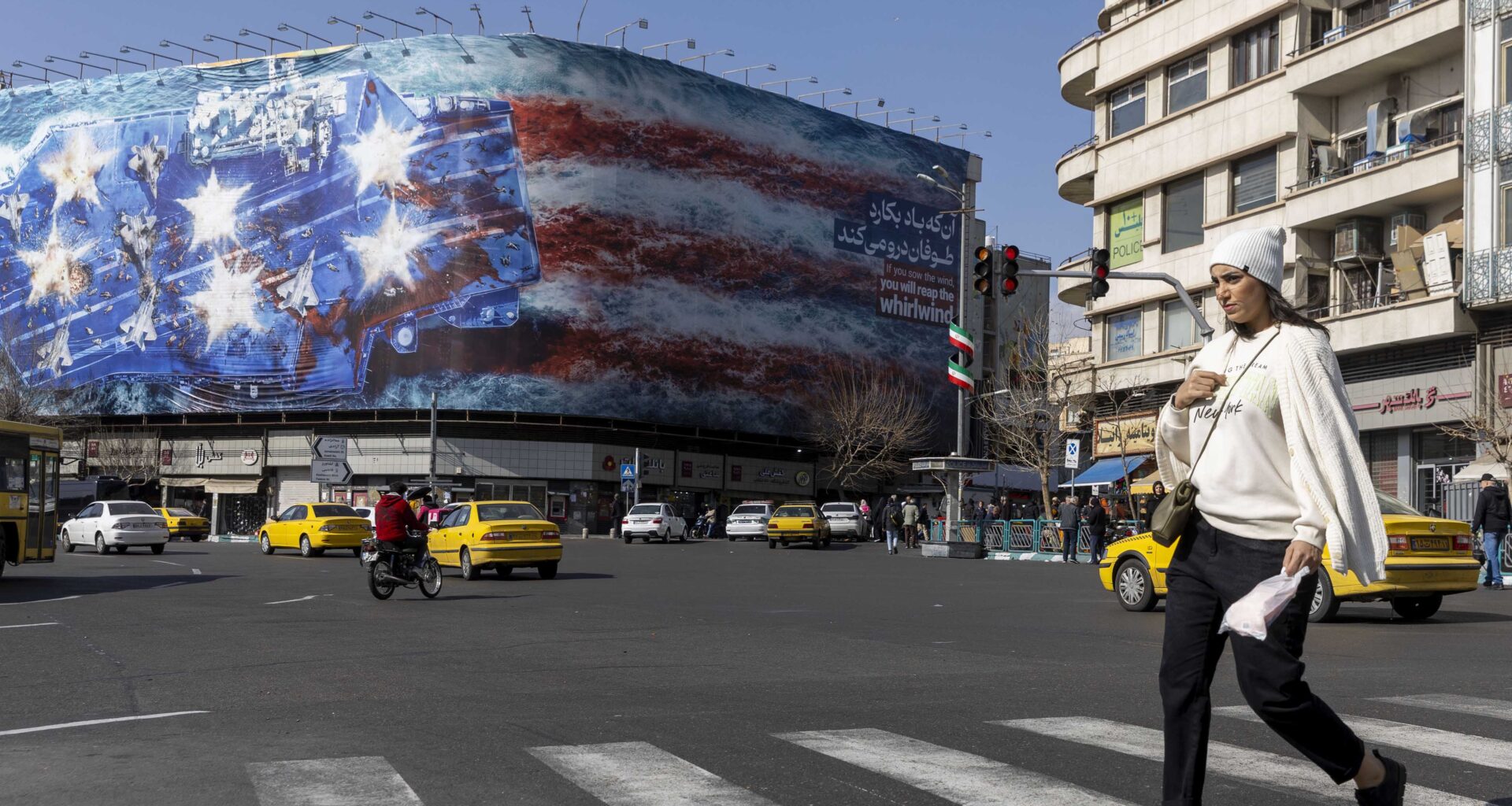
Mona Yacoubian: Rising tensions between the United States and Iran highlight the potential for renewed confrontation. Regional actors, including key Gulf states, have encouraged the Trump administration to seek a negotiated solution. Today, the region stands poised at the precipice between conflict and diplomacy. Can the United States and Iran bridge their differences through the negotiations? Will all key concerns regarding Iran, its nuclear ambitions, ballistic missile capabilities, and support for regional proxies be addressed? What’s at stake for the Middle East and for the United States?
I’m Mona Yacoubian, director of the Middle East program here at CSIS. And to help us unpack all of this, I’m joined by the Middle East Program’s four distinguished nonresident affiliates: Michael Ratney, former U.S. ambassador to Saudi Arabia. Susan Ziadeh, former U.S. ambassador to Qatar. Vali Nasr, former dean and currently Majid Khadduri professor of international affairs and Middle East studies at the Johns Hopkins School of Advanced International Studies. And Joseph Farsakh, a former State Department senior policy advisor focused on Yemen and the Gulf.
Vali, I want to start with you. We’re going to get to the negotiations and all of the brinksmanship, but I want to start with the protests, the historic protests, and brutal crackdown that took place beginning late December into early January. There have been protests around the world this past weekend calling for regime change in Iran. And yet, inside Iran it seems as though the protests have been largely quelled. Can you give us an update on what the situation is like right now inside Iran?
Vali Nasr: I mean, the situation is very tense. I think the country is still in shock, in despondency after the protests. And there’s also still a great deal of anger, both towards the Islamic Republic, because of economic and political situation, but also there’s a great deal of anger for the degree of blood that was spilled in quelling the protests. The protests were a sudden explosion, if you would say. They were not – this was not a concentrated campaign led by a political movement. And therefore, that kind of an explosion is not necessarily sustained over time, particularly when it faces the kind of brutal crackdown that happened. So it’s not surprising that the protests are not there.
But we are seeing reflections of it. For instance, yesterday was the 40th anniversary – the 40th day after the death of the protesters – after the killing of the protesters. And across many funerals in Iran there were chants against the Islamic Republic, against the supreme leader. So the issues have not been resolved. It’s not as if the Islamic Republic was able to put this to bed as a – I mean, as a political challenge. It was able to force the protesters to evacuate the city – the cities, the streets, the towns. And the protesters, because they’re currently not organized, they don’t have a communications network, they don’t have leadership on the ground, they don’t have political organization, are not able to sustain that movement, again.
But I’m sure that, given the economic pressures that Iran faces, and particularly the fact that Iran really – both the government and the people – crossed the line on January 8th with the massive uprising and the massive killing, that this political tension is going to erupt again in one form or another.
Ms. Yacoubian: And, of course, it’s the protests that kicked off this latest chapter of tension between the U.S. and Iran. And I do want to turn to the second round of negotiations that took place yesterday in Geneva. Not entirely clear what the result was. It doesn’t sound like – they didn’t collapse, the talks. And yet, it’s also clear that there are significant differences that continue to divide the U.S. and Iran. I wonder if you could give us your sense of an assessment of how that round of talks went. Is there – are the differences between the U.S. and Iran bridgeable?
Dr. Nasr: I think the talks went well enough, in the sense that nobody came out and said they failed. And basically, they said there is room for –
Ms. Yacoubian: It’s a low bar. (Laughs.)
Dr. Nasr: It’s a low bar. And that they’re going to meet again. So the definition of success here is quite low. I mean, Iran has gone into these talks basically under the gun, under two guns. One is under the threat of a direct American and/or Israeli military attack, given the armada the president has built in the Gulf. And the second gun to their head is actually the protests, because the protests were caused by the very economic sanctions that the U.S. has in place. And Iran can only lift these sanctions through a successful deal. But also because Iran’s leadership understood the protests to be connected to an American strategy against Iran.
I mean, first of all, Secretary of Treasury Bessent has said very clearly that this was a successful strategy of forcing the Iranian public into poverty, desperation, and bringing them on the street. And then President Trump also, during the protests, threatened direct military intervention in Iran. So the protests were not separate from the threat of war. So when the president says come to the table otherwise there will be war, what he doesn’t say is that come to the table otherwise you’re going to be in a persistent situation with protests.
Having said that, I think the Iranians’ expectations of the talks is very low, in the sense that it’s not only about the terms or the process. It’s about the fact that Iran has no trust, that even if it arrived at a deal, that the U.S. would not attack it anyways, or that it might attack it during the process, or that the U.S. actually would implement what it agrees to and would not walk away from another deal. So they don’t want to go into a deal in which they give President Trump the ability to declare that this is resolved, we’re in agreement, there is a deal, because they don’t see that it resolves anything for Iran.
They want the United States to sit down and negotiate every comma, every period, every word of this, and then give them certain guarantees that would suggest that the deal would be implemented and there would be no war. And they’re nowhere close to getting that. And as a result, they’re not close to giving anything that the United States right now would want to declare victory.
Ms. Yacoubian: So, Susan, I want to turn to you. So Vali has laid down a number of factors, certainly this significant deficit of trust, also the military buildup – which seems unprecedented, at least in recent memory. All kinds of military assets being flooded into the region. I’d like you to give us your sense of where you see this attempt at negotiations. What’s your assessment of what happened yesterday? But also, I think, very important to understand, unpack for us a little bit the role the Gulf has played quietly behind the scenes in seeking to mediate and look for off ramps and a negotiated resolution to these tensions.
Susan Ziadeh: Well, the Gulf, in particular the littoral states up and down the Persian Gulf, are very concerned about these tensions. It affects them. It’s their neighborhood. It’s their geography. They really don’t like it when they have outside powers coming in and meddling in the neighborhood in a way that leaves the cleanup to them. They have, in the last few years, made more accommodation towards Iran, trying to bring down the temperature. They have wanted to be able to find a modus vivendi with Iran, knowing that economically they are struggling. And that if they could come up with that, that kind of stability is important.
Look, these countries are looking for regional stability and they’re looking for regime stability. And those two factors don’t mix well with tensions in the region. They are economies that are based on hydrocarbons. They are trying to move away from that model and try and expand their economic base through trade, through investment, through tourism, through entertainment. All of that requires stability in the region in ways that is very important to them. And the last thing I would note is, even with the goal of diversifying their economy, so much of their GDP is still based upon energy sources and exports. And the fear is always what happens if the Straits of Hormuz is closed and they can’t get their energy products out. The maneuvers that the IRGC has done over the last couple of days near the Straits of Hormuz was very troubling for them.
Now, the last comment I would make is the price of oil, Brent and West Texas, still is around 60-62. I think that has stabilized because of the results of the negotiations, which left a little bit of hope. But if the situation changes, the price of energy will go through the roof. And then they will not be able to export, therefore losing market share. And market share is everything to these countries.
Ms. Yacoubian: So, as if we didn’t need more complicating factors, we also have to note this rift between Saudi Arabia and the UAE, which is playing out at the same time that all of these tensions are rising between the U.S. and Iran. Can you help us understand a little bit better kind of what’s driving that rift between those two countries? And, I mean, in a sense, does what’s happening with Iran perhaps lead them to, you know, put their differences aside and come together in the name of addressing these other sort of potentially existential threats?
Amb. Ziadeh: Yeah. I’ll start with the second part of that question, because I do believe they’re going to take the step back and try and lower the temperature, because of the concerns of what’s happening in the region. There has to be some kind of cooperation, at least in terms of defense mechanisms in the region. And they understand that, in that sense, they’re all in this kind of same boat. That said, that account ledger is still open. Doesn’t mean that’s gone away. These folks have long memories. And this is not the first time that these two countries have, shall we say, seen the region in different terms, and had different priorities and different expectations.
And so for Saudi Arabia and the UAE – and, of course, Michael can address Saudi Arabia more recently – the fact is that they both are competing for investment. They’re both wanting to be seen as the hubs for artificial intelligence, even though the Emirates has a long experience in that much before Saudi Arabia. But also, the whole experience in Yemen, I think, was really the straw that broke the camel’s back, if you’ll pardon the pun, because Yemen is existential for Saudi Arabia, And when those borders were starting to be breached by the Southern Transitional Council, and movement was going into areas of Hadhramaut and the Mahra province, that became very problematic for the Saudis. And they realized that the Emiratis were moving their people into an area that was at variance with Saudi interests. So that was really the sticking point. But, I mean, there’s a history of tensions between the two countries. They have always tried to find a modus vivendi and make it work.
Ms. Yacoubian: So, Michael, I want to bring you in. And let’s start, you most recently served as U.S. ambassador to Saudi Arabia. What’s your sense on where the Saudis are with respect to both these rising tensions with Iran, but also its differences that they are playing out with the UAE? How do those factors fit together in the moment we find ourselves in?
Michael Ratney: Sure. I mean, the Saudis have no love for the Islamic Republic, for their ideology, for their nefarious activities in the region. They would love to just wish it away. But they know they can’t. I think, from their perspective, their bigger enemy is instability. They have these huge ambitions, as Susan was saying, commercially, culturally, politically. And the challenges are twofold. One is oil prices persistently low. And what they’re trying to do is expensive. And as we’ve seen, they’ve started to reprioritize some of these giga projects. When you have oil in the 60s, this conflict notwithstanding, it doesn’t seem like there’s any hope that oil prices are going to go up in a sustained way.
And the other enemy is instability. Because they’re not going to get investors, and tourists, and visitors, and others coming in – not just to Saudi, but to the Gulf in general – if there’s conflict in the region, if there’s rockets and drones and missiles. So as much as they dislike the Iranians and everything that they stand for, they’re just craving stability and predictability. And all of those things are up for grabs right now, partly because the United States and Israel are kind of rattling the saber, pressuring the Iranians towards negotiations under threat, as Vali was saying. And I think it makes them very, very nervous. And it’s also awkward for them because they all have a pretty good relationship with the Trump administration, on the one hand. On the other hand, I’m sure they’re telling the Trump administration that this is not certainly in their interests, and I think they probably want to reflect that more broadly, not in the interest of stability in the region generally.
Ms. Yacoubian: So you’ve mentioned Israel. And I think I would like to bring that factor into the discussion as well. Of course, you served in Jerusalem as consul general. We know that Prime Minister Netanyahu was in Washington last week. It sounds like ostensibly, at least in part, to bring a message about where Israel stands on Iran. I think we see an Israel, certainly post-October 7th, that is looking at preemption at all costs and really will not tolerate an Iran – not only a nuclear Iran, but even an Iran with significant ballistic missile capability. There’s satellite imagery that suggests that the Iranians have, in fact, started to restore those capabilities. So can you give us a sense of where Israel’s position is today with respect to these talks and negotiations?
Amb. Ratney: Sure. I mean, it’s a complicated situation for the Israelis, And I think it’s a graver situation, in a sense, for Israel than it is for other countries in the region. I think a lot of countries in the region regard Iran as troublemakers. For the Israelis, it’s frankly – not to overuse that term – it’s more existential than that. As a matter of Iranian ideology. They’d like the destruction of Israel. And the Israelis know it. It’s a political issue in Israel too, but I think they also regard it as a fundamental strategic issue.
I think they were, in some sense, satisfied with the kind of bottom line of this 12-day war. It had degraded the Iranians’ air defenses. It had some impact on their nuclear program. But, from the Israeli perspective, there’s a lot of unfinished business, right? I don’t think there’s any doubt, at least in the Israeli mind, that the Iranians intend to reconstitute their nuclear program to the extent that it was destroyed, reconstitute their air defenses, their ballistic missiles, and continue to pose a threat.
So I think from the Israeli perspective, there’s a window of opportunity here, right? They haven’t fully rebuilt their air defenses. They’re still vulnerable. There’s an opportunity to inflict even more damage. Who knows if they want to take that as far as toppling the regime? I think for a lot of Israelis, certainly in their security establishment, that seems like a very appealing prospect. On the other hand, I’m sure there’s some that say they don’t quite know what comes next, right?
They’d love to think that that Reza Pahlavi is going to come and kind of lead the country into stability and reestablishment of relations with Israel. But I think in the back of their mind, or deep in their heart, they know that’s probably unlikely. And they probably also listen to the voices of others in the region that are gravely nervous about what happens if you go from a deeply troubling Islamic Republic to complete chaos. At that point, you really don’t know what you get.
I would say, though, at the end of the day they would err on the side of kind of a more aggressive posture. And I’m sure that’s what Trump heard. I’m sure he heard that if Trump embarks on a negotiating process with the Iranians, here are the things that it has to address – nuclear program, ballistic missiles, malign activities in the region, a whole range of things. And absent that, it is, from their perspective, a faulty deal. And I think they know, at the end of the day, that they can make those arguments to Trump all they like, but at the end of the day Trump has his own calculations. And the decision for war or peace or negotiations doesn’t rest with the voices of governments in the region. It doesn’t rest with a policymaking process in Washington. It rests in the brain of one person.
Ms. Yacoubian: Indeed. So, Joseph, I’d like to bring you in as well. And both Susan and Michael have talked about – Michael referenced potential chaos. We don’t know what would happen. Susan has talked a little bit about the potential if the Strait of Hormuz were blocked, the economic and energy implications of that. I also note that President Trump has also agreed – as part of this multipronged effort to pressure Iran, he has also raised the prospect of potentially up to 25 percent tariffs on any country that does business with Iran. So this is part of a broader economic campaign as well. What is your sense, more broadly, of the implications of the tensions and the crisis that we are currently watching unfold in terms of energy markets, in terms of freedom of navigation, in terms of other kind of global reverberations that we should all be thinking about?
Joseph Farsakh: Thank you, Mona. Well, as Ambassador Ziadeh said, the most significant global economic question has historically been what happens in the Strait of Hormuz, right? That’s the economic doomsday scenario that’s been outlined extensively. And to me, the real question is why hasn’t Iran done it already? They didn’t do it after the Soleimani killing. They didn’t do it after Israeli strikes. They didn’t do it after U.S. strikes. And to interpret that, we have to consider that Iran itself exports 1 to 2 million barrels per day through that strait. So it’s their economic lifeline. And most of that oil is flowing to Asian buyers. And China has explicitly called closing the strait a quote, “most irrational proposal,” because it would devastate Iran’s own economy.
And we saw this play out in the energy markets last June when the Iranian members of parliament threatened strait closure. Brent crude spiked to $80-81 a barrel. But after the ceasefire was announced, prices dropped immediately to $68 a barrel, which is actually below the pre-conflict pricing. So effectively, markets shrugged off the idea that Iran was going to go through with it. My opinion, the more likely scenario isn’t full closure. It’s asymmetric disruption, targeted harassment, forcing rerouting, raising insurance premiums, essentially an everything playbook.
Now, on the regional investment issue set that Ambassador Ratney referenced, the 2019 missile attack on Saudi Aramco facilities really shed light on how exposed Gulf critical infrastructure is. And today the Saudis have committed north of $100 billion specifically to AI development with significant joint ventures and partnerships already underway. And as the ambassador referenced, the UAE has deployed billions of dollars in AI investments. And Dubai is targeting 10 percent of its GDP to be from AI by 2030-2031. These aren’t just oil economies anymore. They’re really positioning themselves as global AI hubs, with massive datacenter buildouts and sovereign computing initiatives.
So FDI in the Gulf really takes a hit when the conflict is close to home. It’s different in that sense. And Gulf states, as we’ve heard, you know, are extremely jittery, knowing that U.S. military action could rebound on them in a retaliation event. The economic calculus just isn’t really only about oil. It’s really whether the Gulf can remain a viable node in the global digital economy, or becomes too risky for the Microsofts and the Amazons, who are making multibillion-dollar bets there.
Ms. Yacoubian: So you, I think, made passing reference to the Houthis. And I do want to raise that potential X factor, or maybe it’s less – it’s more than an X factor. But we’ve worked on Yemen quite a bit. If in fact confrontation did get kicked off, do you see the Houthis engaging? And if so, what kinds of things would they do? And if not, why not?
Mr. Farsakh: Well, Mona, when the Houthis say something, they generally do it. The evidence really indicates that, yes, they’d attack. They’ve said they would. They’ve done so throughout June 2025, the U.S. and Israeli strikes. And they, of course, often point to the ongoing Israeli strikes in Gaza, even during the ceasefire, right? They really haven’t been degraded as much as folks might think since the start of the regional war. And as everyone knows, they control the Bab al-Mandab Strait – 9 percent of global seaborne oil, 12 percent of maritime trade. And markets have really shifted and reacted to the reality of how they’ve exercised that chokepoint.
The real question is whether the Houthis will ever land a massive hit on a U.S. warship. That’s what changes the calculus. If the Houthis sink or severely damage a warship, and especially if you have American casualties, that becomes a real political crisis for the Trump administration. It would force exactly the kind of wider entanglement that has very low support domestically. A sunken destroyer with American casualties would create irresistible pressure for major escalation, at a time where public opinion is essentially screaming for less entanglement, if you will.
Ms. Yacoubian: So I’d like to actually engage all of you on thinking a little bit about the situation we find ourselves in today, and to what extent is it similar to or different from the situation that pertained in June where, again, there were negotiations ongoing. Israel initiated strikes against Iran. The president got involved, President Trump. He talked about two weeks to discuss or think about, mull over an answer. Not unlike what we’re seeing today where, again, the timeframe that’s been laid down is two weeks. And then we went to war two days later, I think it was. So are we in a similar situation? I’d like to start with you, Vali, and then we’ll just kind of go around. But does what we’re looking at today – does that reflect what happened in June? And I guess the other point I’d make, especially for you, Vali, is we did, of course, see the U.S. get involved. The Iranians then hit a U.S. base in Qatar. But very quickly the situation deescalated. It was kind of a one – it felt like very much like a one-off back and forth. Is that the same situation we can expect today?
Dr. Nasr: Well, there are a lot of similarities in terms of the way the scene is set. You know, there’s negotiations are not going anywhere, and both Israel and the United States are poised to attack. But there are also differences, which is very important. Which is – one is that there’s lessons learned by Iran, as well as the region. And that’s why the region is playing a very different role. And for now they’ve had influence in averting war. It remains to be seen for how long they can exert the same influence on the Trump administration. But this time, I think the Iranians have their finger on the trigger. The element of surprise is gone.
They were surprised last time. A lot of their commanders were killed. There was a lot more disruption. The Israelis cannot pull off the same kind of an attack. And this time, the Iranians, I think, have come to the conclusion that symbolic reactions to U.S. or Israeli attack is actually not productive for them, because it keeps them in this situation. And then they’re going to get hit again. So I think they’re highly motivated to take this to the next level for the United States. So the way – and it’s also, I think – and they may be completely mistaken on reading this – is that they didn’t ask for the ceasefire last time. It was the United States that asked for the ceasefire. And their belief is that Israel began to sort of think that, you know, the war can go beyond two weeks, and then they enter into a period of whether the Iranians are going to run out of missiles first or the Israelis are going to run out of interceptors.
And so the Iranians calculated that actually a massive retaliation may be much better for them. Secondly, last time the president – the United States only entered the war for 45 minutes, right? And then immediately there was a ceasefire, and this sort of Kabuki of Iranians attacking empty buildings in Al Udeid Base. And I think the Iranians realized that this is not going to work for them. So that’s different. I think the United States may think that it can carry out the same kind of a strike, a targeted strike, but the risk is the Iranians this time actually deciding to completely change Washington and Jerusalem’s calculation. Because right now they’re sort of in a position they think they can escalate and hit Iran at any time they want, and then say, OK, you can come back to the table. And this time you sign a surrender deal, give up proxies, missiles, nuclear program. And we’ll think about whether we want to lift sanctions or not, right?
And so I think a much larger war is strategically – to their thinking – is strategically to their advantage. And they have communicated this to the Gulf, I think, very, very forcefully. And part of the reason why we’ve seen the Gulf react the way it does – I think, you know, the comment is absolutely correct It threatens their digital economy. It threatens services and security. But I think they’re not going to go after the Straits of Hormuz. They’re going to go after oil production, whether it’s – and, you know, they’ve done this before, when they attack the Abqaiq. And I think that motivates the Gulf to actually try to hug Iran tighter, in order to say we really are with you. Don’t put us on your target list. But I think if it really comes to disrupting world energy, it’s not – it’s not going to be the Straits of Hormuz. It’s going to be attacking tankers, attacking pipelines, attacking oil production.
In a way that, if we’re sinking everybody’s going to sink with us. And if you want this to stop, you have to change your calculation. It cannot be the same old rules of the game, that you hit us whenever you want and you offer nothing at the table, and we don’t get anything out of a deal. And so I think that makes this much more dangerous. And one problem I think might be, among the thinking in the West, is to think actually it’s going to be like last time. And it may end up not being the case. And I think that’s exactly what the Gulf is trying to communicate to Washington.
Amb. Ratney: Can I ask –
Dr. Nasr: Yeah.
Ms. Yacoubian: Please.
Amb. Ratney: The Iranians must imagine that the Israelis are going to go, maybe the U.S. as well, kind of fast and strong against all of their military assets. So they might be in a use or lose scenario, they got to fire everything or it’s just going to get destroyed 10 minutes later. Is that – does that sound realistic to you?
Dr. Nasr: Possibly. I mean, last time the Israelis were surprised by the fact that they didn’t knock out Iran’s ballistic missiles. They hit a lot of launchers. And also, if you kill 30 commanders of a military, you don’t expect them to start firing back within 24 hours. And so I agree. I mean, I think the Iranians have rebuilt in the past six months in a stealthy way, have taken things further on the ground. They’re going to be unpredictable. But I think they basically – they could try to go big at the beginning, or they might want to drag the United States in a protracted situation. So you hit a tanker, or you hit an oil facility, or you hit an American ship, and then it’s up to President Trump to go to the next level. And then, you know, you can go further from that. But you’re right. I mean, this might be a miscalculation. I don’t want to say that they’re in command of it. But we’re in a scenario where this might get out of out of control very quickly.
Amb. Ratney: Yeah.
Ms. Yacoubian: So I want to bring Susan and Joseph in on the Gulf. Yes, please.
Amb. Ziadeh: Well, I just wanted to say, before we go back to the Gulf, it raises a question – and if you want to do it later, that’s fine – but what are U.S. objectives in this? This is something that I still can’t quite fathom. I mean, it can’t be a replay of last time, because so much of the nuclear facilities, et cetera, have already been destroyed, to an extent. Yes, they’re rebuilding. Yes, on the ballistic missiles they’re rebuilding. But there hasn’t been enrichment over the last seven, eight months, because they can’t.
And so the question is, what are our objectives as the United States? You know, if you do military planning, you know, what’s the end state? What is it supposed to look like? So now we’ve got this huge armada that’s gone out, second aircraft carrier. We’ve got all kinds of attack and fighter jets in bases in all kinds of areas in the region. But every aircraft carrier can hold at least 75 aircraft. So that’s a big, big power. What is it that we’re trying to achieve? And it’s not clear to me that we understand that, and therefore we understand what would be the military planning to support that end state or that objective. And that’s very unclear.
And then bringing it back to the Gulf states. This makes them so nervous. So nervous. Because they don’t even understand what this is going to look like. Is it going to be just more of the same? Is it going to be, no, we’re going to take out the leadership. Who does that leave in the leadership, if other leadership is taken out? And what does that mean in terms of civil society, and civil unrest, and lack of law enforcement in areas that could create ungoverned spaces where new actors come in which are antithetical to any state regimes?
Ms. Yacoubian: So I definitely want us to lay down a little bit more thinking on U.S. – what are potential, U.S. options, and what are the implications of those, what type of force is needed. But I would like to draw it – I love this idea, Vali, that you laid down of lessons learned, and how different actors in this drama are taking lessons from what happened before in June. And, Joseph, maybe pull you in, because I think we’ve talked a bit – and it sounds like there’s even an explicit kind of warning to the Gulf that these trillions in AI investments, your whole, you know, Visions 2030, 2040, whatever, to diversify your economies, will all go up in smoke if this conflict comes into being.
Joseph, do you have a sense of kind of lessons learned that the Gulf has taken? And how are they approaching this differently? And how are they approaching Trump differently? It does feel like they’re learning more how President Trump operates, and are putting their own playbook into action.
Mr. Farsakh: Well, you know, they are, to some extent, in an awkward position, because they do have, you know, good relations with the administration. They want to keep it that way, and want to survive, ultimately, these next few years, and mitigate, you know, the damage, if you will. The real prize of diplomacy, you know, in this context, is what I call the regional stability premium. Because if you – going back to 2015 JCPOA, and I don’t think we’ll get anything nearly as comprehensive as that even if we go down the route of a negotiated outcome as opposed to further escalation. But back then, regional stock markets in the Gulf gained relatively significantly. And, you know that enables long-term planning. It enables sustained infrastructure investment, confidence from these Western technology companies to make the billion-dollar bets that we’re talking about.
The fundamental question, as far as I’m concerned, is whether the region and the Gulf continues to absorb the instability tax, or if they secure, you know, durable stability and a dividend, effectively, through this credible diplomacy. And for the U.S., you know, stability in the region advances our interests. It aligns with our values and it delivers more reciprocal investment opportunity. That’s the conundrum that I believe the president is in. You know, he is a businessman and understands the advantages of the investment opportunity and what that can mean for the economies there, and the economy here in the United States, which is important to him. But he’s balancing several factors. And it’s difficult to tell where it’s going.
Ms. Yacoubian: So I like kind of the way you’re framing it, and these – sort of these different options. And in a moment, Michael, I’m going to put you as the lead in the Situation Room, or Mar-a-Lago, or wherever these conversations are being had – (laughs) – as to how we understand the risk/reward calculus of President Trump in this administration, in terms of where to go next. But I do want to draw you out, Vali, on one other thing that had come to mind. I didn’t hear you say one of the other options the Iranians may choose to undertake is to unleash missiles on Israeli cities, in ways that – if there’s an attack – in ways that would cause a lot more damage and harm to civilians. Is that something that is in the Iranian playbook, potentially, for this next round of conflict, if it happens?
Dr. Nasr: I mean, they have said – they have made that threat. I mean, there are Iranian Revolutionary Guard commanders who have made that threat as well. Particularly if Israel comes in directly, that they would do so. But I think right now they’re targeting President Trump directly, which is because if you’re trying to avert war, or you’re trying to force a different scenario in the next round of – round of negotiations, you have to threaten American body bags. Because their assumption is, and you often hear him say it, that he wants things nice and neat, like the 45-minute bombing of Iran, or like Venezuela. And they’re trying to convince him that this is going to be messy. Now, whether they shoot all their missiles at once or gradually, you have to begin to make that calculation.
And then also, they realize that he’s more sensitive to what happens to the Gulf than what happens to Israel. Not in the sense that he doesn’t care, but because of the business side of things. But also, the fact is that if you threaten Israel it doesn’t make Israel go to Washington and say, please don’t go to war. But if you threaten the Gulf economies, you get five or six, and at least three of them much more important than others, allies who have the ear of the president directly, who go to him and say, don’t do it. So I mean, logically, you know, yes, you threaten Israel that if you hit us, we’ll hit you. And we hit Tel Aviv and Haifa pretty hard last time, so this might get messy. But I think in the short term – right now, the purpose of the threats is not actual war planning. The purpose of the threats is to get the president of the United States to back off. And so you want to threaten American ships, and you want to threaten the Gulf countries.
And also, Turkey is also pretty worried about this. We have to add to this, because the Turks are worried about millions of refugees, Iranian refugees, that will go into Turkey. It has happened during Iran-Iraq War. This time it might be something bigger. They’re also very worried that if things in Iran begin to collapse, what happens to Iran’s Kurdish region? Because that’s actually the prime place where you might end up with the start of a serious scenario, armed, you know, militias, et cetera, taking hold of a part of the country, and then fighting for that. And then they’re facing, you know, a renewal of the Kurdish issue as well. And so the Iranians are basically making the point to all of these countries that, you know, we’re not going to go down on our own, very politely. If we’re going to go down, you know, you guys are going to get bloody as well.
Ms. Yacoubian: So, Michael, lead us through a quick laydown of kind of how do you think the current administration is weighing the risks/rewards of this sort of fork in the road that it appears we’re at, of whether pursuing negotiations or pursuing military confrontation.
Amb. Ratney: Yeah, so, Mona, even your question presupposes the existence of a rational policymaking process, right? (Laughter.) And we can’t think in those terms. You know, the U.S. military clearly has the ability to project an astounding amount of force, right? But ultimately that force is a tool of policy. And I think it’s unnerving to the governments of the region, probably to the Iranians, probably even to the U.S. military, it’s not clear what that policy is or how it is formulated. It’s not formulated in normal ways, right? There’s no interagency process debating options, and cost, and benefit. There’s stimuli kind of affecting President Trump’s calculations at a given moment. And it could be a conversation with the Israeli prime minister. It could be a conversation with a Gulf leader. It could be a conversation with U.S. politicians. Could be a conversation with friends of his, right?
And I think all of those somehow conspire to produce a decision. And we never know what that is or when the decision is going to come. I do think President Trump is – I think his inclination is to avoid military conflict. That does seem to be the pattern. He doesn’t want to get into another war. War is bad for business, right? He hears there’s impulses, certainly, and there’s pressure from political figures, from Israelis, from others, that say this is your only chance to do this. You need to show that the U.S. is in charge, we’re not going to be pushed around. On the other hand, like I think he’s – I think he’s generally disinclined to do it. And it makes for an extraordinarily unpredictable environment.
And, you know, in the middle of that he’s facing, in a sense, U.S. midterm elections in some months. He’s going to calculate how does that figure in. The Israeli leadership is facing elections in some number of months. The Gulf is facing kind of low oil prices. This conflict between the Saudis and the Emiratis, which is kind of affecting their ability to have a kind of cohesive approach to regional crises. Like, it is different than June in the sense that there’s a lot more uncertainty surrounding the decision-making process. But I think it still rests in the head of one person. And, you know, I hate to put odds to it.
Ms. Yacoubian: Hold – you’ll have to do that at the end. So hold that, OK? (Laughter.)
Amb. Ratney: OK, gladly. (Laughter.)
Ms. Yacoubian: But I mean, I – OK, so I feel like we should probably draw out a little further this other potential, which, however distant the prospect, of a negotiated outcome to this. And maybe I’ll start with you, Vali, and just ask each of you to reflect a little bit on, you know, what would a negotiated resolution to this look like? Is it a JCPOA-type agreement? Is it something more, which the president seems to be under pressure to produce? Do all of these various demands that have been put on the table be – are they satisfied in a negotiation? Or is it something less?
Dr. Nasr: Well, in a way, we’re back to JCPOA. I mean, even when JCPOA was signed, the immediate criticism was that, as Secretary Blinken later on, years later, put it, that we needed a bigger, longer deal. So the terms of the JCPOA itself had to be better, but also it should have included missiles and proxies. So already what the United States is putting on the table, without calling it that, is that they’re looking for a JCPOA-plus, right? So, you know, you give up enrichment, you give up this, you give up that, timelines, you know, sunsets, et cetera, will all be very different. And then you will also negotiate over your missiles and your proxies. Now the Iranians, I think, are ready to talk about a JCPOA-plus. Doesn’t mean that they would accept every one of these terms along the same way, but they understand that they need to go much, much farther.
For instance, they have floated this idea that there could be a consortium of enrichment in the region. So technically, you could say that Iran is no longer enriching on its own soil but, for instance, it’s enriching with Iranian centrifuges in Oman. And then, you know, the enriched uranium is, let’s say, stored in Saudi Arabia, et cetera. And so Iran can claim it’s enriching, and the U.S. can claim it’s not enriching on its own soil. I mean, all of these can be eminently negotiated, let’s say. But the problematic is that President Trump – and, Mike’s right, it goes to the person we’re dealing with, doesn’t have the patience, or the diplomats for that matter, to actually do a negotiation.
He’s after a declaration, not a deal. A declaration like the Gaza peace plan, to come out and say I solved the 3,000-year, you know, conflict. He wants to come out and say that, you know, I solved Iran’s nuclear program, although we don’t know what the detail is. And things are going to be fine from here on. And, you know, if he could get to say that I also had a 15-minute conversation with the President of Iran, or something like that, that would be the cherry on the cake. But basically, he can claim that he’s the American president that, after 47 years, changed the trajectory of Iranian-American relations, solved the Iran problem.
So I think if you were to say, Susan, what is – America’s objective here is not clear. But to me, his objective is much clearer.
Amb. Ziadeh: Yes.
Dr. Nasr: Which then, this definitely would make him a Nobel Prize candidate, right?
Ms. Yacoubian: There we go.
Dr. Nasr: But the Iranians basically distrust this man in particular, above what distrust they have about the United States, because he walked away from an American deal that they had implemented. I mean, we might say it’s a bad deal, whatever, but they don’t think it was a good deal either, because clearly they didn’t get anything out of it. And also, the United States backed out of it. He’s the one who gave a green light to Israel in the middle of the negotiations. He’s the one who basically was totally disinterested in any conversation between Iran and the U.S. until the protests happened, and then all of a sudden calculated that the Iranian protesters are America’s boots on the ground and I’m just going to topple the regime. And then, when that didn’t happen, then he fell back again on the – on the nuclear deal.
And as I said earlier, they don’t trust that he – they won’t get bombed in the middle of the process, after the process. They’re not – they’re not convinced that any sanctions would be lifted. The worst-case scenario for them is something like a Gaza deal, that there’s a great declaration out of Geneva and then nothing happens on sanctions. So he claims his victory; they don’t get anything.
So they are insisting on a proper negotiated process, even if they’re going to give a lot more, even if it’s much, much further than JCPOA. They want to be able to hold the United States to a text that is previously negotiated.
And also, they’re going to have their own JCPOA-plus. In other words, I’m sure at some point they will say for every centrifuge that is dismantled you need to show that you’ve dismantled a sanction. That is going to be a step-by-step process. There’s going to be verification. All of that can be negotiated. I don’t want to say it’s not done. But – and the president, I think to – Iranians also realize this – he did lift sanctions on Syria. So he is actually capable of fast-tracking.
Ms. Yacoubian: Of doing it. Yeah. Yeah. Yeah. Yeah.
Dr. Nasr: Of doing it and fast-tracking it. So that’s to his advantage. But I think what the Iranians want is that we’re not going to come out of Geneva giving you a victory until there is a text we can sign.
And also, the way the U.S. is set up, you can’t do that. The two interlocutors are not diplomats. And you know, they want to do this on Tuesday and then do Russia-Ukraine on Wednesday and Gaza on Thursday.
Ms. Yacoubian: No, literally the – literally, the next hour after the – (laughs) – negotiation.
Dr. Nasr: I mean, that’s not going to work. So the blocking issue is both the substance and the process.
Ms. Yacoubian: So, Susan, I want to bring you in on this question, but from the perspective of the Gulf. So we see some of the constraints in a way, I mean, particularly bandwidth constraints on the U.S. side. We see a more engaged and active Gulf. We’ve seen them play a role, for example, in the Gaza ceasefire, playing more of a role there, and even stepping up and offering incentives or elements to a deal. Do you see that, potentially, in a negotiated deal between the U.S. and Iran, that the Gulf play a more active and key role in landing something like that?
Amb. Ziadeh: I think it’s not only possible; we’re seeing it. And it’s important to note in 2015 with the JCPOA the Gulf was left out of the whole process.
Ms. Yacoubian: Yes, exactly. Exactly. Yeah.
Amb. Ziadeh: And it was a secret process. They didn’t know about it. It unfolded, and when they found out they were furious. And I do remember I was at the State Department at that time in charge of the Arabian Peninsula, so I got the earful all the time from the Washington ambassadors. And then Wendy Sherman, who was one of the negotiators on the team for the JCPOA, started doing weekly informational sessions with all of the GCC ambassadors and other Arab ambassadors to start to bring them up to speed, let them know, bring them into the process because the tensions were really very strong and retribution, really, was a bit feared.
So now they’ve learned that lesson, right? We’re not going to be ever caught in that position again, so – in part because of their close relationship with Trump, but now also trying to play a facilitating role. Now, Oman has always played that role with Iran, and you see their foreign minister, Al Busaidi, in Geneva playing that part. But even other – there’s been a lot of movement between GCC leaders to try and tamp down the situation and also deal with the Emirati-Saudi rift, which they feel adds another layer of instability which is unhelpful at this point.
I mean, to see, for example, Crown Prince Salman bin Hamad of Bahrain going to Qatar in the last few days, that was surprising to me. That tells you the level of anxiety of what’s going on in the region. Also, the emir of Qatar going to Abu Dhabi and meeting with Mohammed bin Zayed. So there’s a lot of movement in a way to try and, A, close ranks, get together on the same page, and make sure that there’s a bit of a unified voice so that different elements within the decision-making process – whether it’s in Iran or whether it’s in Washington, or Israel for that matter, where, you know, the Emiratis have a stronger line – do not be able to what we can say is take advantage of possible seams in the relationship.
Ms. Yacoubian: So, Joseph, I want to turn to you for one last longer question related to this idea of a negotiated outcome, and then we’re going to have a lightning round of a few – a few quick questions. But it would be useful – we don’t really do this often, but if you could give us a blue-sky analysis of what would it look like if there is a negotiated outcome, if the issues with Iran are settled in some way, and there is an Iran that is more integrated into the region – which is a vision you hear from the Gulf at times – what does that look like in terms of prospects for investment? Now, I should say that there’s reporting that the Iranians are also seeking to, I think, entice the U.S. with the idea of investment opportunities and so forth that would come with a negotiated outcome here. Can you give us a sense of what that might look like?
Mr. Farsakh: Well, it’s very hard to foreshadow, and there are just so many factors. There’s no doubt that it’s a significant market, a massive market, and an opportunity for U.S. businesses internally in Iran, of course. But you know, that is presuming quite a bit, right, in terms of what a negotiated outcome can look like.
And as I said earlier, I’m not convinced that we’re going to get anything nearly as comprehensive at the JCPOA right now, largely because, as Vali said, the Iranians just don’t trust this administration. I don’t know that we’re going to go down that route. But the jury is still out.
From an economic perspective, a negotiated outcome, obviously, paints a different picture. Partial sanctions relief, for example, could restore Iranian oil exports from the current 1 to 2 million barrels a day to something in the 2.5 million range. You know, that can inject something between 50 (billion dollars) to $90 billion annually into markets. The paradox there is the more Iranian crude you get to hit the markets, especially if it happens quickly, the more it can bring the price of a barrel down, right? And that would squeeze the budgets financing the Gulf economic transformations that we were talking about earlier, all those AI investments and the Vision 2030s, et cetera. So that’s a complicated equation for folks to consider.
You know, blue sky, there are plenty of opportunities. And as I referenced, I do think that there’s a peace dividend in that context because what it unlocks is just more stability, more predictability, and it unlocks the ability of outside companies to have a larger appetite to invest in the region. That integration overall can help. But again, I think we’re quite far from that.
Ms. Yacoubian: OK. So now we’re going to go into the lightning round of just quick, tough questions with quick, snappy answers, starting with you, Michael. Which way are we headed? Are we headed toward war or are we headed toward peace?
Amb. Ratney: So I’m going to cheat.
Ms. Yacoubian: (Laughs.)
Amb. Ratney: I think – I think it’s 50/50, and I actually do –
Ms. Yacoubian: I knew you were going to do that. (Laughs.) OK.
Amb. Ratney: I do think it’s 50/50 because I think there’s – I think 50 percent chance says there’s some military conflict and it becomes unpredictable how far that goes. Fifty percent Trump finds a way with the influence of others in the region to define a result as him having, as Vali was saying, kind of solved this. It’s not an agreement. There’s no time to do an agreement. Might be a framework. It might be an announcement. It might be something that gets you into a process, probably a frustratingly open-ended process, but Trump can say peace in the Middle East.
Ms. Yacoubian: OK. Vali?
Dr. Nasr: I’m somewhat along the same lines. And the reason I would say it’s 50/50 is, first of all, neither Iran nor the United States, even though they’ve been preparing for war, really want to get into a very messy war, and the risks of that are quite high. And so at least that’s going for the fact that in the end they may step back from the brink.
And, secondly, I think, you know, why it’s very difficult to foresee this is because of the personality of President Trump and the way he plays in American foreign policy. I mean, traditionally when we analyze these things we look at sort of trajectories of policy evolving, the momentum of institutions on America’s interests, Iran’s interests, objectives. But when you come to the calculation of one person, and how he reads this, and what is in it for him – because right now really on the ground there’s nothing really in it for the United States, so why are we escalating at this point in time? Iran is not – hasn’t been a particular problem – hasn’t been enriching, hasn’t been doing anything that needed this kind of an urgency other than the fact that the president created this moment on his own, and now how he would calculate the benefits of whether he pursues it or not.
So I think it’s 50/50 because I think it’s 50/50 in Trump’s head.
Ms. Yacoubian: OK. You can’t say 50/50, Susan? (Laughs.)
Amb. Ratney: Forty-nine –
Amb. Ziadeh: Well –
Ms. Yacoubian: War or peace? (Laughter.)
Amb. Ziadeh: No, I would say it’s close to that. The only thing – the only additional element that I would add is the fact that you have arrayed this huge armada into the region. And just the fact that you have so much firepower and so much naval and destroyers and attack planes, et cetera, in the region creates a momentum of its own. And sometimes that momentum is a little hard to just put the brakes on and say that’s it, we’re not doing anything. It’s like, well, then why did you move all of that out there? OK, it’s a deterrent, but we could have done deterrence with a lot less. So I worry about that kind of movement.
And one other thing is we don’t know what the Israeli role is going to be in this. And I think that bears watching because they have a very different calculus than we do.
Dr. Nasr: If I just can add one other thing here is that, you know, we’re going also week by week. This week, this is the scenario around the world. But this president is putting so many issues and so many crises simultaneously on the table that one has to think that one will affect another one. And so this issue of Iran-U.S. is not going to be – it’s not in a vacuum the way, let’s say, Iraq and the U.S. were in 1991 or 2003, where there was no other issues. But you know, domestic issues in the U.S., Cuba, Venezuela, you know, Russia-Ukraine, I mean, two weeks from now one of these other things may have erupted.
Ms. Yacoubian: Yes. Indeed.
Dr. Nasr: And then that would make – have an impact on how he calculates whether he wants to have war here or not.
Amb. Ratney: Or a new one.
Dr. Nasr: Or a new one. That’s right.
Ms. Yacoubian: Joseph –
Dr. Nasr: I mean, Greenland last time actually had that impact.
Ms. Yacoubian: (Laughs.) Right, settled it down.
Joseph, what’s your sense? Which way are we headed?
Mr. Farsakh: Well, in part because of what Ambassador Ziadeh just outlined with the military buildup and what we’ve seen in Venezuela, et cetera, I’m not convinced that we’ve seen the end of U.S. and/or Israeli strikes. If there’s a deal, my read is that it’s a partial deal that kicks the can much more likely than a comprehensive agreement.
Ms. Yacoubian: Well, I want to thank all of you for your terrific insights. I think we were able to cover quite a lot of ground. I think – to me it’s clear that we are at a defining moment in the region. Whichever way it goes, we’ll be – we’ll be tracking it closely.
I also want to thank our online audience for tuning in. I would invite you to visit the CSIS Middle East Program webpage. You can find us by going to CSIS.org and just typing in “Middle – typing in “Middle East Program.” There you’ll find all kinds of insights not only on Iran, but all of the many developments happening in the region.
Thank you so much, and I wish you a pleasant day.
(END.)