
Thai Pollution Control Department taps into technical assistance to mprove water quality
PUBLISHED : 26 Feb 2026 at 10:00
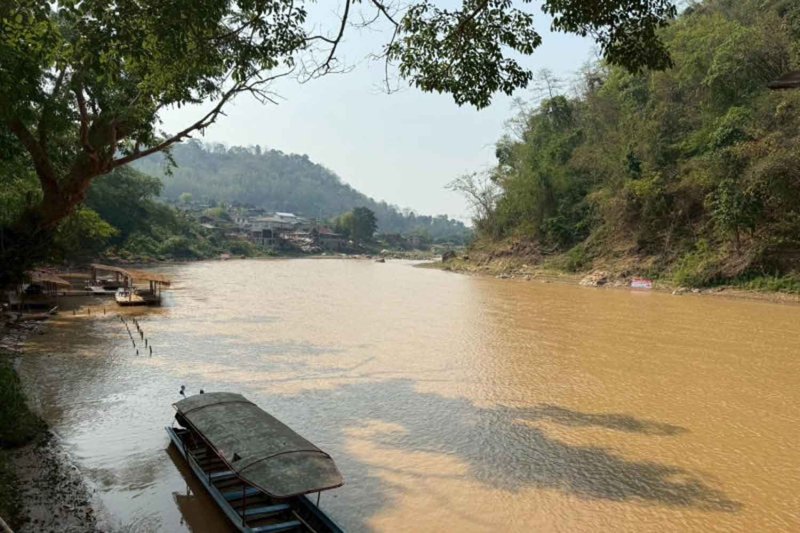
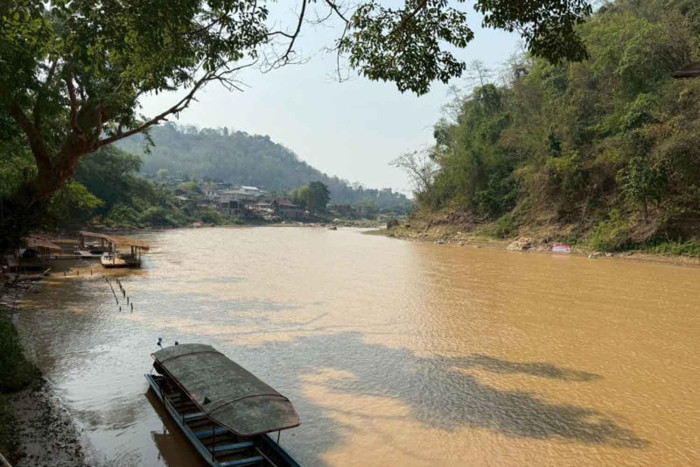
Kok River (photo: Panumet Tanraksa)
Thailand has sought Japan’s support in collecting water samples from Shan State in Myanmar to identify a source of toxic runoff that is threatening the health of people on both sides of the border.
The Japanese government has held talks with the Pollution Control Department on cooperation, particularly on water-filtering technology and sediment studies, department director Surin Worakitthamrong said on Wednesday during a water quality test at the Kok River in Chiang Rai province.
He said Japan is keen to take part in Thailand’s initiative to tackle water pollution and has also engaged in similar projects in Myanmar.
“Japan will help us conduct a heavy metal test on water and sediment samples. We expect to travel to Shan State shortly,” Mr Surin said.
Two main sources of arsenic in the Kok River could stem from either agriculture or rare-earth mining, he said.
Mr Surin said the department would organise a meeting on arsenic pollution in transboundary rivers next month, adding that the government has included pollution in such waterways and haze as part of its flagship policy.
The department also plans to set up eight stations to measure water quality and heavy metal contamination along the Kok River and three stations along the Salween River. The stations will provide real-time water quality results to keep the public informed.
On Tuesday, the department conducted a laboratory test on water samples collected from the Kok River.
A rapid demonstration showed the sample contained arsenic at an amount of 0.005 milligrammes per litre, well within the safety standard of 0.1mg/l. Such tests are considered to have an accuracy level of about 80%.
To ensure water safety in Chiang Rai, the department will seek the cabinet’s approval for 2.25 billion baht to build a new waterworks plant in Mae Sai district next month.
It plans to divert a source of raw water in the polluted Kok River to the Lao River as the Royal Irrigation Department has approved the use of a 30-rai plot of land in Mae Suai district. This is expected to provide tap water for 79,000 families within the next decade.