
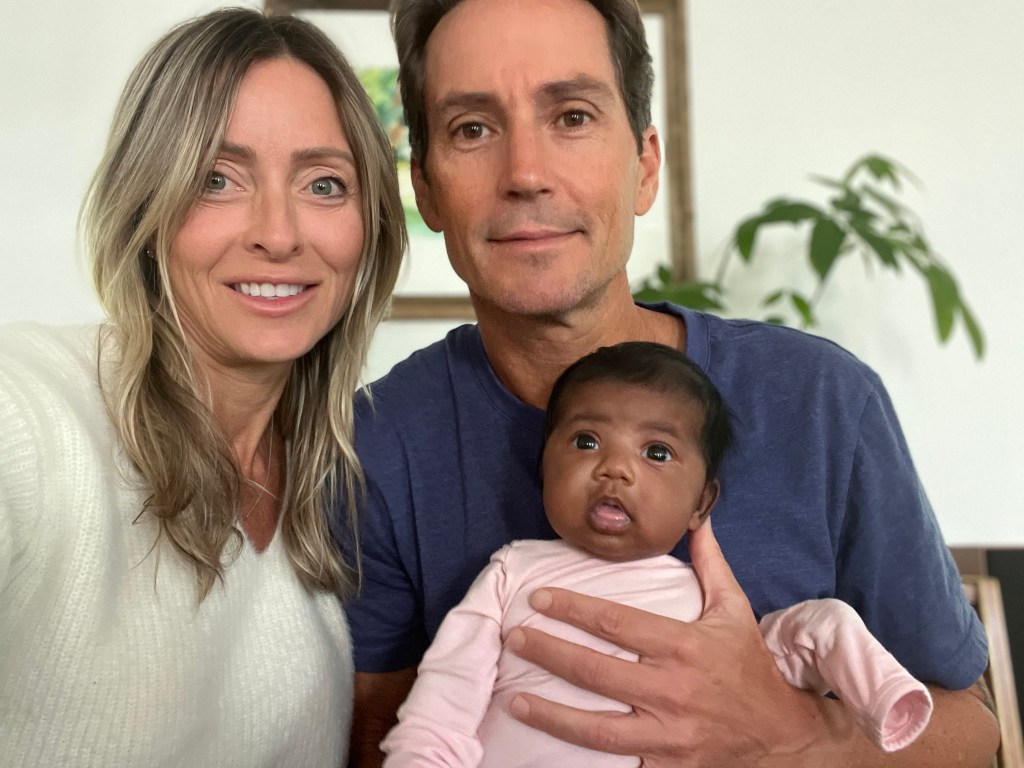
An unnamed couple has agreed to undergo genetic testing to determine whether they are the parents of a baby girl born to a Brevard County couple as the result of an embryo mix-up at their fertility clinic, attorneys said Tuesday.
The unnamed couple have told attorneys that they used the same clinic and gave birth to a boy the same month as Tiffany Score delivered a baby girl. Score’s daughter is neither her nor her partner’s biological child, the result of an error during the in vitro fertilization process.
Score and partner Steven Mills are now suing the clinic and its doctor because the wrong embryo was implanted in Score. They realized what happened when it became clear the baby is a different race than the Caucasian couple, and genetic tests confirmed the two-month-old is not their biological daughter.
Last week, the Orlando Sentinel reported that an unnamed woman and her husband, who learned from reading news reports of an “embryo mishandling,” could be the baby girl’s biological parents, based on a court filing by Score and Mills’ attorney.
That woman, based on photos she saw in the media, said Score and Mills’ baby has the same complexion as her husband. The woman gave birth to a boy in December, the same month Score delivered, said she had an embryo implanted at the clinic the same day Score did.
It is not clear, though, if the unnamed couple discussed in Tuesday’s court hearing is the same one represented in last week’s court filing.
But attorneys for Score and Mills and the clinic hope genetic tests will provide answers soon.
“The parties are really focused on that one patient couple for now and really expediting the testing of that patient couple,” attorney Mara Hatfield told a circuit judge during the status hearing.
Hatfield represents Score and Mills in their lawsuit filed last month against Dr. Milton McNichol and his IVF Life Inc, which operates Fertility Center of Orlando in Longwood.
The clinic’s lawyer told Circuit Court Judge Margaret Schreiber on Tuesday that the lab conducting the genetic testing on the unnamed couple should have the results by the first week in March.
If the genetic tests of the unnamed couple reveal they are not the biological parents of the girl being raised by Score and Mills, Hatfield said the Brevard couple and the clinic would have to look to other people who used the clinic at times when Score and Mills did, likely a pool of “less than 20 patients.”
She did not provide any further details, but she had previously said that patients who used the clinic in March, 2020, when Score had her eggs retrieved and fertilized with Mills’ sperm, and in April, 2025, when Score was implanted with an embryo and became pregnant, were when the mix up likely occurred.
The couple want to identify their baby’s biological parents and want to know if one of their embryos was mistakenly implanted into another woman, who could be raising their biological child.
The Brevard couple love the baby girl and are happy to raise her as their own, their attorneys said. But they feel obligated to find her biological parents and are also worried that someone could demand custody and take the baby from them.
Complying with an order Schreiber issued on Monday, IVF Life attorneys said they have agreed to send out notices to all its patients that used the clinic on the key dates in 2020 and 2025.
Those notices will offer patients genetic testing, a waiver of confidentiality and a phone number and email address that they can use if they have any questions, as Schreiber ordered.
“Everyone is going to get contacted,” said Orlando attorney Francis Pierce, who represents McNichol.
The clinic will later have to provide Schreiber information on whether any patients have agreed to the testing and whether any biological matter has been submitted for genetic testing, according to the judge’s order.
In their lawsuit, Score and Mills are demanding that the clinic reveal what happened with the embryos of other patients that used the clinic in March 2020 and April 2025, and that it pay for the genetic testing of any child born under the clinic’s fertilization process in the past five years.
Schreiber said she issued her order Monday after listening to frustration expressed by the couple’s attorneys last week, who said the clinic was stalling and not working to quickly provide information on who else might be a victim of the “embryo mishandling.”
Attorney Robert Terenzio, who represents IVF Life, said that they have been wrestling with how to comply in delivering the information without violating patient confidentiality.
According to the federal Health Insurance Portability and Accountability Act of 1996, also known as HIPAA, health care providers are prohibited from disclosing information about a person’s health, unless the patient agrees in writing. That would include patients undergoing in vitro fertilization.
But on Tuesday, Schreiber said she was pleased the case was moving forward at a quicker pace in trying to determine the biological parents of the baby girl.
“This is all very positive news,” Schreiber said.
Hatfield agreed.
“We’ve made significant headway,” she said Tuesday.
Attorneys also said they are making progress in trying to determine how the embryo mix-up occurred and whether the sperm and eggs of other patients were accidentally combined. The couple’s attorneys have described a sloppy operation with “ad-hoc written labels” and some material at times in unlabeled containers.
The clinic is to provide that information at the next status hearing on March 4.
“That is something that we’re working on,” Terenzio said.
Score and Mills also are requesting their remaining frozen embryo be genetically tested to see if it actually is biologically theirs before they move it to another fertility clinic not connected to IVF Life.
IVF Life had informed the couple that three viable embryos were created and frozen. One was implanted in Score in February 2025, but it did not result in a successful pregnancy.