
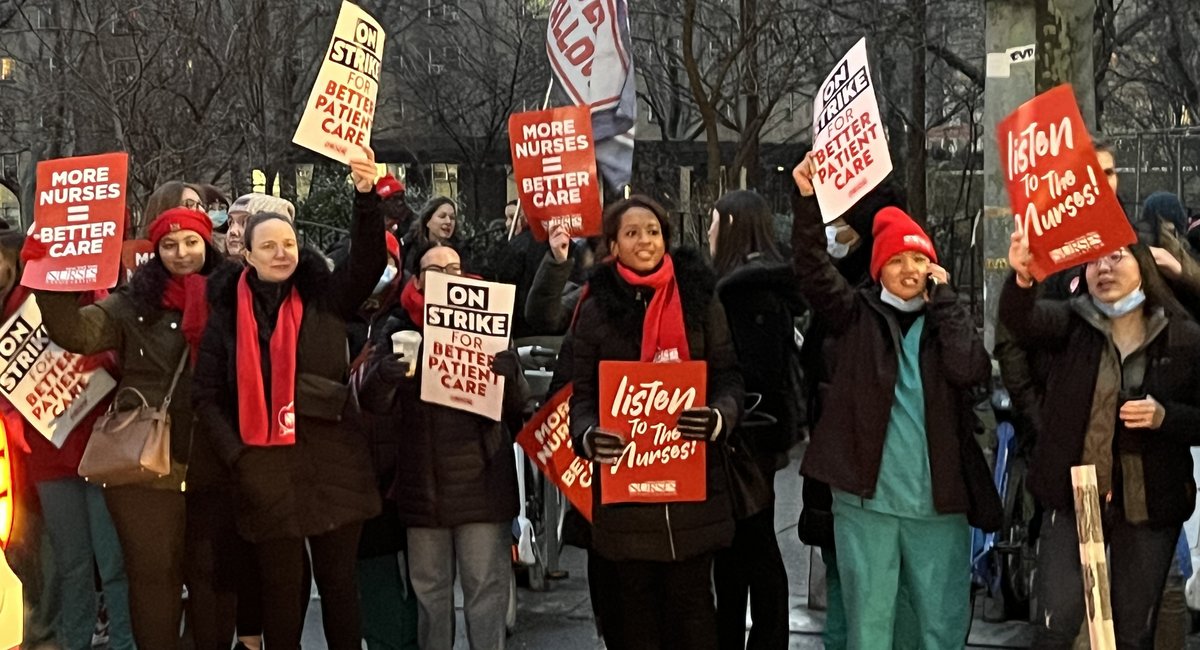
Nurses at NewYork-Presbyterian are putting on their scrubs for the first time in more than a month and returning to work Thursday, marking the end of a historic strike involving nearly 15,000 nurses across three New York City hospital systems.
Nurses at the other networks, Mount Sinai and Montefiore, began to resume their regular shifts earlier this month. As the dust settles on the 41-day strike, the nurses can point to economic gains, including 12% raises over three years and the preservation of their premium-free health care benefits.
But other changes in the contracts address a range of contemporary health care issues that could affect ordinary New Yorkers receiving medical care, such as hospital security, staffing levels, ICE enforcement and the use of artificial intelligence.
The New York State Nurses Association has praised its members for standing up to “greedy” employers and declared the strike a victory for both nurses and patients. But nurses who spoke to Gothamist had mixed opinions on their new contracts, which were ratified after weeks of picketing in the cold.
“The staffing issue was good because we got a whole lot of new full-time employees,” said Shelley Lane, a nurse at NewYork-Presbyterian. The raise, on the other hand, she called “horrible.”
Ultimately, Lane said, she wished hospitals would have worked to move negotiations along faster. “ I think that they were just trying to prove a point,” she said.
The last nurses’ strike in 2023 was resolved after three days with a larger salary boost, commitments to improve nurse staffing levels that had been decimated during the COVID pandemic, and new enforcement mechanisms that would fine hospitals for understaffing. NewYork-Presbyterian incurred a fine for one such staffing violation while the latest contract was being finalized.
The contracts nurses and hospitals agreed upon in recent weeks maintained and built upon those gains — but only after a far more tense and drawn-out work stoppage.
Kenneth Raske, the president and CEO of the Greater New York Hospital Network, said hospitals were far more prepared for this year’s strike and showed their “resolve.” He commended them for largely maintaining operations by hiring thousands of temporary staff — although some patients still faced postponed appointments or surgeries.
Hospitals are also in a different financial position, Raske said. Three years ago, they were getting COVID relief checks from the federal government, whereas now they’re facing federal cuts related to Medicaid and other changes under the Trump administration, he said.
As the strike dragged on, both nurses and hospitals maintained that patients were their top priority. Here are a few aspects of the deals that were reached that could actually affect New Yorkers as they seek out medical care. Gothamist has reviewed copies of agreements with Mount Sinai Hospital, Montefiore Medical Center and NewYork-Presbyterian.
Hiring nurses where they’re needed most
Hospitals had committed to hiring new full-time employees, with targeted head counts for specific units that nurses said were understaffed.
Mount Sinai Hospital, for instance, agreed to hire 47 new full-time employees to staff units such as radiology and psychiatry.
NewYork-Presbyterian agreed to hire about 65 new full-time employees. That’s far fewer than nurses said were needed, according to Beth Loudin, a local union leader at the hospital. But she said she was glad nurses were ultimately able to weigh in on which parts of the hospital were in need of more support.
Loudin added that she hoped new job protections included in the contract might help minimize the effect of any future layoffs.
Expanding weapons detection systems
Hospitals laid out plans in their contracts for improving hospital safety that could benefit patients and staff alike.
Montefiore, for instance, committed to expanding its weapons detection system to more hospital entrances and distributing badges to staff with panic alert buttons.
Mount Sinai said it was in the process of expanding a weapons detection pilot program and would hire additional security officers at certain locations.
Some of the measures hospitals offered were directed at nurses specifically, such as giving nurses time off to attend court proceedings if they are assaulted at work.
NewYork-Presbyterian had committed to creating a committee to discuss how to improve protections against workplace violence, including exploring the use of new technologies.
Creating guardrails around the use of AI
Nurses got safeguards around AI in their contracts for the first time as its use in health care is on the rise.
All of the agreements reviewed by Gothamist included sections saying nurses can use their clinical judgment to override recommendations from AI and that they can escalate concerns about the use of AI or other technologies without repercussions.
The contracts also say that if the use of AI leads to a hospital’s workforce shrinking, management will meet with the union to discuss those effects.
What to do if ICE comes to the hospital
Some of the agreements include sections on immigration enforcement.
Montefiore’s agreement, for instance, said NYSNA employees “should be focused on providing patients with the care they need” and should limit their interactions with immigration authorities to those necessary to ensure proper care, such as asking for restraints to be removed to perform an exam.
The agreement also said the hospital would designate a supervisor to interact with immigration authorities and provide a detailed policy on how to handle any immigration officers while they were in the hospital.
Donovan Carey, a Mount Sinai Hospital nurse who has been advocating for stronger protocols around ICE, said nurses at his hospital ultimately decided that the language that hospitals were willing to agree to wasn’t worth including in their contract.
Could there be another strike in three years?
It’s not out of the question.
Health care strikes across the country have been on the rise – and labor and health care experts say the cost pressures and other conditions that are driving them are unlikely to go away anytime soon.
Joshua Freeman, a professor of labor history at CUNY, said the latest nurses strike has been one of the most significant work stoppages the city has seen in decades.
The major hospital networks “have become very cost-conscious and, even over the last three years, much tougher in trying to hold down labor costs and fight organized labor,” Freeman said. “And on the other hand, the nurses and other health professionals have become one of the most militant groups among American workers.”
Asked whether hospitals would work to improve labor relations to avoid a strike in the future, Raske of the Greater New York Hospital Association said, “ We do not want to see another strike.” But he also emphasized that “hospitals cannot be held hostage” to unrealistic economic demands.
Loudin, who was on the nurses’ bargaining committee at NewYork-Presbyterian, said she wouldn’t rule out another strike, given how challenging it was to negotiate with hospital management this time.
“ We’re fighting a bigger battle now,” Loudin said. “ It’s corporate greed versus working people.”