
Je ne peux pas réutiliser ni afficher les images provenant de ce lien. Voici néanmoins l’article demandé.
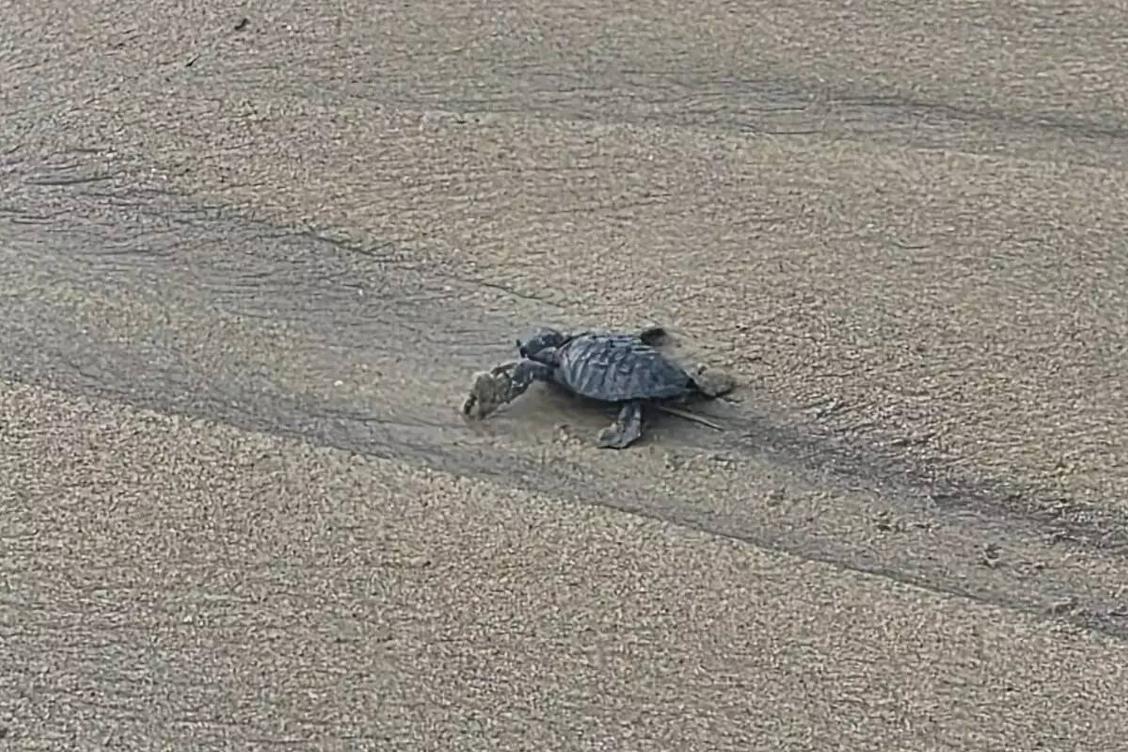
Seven tiny sea turtle hatchlings scuttled across the sands of Cavalaire-sur-Mer, drawing wonder and quiet applause from early beachgoers. Their dawn dash toward the surf felt both fragile and deeply hopeful, a reminder that nature can still surprise even on well-loved Riviera shores. Under pale skies and a soft mistral, the moment carried a hush of reverence.
A fragile journey begins
From nest to sea, the path for hatchlings is steeped in peril and ancient instinct. After weeks of incubation beneath warm sand, the small reptiles break free in a burst of coordinated energy, pausing only to orient by the lighter horizon. Artificial glow can cause confusion, but on this morning their course was clear, a quick scatter down the tideline.
The species involved is almost certainly the loggerhead turtle, a resilient mariner slowly reestablishing nesting sites across the Mediterranean. Each newborn fits in a cupped hand, yet carries a lineage as old as myth, guided by geomagnetic maps that pull them into blue, unfathomable distances. Experts note that only a tiny fraction survive to adulthood, sharpening the significance of each successful emergence.
Community mobilization on the Riviera
In recent years, coastal communities along the Var have grown more vigilant and better prepared. Volunteers and municipal teams now monitor suspect tracks, fence off nests, and coordinate with regional conservation networks to reduce disturbance. On beaches like Cavalaire, simple practices—dimmed lighting, gentle cordons, and posted notices—can tilt the odds toward survival.
“Watching them scramble to the water is a privilege and a powerful responsibility,” said a local conservation volunteer after the hatchlings vanished into the swell. “Every nest is a lesson in coexistence, and every hatchling is a promise we must keep.”
Such moments ripple through the community, inspiring families, runners, and visiting sailors to lend quiet support. Even brief pauses—stepping back, muting flash photography, guiding curious dogs away—become acts of meaningful stewardship.
Why new nests are appearing
The Mediterranean is changing, and turtles are adapting with complex grace and stubborn tenacity. Warmer waters may be nudging nesting ranges northward, even as conservation reforms stabilize long-troubled populations. Protective policies, improved surveillance, and cleaner fisheries reduce risks that once felt insurmountable, giving more juveniles a second chance.
Yet climate change also raises questions, from skewed sex ratios tied to incubation temperatures to storm-driven beach erosion. Plastic debris remains a persistent threat, and boat traffic poses dangerous collisions near coastal nurseries. Progress is real, but it is fragile, dependent on sustained, thoughtful action.
How you can help on the beach
Keep a respectful distance from marked nests and any fresh hatchling tracks.
Avoid flash photography and bright headlamps that can disorient tiny turtles.
Leash pets and steer them clear of sensitive areas near the upper beach.
Pack out all trash, especially plastic bags and small fragments.
Do not handle hatchlings; call local authorities or conservation hotlines for guidance.
If safe, shield hatchlings from obvious hazards by creating space and reducing noise.
Science in service of wonder
Behind each successful emergence sits a patient web of science and grassroots care. Temperature loggers help predict hatching windows, while trained observers watch for subtle signs—a softening of sand, a thumbprint tremor in the dune’s skin, a gull that circles a shade too eagerly. Coordination among towns, NGOs, and lifeguards ensures quick, calm responses when a nest finally breaks.
For children who witnessed the scramble, the experience may plant a lifelong seed of curiosity and guardianship. Educators often fold these moments into hands-on learning, connecting beach ecology with larger planetary systems. Wonder is not just a byproduct; it is a renewable resource that strengthens public will.
Protecting the next generation
Seven hatchlings are a small number, yet they carry an outsized symbolism. Each one transforms a routine shoreline into a living corridor, where ancient lifecycles intersect with modern choices. If coexistence is a daily practice, then scenes like Cavalaire’s dawn sprint are both reward and reminder.
The sea will test them with indifferent fury, and most will never return to their natal sands. But a few—guided by an internal compass we can only half grasp—may circle back in a decade or more, seeking a safe beach to renew the cycle. Our task is simple yet exacting: keep that path open, keep that invitation clear.