
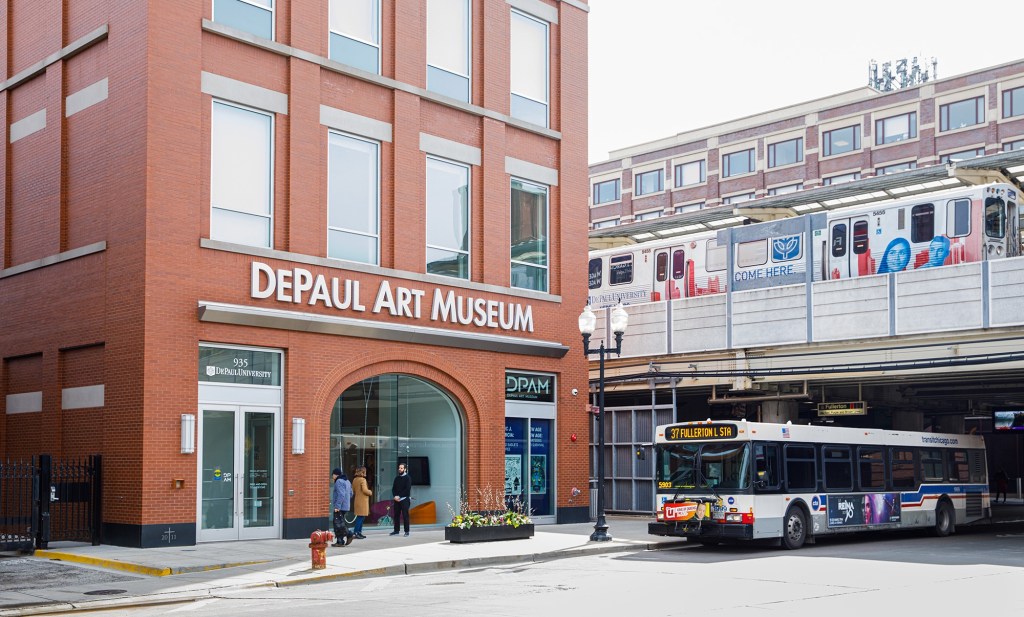
Since 2011, the DePaul Art Museum has featured the work of contemporary artists, many of whom are based in Chicago. But on June 30, the museum will close its doors.
“As part of our responsibility to ensure long-term financial sustainability for our university, we are continuing to engage in ongoing budget planning discussions,” per an announcement of the closure from the university on Thursday morning. “As part of this review, we have made the difficult decision to stop operations in the DePaul Art Museum at the end of this academic year.”
The news comes ahead of the museum’s two spring exhibitions, featuring the work of painters Alice Tippit and Barbara Nessim, which open on March 5. Their shows will be the last at the Fullerton Avenue location.
Until recently, the museum had a full-time staff of three, which was reduced to two earlier this month when curator Ionit Behar left to take a job at the Museum of Contemporary Art. According to reporting by Crain’s in 2016, the museum’s budget received half a million dollars from the university, which at the time had an annual budget of $500 million; the school’s operating budget for 2026 is $610 million.
“Besides this being a loss to the city, it’s such a loss to the university,” said Phoebe Collins, the museum’s collection and exhibition manager. “We have a lot of students that work here with us who are losing their jobs at the end of June, but we have a lot of classes that come.”
Class visits, she said, entail “working with the professor to pull pieces from our collection that will match what they’re talking about in their classes. It’s a really great way for students to learn about art and see it in a different way, because of course we get art history students, but we also get anthropology students, I have a biology art class that comes, and we’ve also worked with classes from the business school and the college of computing and digital media. It’s tragic that this resource for the students is going to be lost. DePaul also has a museum studies minor and we work with them a lot, so that’s of course a huge loss to them.”
In addition to serving faculty and students, the museum was a place for “artists that had been underrecognized in Chicago, as well as nationally and internationally,” said museum director Laura-Caroline de Lara. “Our mission was to highlight those voices who weren’t being shown at larger institutions. So we became known as a place that was a forerunner for introducing names that would become some of Chicago’s biggest known artists working today, including Brendan Fernandes, Caroline Kent and Evette Mayorga.”
The focus, de Lara said, “was on social justice topics and that felt like a really important part of Chicago’s art landscape — to talk about everything from police brutality to domestic violence to climate change through artwork. It wasn’t just about putting artwork on the wall, but about creating opportunities for conversations about these issues.”
The DePaul Art Museum has a permanent collection of more than 3,000 objects, including pieces by Andy Warhol and the surrealist Gertrude Abercrombie. It is not yet clear what the university intends to do with the collection. According to DePaul, “In the coming weeks, we will convene a discussion with our university community to explore how the museum building and its collections can continue to serve as assets to DePaul.”
The options come down to selling off or donating the collection to other museums, or the university may wish to retain it. “But without a staff to take care of the collection, preservation of the art is at risk,” said Collins. “Museum missions are often about taking care of and preserving works of art.”
As for the building itself, DePaul says it has “no plans to sell the museum building or leave it vacant. The building occupies a prominent location on our Lincoln Park Campus, and we believe it holds significant potential to be transformed into a space that continues to enrich the student experience.”
The announcement came from university president Robert L. Manuel, provost Salma Ghanem and executive vice president & CFO Sherri Sidler.
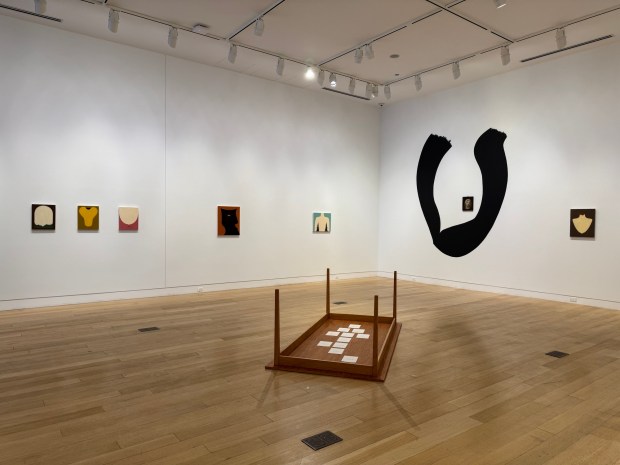 The exhibition “Alice Tippit: Rose Obsolete,” curated by Ionit Behar, opens March 5 at the DePaul Art Museum. (Provided by DPAM)
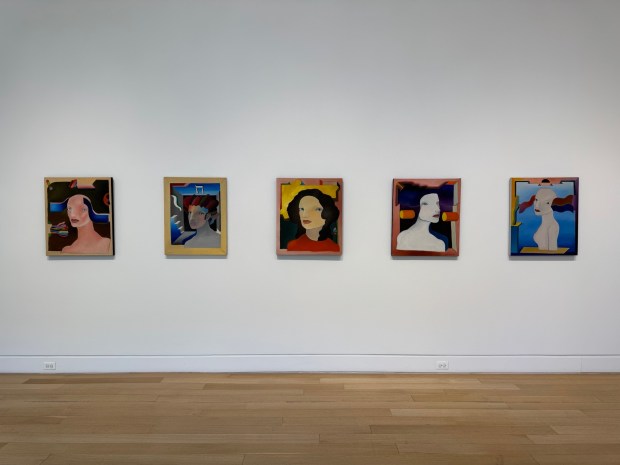 The exhibition “Barbara Nessim: My Compass is the Line,” curated by Ionit Behar, opens March 5 at the DePaul Art Museum. (Provided by DPAM)
For artists, this is one less place to show their work and earn an income from that work.
“Artists get an honorarium to show their work,” said Collins. “We also commission artists to do work for different shows. We will also pay artists to do programming here, whether it’s a panel discussion or a dance performance, for example. And we also buy artwork from artists and galleries.”
The museum world is small, she said, “and the arts and humanities don’t have any help right now from the federal government. Smaller grants from family foundations are harder and harder to get because there’s more competition for them.” As with many professions at the moment, there are fewer job openings than ever. “All museums are struggling which makes this a really hard job market.”
For de Lara, who has worked at the DePaul Art Museum for 10 years, the space itself has been a second home. It’s also where she got married.
The museum, says Tribune contributing art critic Lori Waxman, “has been critical in giving a huge number of local and minority artists their due. Selva Aparicio, Krista Franklin, the Stockyard Institute, Karolina Gnatowski, Eric J. Garcia, Huong Ngo, among others, all had their first museum solo shows here. DPAM has been running a multiyear initiative to increase the visibility of Latinx artists, with programming, collecting, bilingual signage, and more.”
And, she added, “DPAM has been unafraid to be boldly political, exploring the connections between police torture in Chicago and human rights violations in Guantanamo; documenting the work of Artists Call Against US Intervention in Central America, a seminal activist campaign of the 1980s; showing us the truth about the Young Lords Organization, who rallied for the rights of the Puerto Rican community in Chicago in the 1950s and ’60s. No other museum in Chicagoland has done this crucial work so solidly and so consistently.”
In December, the Tribune reported that the Chicago Plan Commission approved a proposal by DePaul to build a “$42 million basketball practice facility in the heart of its Lincoln Park campus, a controversial plan that will require demolishing a row of century-old residential buildings.”