
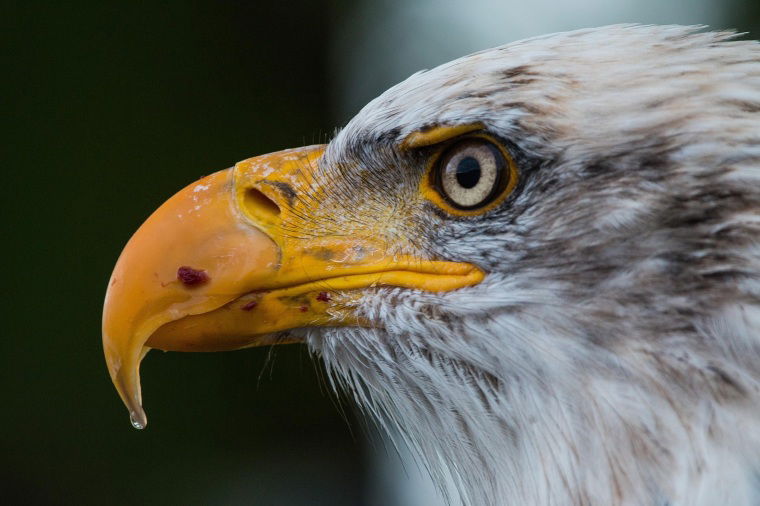
An analysis of 237 species by scientists at Trinity College in Dublin, Ireland, has revealed that animals experience time at dramatically different speeds, including humans, depending on how fast each species lives.
The research team behind the discovery, which included scientists from the University of Galway, noted that this ability to visually process the world more rapidly than other animals that don’t live at a similar pace has enabled fast-pursuit predators to stalk and capture smaller, more maneuverable prey animals. They also suggest that the evolution of these differences is driven by external factors, such as the environment and availability of food resources.
“(Our) findings provide the strongest evidence to date that ecology and evolution shape the tempo of perception across life on Earth,” they explained.
Animals From Different Worlds Experience Time at Dramatically Different Speeds
According to the lead author of the study detailing the team’s findings, Dr. Clinton Haarlem, from Trinity’s School of Natural Sciences and Trinity College Institute of Neuroscience, animals live in “very different perceptual worlds.” For example, an eagle tracking its prey in mid-air perceives the world in a drastically different way than a sea slug moving slowly across the ocean floor.
While some of these differences in perception are based on environmental factors, such as living in water, there is evidence of a variance in temporal perception. Scientists know that animals display drastically different reaction times, such as a whale turning around over several seconds versus a fruit fly changing directions numerous times during a single second. Anecdotal evidence suggested these animals were experiencing time at different speeds. Still, scientists have failed to explain the cause of this variation in temporal perception.
To search for a pattern, the team started by analyzing scientific data on 237 different animal species. To capture as broad a picture as possible, the team studied species from a wide range of animal groups living in varying habitats. These included species of birds, fish, mammals, and insects.
CFF Scores Show Sensory Systems Evolve to Match an Animal’s Way of Life
As a baseline for time perception, the researchers used a standardized measure called the critical flicker fusion (CFF) metric. According to their statement, the CFF is the fastest rate at which an animal can perceive a flickering light as distinct light pulses rather than continuous. The higher an animal’s CFF value, the faster its brain processes visual information. A higher score would also suggest that they experience time at dramatically different speeds.
Previous studies have established that humans can perceive the flickering light up to about 60Hz. Conversely, some insects and birds can spot the telltale flicker at up to 200 flashes per second. According to the researchers, animals moving with a higher CFF are “effectively experiencing a slower-moving world.”
After collecting CFF values for the selected species, the research team compared the scores to ecological traits. According to the study authors, this included an animal’s locomotion method, foraging strategy, body size, and “light” environment.
When the researchers compared the CFF scores to the animal’s ecological traits, they found several characteristics. For example, the animals with the highest CFF scores were all from flying species, with an average CFF twice that of humans. They also found that “pursuit predators” that chase their prey experience time at a drastically different speed than species that feed on slower-moving or stationary food sources.
After feeding, the team compared the CFF scores to environmental factors. This comparison revealed that species operating in brighter environments have “generally faster vision” than animals living in darkness or deep-water conditions. In aquatic environments, the study found that smaller, more maneuverable species perceive the world much more quickly than larger, slower-moving ones.
Study author Dr. Kevin Healy from the University of Galway said the team’s findings support the idea that sensory systems evolve to match an animal’s way of life, known as Autrum’s hypothesis. However, Dr. Healy adds, their world demonstrated this theoretical pattern “across the entire animal kingdom, not just within small groups of species.”
The World We Experience is Just One Version of Many
Although faster visual processing can offer advantages for both pursuing predators and evading prey, this ability to perceive time at dramatically different speeds comes at a cost. Specifically, rapid neural processing uses more energy, so it is only evolutionarily selected for if it offers an advantage that outweighs that cost. They also suggest that animals with higher CFF scores may be disproportionately affected by artificial and other flickering light sources in environments modified by humans.

“These findings suggest species with fast visual systems may be especially vulnerable to flickering artificial lights,” Dr. Haarlem explained. “This could affect their hunting success, navigation, and impact predator–prey interactions, particularly in birds and aquatic predators.”
The researcher also noted that understanding how different types of animals perceive time at dramatically different speeds could offer previously unavailable insight into their behavior and evolution, as well as how they react to changes in their environment.
“From a dragonfly tracking prey in mid-air to a starfish grazing slowly across the seabed, animals live in very different perceptual worlds,” Dr. Haarlem said. “Our results show that these differences are not random. Instead, they are closely linked to how animals move, hunt, and interact with their environments.”
“It reminds us that the world we experience is just one version of many,” he added.
The study “Pace of ecology drives the tempo of visual perception across the animal kingdom” was published in Nature Ecology & Evolution.
Christopher Plain is a Science Fiction and Fantasy novelist and Head Science Writer at The Debrief. Follow and connect with him on X, learn about his books at plainfiction.com, or email him directly at christopher@thedebrief.org.