
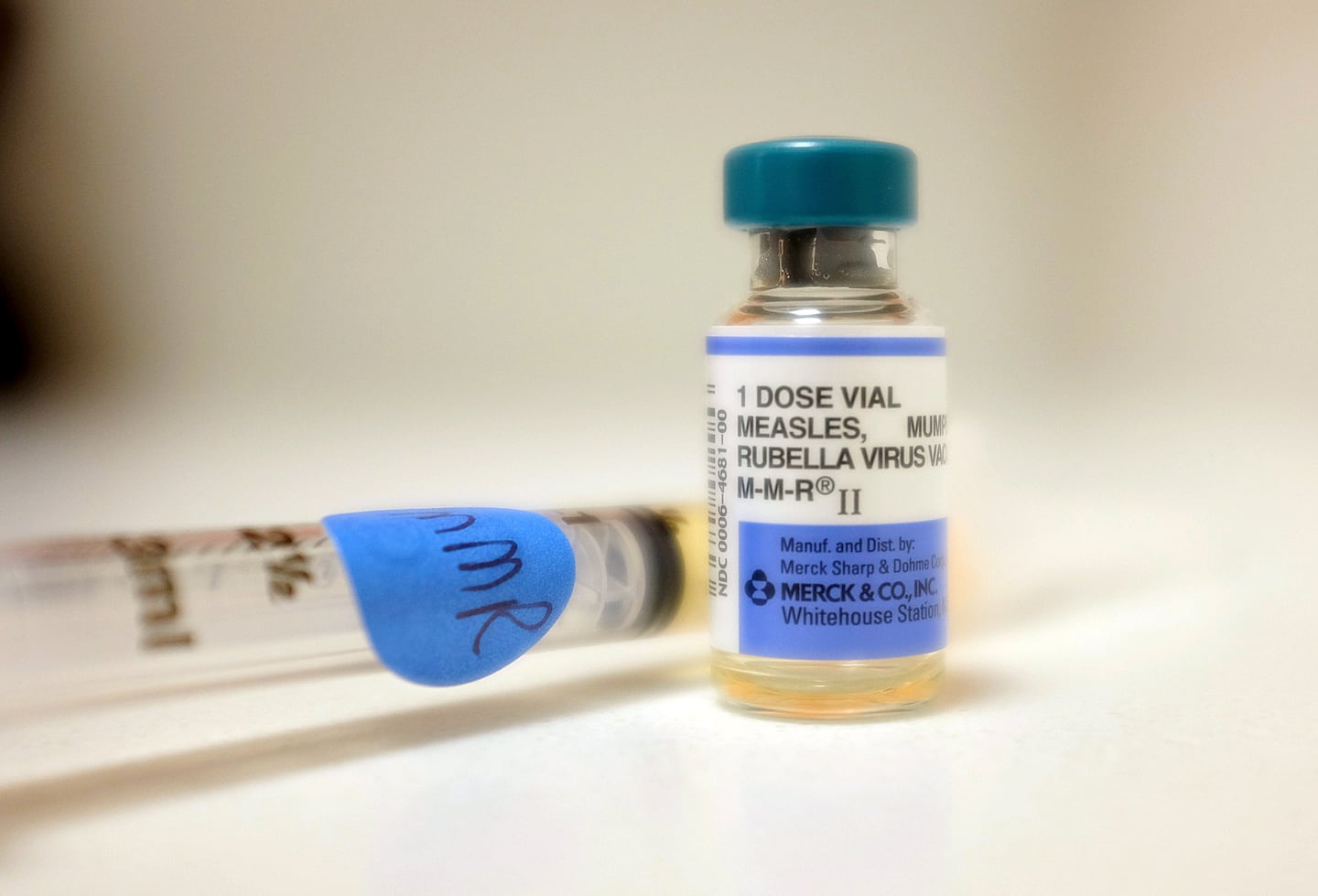
Two people from Massachusetts, a child and an adult, have been diagnosed with measles, the state’s Department of Public Health reported Friday.
The adult, who lives in the greater Boston area, has an uncertain vaccination history, DPH reported, and may have contracted the virus while traveling overseas. State and local officials are working to identify people in the region who might have been exposed to the virus.
The child was diagnosed with the virus out of state, and has not returned to Massachusetts, health officials reported. That child does not appear to have exposed anyone in the state to measles.
These are the first measles cases in Massachusetts residents since 2024, when the state reported one infection.
Measles is among the world’s most contagious viruses, according to the Centers for Disease Control and Prevention. It can be expected to spread to 90 percent of the people exposed to the virus if they are not protected by vaccination or prior infection, the CDC reported.
The illness, which had become rare in the United States, is staging a comeback due to lower vaccination rates nationwide. Last year, 2,281 people fell ill with measles, the most since 1992. Three of them died.
Serious measles outbreaks have occurred in Texas and, more recently, South Carolina. With 1,136 people infected in the US since January, the country is on pace to see far more cases this year.
In New England, Maine reported five cases so far this year, and Vermont reported one.
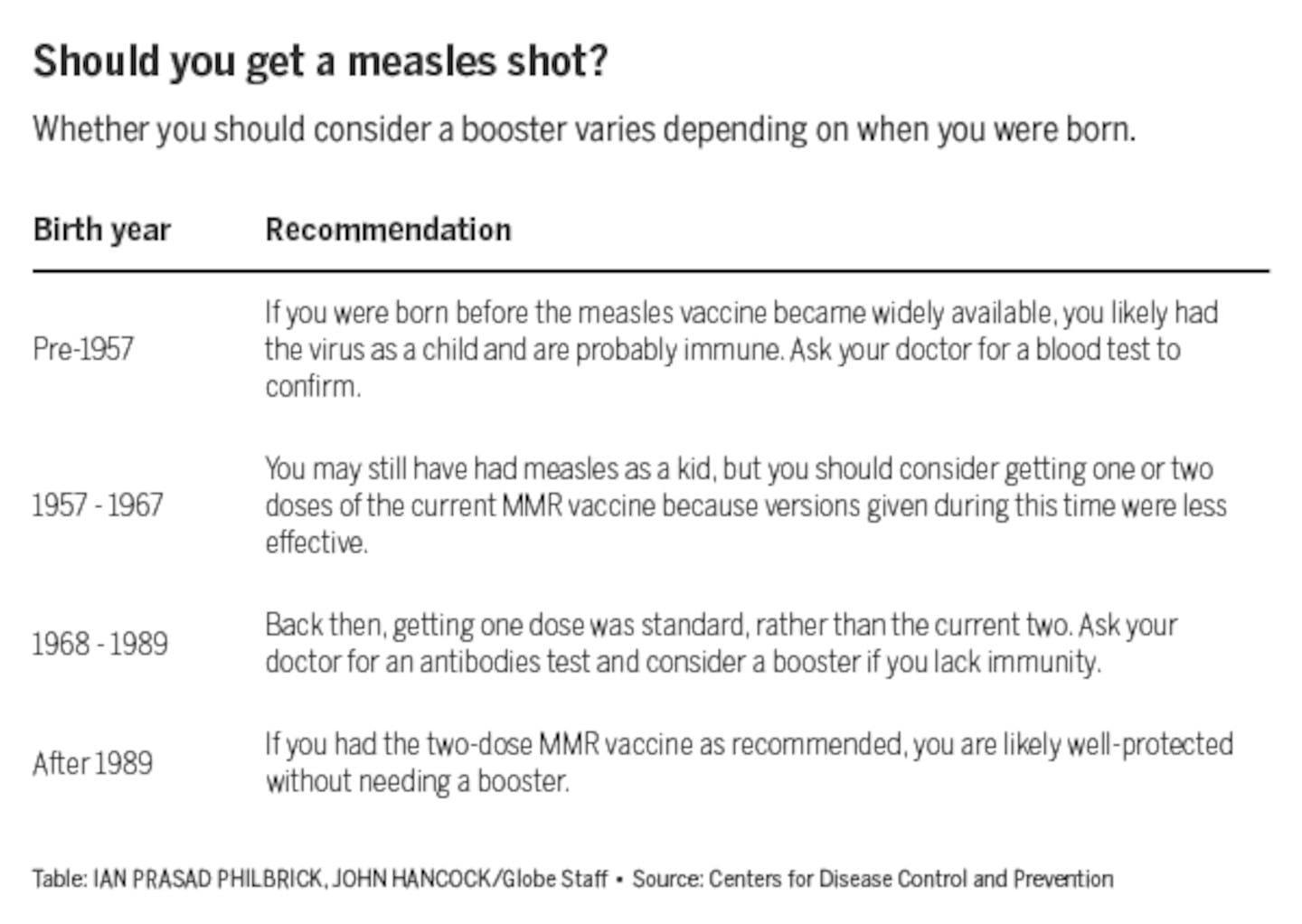 Chart showing whether you should get a measles shot.Centers for Disease Control and Prevention
It can take up to two weeks for measles symptoms to develop, and they initially are similar to cold symptoms, including a cough, runny nose, and fever, the state DPH reported. Within two to four days, infected people develop a rash that lasts a few days. A person with the virus is typically contagious over a period of four days before the rash appears until four days after it clears.
Before vaccination became commonplace, catching measles was a childhood rite of passage, but the virus can cause serious complications, particularly for children younger than 5 years old. About 30 percent of infected people can become severely ill, including with pneumonia, diarrhea, and immune suppression. Some may develop encephalitis, a life-threatening inflammation of the brain.
Massachusetts is particularly well protected against the virus, with than 96 percent of the state’s kindergarteners were vaccinated against measles as of the 2024-25 school year, the most current data available.
“Fortunately, thanks to high vaccination rates, the risk to most Massachusetts residents remains low,” said Dr. Robbie Goldstein, the state’s public health commissioner, in a statement.
But an overall high vaccination rate can offer a false sense of security. There are pockets of low vaccination throughout the state, particularly in western Massachusetts and on Cape Cod, according to state data.
A recent study from Boston Children’s Hospital evaluated the risk of measles outbreaks by focusing on vaccination rates among children younger than 5. That study found areas of vulnerability in the Greater Boston area, with some zip codes in or near the city at “high” risk of an outbreak.
This is a breaking story and will be updated.
Jason Laughlin can be reached at jason.laughlin@globe.com. Follow him @jasmlaughlin.