
Love, sex, betrayal — Tracey Emin silences her detractors once and for all
, The Sunday Times
I have no time for those in the art world who have no time for Tracey Emin. Frankly, if you don’t understand the significance and import of what she has given us then you need to find yourself another cultural interest, because art is not for you. Hopefully, her unmissable ascension at Tate Modern will silence the naysayers forever.
What has she brought? Well, above all, it’s a voice, a timbre, an audio frequency that has not been heard in art before. It’s the sound of the mouthy, working-class female, or ladette, as it was called dismissively back in the 1990s. It’s the voice of the Tesco checkout girl, the woman having fun at a hen do, the walker home at night who needs to be careful because you never know who’s out there. It’s a voice that has not been heard before, not because it has nothing to say — love, hope, sex, betrayal are universal concerns — but because the roars of art’s most common species, the chest-thumping alpha male, have drowned it out. Until now.
Of course, the trick here is how to turn all this fresh material into great art, because it’s certainly not a given. And that’s where this rousing encapsulation of her career at Tate Modern gets so many things right, and where it deserves to be recognised as a special success.
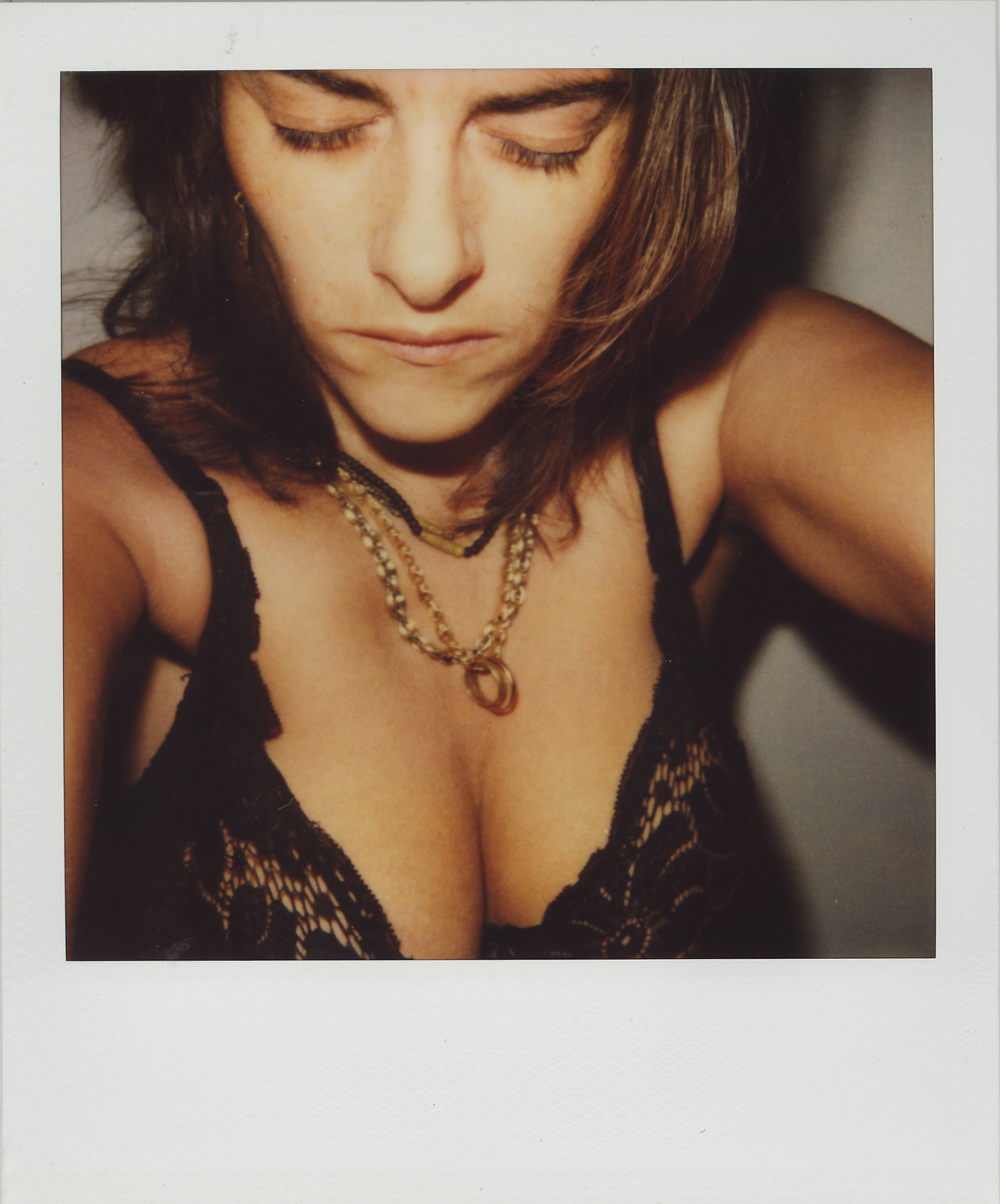
Tracey Emin’s Self Portrait, 2001
© TRACEY EMIN. ALL RIGHTS RESERVED, DACS 2026
It’s not a retrospective as such, it’s not unwaveringly chronological. But it has a tangible journey to make that starts with a fraught childhood and ends with Emin, 62, having survived a vicious bout of cancer and finally finding illumination. What she arrives at is not peace — she’s much too volatile for that — but it is an equilibrium of sorts. She was bad at being a teenager, but she’s good at getting to Granny’s age.
• Tracey Emin: ‘I can hardly see colours. I’ve got cataracts’
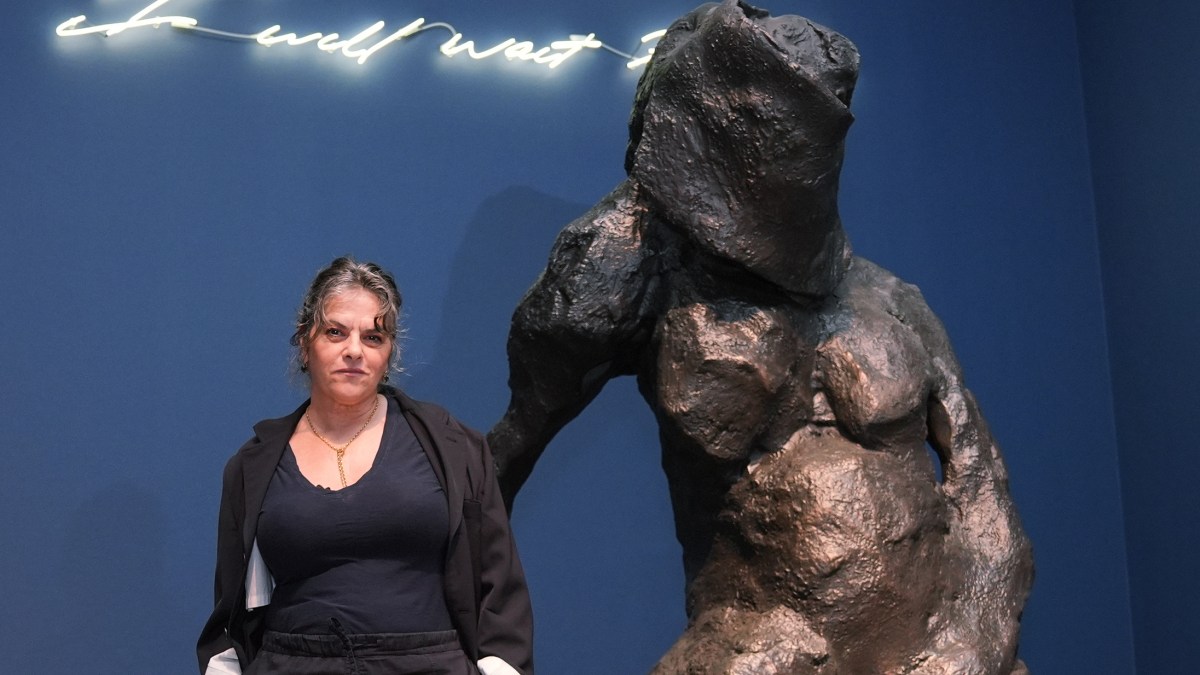
Indeed, in one of the stand-out moments of the show, a giant bronze nude of heroic baroque dimensions, she dreams of going to Heaven and being Michael Douglassed by a giant male head suspended between her legs. Where David had the decapitated head of Goliath, Emin, in her final dreams, is enjoying a heavenly bout of cunnilingus.
Along with the new subject matter, what singles her out is the range of methods she employs. She makes art in many ways, and, unusually, is good at all of them. We start with her famous “blankets”, the bed-sized wall hangings on which she would embroider and sew assorted tales and confessions of her younger life.

The Last of the Gold, 2002
© TRACEY EMIN. ALL RIGHTS RESERVED, DACS 2026
From a distance, the quilts are shoutily insistent. A medium that had previously reeked of dutiful evening labour has been stolen by a party girl who seems never to be completely sober. But when you get in close, and start reading properly all that is written on them, the quilts tug you into a dark life full of hurt and upset. Bedcovers ought to be protective and warming. In Emin’s hands they become Bayeux Tapestries filled with angst, struggle, heartbreak and sex war.
• My eyes filled with tears at the life of this Siouxsie Sioux fangirl
Another thing she’s good at is video art. In a realm in which almost no one has done anything truly worthwhile — there’s nothing more boring than a boring art video — she has managed to buck the trend. She’s done it because her central talent is storytelling. In charged videos such as How It Feels (1996), a dark lament on abortion, or the energetic bit of bloke-bashing that is Why I Never Became a Dancer (1995) she does little more than stand before us and tell us what happened to her. But it’s enough.
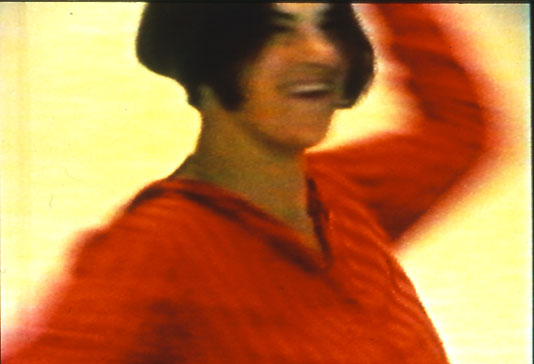
Years of hurt: still from Why I Never Became a Dancer, 1995
© TRACEY EMIN. ALL RIGHTS RESERVED, DACS 2026
Her neon pieces are resonant, her photographic self-portraits are sexy and loaded, and her installations are full of fascinating detail, notably the notorious My Bed from 1998, which succeeds here in looking less confrontational, more thoughtful. Yes, it’s a double bed covered with the detritus of a squalid urban life — used condoms, empty fag packets, morning-after pills — but what’s easier here is to see it as a giant still life, with evidence of a troubled domestic history. Again, there’s a sense of defeat about it, a lamenting note, as if something warm and gentle has been lost or crushed or thrown away. As I said, she’s a gripping storyteller.
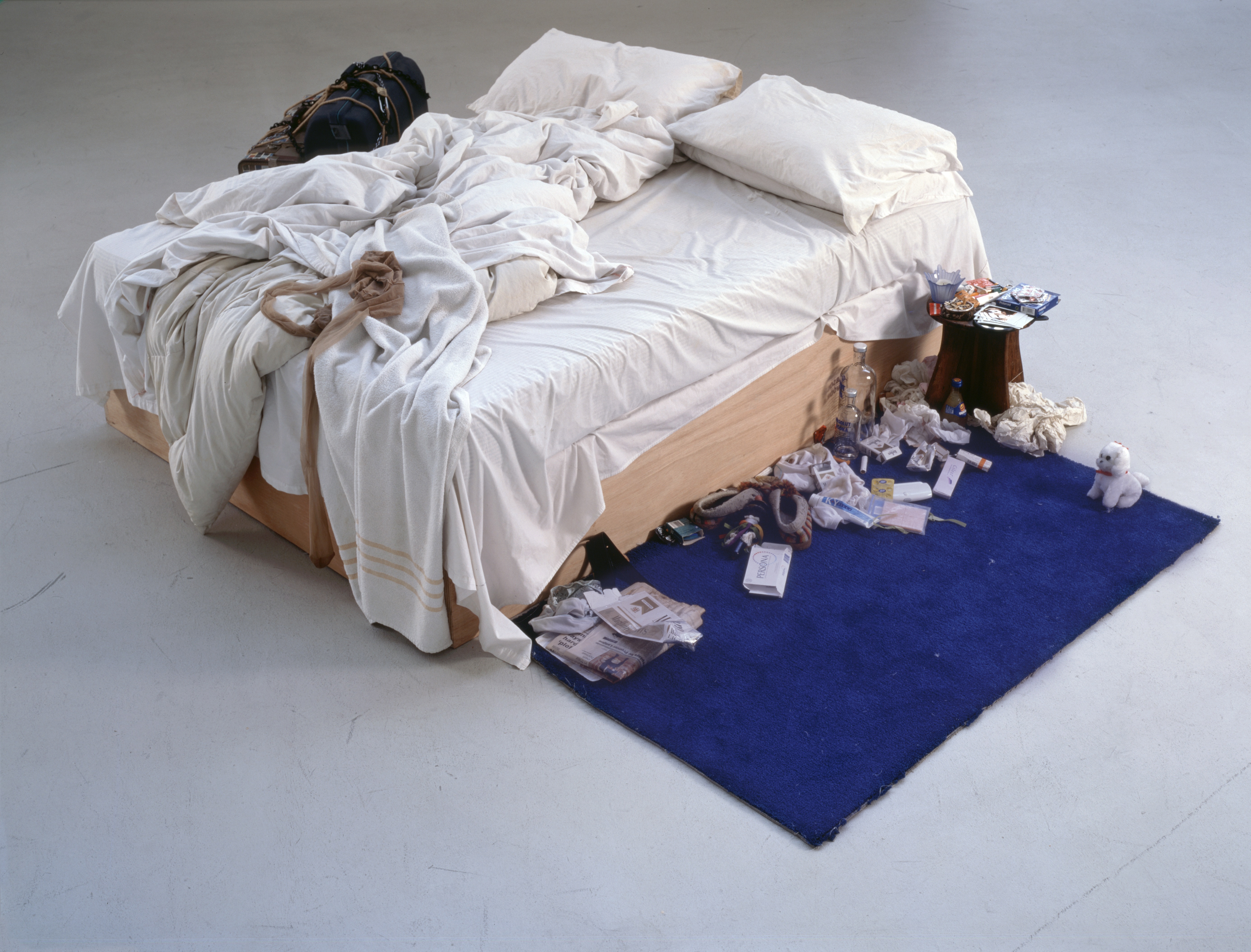
My Bed, 1998
COURTESY THE SAATCHI GALLERY, LONDON / PHOTOGRAPH BY PRUDENCE CUMING ASSOCIATES LTD

I whisper to My Past, Do I Have Another Choice, 2010
© TRACEY EMIN. ALL RIGHTS RESERVED, DACS 2026/PHOTO: WHITE CUBE/OLLIE HAMMICK
Because this is not a straightforward retrospective, lots of chronological to-ing and fro-ing occurs. In recent years, Emin, in what could be misunderstood as a return to “real art”, has concentrated on painting and sculpture. Again, she’s really good at both of them. Sharing the room with My Bed is a poignant bronze from 2024 called Ascension in which a twisty female body that has lost its head and arms in the style of the ancient Greeks journeys upwards in a visible struggle. The amount of pent-up energy trapped in the squirming torso is extraordinary.
• Read more art reviews, guides and interviews
So good are these recent sculptures and paintings that they have encouraged some to forget the power and diversity of her earlier work. There is, therefore, something very welcome about the determination of this show to tell a fuller story. And even though the art is not presented chronologically it feels, strongly, as if it adds up to a coherent progress.

Ascension, 2024
© TRACEY EMIN. ALL RIGHTS RESERVED, DACS 2026
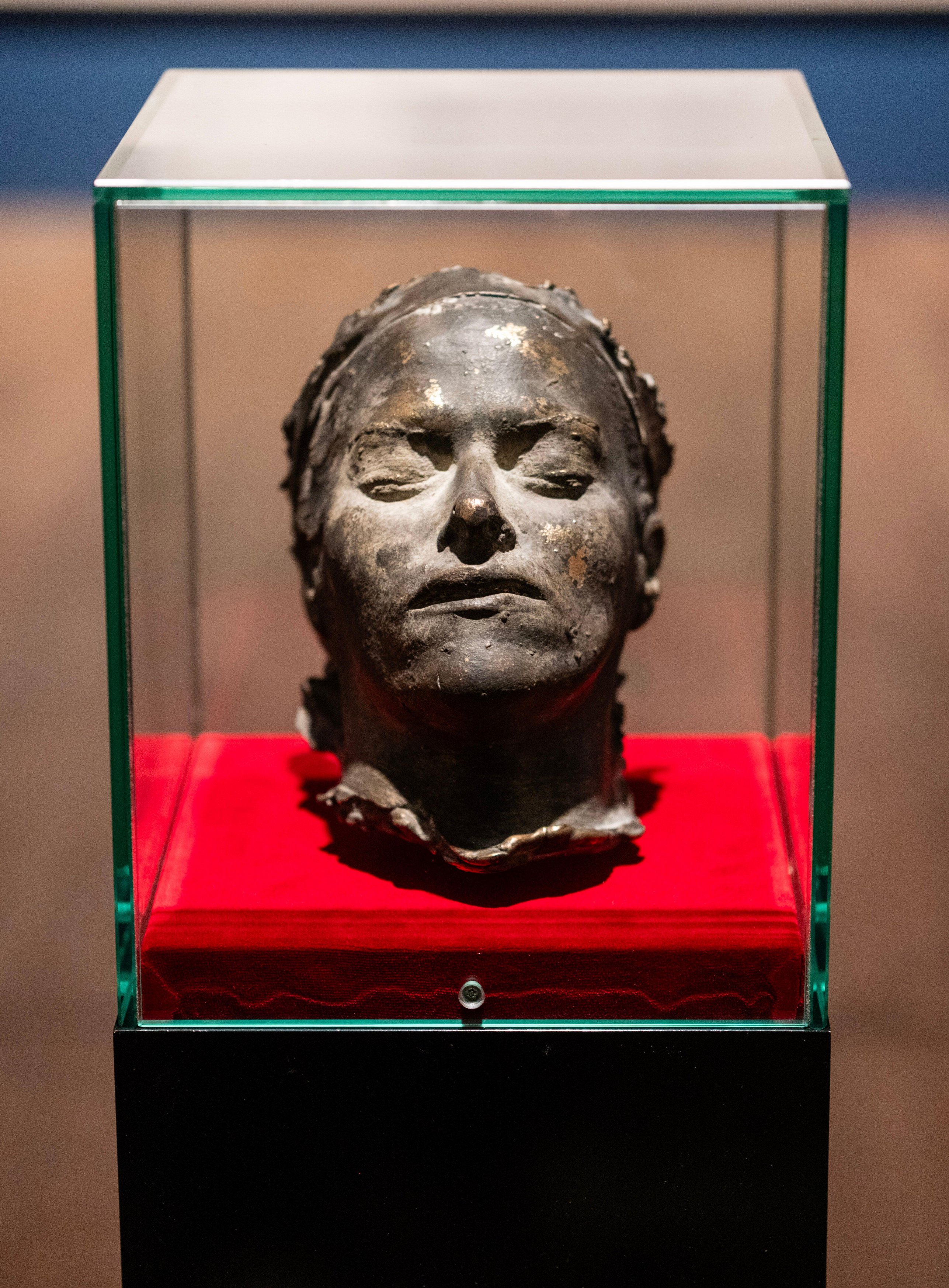
We are watching a life that has turned a full circle. A journey from pain to wisdom. The final room, perhaps the best at an event dense with highlights, presents a ring of painted single figures arranged around the bronze death mask that Emin made with spooky prescience in 2002. Each of the single figure paintings tells a rich pictorial story. Each, on its own, is a daring piece of figure painting. But together, they have another kind of artistic force, a sense of the unstoppable cohort, and they give this superior event the powerful ending it deserves.
Tracey Emin: A Second Life is at Tate Modern, London, to Aug 31
What exhibitions are you going to see this month? Let us know in the comments below