
Hawaiʻi has been enduring a cost of living crisis for decades. We constantly hear news stories about it; friends, neighbors, aunties and uncles repeat the refrain that our high cost of living is driving locals out of Hawaiʻi — forever changing the social and cultural fabric of our islands.
But constant talk of high prices pushing locals out may be obscuring another major factor in our affordability crisis: low wages.
According to a new report by UHERO, “Beyond the Price of Paradise: Is Hawaii Being Left Behind?”, Hawaiʻi’s affordability challenges are not merely a function of high prices. Instead, they are likely a combination of persistently low wages eroding the spending power of local families as prices for everything from housing to food to fuel continue to rise unabated.
 Civil Beat is focusing on transparency, accountability and ethics in government and other institutions. Help us by sending ideas and anecdotes to sunshine@civilbeat.org.
For policymakers, addressing the issue of low wages has been a start and stop exercise. To the Hawaiʻi State Legislature’s credit, it has made significant strides in addressing low wages for working families by passing an historic increase in the minimum wage, raising it to $18 an hour by 2028. This has ensured greater economic stability for thousands of Hawaiʻi families, and has put us on a path toward having one of the highest minimum wages in the country.
But despite these gains, affordability remains a persistent challenge. Raising the minimum wage is a good start, as raising the wage floor can push wages up for other workers in the economy. But for those earning the minimum wage, the hard truth is that $18 an hour just isn’t enough to live in Hawaiʻi. For example, Aloha United Way’s ALICE Report shows that the survival wage for a single adult in Hawaiʻi is already $19.96 an hour — that’s just the wage needed to survive, not necessarily what’s needed to get ahead.
If we are truly going to address persistent low wages for Hawaiʻi’s workers, it may be time for us to look beyond adjusting the minimum wage and explore what a truly living wage looks like for Hawaiʻi.
Fortunately, voters in the City and County of Honolulu may have a once-in-a-decade opportunity to make their voices heard on whether the county should pursue a living wage policy. If approved by voters, this proposal would instruct the city to begin developing a framework for implementing a living wage for Honolulu County.
But that process still begs a few questions about the proposal itself and how it might be implemented. Working through some of the technical and legal details of this proposal we address a few of those questions here:
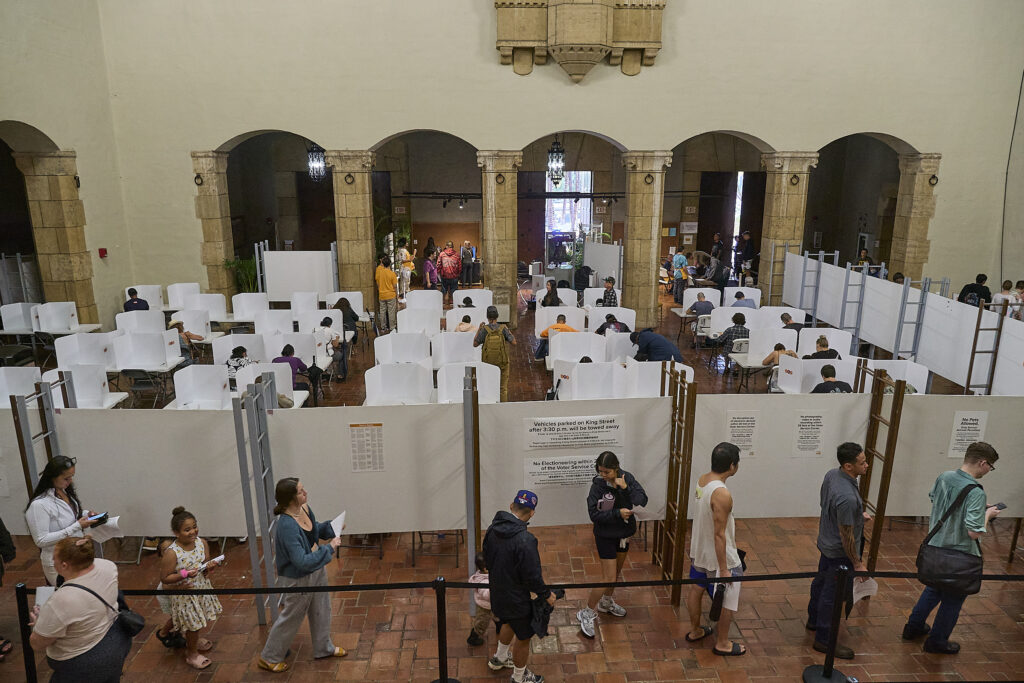 Honolulu voters will have the opportunity to vote on a number of city charter amendments in November, including an increase in the minimum wage. (David Croxford/Civil Beat/2024)
Should there be a minimum wage specific to the City and County of Honolulu?
That is the only issue presented by this proposal. The proposal does not dictate which employers must pay the wage, how the wage would be calculated, or the enforcement mechanisms. If voters approve the proposal, all of those details would be worked out by the City Council in an ordinance.
Does the city have the power to set a minimum wage?
Yes. The state of Hawai‘i grants all counties the authority to exercise general police powers — the ability to enact laws to protect health, life, and general welfare of residents — as long as the county law does not contradict or interfere with state law. Minimum wage laws are a classic exercise of the government’s general police powers.
Would a city minimum wage law conflict with the state minimum wage?
No. Similar to the county-state relationship, the state may exercise its general police powers as long as state law does not contradict or interfere with federal law. State minimum wage laws are not preempted by the federal minimum wage. For the same reasons, a city minimum wage would not interfere with the state minimum wage.
Nothing in the proposal would require the City Council to impose the wage standard on all possible employers. There could be carve-outs, for example, for mom-and-pop companies that only have a few employees.
What it does mean is that the city can ensure national corporations that operate in Honolulu, like Walmart and Amazon, provide local residents with fair compensation for their work. The City Council would have the discretion to draw those lines because the proposal expressly provides that the wage standard is only “enforceable as provided by ordinance.”
The Charter Commission will continue its deliberations throughout the first half of 2026 and make final decisions on which amendments to put to Honolulu voters later this year. If approved by voters it could be a model for the other three counties and the state to follow.
Let’s not lose sight of what we can do to address the cost of living, and urge the Charter Commission and voters to keep in mind that affordability is not just about high prices, but low wages too.

Sign up for our FREE morning newsletter and face each day more informed.
Sign Up
Sorry. That’s an invalid e-mail.
Thanks! We’ll send you a confirmation e-mail shortly.