
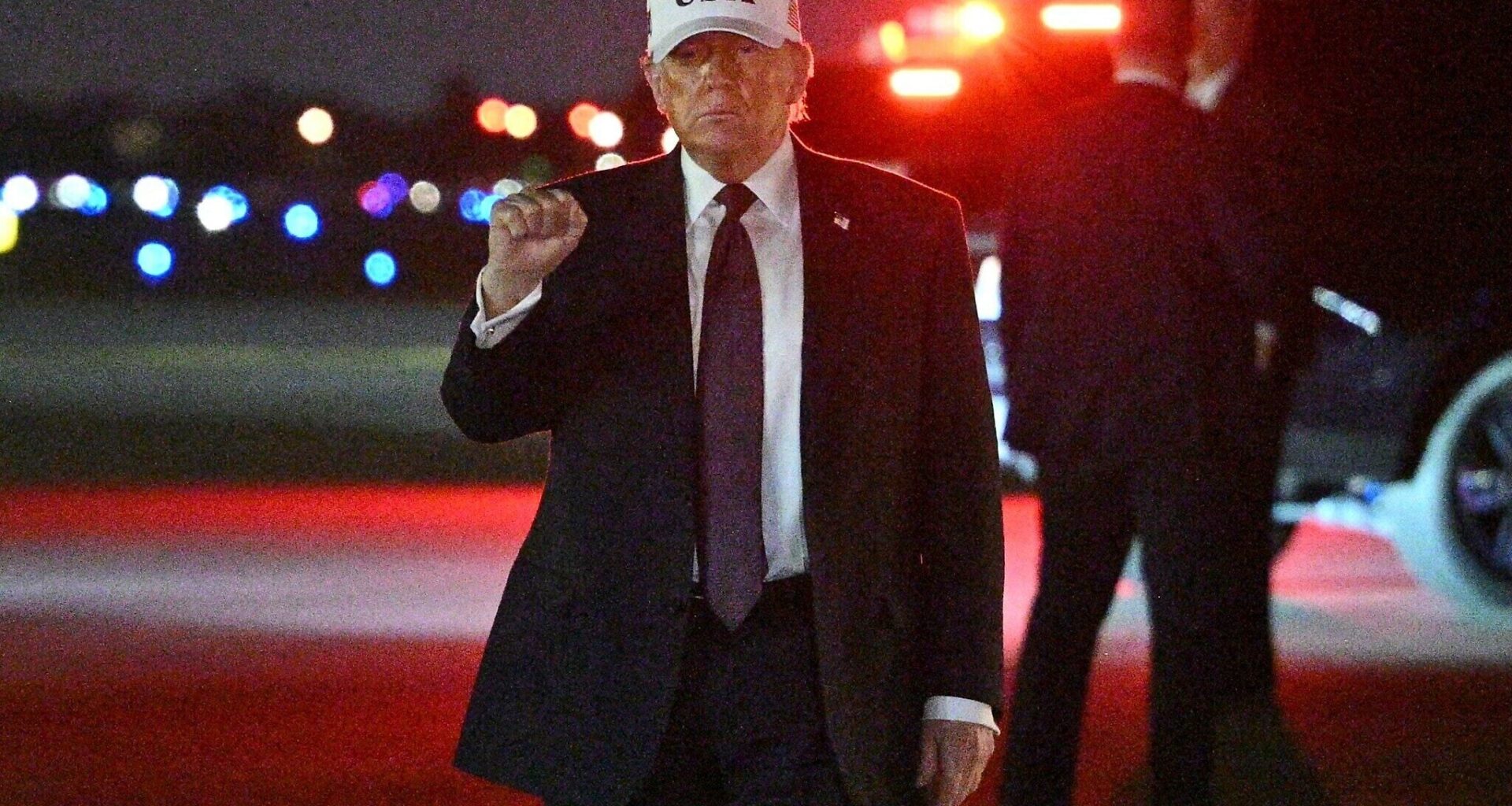
Briefing reporters on Saturday, a senior administration official tried to make the case that US President Donald Trump had “no choice” but to authorize Operation Epic Fury against Iran.
“The threat from Iran… in the short term is… the conventional missile capability,” he said of the decision to launch a military campaign against the Islamic Republic.
“We had indicators that they intended to use it potentially, preemptively… if not simultaneous [to] any actions against them,” the senior US official said.
Intelligence that Iran was about to strike could well have justified the US acting first, but the official’s own indecisiveness on the matter was difficult to ignore.
It harked back to Trump’s State of the Union speech days earlier, when the president appeared to give another justification for what then was only a theoretical strike on Iran.
Get The Times of Israel’s Daily Edition
by email and never miss our top stories
By signing up, you agree to the terms
“After [Operation] Midnight Hammer, they were warned to make no future attempts to rebuild their weapons program… Yet they continue starting it all over. We wiped it out, and they want to start all over again,” Trump said.
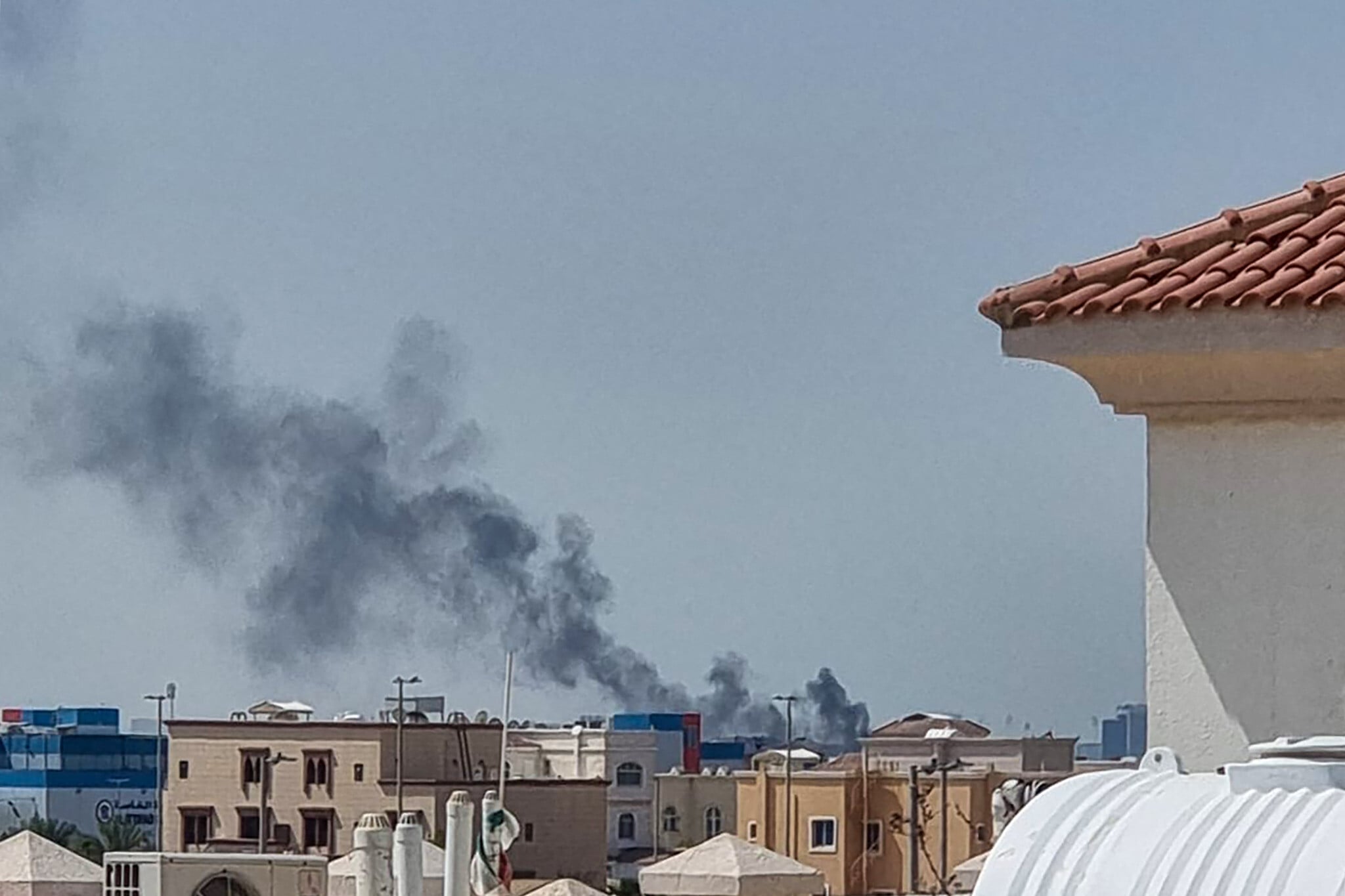
A smoke plume rises over Abu Dhabi from the site of an Iranian missile strike on February 28, 2026 (AFP)
There’s a difference between Iran rebuilding its nuclear program and merely wanting to do so, but Trump said both of those things.
Then, in his address to the nation moments after authorizing the strike, Trump phrased the justification a third way: “They attempted to rebuild their nuclear program” — not necessarily rebuilding the program, but trying to do so.
Those assertions were part of prepared remarks by the president in which he could be seen looking at the teleprompter — not off-the-cuff claims that could have been dismissed more easily.
Toward the end of his Saturday speech, Trump indicated there was an additional motivation for striking Iran that went beyond intelligence of a potential preemptive missile strike or the potential rebuilding of its nuclear program.
Appearing to push for regime change, Trump called on Iranians to “take over” their government.
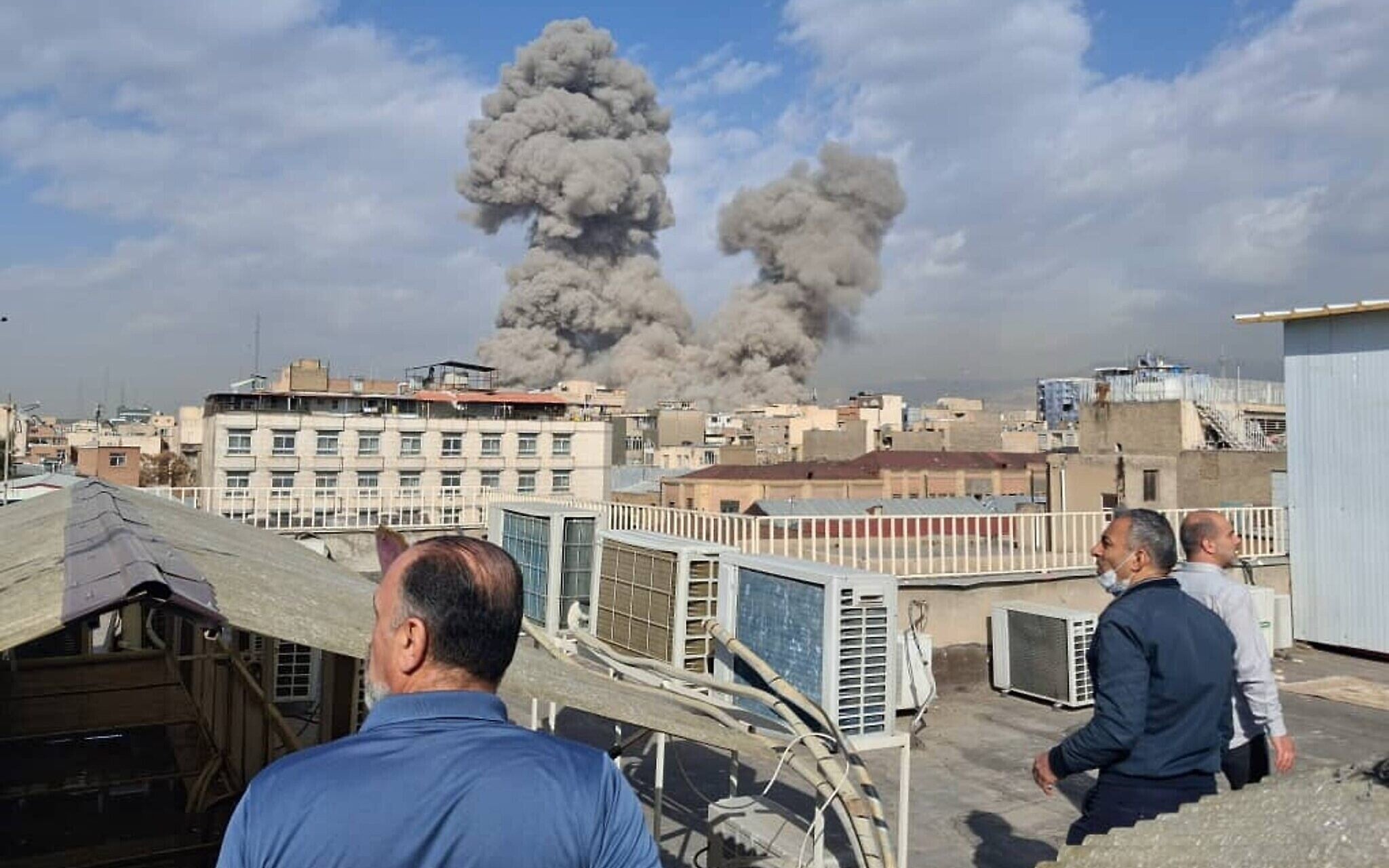
People watch as smoke rises on the horizon after an explosion in Tehran, Iran, February 28, 2026. (AP Photo)
“Now is the time to seize control of your destiny and to unleash the prosperous and glorious future that is close within your reach,” he said.
It was an acknowledgement that, as much as the US could try to lay the groundwork for the regime to fall, it wouldn’t be able to finish the job on its own.
So Trump is betting on the Iranian people with Operation Epic Fury.
It could well be worth the gamble, given the weak and exposed state of the Islamic Republic after last year’s 12-day war and its latest brutal crackdown on Iranian civilians.
But it’s still a gamble.

US President Donald Trump announces US strikes on Iran on February 28, 2026. (Screen capture/Truth Social)
He faces a regime that prepared for this very scenario, including by putting contingency plans in place for who would make decisions in the event that Supreme Leader Ali Khamenei was killed, a senior Arab diplomat told The Times of Israel on Saturday hours after Khamenei’s death.
The regime knows that Trump wants Operation Epic Fury to wrap up quickly after having campaigned against getting the US become entrenched in Mideast conflicts.
“We will measure our success not only by the battles we win, but also by the wars that we end, and perhaps most importantly, the wars we never get into,” Trump said to applause from his supporters in his inauguration speech just over a year ago.
He’s no longer personally campaigning, so that may explain his willingness to seemingly abandon that mantra in favor of addressing what he said in his Saturday speech was the “imminent” threat posed by Iran.
But his party may pay if fresh polling, indicating that just one in four Americans backs the US strikes on Iran, still holds come the November midterms.
You appreciate our wartime journalism

You clearly find our careful reporting of the Iran war valuable, at a time when facts are often distorted and news coverage often lacks context.
Your support is essential to continue our work. We want to continue delivering the professional journalism you value, even as the demands on our newsroom have grown dramatically during this ongoing conflict.
So today, please consider joining our reader support group, The Times of Israel Community. For as little as $6 a month you’ll become our partners while enjoying The Times of Israel AD-FREE, as well as accessing exclusive content available only to Times of Israel Community members.
Thank you,
David Horovitz, Founding Editor of The Times of Israel