
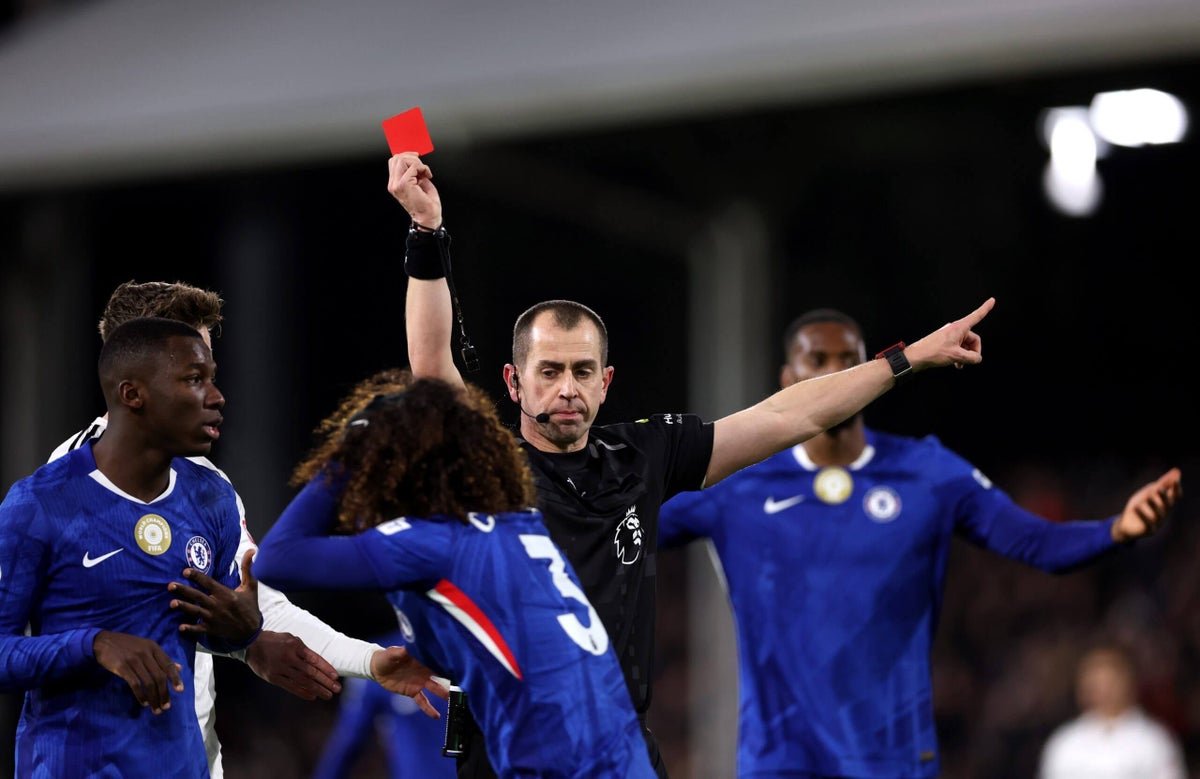
Death, taxes and Chelsea red cards. It is the latter of life’s three certainties that is preoccupying an increasingly sombre Liam Rosenior as he tries to stop this season falling apart.
“It’s a focus and a concentration thing that we need to get right,” Rosenior said in his post-match press conference after Pedro Neto’s second-half red card had helped condemn a spirited but undisciplined Chelsea to a 2-1 defeat to Arsenal at the Emirates Stadium.
“The club’s record is not great from the start of the season, and now it’s getting bad. We had 10 games when I was in where we didn’t have these issues, but we’ve had two in two games. There’s something deep-lying that we need to get to the bottom of.”
It was Chelsea’s seventh red card in the Premier League this season — three more than any other club in the division — and their ninth in all competitions. That number rises to 10 if you include former head coach Enzo Maresca being sent off in a 2-1 win over Liverpool in October.
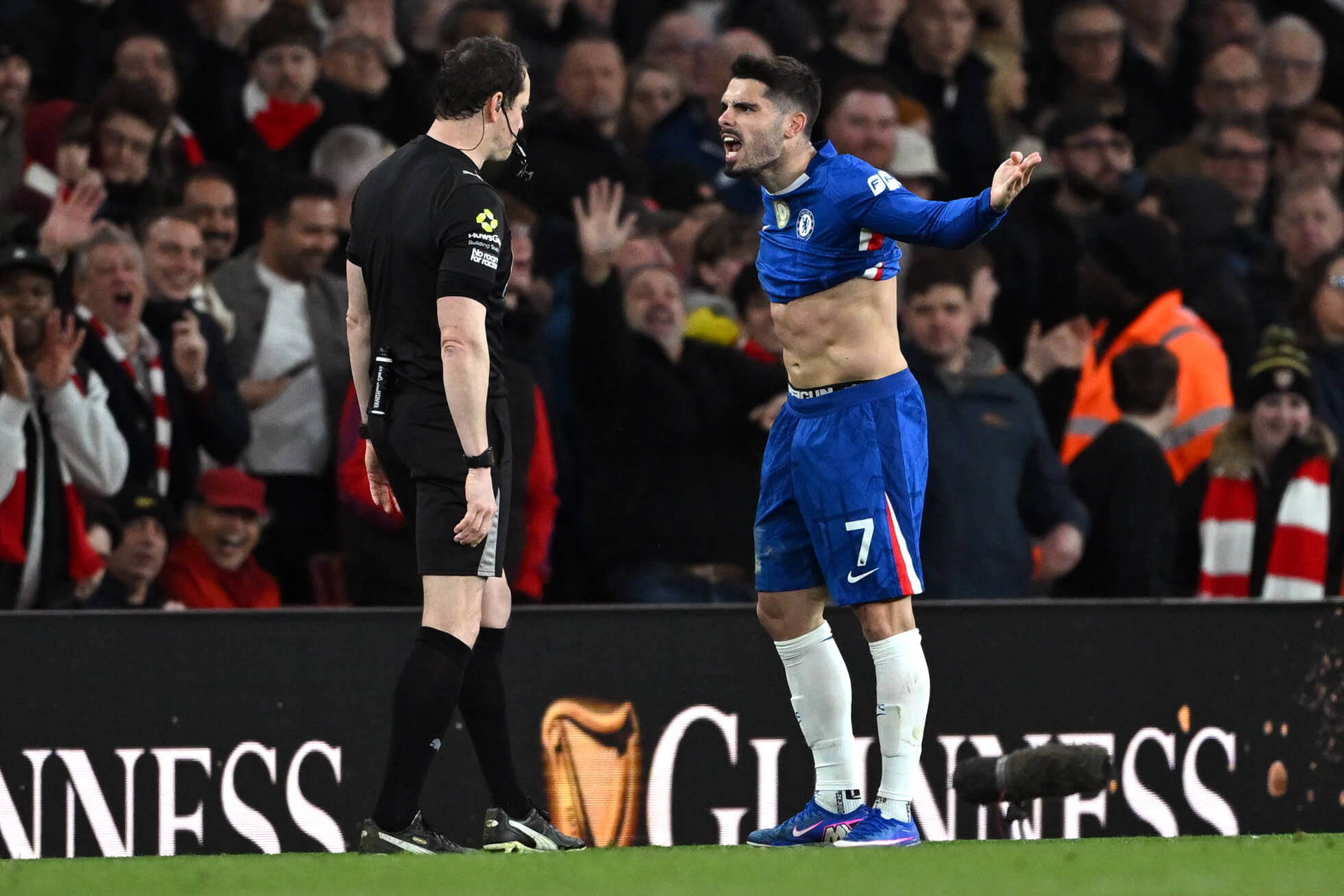
Pedro Neto angrily protests his dismissal against Arsenal (Justin Setterfield/Getty Images)
Chelsea’s red cards have all been shown to different players — only Sunderland in 2009-10 and Leicester City in 1994-95 (both eight) have seen more different players be dismissed in a Premier League season than Chelsea’s seven in the competition in 2025-26… so far.
“We’ve spoken about it, every time it’s someone different, not the same player,” James told Sky Sports after the game. “Internally, we need to review and keep improving. It’s a problem, we are playing in the toughest league in the world — 11 vs 11 is tough, 11 vs 10 is even harder, no matter who you are playing.”
The bigger picture is that Chelsea are averaging a red card every five games, and indiscipline has cost them points in the race for Champions League qualification — seven, to be precise.
What lessons for the future can be gleaned from Chelsea’s red cards this season? Let us take a more detailed look back…
Robert Sanchez, Manchester United 2-1 Chelsea, September 20 (Premier League)
In the fifth minute at Old Trafford, United goalkeeper Senne Lammens punted a long kick forward. Benjamin Sesko easily beat Trevoh Chalobah in the air to flick the ball on, sending it spinning into the space behind Wesley Fofana and Moises Caicedo for Bryan Mbeumo to chase.
Sanchez took several swift back-pedalling steps before deciding to rush forward, and his indecision was fatal. He clattered into Mbeumo just outside the Chelsea penalty area, leaving the simplest of VAR reviews to confirm a straight red card for Sanchez to referee Peter Bankes.
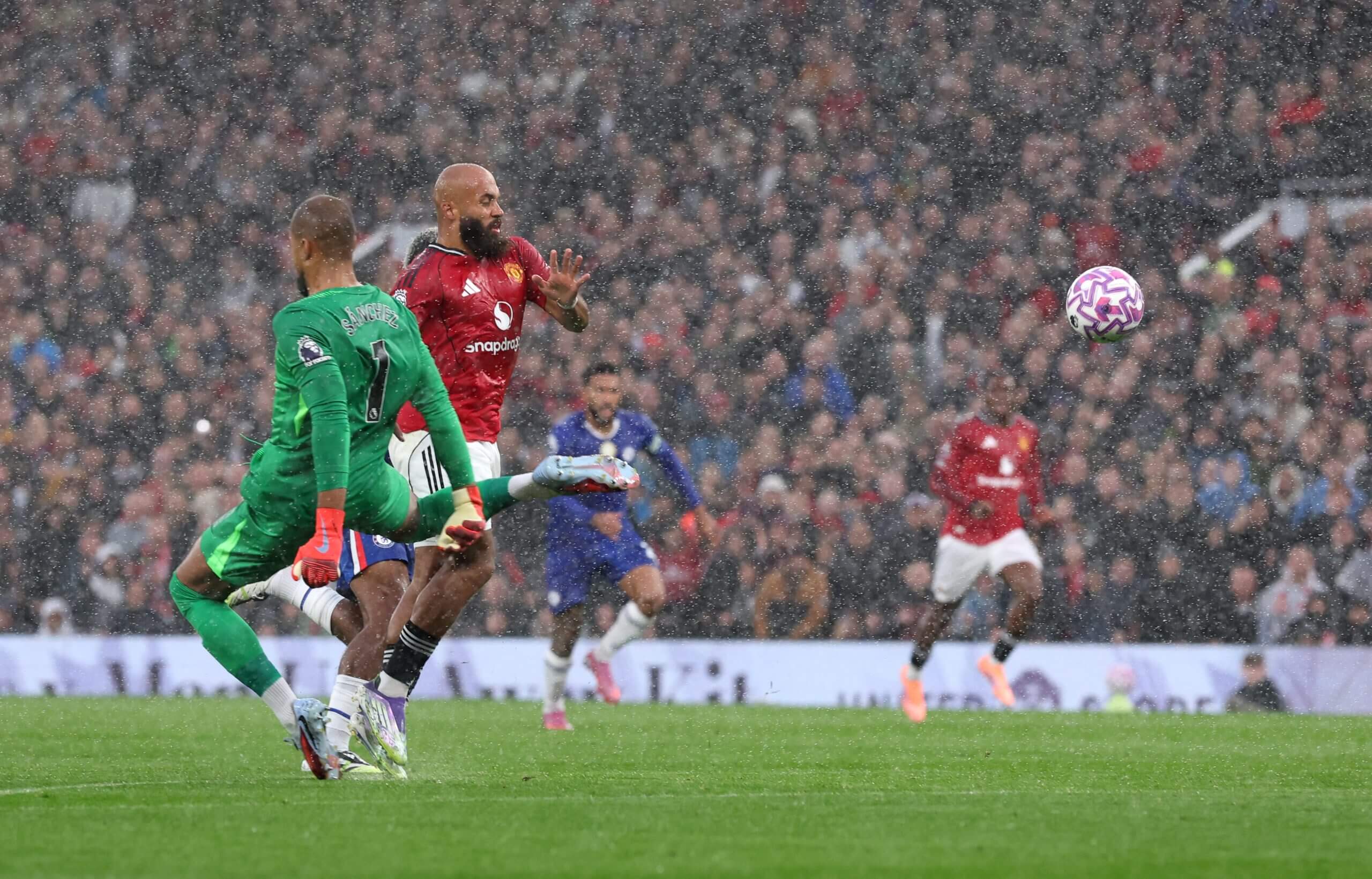
Robert Sanchez brings down Bryan Mbeumo (Alex Livesey/Getty Images)
Would it not have been better to simply let him score? United had Casemiro sent off later in the first half, but not before United had netted twice to snatch a lead they did not relinquish.
Trevoh Chalobah, Chelsea 1-3 Brighton, September 27 (Premier League)
Chelsea were leading 1-0 and in control at Stamford Bridge in the 53rd minute when a loose Andrey Santos touch set two Brighton players through on goal. Perhaps worried about what Sanchez might do, Chalobah attempted to dispossess Diego Gomez from behind but brought down the Paraguayan with a clumsy execution just outside the box.
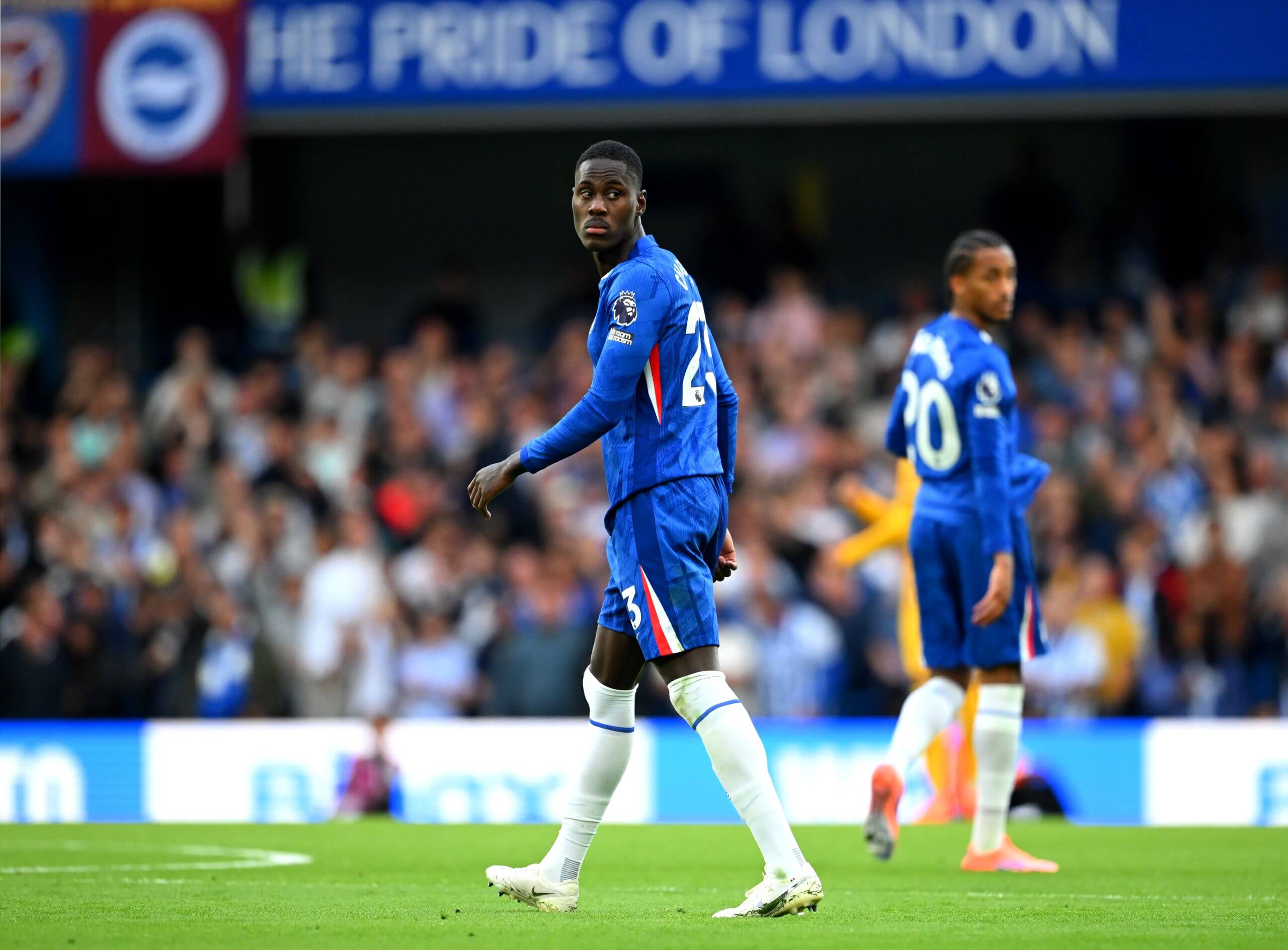
Trevoh Chalobah after being shown a red card against Brighton (Clive Mason/Getty Images)
Referee Simon Hooper duly flashed a straight red card for another last-man foul and Brighton took full advantage of their numerical superiority, with familiar nemesis Danny Welbeck netting either side of Maxim De Cuyper’s header as Chelsea’s defensive resistance crumbled in the final 15 minutes of the game.
Joao Pedro, Chelsea 1-0 Benfica, September 30 (Champions League)
Brought on for Tyrique George just after the hour mark, Joao Pedro earned his first yellow card a minute later for catching Enzo Barrenechea with a flailing arm — seemingly by accident — in an aerial duel.
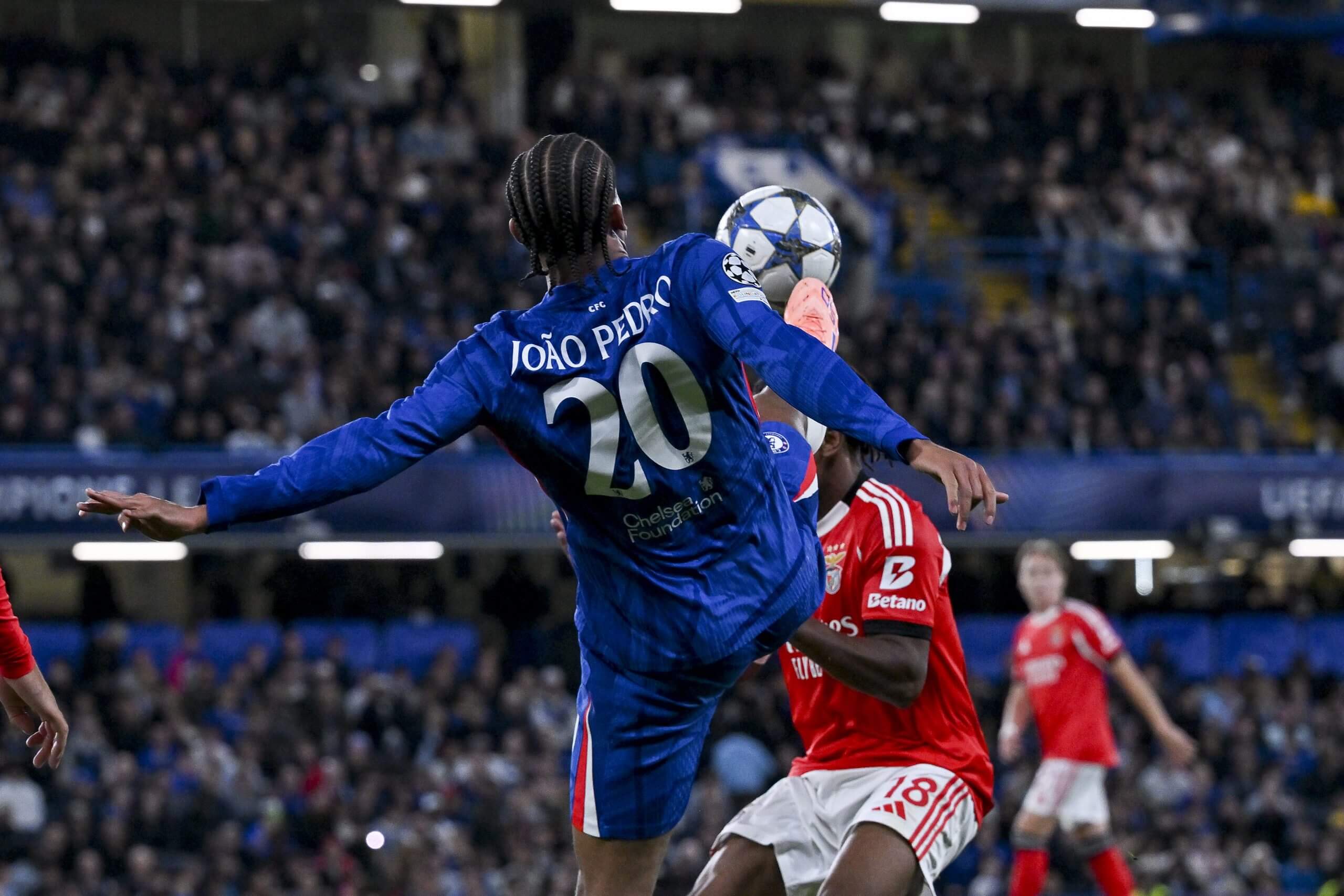
Joao Pedro’s high boot on Leandro Barreiro earned a red card (Vince Mignott/DeFodi via Getty Images)
But the knowledge of that booking should probably have given him pause before flicking his boot high in the direction of Leandro Barreiro’s head when competing for another high ball in the final minute of action.
Relatively innocuous in isolation, but in context, this was Chelsea’s third red card in four matches across all competitions.
Enzo Maresca, Chelsea 2-1 Liverpool, October 4 (Premier League)
Can a head coach credibly castigate his players for indiscipline when he gets himself sent off?
In fairness, Maresca’s red card was the most understandable of the lot: he was shown a straight red card for sprinting from his technical area and joining the mass celebration that followed Estevao’s late winner against Liverpool.
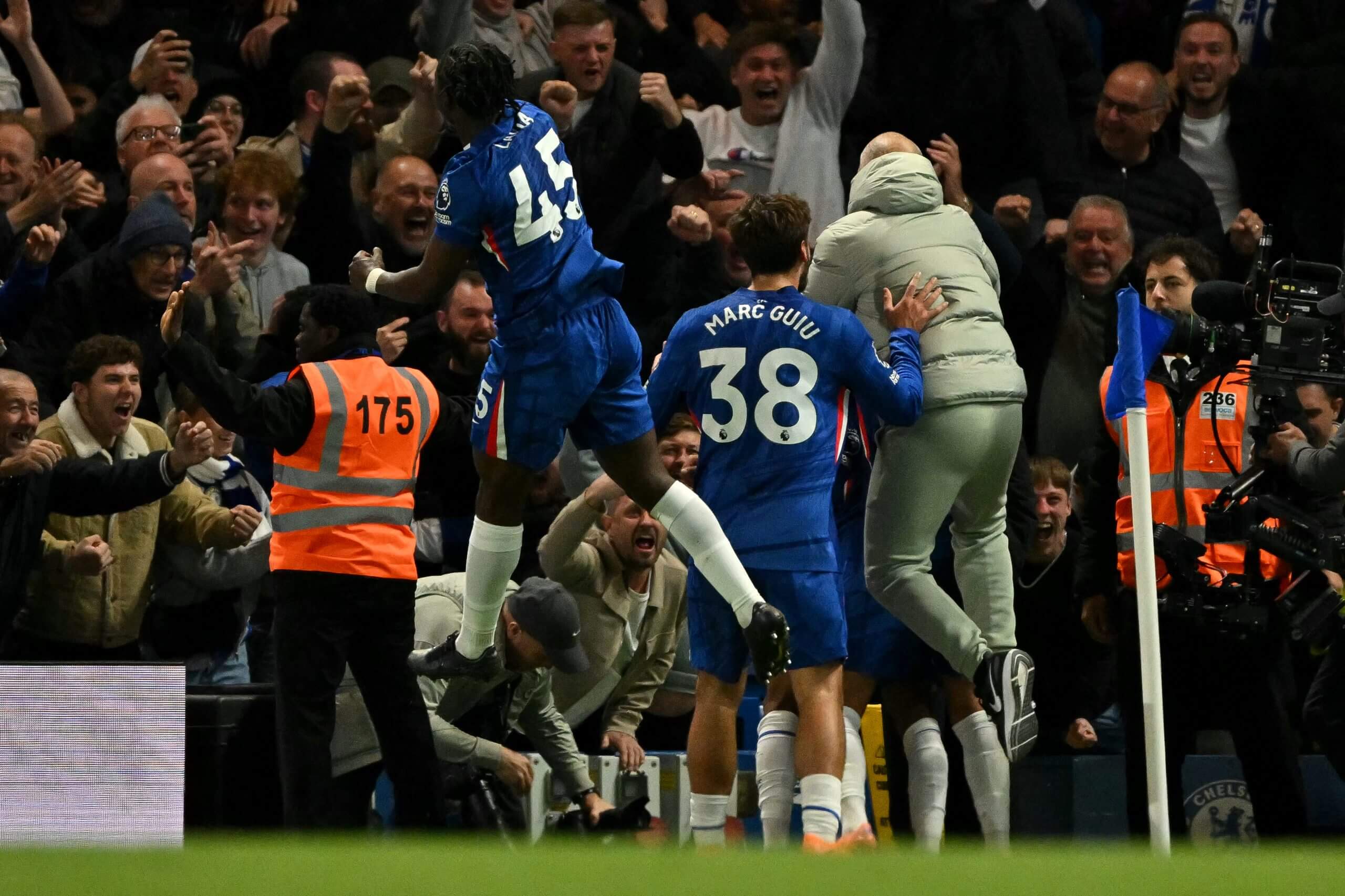
Former Chelsea head coach Enzo Maresca was dismissed for excessive celebrations against Liverpool (Glyn Kirk/AFP via Getty Images)
He was handed a one-match ban after admitting a misconduct charge, describing it as an instinctive reaction. He is unlikely to have any regrets about it.
Malo Gusto, Nottingham Forest 0-3 Chelsea, October 18 (Premier League)
The strongest contender yet for the daftest of all of Chelsea’s red cards this season.
Maresca’s side were already 2-0 up and cruising at a mutinous City Ground in Ange Postecoglou’s final game when Gusto caught Nikola Milenkovic with a high tackle.
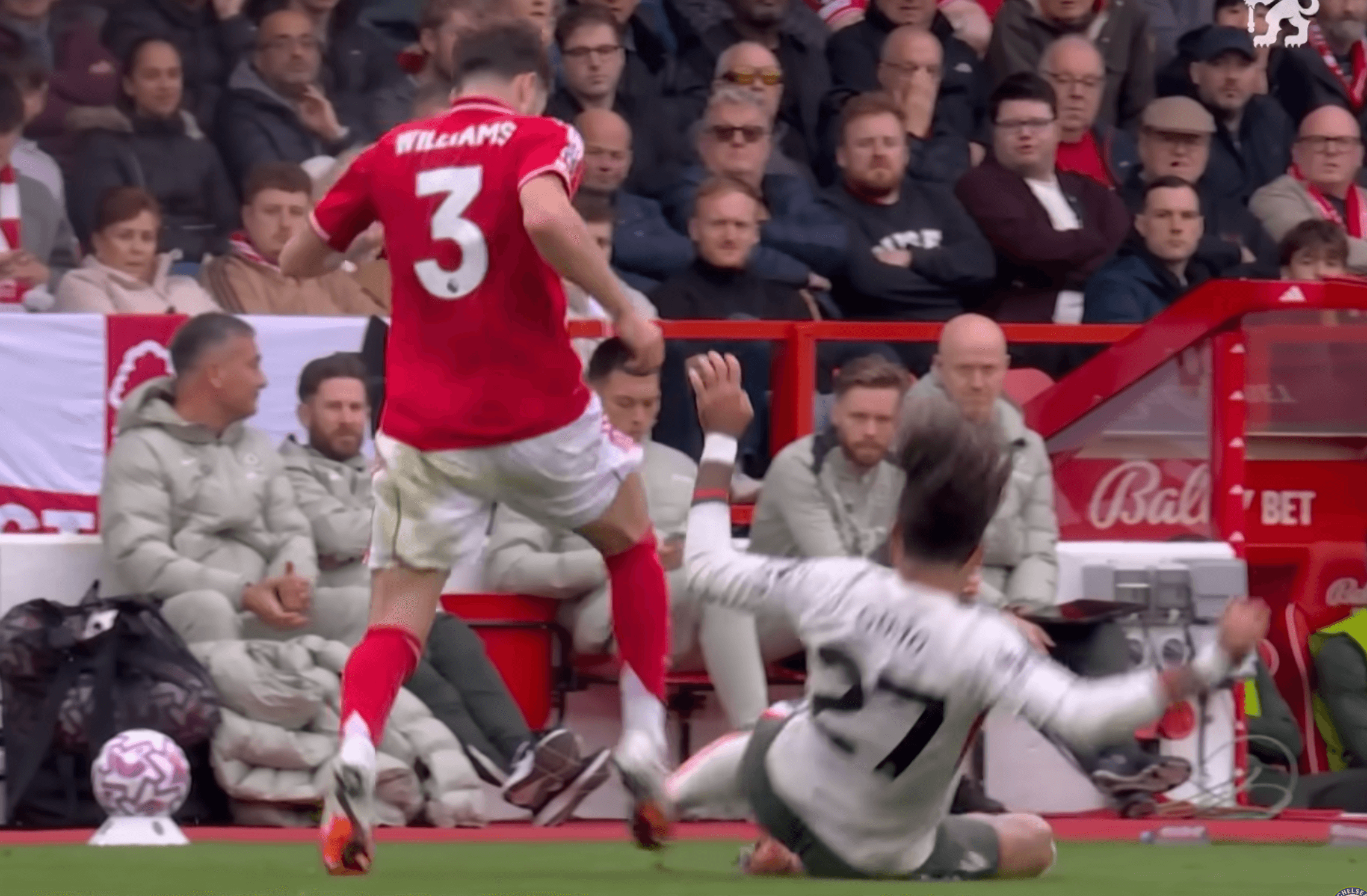
Malo Gusto got a second yellow card for fouling Neco Williams at Nottingham Forest
These things can happen. What cannot happen — and yet, somehow did — is Gusto then sliding in to bring down Neco Williams and prevent a counter-attack in the 87th minute at 3-0 up. Chelsea paid no immediate price, but the mental lapse was tellingly on brand for this squad.
Liam Delap, Wolves 3-4 Chelsea, October 29 (Carabao Cup)
Not to be outdone by Joao Pedro being sent off as a second-half substitute in a cup game, Delap emulated the trick in far more ridiculous circumstances at Molineux.
Brought on at the hour mark, in the 79th minute, he was arguably fortunate to only get a yellow card for throwing Yerson Mosquera to the floor off the ball — but the reprieve did not prompt a cooling of the temper.
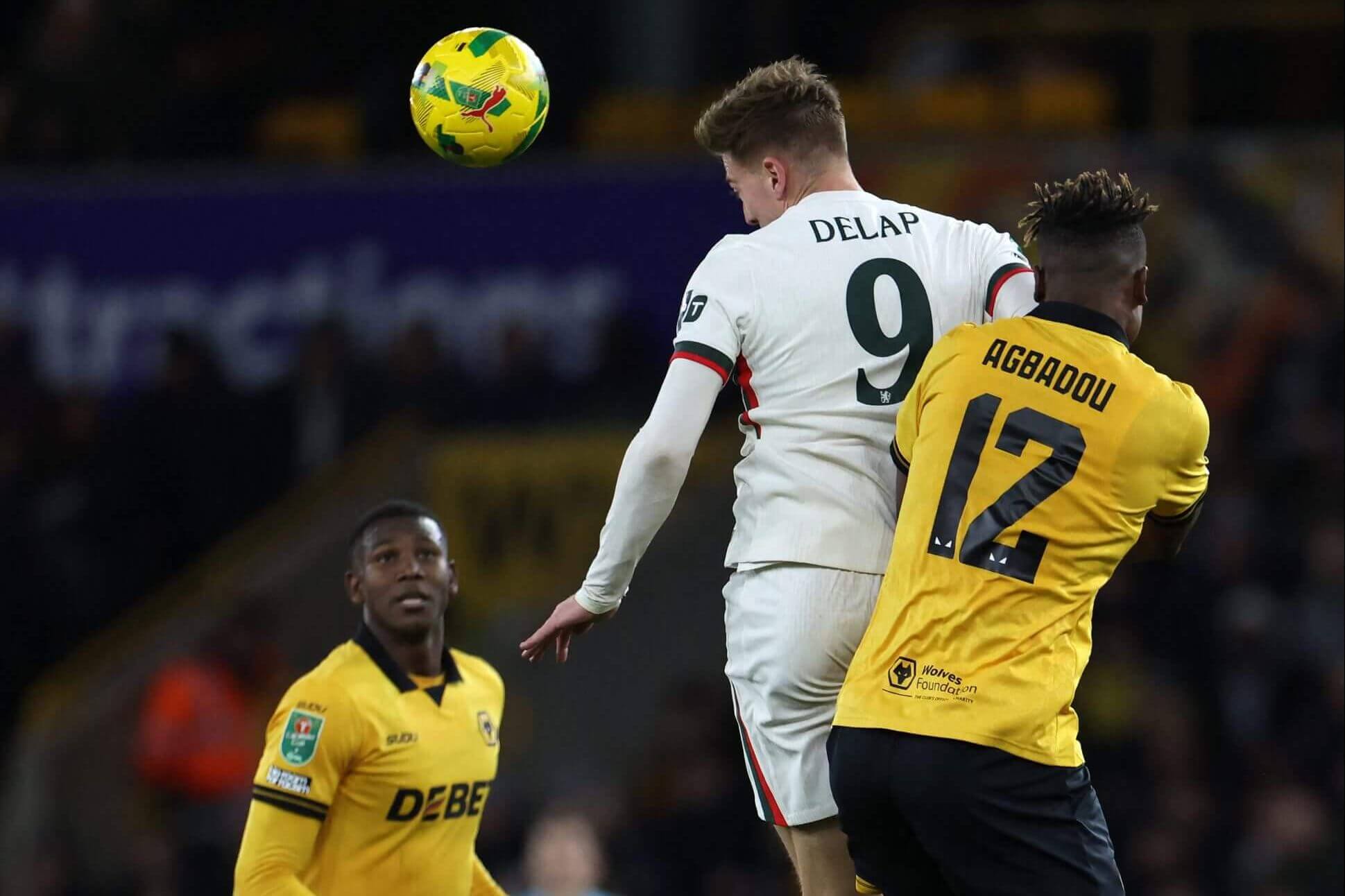
Liam Delap got a second booking for this foul on Wolves’ Emmanuel Agbadou (Darren Staples/AFP via Getty Images)
Instead, Delap steamed elbow-first into an aerial challenge with Emmanuel Agbadou seven minutes later, earning his marching orders with enough time left on the clock for a Jamie Gittens screamer to be required to see 10-man Chelsea over the line in a game they had led 3-0 at the interval. A furious Maresca branded it “embarrassing”.
Moises Caicedo, Chelsea 1-1 Arsenal, November 30 (Premier League)
Play initially continued when Caicedo’s studs found the ankle of Mikel Merino at high speed in the 38th minute of a feisty London derby at Stamford Bridge.
Both players promptly hit the floor to receive medical treatment, and Caicedo was preparing to re-enter the field when a VAR review informed referee Anthony Taylor that a straight red card offence had been committed.
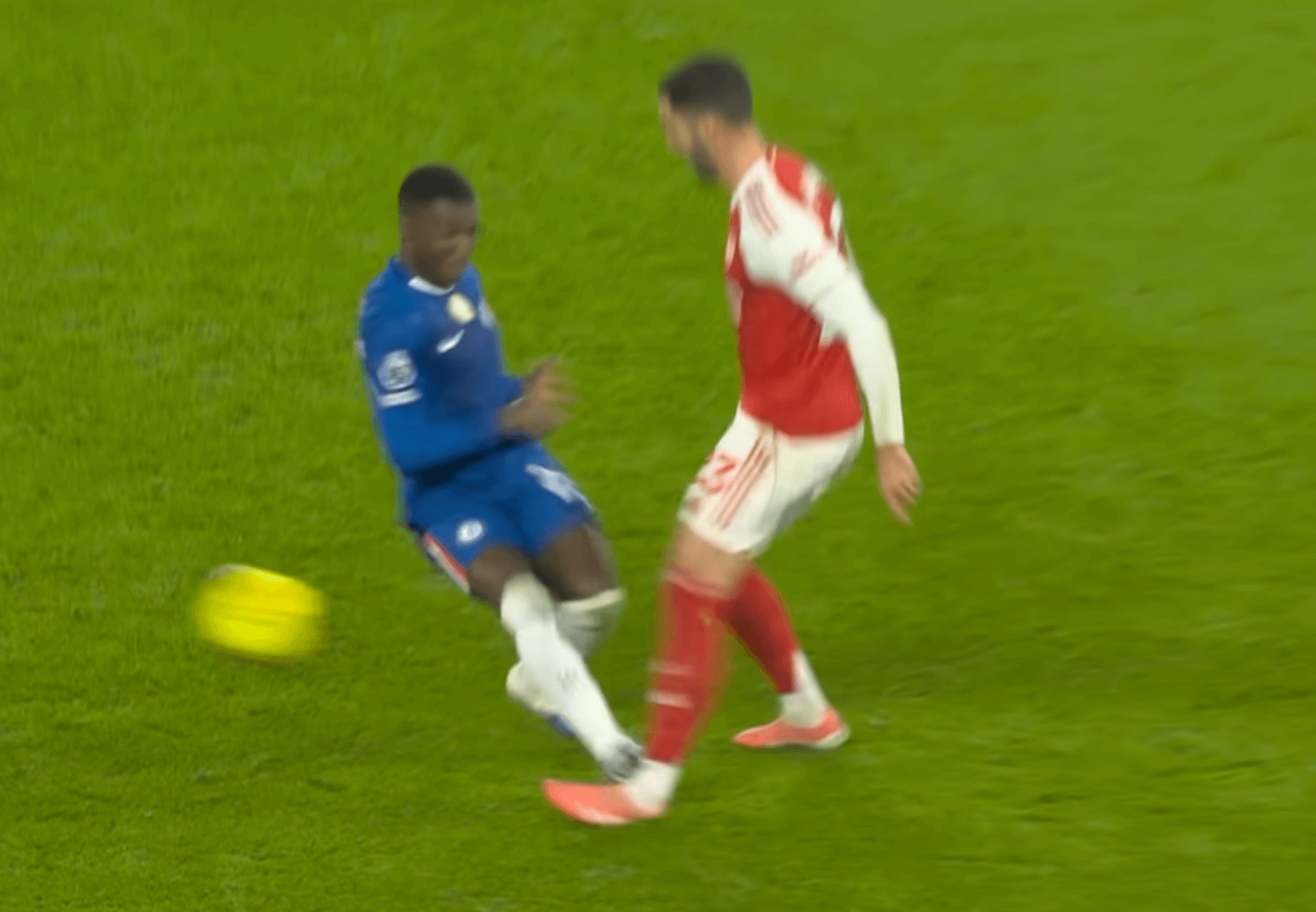
Moises Caicedo’s lunge earned a straight red card against Arsenal
Chelsea rallied remarkably with 10 men and even took the lead through Chalobah early in the second half before Merino equalised, but optimism at the spirited nature of their performance was tinged with the nagging question of what they might have achieved with 11 men.
Marc Cucurella, Fulham 2-1 Chelsea, January 7 (Premier League)
As with the Sanchez red, Chelsea were plunged into immediate disarray by one long kick from a goalkeeper at Craven Cottage.
This time, it was Bernd Leno who floated a ball into the space behind Harry Wilson and Marc Cucurella, Chelsea’s deepest defender from an attacking corner kick.
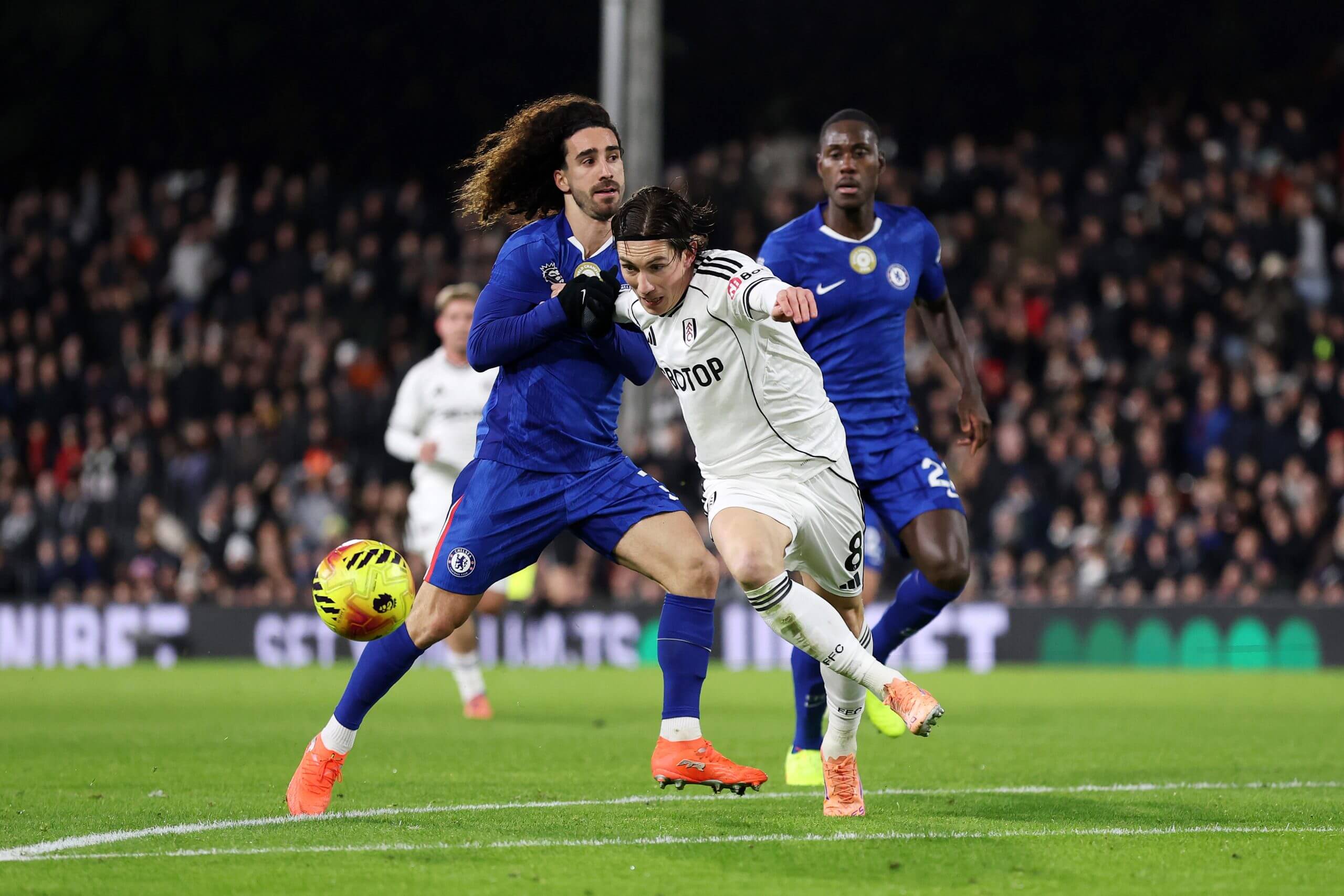
Marc Cucurella was dismissed for this foul on Harry Wilson (Justin Setterfield/Getty Images)
Wilson manhandled Cucurella with alarming ease to gain prime position to bring the ball under his control, prompting the Spaniard to pull him down in desperate fashion just outside the box. Last man, denial of a clear goalscoring opportunity, straight red card.
As against Arsenal, Chelsea did not give up with one man fewer under the interim leadership of Calum McFarlane and Delap even managed to cancel out Raul Jimenez’s opener before Wilson fired in a late Fulham winner.
Wesley Fofana, Chelsea 1-1 Burnley, February 21 (Premier League)
Chelsea had already begun to lose control against Burnley when Fofana picked up his first yellow card in the 34th minute against Burnley, chopping down Hannibal Mejbri after the Tunisia international had been allowed to dribble through midfield unchallenged.
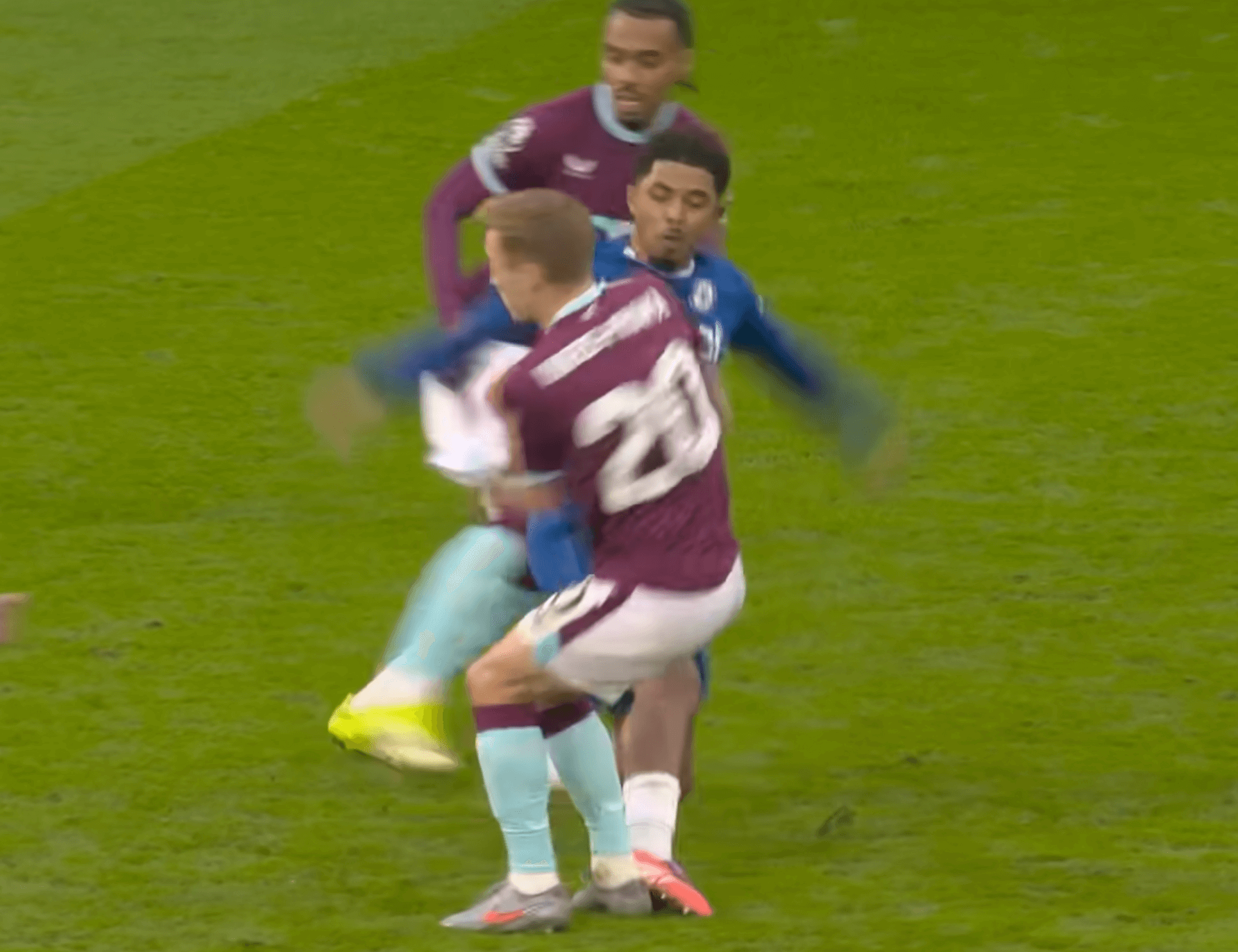
Wesley Fofana earned a second yellow card for this tackle against Burnley
They had started to regain it when he lunged a split second late into a challenge on James Ward-Prowse in the 72nd minute, trying to regain the ball deep in Burnley territory.
Instead, he left the game, and Ward-Prowse picked himself up to supply a crushing late equaliser from a corner kick for Zian Flemming.
Pedro Neto, Arsenal 2-1 Chelsea, March 1 (Premier League)
Two minutes and 58 seconds separated Neto’s two bookings in the second half at Emirates Stadium.
His first was the result of protesting Jurrien Timber’s (entirely legal) goal too forcefully for referee Darren England’s liking. If the memory of that moment lingered in his mind, it did not prompt the increased caution Rosenior would have wanted.
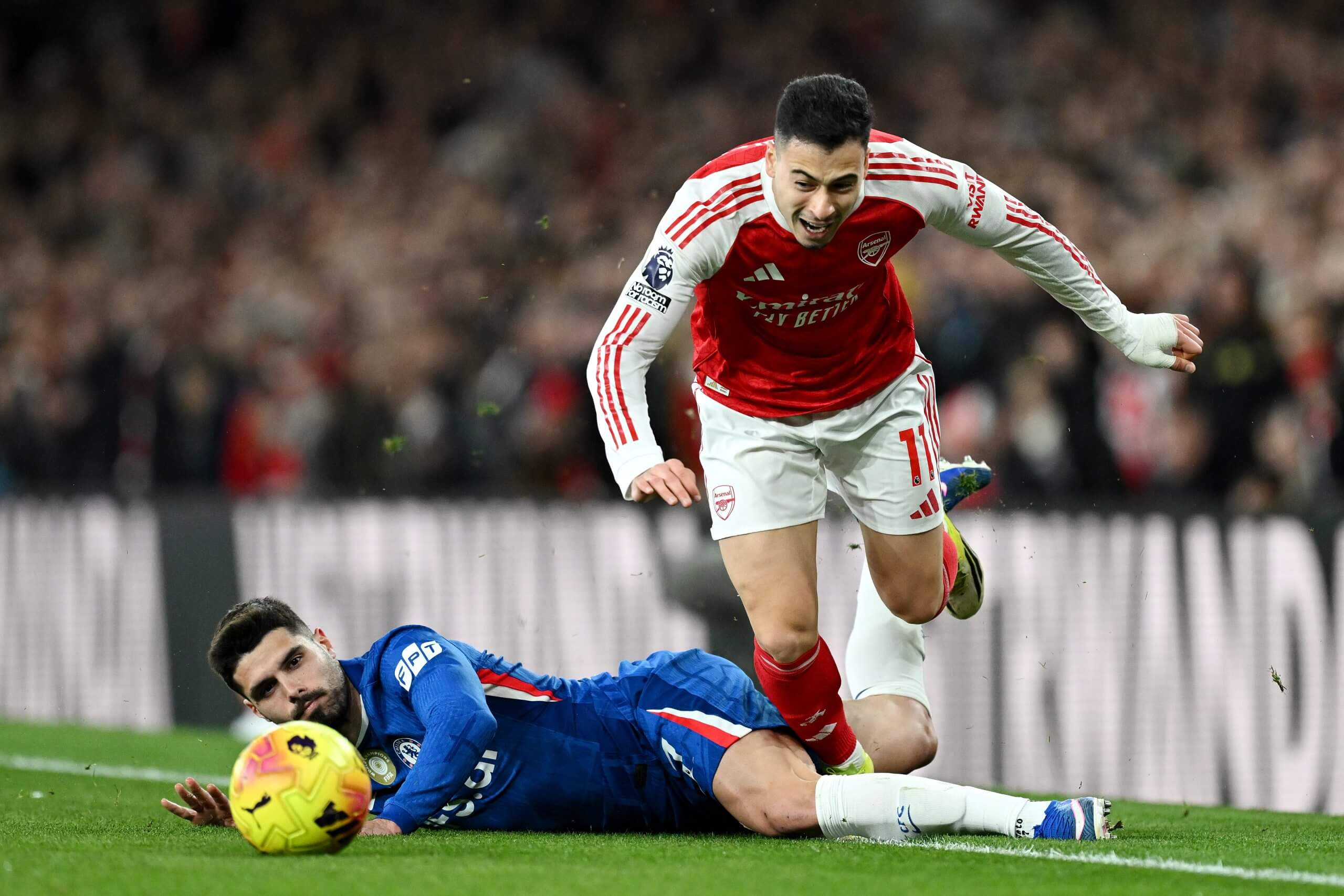
Pedro Neto brought down Gabriel Martinelli to earn a second booking (David Price/Arsenal FC via Getty Images)
Gabriel Martinelli then sized up Neto near the touchline on an Arsenal transition attack before knocking the ball past him. Rather than continuing to track the Arsenal man, the Chelsea winger instead lunged into a hopeless challenge that made a second booking inevitable.
The only surprise was his surprise as he argued his way off the pitch. He will miss Chelsea’s vital Premier League clash at Aston Villa on Wednesday.