
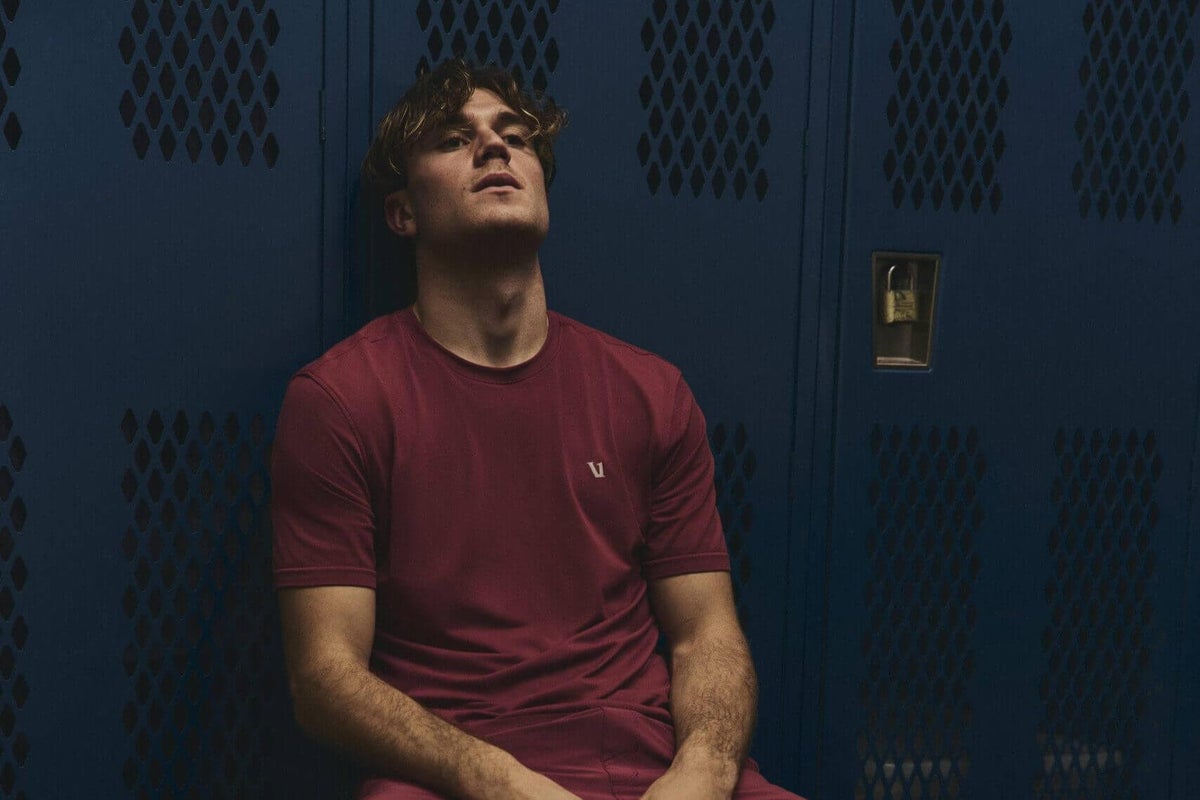
It’s been a long year for Jack Draper.
Spool back to the last time he was in Indian Wells, California. Draper was on top of the world. He’d just won the BNP Paribas Open, his first ATP Masters 1000 title — the rung below the Grand Slams — with an exhibition of baseline brilliance, variety and raw power. He overwhelmed the two-time defending champion Carlos Alcaraz, who admitted to having been “nervous” about facing Draper, in the semifinals. He was up to No. 7 in the rankings. A few months later, he was the world No. 4.
But rather than kickstarting a period in which Draper could reliably challenge Alcaraz and Jannik Sinner at the top of the sport, his momentum stalled. The 23-year-old had already suffered with a number of injuries during his young career, and started to feel pain in his elbow as early as the clay-court season a month later.
He took a break after Wimbledon, where he lost rudderlessly to veteran Marin Čilić, before making an abortive attempt at a comeback in August at the U.S. Open. Draper, who had been a semifinalist in New York City a year earlier, had developed a serious bone bruise in his serving elbow. A “bad scan” before the tournament made him think his arm was healthy enough for him to play. He battled through his first-round match, but then withdrew, and wasn’t seen on court again until Great Britain’s Davis Cup tie against Norway in early February. He only made his tour return at the Dubai Tennis Championships last week, where he beat Quentin Halys in the first round before losing in three tight sets to the world No. 28, Arthur Rinderknech.
“A lot of life has happened since then,” Draper said from California in a video interview Saturday, reflecting on the period since his Indian Wells win. He’d made the long journey over from Dubai, where he had escaped the impact of the U.S.-Israeli attack on Iran, and the subsequent retaliation, by only a day. This year’s Indian Wells main draw begins Wednesday, with Draper, now ranked No. 14, defending 1,000 points in the Californian desert and facing a sizeable drop if he goes out early.
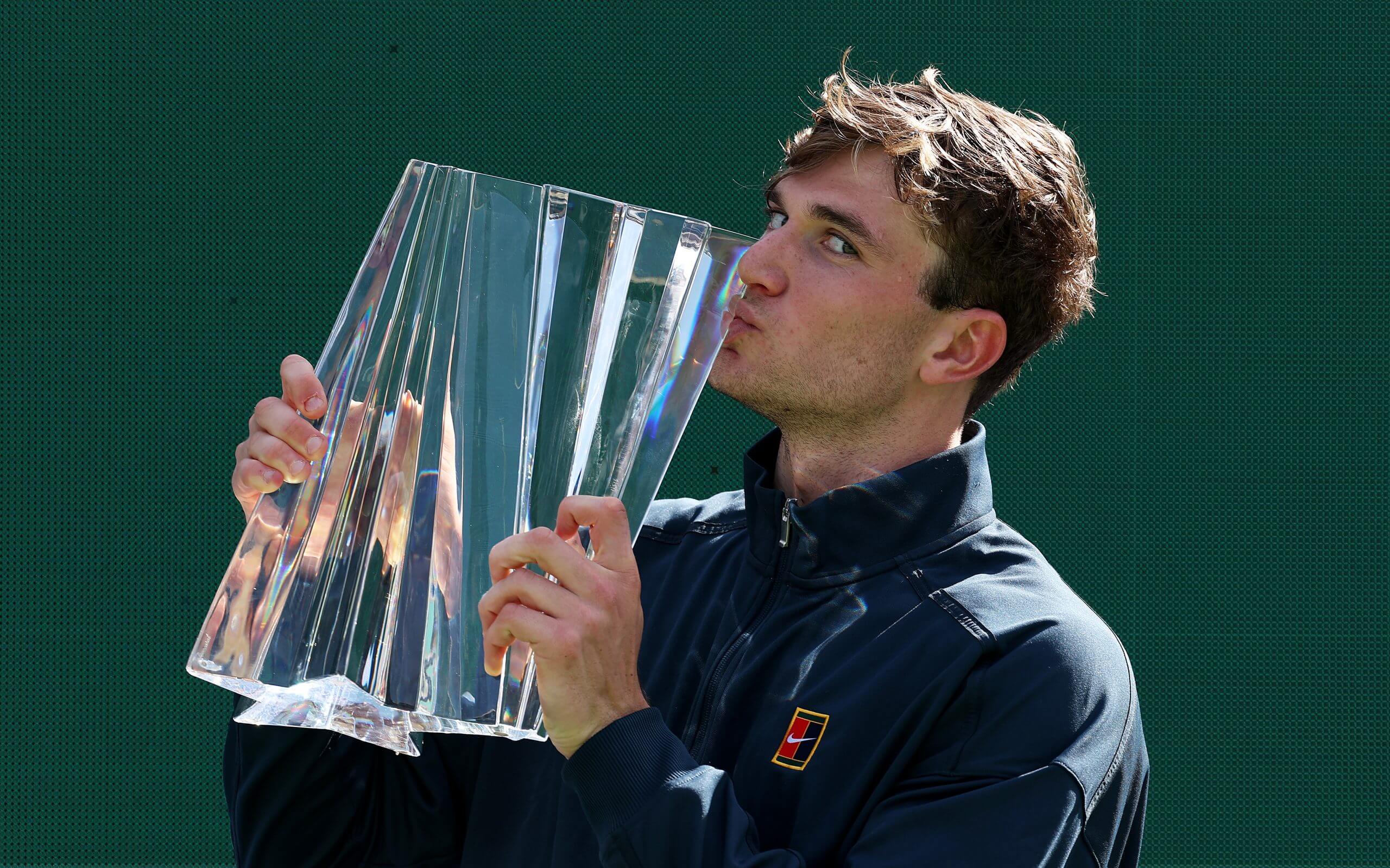
Jack Draper with the Indian Wells trophy last year. (Clive Brunskill / Getty Images)
It’s been a long road back to this point for Draper, Britain’s leading player who, at 24, should be entering his prime years. A leftie with an imposing physique, standing at 6-4, he also possesses good feel and is widely seen as a candidate to disrupt the Alcaraz-Sinner duopoly.
The time out has acted as a reset for Draper. He has a new coach — Andy Murray’s former coach Jamie Delgado replaced his longtime mentor James Trotman in October — a remodeled serve, switching from the pinpoint motion which brings the feet together to a static “platform” base where the feet remain apart throughout, and the decision that has caused the most discussion: A new haircut.
Gone is the 90s boyband look which Draper, a global brand ambassador for Burberry among other endorsements, became synonymous with, replaced by a no-nonsense shaved head. “It’s not the greatest in the world,” Draper said, with a smile. “I thought I had a bit of a better hairline than I do. But at the same time, it’s a bit of a fresh start.”
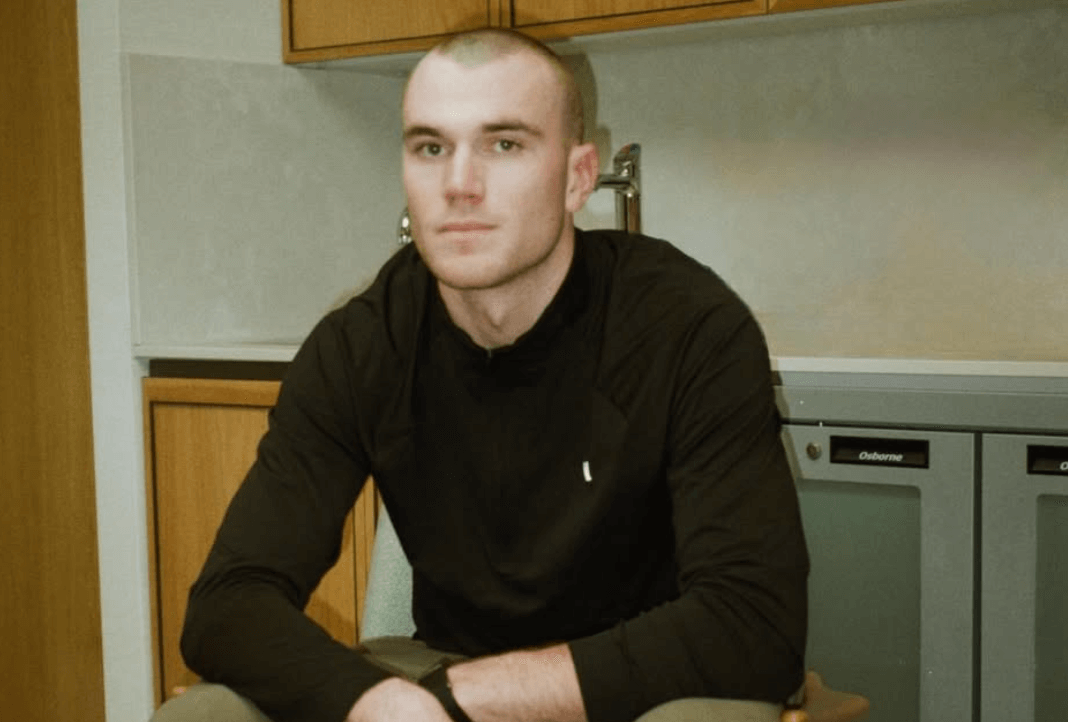
Jack Draper shows off his new haircut on his Instagram.
That feels fitting after eight challenging months, even if he feels he is “a better player than I was 12 months ago.” Recovering from serious injury is a painful, tedious process — especially for someone who had already had a long layoff with a shoulder problem earlier in his career. “It was extremely tiring, pain is tiring,” Draper said.
There were a couple of months where he didn’t feel like he was making progress.
Draper wanted to show what a comeback really looked like. He does not particularly enjoy social media, and so instead has produced a three-part docuseries with his sponsor, Vuori, hosted on his YouTube channel.
The Southern California athleisure brand signed Draper when his Nike contract expired last summer, in a deal worth around $5 million per year, according to two sources at the time, both of whom spoke on the condition of anonymity to protect relationships in tennis. Neither Vuori nor Draper’s representatives commented on the terms of the deal.
The first episode of the series shows Draper rehabbing at the National Tennis Centre in southwest London, a couple of miles from his home in Putney, also in the area.
“I try and look at the positives,” he says in the first episode, after joking with his grandfather Chris about how many injuries they’ve both had. “What can I do? Do I just sit there and f—— cry about it or do I try and work on my game?”
There are other moments of vulnerability, as Draper drives home from training in the pouring rain, reflecting on the fact that the rest of the tennis world is in sunny Melbourne, Australia for the first Grand Slam of 2026. He said he wanted to “give a bit of insight into what goes on away from the highlights and the winning moments and show the daily grind of it. I think it gives viewers a different perspective on the athlete and (has) a bit more of a personal feel to it.”
Draper is a thinker, and he has had plenty of time to do that over the last few months. In November, he called for action to combat the physical and mental demands placed on tennis players by the sport’s unrelenting schedule during an interview with The Tennis Podcast.
The time away has taught him a number of life lessons. Principally, that just as quickly as a player starts to achieve everything they dreamt, it can be taken away. And that the tennis calendar means they rarely have the time to take anything in.
“My perspective and gratitude for just being able to be healthy and do what I love has really hit home in the last year,” he said. “It can be taken from you quite fast and you’ve got to really appreciate the life and the results because that’s what you put all the work in for.”
One of the big adjustments he had to make was adapting to a new pace of life. “You’re used to the thrill of being out there playing in front of people and then all of a sudden, that gets taken from you and you’re at 20 mph instead of 90. It’s an adjustment. And it can be quite isolating, because it’s an individual sport and you give everything to the sport. In my time out, that would probably be the most challenging thing — the feeling of getting used to being a bit more isolated, having to think outside of my life as a tennis player.”

Jack Draper with former Vogue editor Anna Wintour at a Burberry fashion show in London last year. (Saira MacLeod / WWD via Getty Images)
Instead of beating an opponent in front of tens of thousands of fans, the goal was “just trying to win the day. It was an extremely slow and draining process. I’m not the best at chilling out, but I suppose that’s where the perspective came into it.”
Draper has resolved to work “smarter” when it comes to the physical side of tennis. A late developer, he was only 5 feet, 6 inches until a growth spurt in his mid-teens transformed his physicality. He’s been growing into his body since and has put a huge amount of work into going toe-to-toe with the world’s best players over five sets.
Now it’s about knowing when to slow down, especially after an “overload injury” like the one he suffered last year. “Injuries always happen for a reason and it really made me look at the work I’m doing, how I’m recovering, eating and sleeping.”
The time away also gave Draper time to work on his game, a luxury that those playing on the tour each work are not afforded. “I’ve worked a hell of a lot on my transition game, my volleys,” he said. “And I’ve actually hit more serves than I’ve ever hit because I’m hitting them 20 percent, 30 percent, 40 percent and so on. The accuracy and changing my stance on the serve to help my arm … It takes time but you get more repetition because you’re practising it more.”
He was determined that his rehab would not just be about getting physically ready, but “progressing to ultimately be the player I want to become.”
His return in Dubai last week was encouraging. Draper hit 13 aces with his remodelled serve against Halys, and demonstrated some of the improvements in the forecourt that he’s been working on against Rinderknech.
Draper said Dubai was “amazing,” mainly the way his arm felt during and after matches. “(It) responded really, really well. I can’t ask for a better week and it gives me a lot of confidence now that I’m able to keep backing up week after week.” He described his new coach Delgado as “perfect,” not only for his experiences with players like Murray and, until last year, the former world No. 3 Grigor Dimitrov, but also because “he’s a guy who’s not got much of an ego, he’s someone that I get on extremely well with, that I trust, and hopefully we can achieve great (things) together.”
Anyone expecting Draper to be bombastic about his immediate prospects will be disappointed, however. He’s realistic enough to know that coming back from an injury this serious may not be straightforward. “I want to have a great year, but truthfully, after what I’ve been through, I really just want to get back competing, playing constantly. There’s no reason why I can’t do really, really well because I feel like I’m a better player than I was 12 months ago.
“My aspirations are to be back being a top-five player in the world by the end of 2027 and to be now competing for Grand Slams. That could happen sooner but it’s easy to say I want everything now. I have to be logical.”
It felt like Draper would be at that point in no time when he stormed to the Indian Wells title 12 months ago, but he’s able to employ some of the perspective picked up from his lengthy absence away. “I’m definitely proud looking back over what I’ve gone through the last eight months to be in the position I’m in.”