
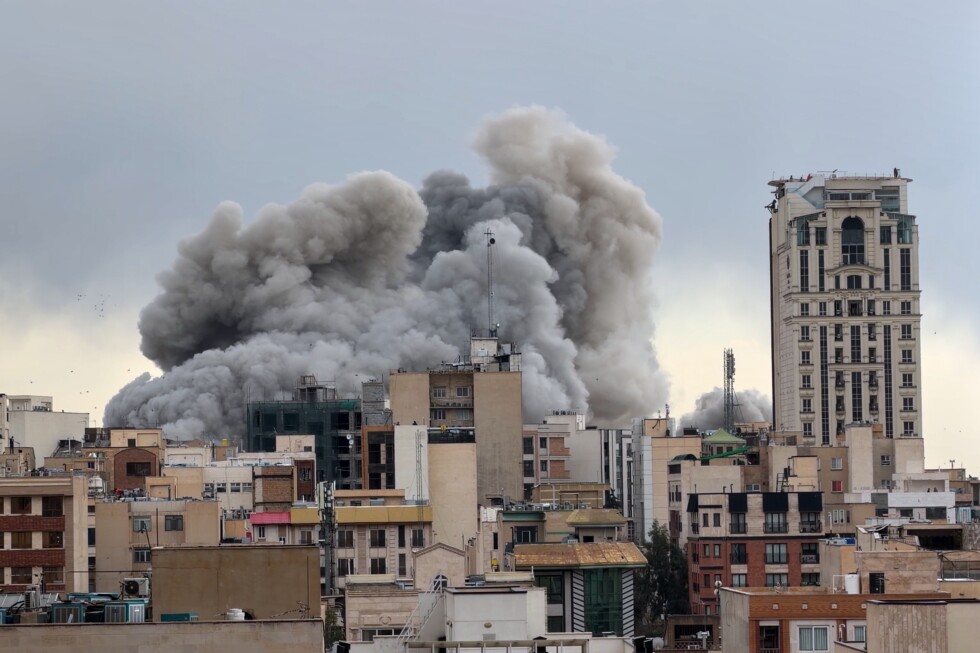
The war in the Middle East spiraled further Monday as Israel and the U.S. pounded Iran. Tehran and its allies hit back against Israel, neighboring Gulf states, and targets critical to the world’s production of oil and natural gas.
The intensity of the attacks, the killing of Iranian Supreme Leader Ayatollah Ali Khamenei, and the lack of any apparent exit plan indicated the conflict would not end anytime soon.
Iran has long threatened to drag the region into total war, including targeting Israel, the Gulf Arab states and the flow of crude oil crucial for global energy markets. All of these came under attack on Monday.
What to know:
Hegseth defends Iran operation: In his first public briefing since the attacks, U.S. Defense Secretary Pete Hegseth defended America’s decision to strike Iran, despite spending years blasting U.S. intervention in the Middle East. He said that Iranian officials spent weeks stalling during the recent rounds of U.S. negotiations as part of their plans to attack. He added that the strikes are designed to reduce Iran’s navy and end its nuclear and missile ambitions.Gulf carriers resume some flights: Global air travel chaos intensified on Monday, leaving airports closed and stranding travelers. Emirates, based in Dubai International Airport, one of the busiest in the world, said it will resume operating a “limited number of flights” on Monday evening, without providing more details. Budget carrier FlyDubai also said it would also operate a limited number of flights on Monday evening.Civilians in Lebanon flee their homes: The Iranian-backed Hezbollah militant group, based in Lebanon, fired missiles into Israel for the first time in more than a year. Israel responded by striking Beirut’s southern suburbs, killing more than two dozen people, according to Lebanon’s Health Ministry. The Lebanese government called Hezbollah’s actions illegal and demanded it hand over its weapons.