
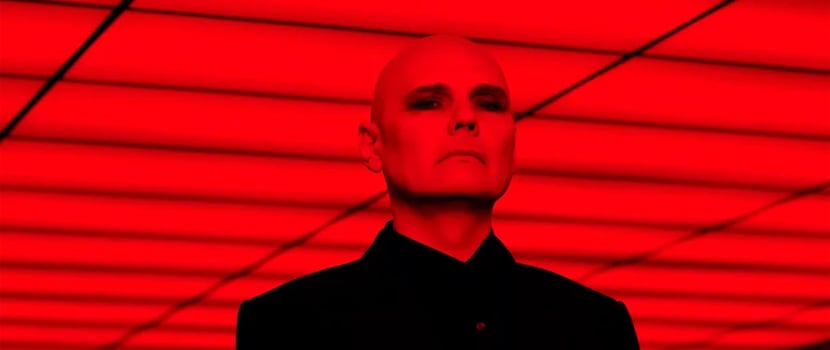
The Smashing Pumpkins vocalist/guitarist Billy Corgan once again welcomed Conrad Flynn on the latest episode of his ‘The Magnificent Others‘ podcast for a wide-ranging chat. Among the topics touched on in this episode was a conspiracy theory related to the perceived decline of rock music in popular culture.
While rock music clearly reigned supreme from the 60s through to the 90s, declining sales and coverage in the mainstream media since — not too mention diminished recognition from industry awards shows and more, do suggest a somewhat abrupt falloff.
Corgan himself suspects that decline was manufactured, as he spelled out below. Per Corgan, he feels that a late 90s collective shift in the music industry was staged in order to diminish the impact and influence of rock in the mainstream media and culture as a whole.
Corgan and Flynn arrived on that topic after discussing rock legends The Beatles and pop rock outfit The Monkees. While The Beatles are frequently credited as the most important act in rock n’ roll, The Monkees in a sense began their rise to fame as a pop rock boy band of sorts.
Launched alongside a TV show and afforded limited songwriting input, etc., much of the band’s creative decisions were controlled behind the scenes. As Corgan put it, the formula for The Monkees‘ success ultimately became standard place in the music industry. He stated:
“If you stop the clock in 1966 and say, ‘take your pick, The Beatles or The Monkees‘, you’d say The Beatles win every time. But The Monkees end up being the model that comes in. We don’t have 20 Beatles now. But we have 20 Monkees.”
Flynn went on to joke that we have “20,000 Monkees.” Flynn then floated the theory that the music industry gravitated more towards artists that are perhaps less directly involved in their music and thus more easily controlled by execs and management for profitability reasons. This theory led Corgan to express his own feelings on the matter, stating [transcribed by theprp.com]:
“I think, and I will say it overtly, I think that rock has been purposely dialed down in the culture. [It began in the] late ’90s. I think the first, and again this gets wizard behind the curtain, right? Somebody’s going to say, ‘Well, how do you know who was the wizard behind the curtain?’ All I know is I saw the gravity shift ,okay?
If you were at MTV, or around MTV in 1997-98, suddenly they decided rock was out, when rock was very, very high up in the thing. And it was replaced by rap. They immediately changed the way… their standards and practices immediately shifted. So now that things that weren’t allowed were suddenly allowed, people were waving guns. Okay, so some people assert that the CIA was involved in all that. Again, above my paygrade. But I saw it happen. I did witness it happen.
And of course great music came out of it. So it’s not like, it’s not a barren wasteland where something was pushed in that replaced something. Qualitative things and great artists came in, but there was this overt shift. I saw it happen. And then now as you pointed out rap seems to be waning in terms of its cultural influence. Pop is completely dominant.
Rock is probably the most dominant ticket-selling thing in the western world, and yet there’s almost no representation of rock in culture. So why do we have that schism? I think they purposely dialed down the ability of rock stars to have a voice in the culture. Or… those who exist within the ecosystem are basically… they know they’ll color between the lines so they don’t have to worry about that.”
[via Rock Feed]