
Along the sloping banks of the San Lorenzo Creek in Hayward, steps from the oldest Japanese garden in California, chaos unfolds. The creek is a favorite gathering spot for the Bay Area’s wild turkeys. A few dozen congregate near the stream and in the parking lot, the vibrant males puffed up, their grand tails fanned out as they shriek and strut around. It’s mating season, and they’re showing off. Another noticeable change occurs this time of year, according to Eric Bergquist, a gardener at the Hayward Japanese Garden. “They get the blue and red on their faces and look more turkey-ish,” he said during a phone call with SFGATE.
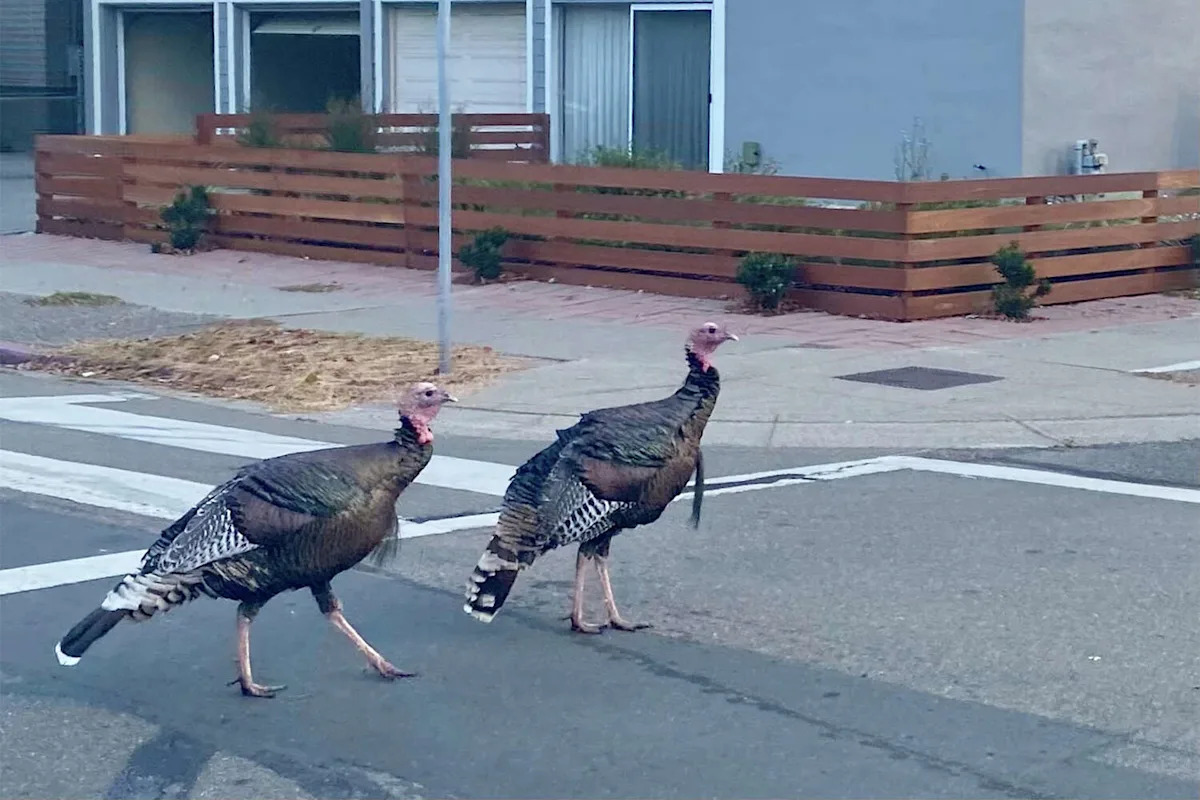
Similar scenes are playing out across the East Bay as spring approaches: flocks crossing residential streets and lingering in busy intersections in Albany, clustering in Fremont, climbing roofs in Oakland. For some residents, it’s a spectacle. For others, it’s intimidation.
The tension came to a boiling point last December when an Alameda man was charged with felony animal cruelty after he allegedly shot and killed a turkey on the former naval air station grounds. So what’s behind the surge in the turkey sightings? Are the animals really becoming more aggressive, or are they simply becoming more visible?
How California got so many turkeys
Turkeys are not native to California. Due to overhunting and habitat loss, the species nearly went extinct at the start of the 20th century in the United States. Various efforts were made to revive their numbers, but it was a 1959 attempt by the California Department of Fish and Wildlife that finally took hold, said Christina Tarr of the Golden Gate Bird Alliance during a call with SFGATE. Two subspecies reside in the state: the Merriman’s turkey, which lives mostly in mountain regions, and the far more prevalent Rio Grande subspecies, Tarr said.
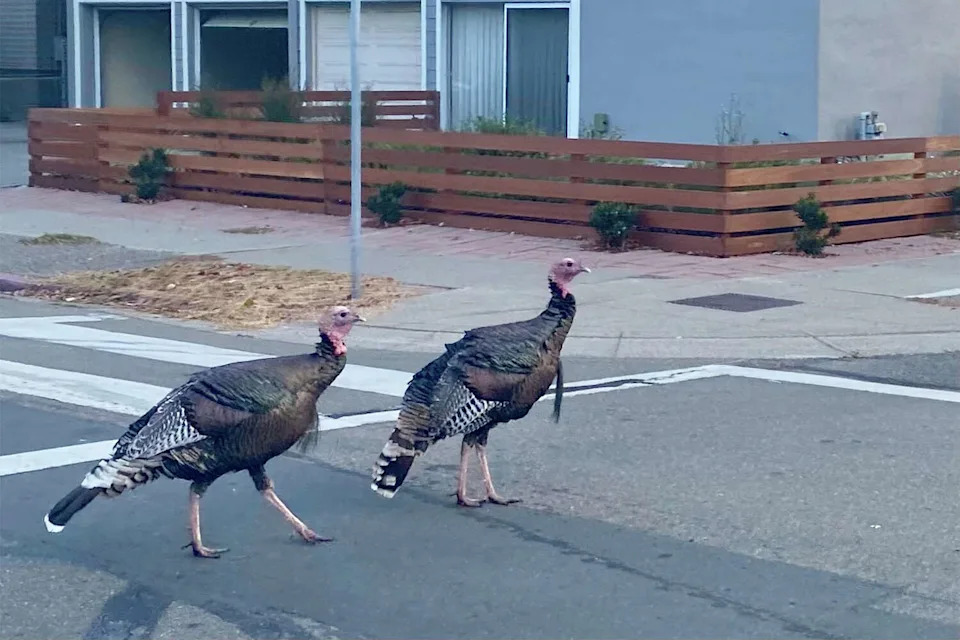
FILE: Two wild turkeys walking near a crosswalk in Alameda, Calif. (Diane Kierse-Donohoe/Getty Images)
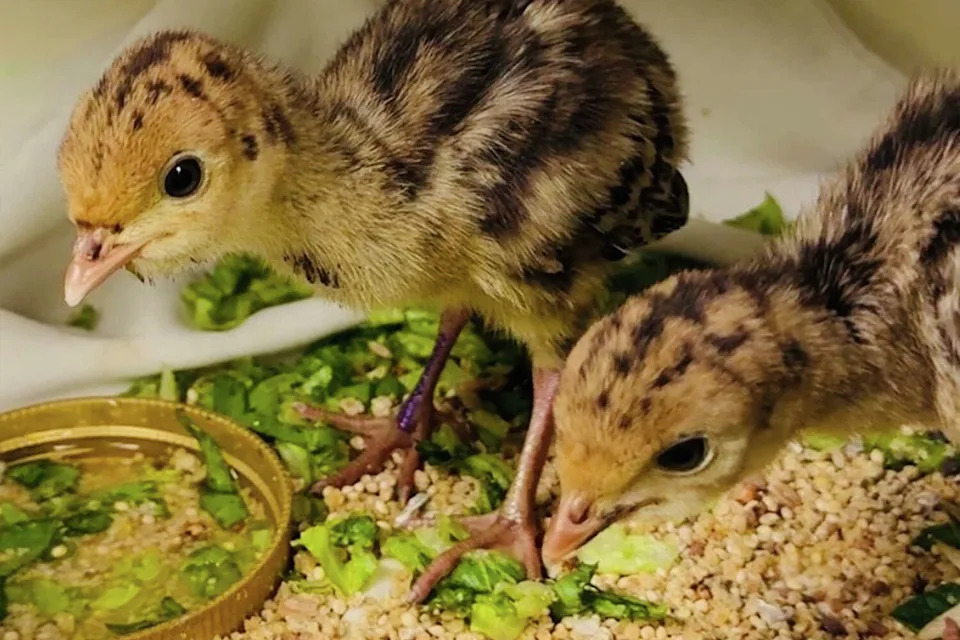
Baby turkeys, known as poults, at WildCare in San Rafael, Calif. (Courtesy of WildCare)
The wild turkey population has grown dramatically since the 1970s, and current estimates peg their statewide numbers at around a quarter million birds today. As a flocking species, family groups often merge into large gatherings. Spring breeding season, which lasts from late February until about May, is the peak time for flashy male displays, according to Melanie Piazza, the director of animal care and hospital operations at WildCare, a San Rafael wildlife hospital and education center.
“All of this springtime is happening,” she said during a phone call with SFGATE. “Hormones are happening now, so as soon as the babies start going or start hatching, that is when these animals will start defending their territories.”
The University of California Statewide Integrated Pest Management Program, or UC IPM, which provides science-based pest prevention guidance, points out that wild turkeys thrive in suburban environments where food, water and landscaped areas create ideal living conditions for the birds. This is similar to the resort-like amenities that made Foster City a poopy paradise for hundreds of Canada geese.
Pecking order and human behavior
In areas where turkeys have become accustomed to people, they may begin to see humans as part of their flock – and therefore part of their pecking order, according to UC IPM. If a human is perceived as dominant, the turkey may act passively. “Viewed as a subordinate, a human might be bullied,” UC IPM writes.
This dynamic can explain reports of birds following, confronting or posturing at local residents.
All of these activities escalate in the springtime, which is also when turkeys may attack vehicles. “That is because they can see themselves in the reflection and think they are seeing a male competitor,” Piazza said.
Cars with shiny chrome may be especially at risk, UC IPM notes.
According to Piazza, wildlife typically act aggressively for two main reasons: protecting young or being fed by humans. “Resist the urge to feed wildlife, because they will get used to humans and come up to them for food,” she said. “And if they approach people who are not friendly towards them, it could result in injury to them.”
The simplest solution when encountering a territorial bird? Walk away and avoid the area temporarily if possible. Piazza also advises slowing down while driving in areas with known turkey populations and for dog owners to leash their pets – the 100 to 150 turkeys WildCare treats annually are mostly brought in as a result of those two reasons.
If anyone finds a fluffy baby turkey, known as a poult, she urges people to bring it to an animal hospital immediately. “They won’t survive on their own,” she said.
Coexisting with turkeys
Eric Bergquist has worked as a groundskeeper at Hayward’s Japanese Garden for about a year, and to him, the wild turkeys are just neighbors.
The birds roost in trees by San Lorenzo Creek and walk along the roof of the senior center next to the garden in the mornings. According to Bergquist, despite their numbers, the birds are skittish. He’s never witnessed a skirmish, even with as many as 30 males strutting around and displaying in the parking lot at once. “I have to say they were very gentlemanly,” he said of their peaceful parade. “I was very impressed.”
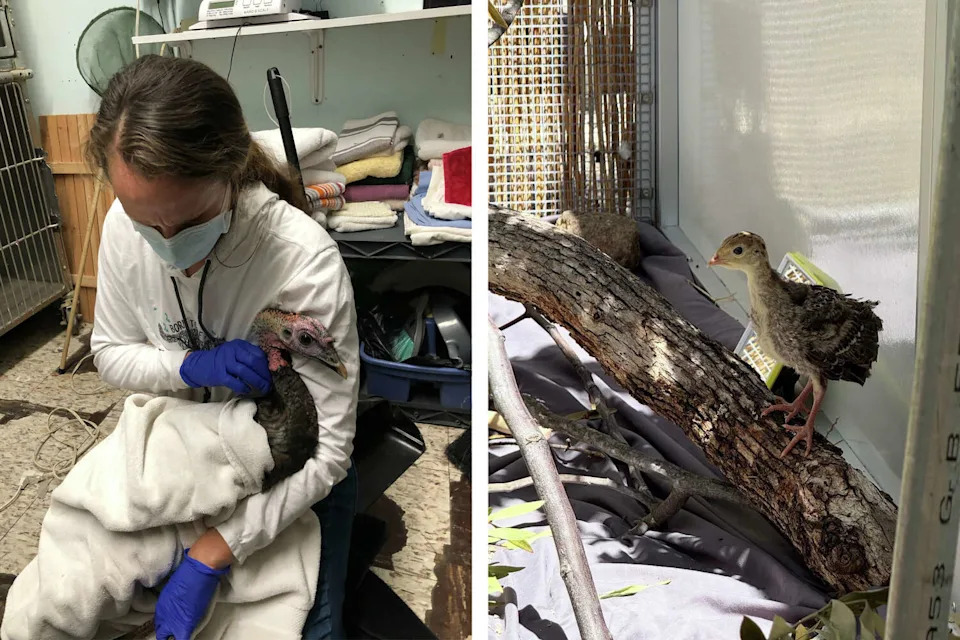
Injured turkeys being cared for at WildCare in San Rafael, Calif. (Courtesy of WildCare)
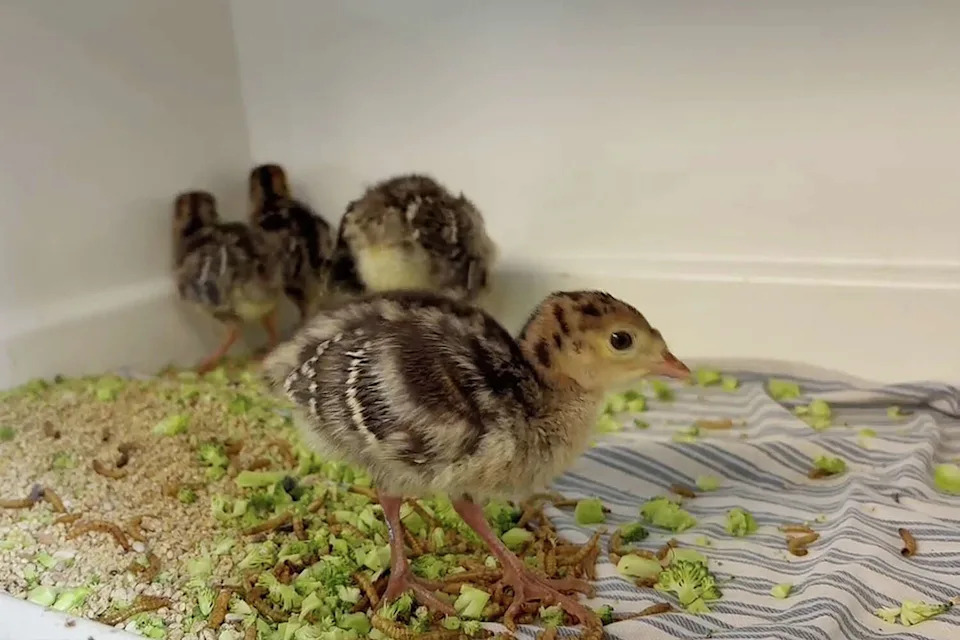
Baby turkeys, known as poults, at WildCare in San Rafael, Calif. (Courtesy of WildCare)
The turkeys can be messy, scattering leaves while digging for grubs in the soil, but Bergquist characterizes their chaos as cartoonish, not harmful. At the garden, they’re considered an unofficial mascot.
Piazza considers the birds to be an ecological asset. “They perform free, natural pest control as their favorite foods include insects and snails,” she wrote. The turkeys also help disperse seeds, aerate soil by foraging and clean yards by gobbling up acorns. “They are a good food source for various predators that people love such as bobcats and coyotes,” she added.
By early summer, the strutting will subside, but the birds will remain. Some people will continue seeing them as menaces, but for others like Bergquist, they’ll continue just being part of the landscape.
More Local
– Deadly avian flu detected in California marine mammals for the first time
– Red Bull’s F1 showcase in the Marina was utter chaos
– A wealthy Bay Area town passed an Airbnb ban. It might not even work.
– Cult favorite Bay Area grocery store to open new local outpost
Get SFGATE’s top stories sent to your inbox by signing up for The Daily newsletter here.
This article originally published at How wild turkeys ended up everywhere in the Bay Area.