
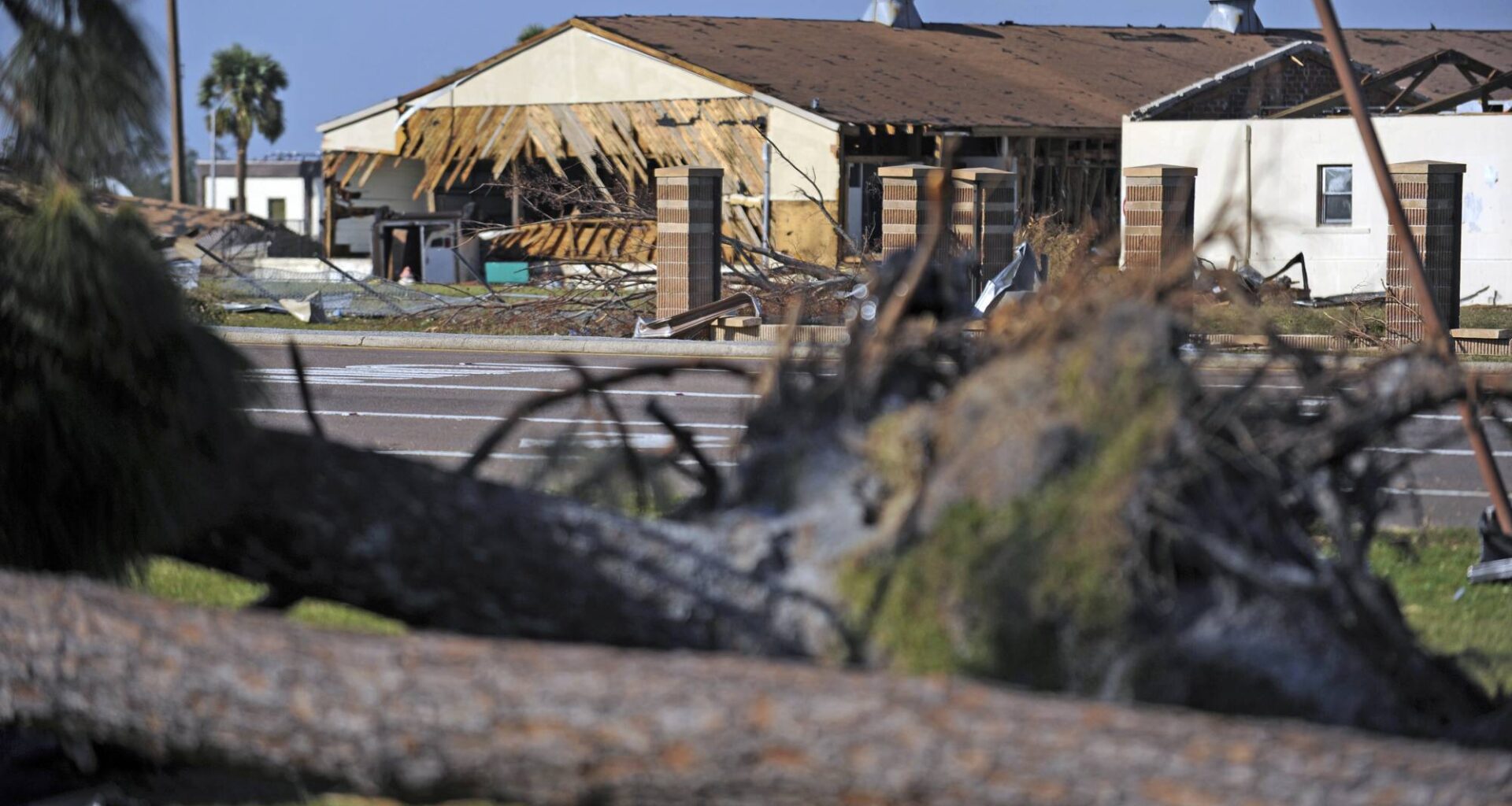
Military installations were expected to complete a spreadsheet in 2025 detailing a range of extreme weather impacts.

March 2, 2026 6:24 pm
3 min read
Natural disasters at military installations have caused billions of dollars in damage over the past decade, but the Defense Department began tracking those costs just recently.
The Defense Department estimates that hurricanes, floods, wildfires, storms, and other extreme weather events have cost the department at least $15 billion in damages to military installations over the past decade. But the effort to collect data to better understand economic consequences of these events only began in 2024, and the data remains incomplete and at times inaccurate.
In fiscal 2025, the office of the assistant secretary of defense for energy, installations, and environment directed military installations to complete a spreadsheet reporting the effects of extreme weather. Specifically, it requested information on impacts to both built and natural infrastructure at installations and associated costs, as well as intangible effects on training or mission readiness, such as health impacts.
Military installations were expected to deliver that baseline data in December 2025, and ASD(EI&E) officials said the department is working to transition from the spreadsheet to a web-based system in fiscal 2026, which would allow installations to update information after the initial submission.
]]>
But the Government Accountability Office found that DoD’s data collection does not include all types of natural disasters that can inflict significant damage on military installations.
DoD captures a range of extreme weather events for reporting purposes such as recurrent flooding, drought, wildfires, thawing permafrost and sea level rise. Kristy Williams, director of defense capabilities and management at the Government Accountability Office, said the department defines extreme weather as these rare events at a particular place and at a particular time of year that possess unusual characteristics. But seismic events, for instance, are not considered as an extreme weather event.
“As a result, the scope of DoD’s data collection excludes potentially billions of dollars in damage or recovery costs associated with natural disasters not covered by the definition for extreme weather,” the report reads.
In addition, the department doesn’t have a process for collecting complete and accurate cost data over time.
“Their baseline data collection is really a point in time, but if you look at the ability to get accurate estimates for disaster recovery, sometimes these costs may not be known until years following the disaster in some cases,” Williams told Federal News Network.
“We spoke with officials at Tyndall Air Force base where the incident occurred in 2018 but there are still recovery improvements going on to this day. So having that comprehensive look at the costs over time in addition to a full range of data we think will really allow the department to have the best handle on these costs associated with the events,” she added.
But Williams said it is a “promising move in the right direction” that the department has begun tracking the effects of extreme weather at military installations.
]]>
Improving resilience as part of disaster recovery
While progress has been made to strengthen resilience as part of the disaster recovery, such as improving drainage systems or rebuilding facilities to absorb seismic energy — those efforts have not been consistent across the department.
In some cases, installations were unable to pursue resilience upgrades because they lacked critical data or did not have sufficient funding to cover their recovery needs.
There is a statutory requirement to incorporate resilience into installation master planning efforts, and while installations are beginning to implement that requirement — existing guidance does not address how the installations should use the master planning resilience information during disaster recovery.
“Efforts are underway — we found that 47 of the more than 500 installations had completed this requirement as of spring of 2025 and at least about 130 had efforts underway to do so. It’s progress and work and moving in the right direction. But additional guidance would be helpful to really clearly identify how these installations, once they have this information included in their master plans, should be using it from a disaster recovery perspective,” Williams said.
Copyright
© 2026 Federal News Network. All rights reserved. This website is not intended for users located within the European Economic Area.