
The Athletic has live coverage of Newcastle vs. Manchester United and Brighton vs. Arsenal.
Arsenal and corners has been quite the combination this season.
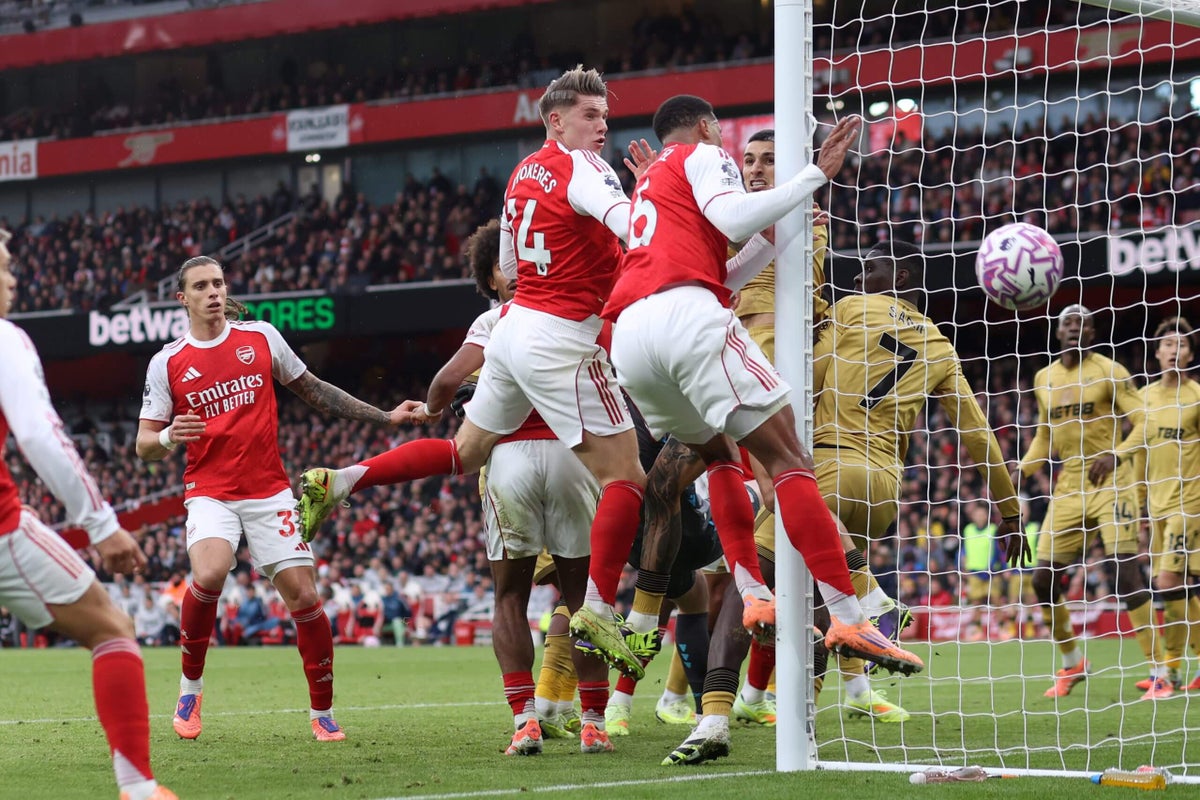
Jurrien Timber’s goal against Chelsea on Sunday was Arsenal’s 16th corner goal of 2025-26. That matched a Premier League-era record previously held by 1992-93’s Oldham Athletic, 2016-17’s West Bromwich Albion, and Arsenal themselves in 2023-24.
Liverpool manager Arne Slot, after his team scored three times from corners in their recent 5-2 win over West Ham United, acknowledged that no other league places “so much emphasis” on dead-ball situations.
But this isn’t a new thing. Manchester City manager Pep Guardiola, speaking this week, said, “When I was a young boy, we said the people in England celebrate corners and free kicks like a goal. I remember perfectly when I was a young boy, so nothing has changed in that way.”
That’s an important detail — the focus on corners in 2025-26 is not a new frontier for English football, but a periodic return to set pieces as an effective way of creating goalscoring opportunities. This season, according to Opta’s data, has seen a greater proportion of goals from corners and set plays, but only at rates seen in the 2000s and earlier.
Some have suggested that it is unbecoming of a team chasing a league title to focus so heavily on set pieces, but if Arsenal win the title, they will certainly not be the first champions to have leant on their ability (and opposition goalkeepers) to do so.
Tony Pulis’ West Bromwich Albion is a good place to start, especially as Arteta is often compared to him in numerous memes.
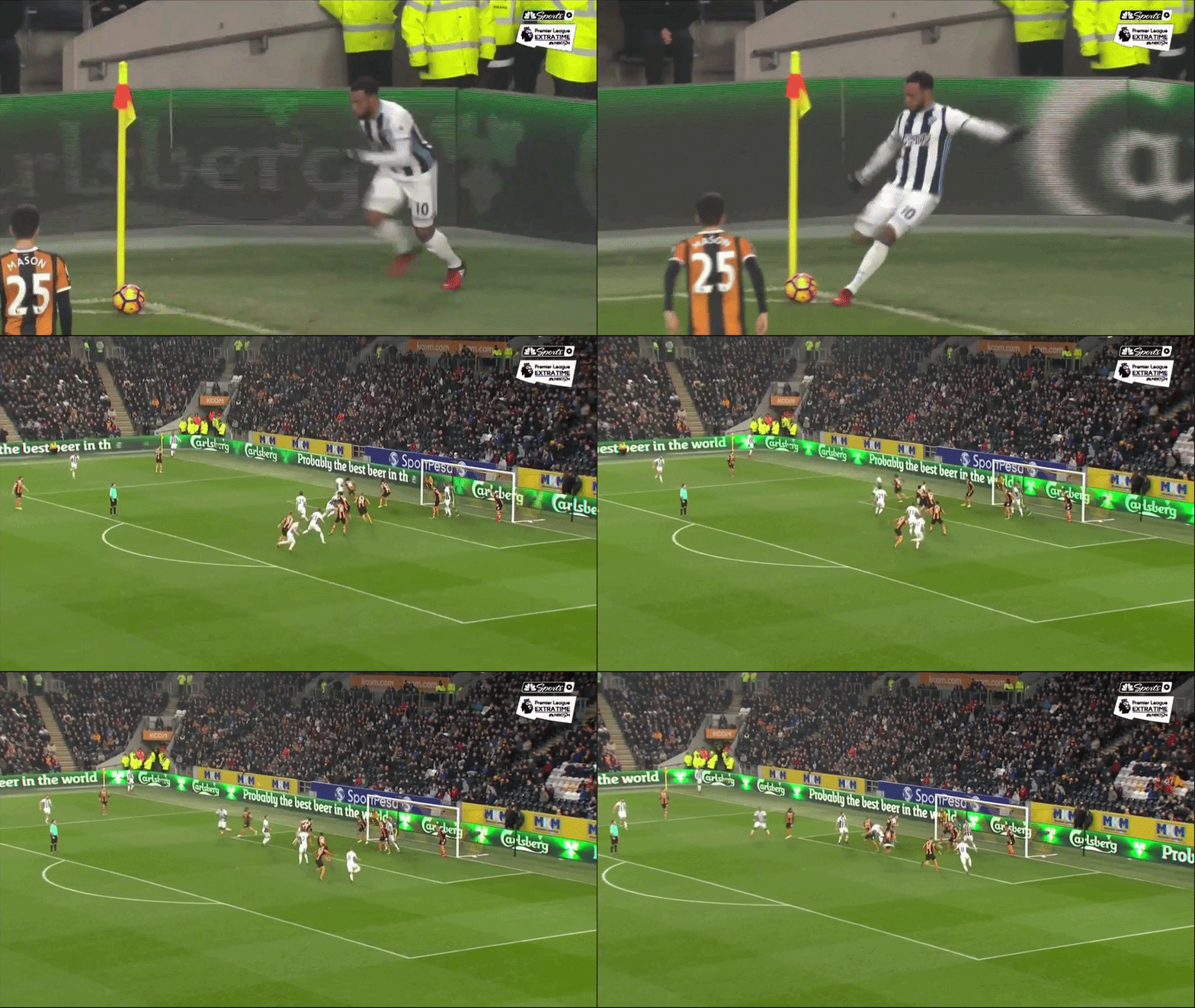
Twelve of West Brom’s 43 league goals in 2016-17 were scored by centre-backs Gareth McAuley (six), Craig Dawson (four) and Manchester United’s current set-piece coach Jonny Evans (two). Unlike the ‘meat wall’ routine (with players packing the six-yard box and area around the goalkeeper) deployed by many teams this season, West Brom’s methodology was simpler against the rest of the league’s mix of zonal marking at either post and man-marking in the centre.
Pulis’ side frequently had a short option, three players attack the near post, one blocking the goalkeeper and one running to the back post. A seventh player — often McAuley or Dawson — darted into the area vacated by the near-post runners to meet pacy inswinging crosses from either side, such as below against Hull City.
West Brom, Pulis’ Stoke City and that 1992-93 Oldham side relied on set pieces to negate clear disadvantages at a financial and player-quality level and retain their top-flight status. That has contributed to the idea of set-piece prowess being the trademark cheat code for minnows.
But Mikel Arteta’s Arsenal are not the only title-chasers to benefit from corner prowess.
Chelsea’s Premier League-winning 2005-06 side regularly used runners starting from behind the penalty spot from corners, with most teams using zonal or man-marking rather than a mix, as seen below.
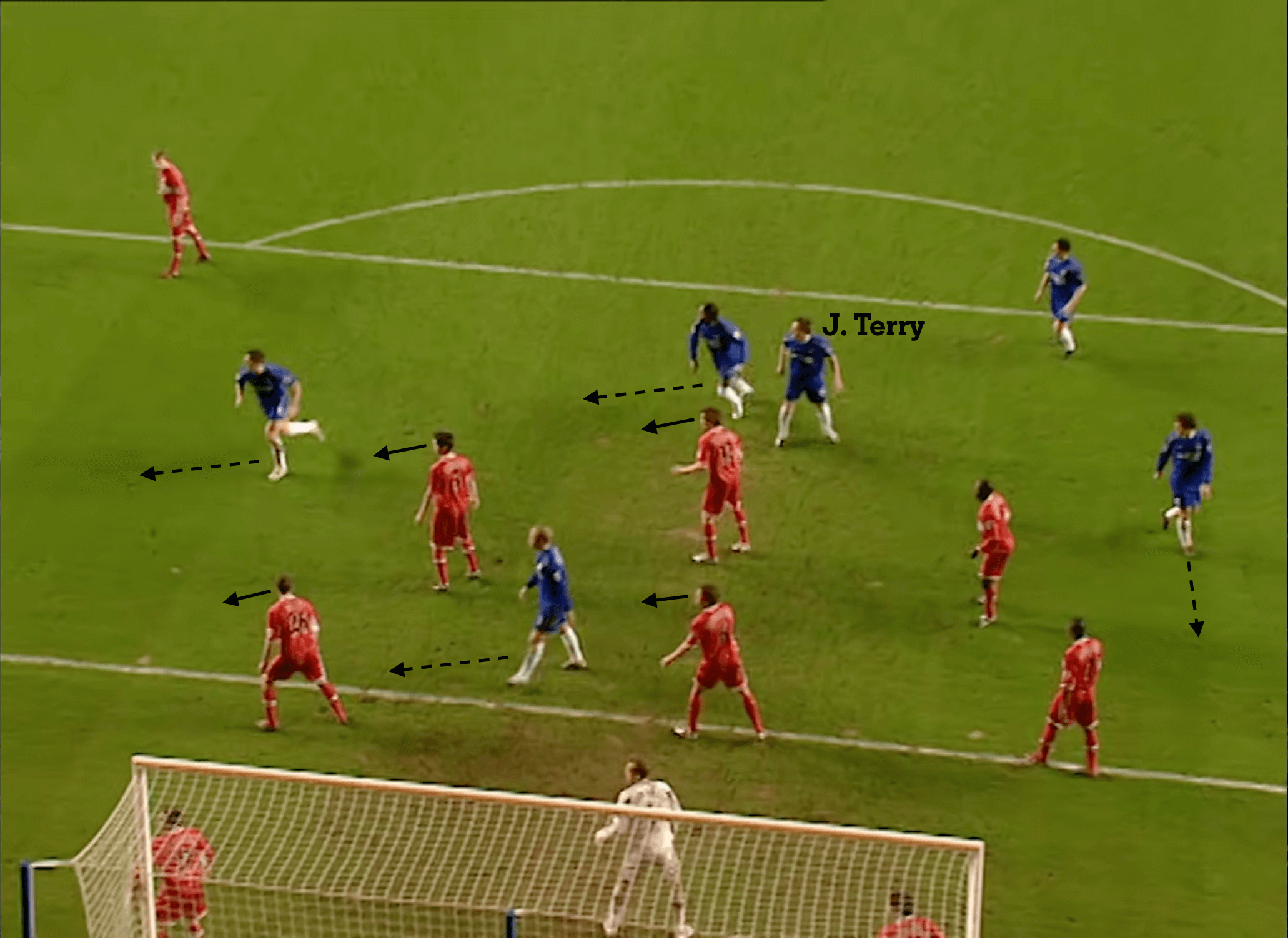
On this occasion, a flat inswinging delivery is powered home by John Terry, whose 27 goals from corners are the most in Premier League history. But he also posed a threat from outswinging corners that swerved towards him rather than goal, charging ahead of his marker to score.
Chelsea benefited from variety. Lofted outswinging crosses to the penalty spot for a knockdown to be attacked by a teammate were part of their arsenal, too. William Gallas scored four times from that exact set-up, including big goals against Liverpool and Manchester United. Flat deliveries to near-post darts from Didier Drogba were a beneficial route to goal too.
A season earlier, Mourinho had bemoaned the prevalence of set-piece routines after his side had thrown away a two-goal lead against Bolton Wanderers in November. “We conceded two goals from set plays. At 1.30pm, we were in the dressing room looking at set plays from Bolton for 20 minutes. I showed them everything — corners, throw-ins, free kicks and we talked about man-to-man marking and responsibility. We did all that but what can you do — shoot the ball?”
More recently, the 2021-22 versions of Manchester City and Liverpool, who finished with 93 and 92 points respectively, used set-piece prowess as an active strategy to break down low blocks. Both scored 15 goals from corners in the Premier League that season.
City, like Chelsea, incorporated different strategies to maximise their chances from dead-ball situations. Most of these had their centre-backs positioned one-v-one in or around the six-yard box with decoy runners at either post. Alternatively, they would loft passes to the far post to then knock the ball across the box, often for Raheem Sterling, their best cross-attacker.
Pep Guardiola’s side even used lofted passes to the edge of the box for Riyad Mahrez to shoot or sent multiple runners to attack fizzed crosses to the near post.
The latter strategy was a Liverpool staple in 2021-22. Virgil van Dijk regularly sprinted to the near post from close to the penalty spot to head the ball home. Liverpool could also attack the six-yard box, where Ibrahima Konate and Joel Matip were looming threats.
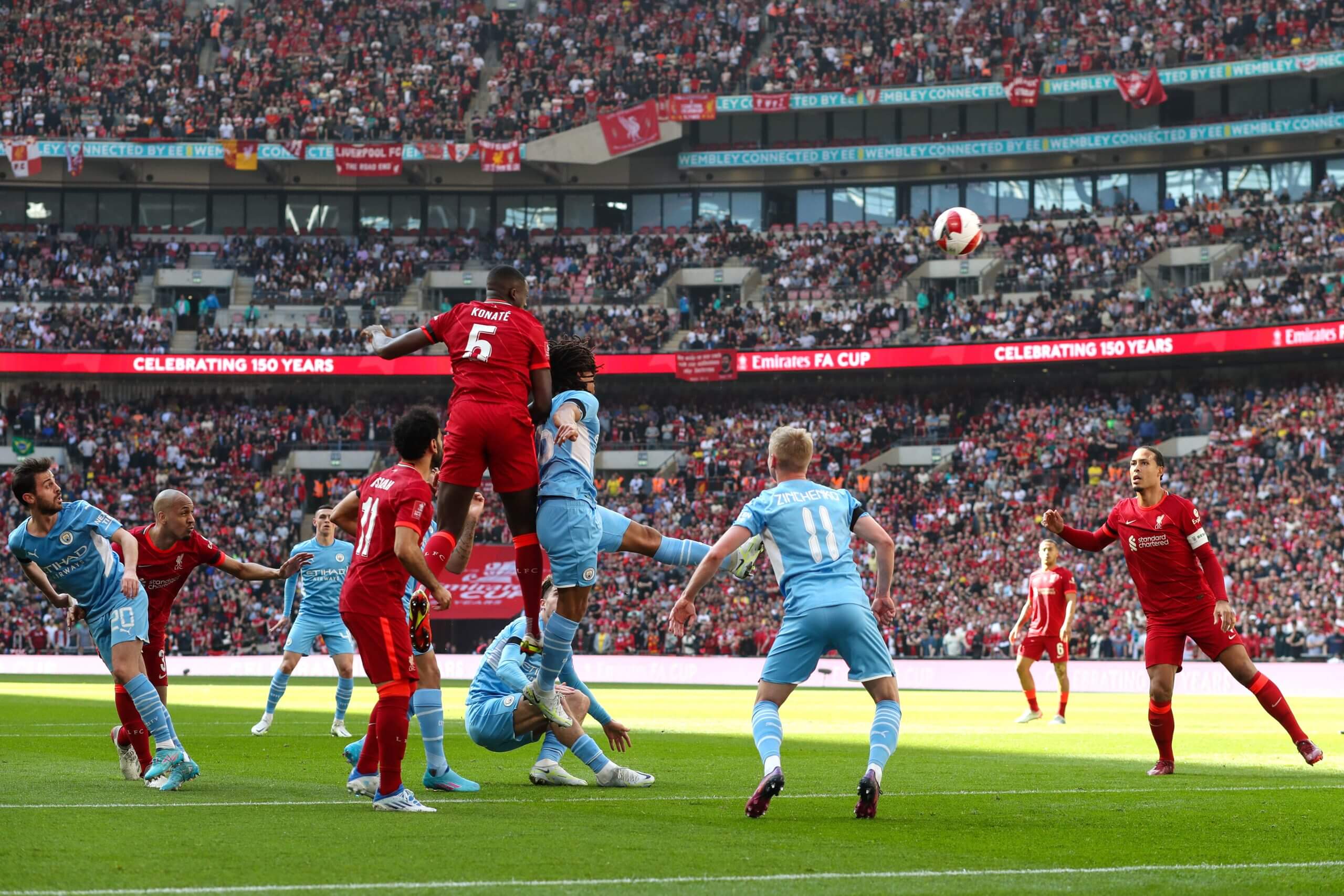
Liverpool and Manchester City both scored plenty of goals from corners in 2021-22 (Mark Leech/Offside/Offside via Getty Images)
Manchester United’s 2007-08 side, remembered overwhelmingly for their counterattacking style, still scored 15 times from corners. In Nemanja Vidic and Rio Ferdinand, they had two of the league’s best players at attacking crosses. The strategy was often to block markers and clear a path for those two to run one-v-one into the six-yard box from close to the penalty spot, generating enough shot speed to overpower goalkeepers from close range. From second balls, Cristiano Ronaldo was an instinctive back-post threat.
United’s set-piece numbers were boosted by Ronaldo scoring four times from free kicks. In the Premier League era, no season saw more direct free kicks scored than the 41 in 2007-08. The next closest years were 2013-14 (39), 2002-03 (36) and 2000-01 (35). It’s a skill that — unlike corners — has not made a significant return in the contemporary Premier League.
Since the start of 2023-24, the division has seen only 39 direct free kicks scored. Modern teams often prioritise quick free kicks or choreographed routines aimed at creating a higher-quality opportunity rather than having a pop from distance.
Even so, the 2025-26 season, courtesy of Anton Stach, Dominik Szoboszlai and Harry Wilson, has seen an uptick. The 15 free-kick goals scored are more than the totals in 2020-21, 2024-25 (both 13) and 2023-24 (11) with 10 rounds left to play.
Throw-ins, a Pulis favourite at Stoke, have been the latest revisionary addition to this mix but remain a ploy for teams aiming to challenge the elite rather than the elite themselves.
Over 75 per cent of throws in the final third taken by Arsenal, United, Liverpool, Chelsea and City are not aimed at the penalty area. Crystal Palace and Brentford, in contrast, launch 72 and 67 per cent of these throws into the box.
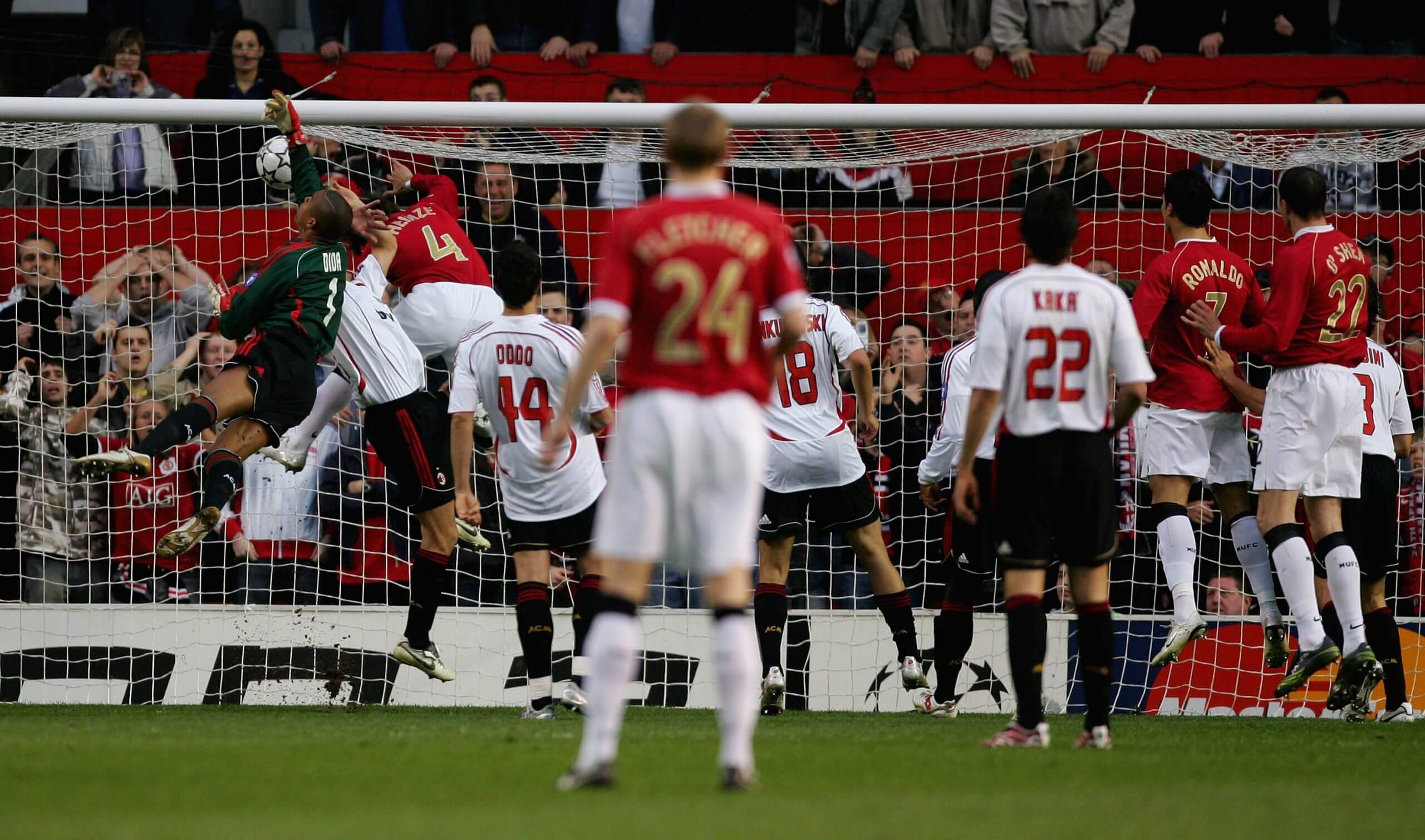
A crowd scene in Manchester United’s Champions League semi-final against Milan in 2007. They went on to score 15 corner goals in 2007-08 (Alex Livesey/Getty Images)
So what has changed? Well, in past seasons, it was rare to see a large chunk of teams rely on set pieces for a quarter of their goals. Chelsea, United, and West Brom were outliers in each of those seasons above. In 2021-22, City and Liverpool were clear of their peers outside of Arsenal (who scored 13 times from corners).
Arsenal this season are some distance ahead of their peers too, with 21 set-piece goals, six more than Manchester United in second. Across the league, however, there has never been greater parity in generating chances due to the access and interpretation of analytics around dead-ball situations, with eight teams managing 12 or more outside of Arsenal.
The table below shows the highest shares of set-piece goals by a title winner since 1992-93.
Past title winners’ set-piece goal share
TeamSeasonShare of set-piece goals (excl. pens)
2005-06
27.8%
2007-08
27.5%
2012-13
26.7%
2004-05
26.4%
2016-17
25.9%
1994-95
22.5%
1992-93
22.4%
2021-22
22.2%
2008-09
22.1%
2013-14
21.6%
The 28 per cent share of Chelsea’s 2005-06 side is bettered by half of the league in 2025-26, with leaders Arsenal, on 36 per cent, only second behind Crystal Palace’s 37. Interestingly, Chelsea and Liverpool are outside of those 10 teams, while City are bottom of the league (11 per cent).
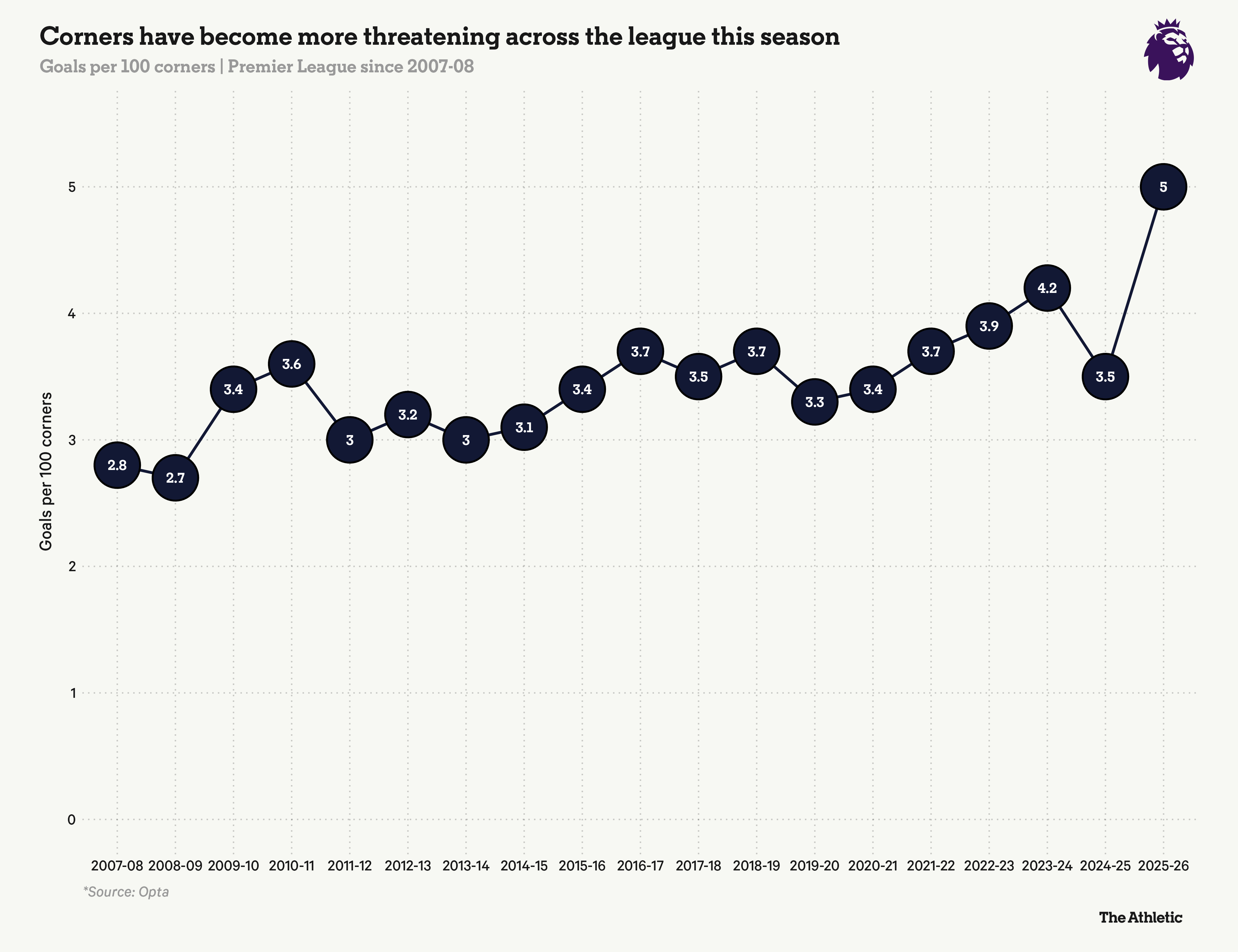
Revisiting the graph from the top of this article, 2025-26 is an outlier. But when we standardise the metric to goals per 100 corners, we can see it is the peak of a rising league-wide wave.
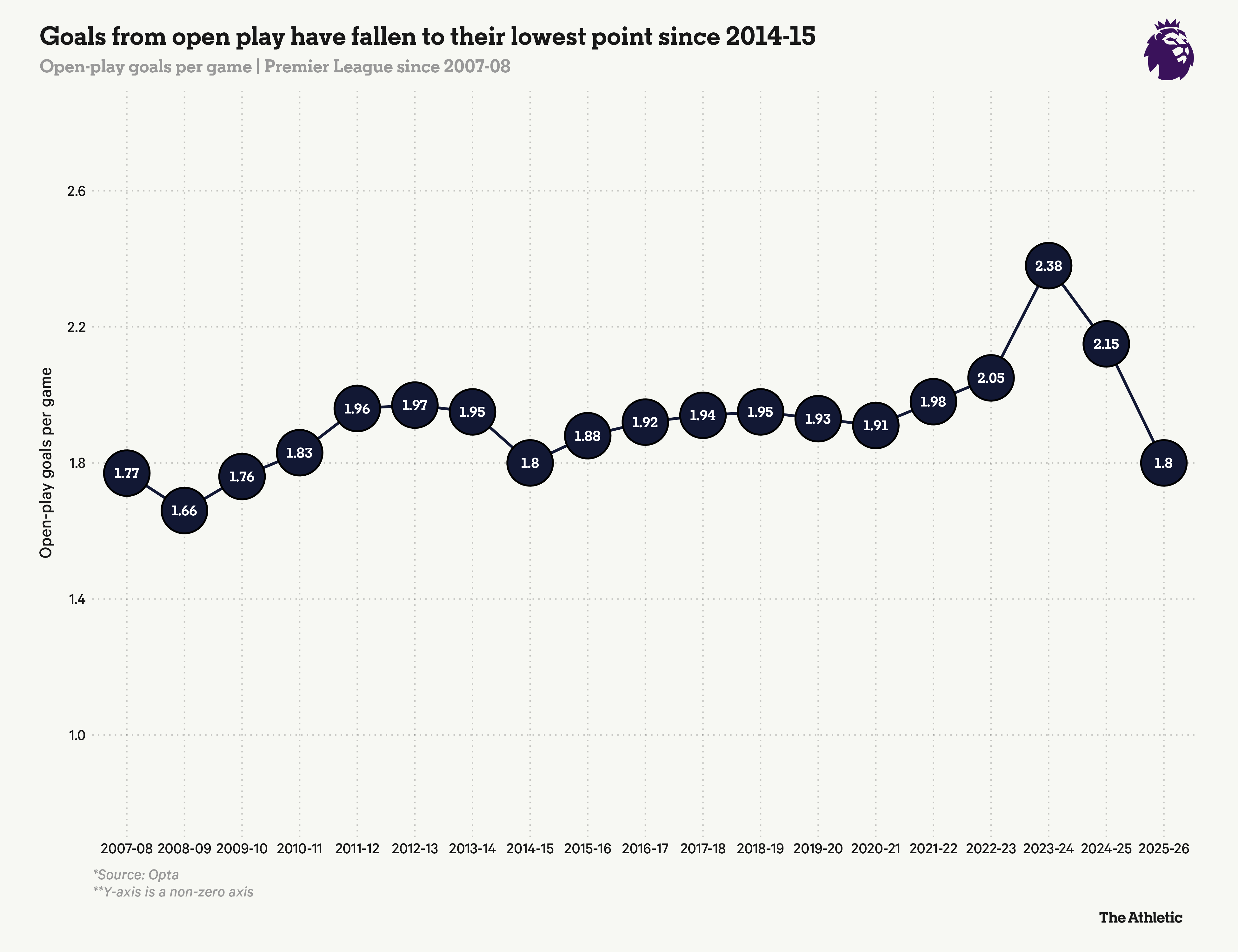
That has coincided, too, with overall scoring from open play dropping to its lowest in more than a decade. Better defending in open play will naturally lead to a greater reliance on set-plays. The numbers back that up.
Slot’s claim about the league’s reliance on set pieces was followed by him acknowledging their contribution in levelling the scales: “Everyone can win against everyone,” he said.
It is also true that modern set-piece strategies add more physicality and a greater knowledge of how much you can get away with.
But we have been here before: innovation on one side of the equation is frequently followed by the same on the other side to repel it.