
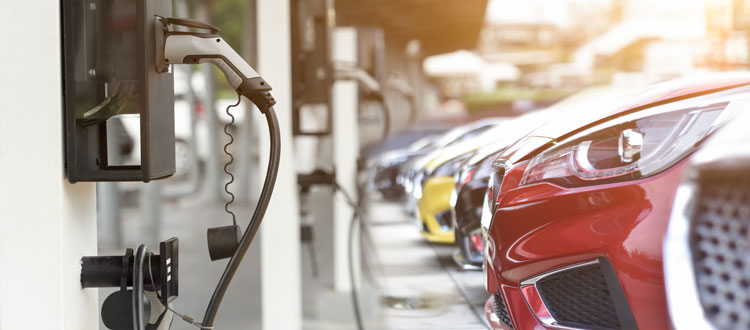
According to Cox Automotive, there were 1.28 million EVs sold in 2025, a 2% decline from the record 1.30 million sold in 2024. Meanwhile, the number of public EV charging stations grew 12%, reaching a record 77,086 sites as of February 1, 2026, according to the U.S. Department of Energy’s Alternative Fuels Data Center. The total number of charging locations is now more than half of the approximately 150,000 fueling locations—c-stores, hypermarkets, kiosks and service stations–in the country.
The demand signals an opportunity for convenience stores, which serve as recharging destinations for EV drivers. A May 2025 NACS Consumer Survey found that a little more than half of all drivers (53%) say they have a garage, driveway, parking spot or other suitable location to charge an EV. The survey also found that drivers consider convenience stores the best location for public EV chargers (see chart).
Of course, there are huge variations in the number of charging locations by state. California has 18,846 charging locations, or nearly a quarter of chargers in the United States (24.4%). However, EV chargers are scarce in less populated states like North Dakota (106), South Dakota (115), Wyoming (119) and Montana (155).
EV Charging Dominates Alternative Fuels
EV charging accounts for roughly 90% of all alternative fuels locations. It’s a big change from 12 years ago, when automakers at the Washington Auto Show highlighted a slew of alternative-fueling options such as propane, hydrogen, liquified (LNG) and compressed natural gas (CNG) and even solar. At the time, EV charging was considered one of many options as opposed to the dominant one.
Fueling Locations and Nozzle Counts Tell Different Stories
In recent years, some advocates for EV charging have used dubious data points to claim that “the gas station is dead.” That’s simply not correct.
In 2025, there were 298.7 million registered vehicles in the United States. Of that total, about six million vehicles, or about 2% of the overall total, were EVs. With total new vehicle sales of around 15 million per year (remember that only 1.28 million EVs were sold in 2025), it will take decades to fully replace the existing vehicles on the road, regardless of the fuel they use.
The 77,086 U.S. charging locations represent about 51% of the estimated 150,000 fueling locations in the country, of which about 122,000 are convenience stores. That is an impressive number, but charging ports are not the same as fueling positions.
According to the Alternative Fuels Data Center, there are 236,407 public charging ports in the United States, of which 67,948 are DC fast chargers.
Meanwhile, convenience stores that sell fuel average 9.8 fueling positions per location, according to the NACS State of the Industry data. Spread across the estimated 150,000 fueling locations in the U.S., that means there are about 1.47 million fueling “nozzles”—about six times the total amount of public EV charging positions.
While EV charging will need years of strong growth to reach the same level of fueling locations or positions, the continued growth of public charging locations provides interesting opportunities for convenience retailers to convert charging customers into in-store customers. We’ll look at some of these opportunities in future issues of NACS Magazine.
.jpg "FE-chart-2-(1).jpg")