
WEST MIFFLIN, Pa. — Beth Hammack, clad in a hard hat and safety glasses, strolled alongside red-hot sheets of metal at U.S. Steel’s Mon Valley Works Irvin Plant last week as she looked to get a sense of how the iconic American company was faring.
Hammack, president of the Federal Reserve Bank of Cleveland, regularly tours U.S. companies in an effort to better understand the state of the U.S. economy, and few companies have taken on a more symbolic role than U.S. Steel. Once the quintessential example of the national decline in manufacturing, the steelmaker is working on a comeback thanks to a deal last year to be bought by Japan’s Nippon Steel. The deal comes with investment meant to keep its plants operating — and even hiring more workers in the coming years.
But Hammack offered a thought that underscored the challenge she and the U.S. economy currently face. With the prospect of thousands of new jobs on the horizon, labor shortages are a cause for concern. So what is a plant manager to do?
“If it’s hard here to get the workers, he needs to find them,” Hammack said, talking from the perspective of a U.S. Steel manager. “If he has to pay them more, then that’s going to raise the price, which means that that appliance, that washing machine, that dryer, is going to be more expensive down the line.”
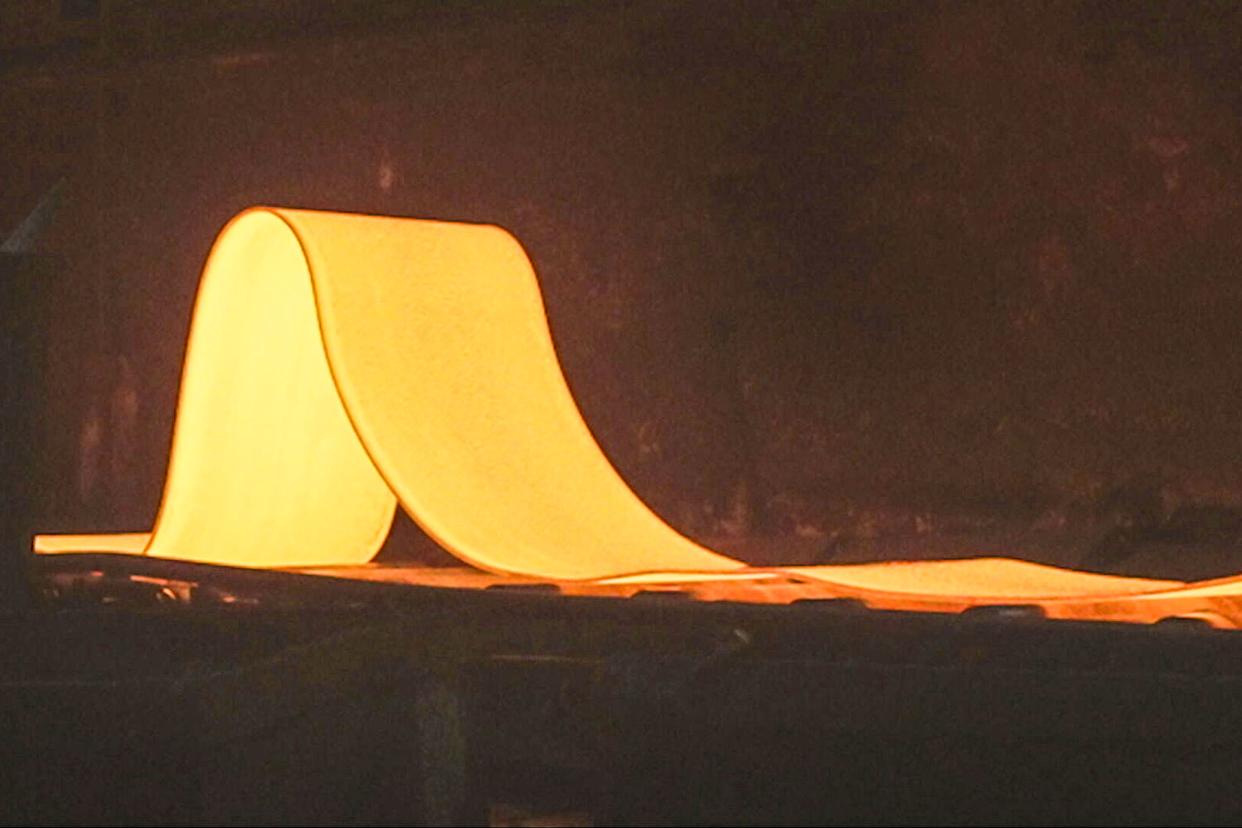
U.S. Steel’s Mon Valley Works Irvin Plant in Pittsburgh. (NBC News)
(NBC News)
Jobs versus inflation. This is the scale that Hammack and 11 other policymakers at the Federal Reserve are constantly trying to balance as they manage the U.S. economy through a somewhat confounding set of circumstances.
For most economists, inflation remains too high, and a fresh war with Iran and renewed uncertainty about President Donald Trump’s tariffs have only added to worries about the global economic outlook. Artificial intelligence investment has helped boost the overall situation, but the technology is also the source of concerns about the future of jobs in general. Job growth remains concentrated in health care and social assistance while manufacturing and other sectors continue to see declines.
The labor market has been its own enigma. The U.S. economy added few jobs in 2025, according to federal data released in February. But that report also found that 130,000 people found jobs in January and the unemployment rate ticked down to 4.3%, offering some reason for optimism.
That’s why, despite Trump’s demands, Hammack does not want to lower the interest rates that can make it cheaper for companies to borrow money and create more jobs.
“Labor is stabilizing, and inflation is still too high,” Hammack said on the sidelines of the tour Thursday. “It needs to make more progress down towards 2% and so for right now, interest rates are at a good level. I think interest rates could be on hold for quite some time.”
That makes the foreign investment U.S. Steel is receiving all the more important. The company has been wholly owned by Japan’s Nippon Steel since June. Of their $14 billion investment, the company committed to pushing $11 billion into U.S. Steel’s infrastructure through 2028.
The Irvin Plant is one of three U.S. Steel plants in Pennsylvania’s Mon Valley, and employs about 850 people. Since the 1930s, they’ve been hot rolling slabs of steel into large coils, which are then distributed to customers, primarily within the region, in the appliance, automotive and home construction industries to create everything from washing machines to HVAC systems and car parts.
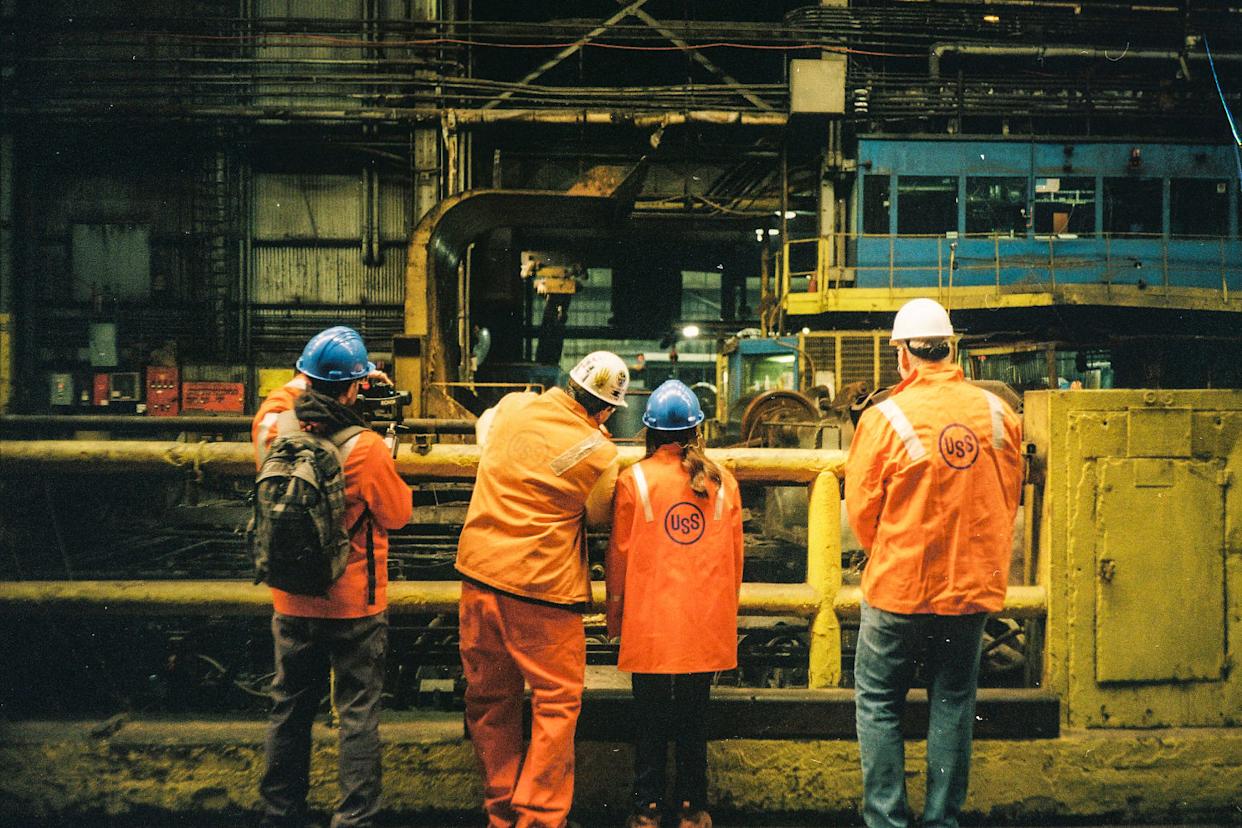
U.S. Steel Vice President of Sales Rob Kopf, right, guides Cleveland Fed President Beth Hammack, second right, through the Irvin Plant alongside U.S. Steel plant manager Don German, second left. NBC News photographer Paul Rigney, left, followed along. (Brian Cheung / NBC News)
(Brian Cheung)
There’s an air of optimism at the Irvin Plant southeast of Pittsburgh. The $14 billion investment from Nippon Steel, with a promise to “protect and create more than 100,000 jobs,” could bring the turnaround they’ve been waiting for.
“The people part of it is really exciting,” said Robert Kopf, the vice president of sales at U.S. Steel, about the new investments in American jobs.
Hammack said the manufacturing sector looked to be “reasonably stable” based on her visit to the Irvin Plant.
“These jobs sound like they’re very good jobs,” she said.
Over the next three years, U.S. Steel wants to use that money to upgrade their Mon Valley plants, and build a brand new hot strip mill. Lower interest rates would lower the costs of making those massive investments.
But Hammack says she wants to hold pat on interest rates, unless the unemployment rate ticks up, or job creation slows down too much.
Another benefit of cutting rates would be stimulating the purchase of steel-heavy purchases like appliances and cars, Kopf said. Steel purchases for home building would get a bump too.
“All the construction steel we make here, we would love to see the residential construction market finally pick up,” Kopf said. “I know higher interest rates have been a little bit of a barrier to that. So we would welcome lower interest rates.”
When Nippon Steel Corporation agreed to buy U.S. Steel in 2023, President Joe Biden opposed the deal, as did Trump when he was on the campaign trail.
But after taking office for a second term, Trump approved the deal on the company’s promise to invest in U.S. Steel, “protect and create” those 100,000 jobs, and give the U.S. government a “golden share” that allows the president to stop the idling of any U.S. Steel facilities.
“We are once again going to put Pennsylvania into the backbone of America,” Trump said during a visit to the Irvin Plant in May.
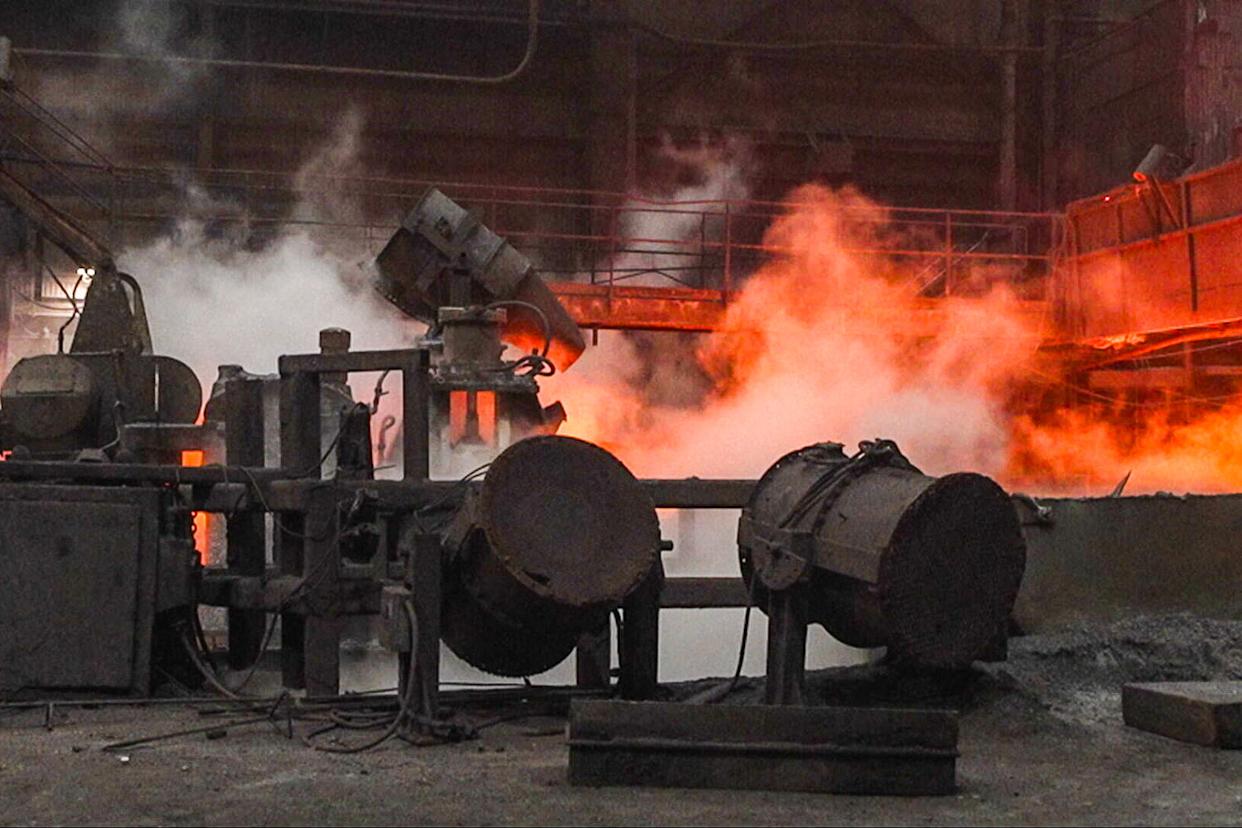
U.S. Steel’s Mon Valley Works Irvin Plant. (NBC News)
(NBC News)
A burst of hiring could reverse a nationwide trend of job loss in the manufacturing sector. The U.S. lost 88,000 manufacturing jobs in 2025, with only a slight uptick in the first month of 2026, according to data from the Bureau of Labor Statistics. After the Great Financial Crisis, manufacturing jobs peaked in January 2023, but have since declined by over 300,000 jobs.
U.S. Steel’s plans to support 100,000 jobs, which the company says will include direct and indirect jobs, come with the challenge of actually filling those roles. On her tour, the company told Hammack that it’s been difficult to find enough skilled tradespeople to fill open jobs.
Hammack, walking through the plant’s grounds, noted that a lot of operations were driven by automation and computers behind the scenes, meaning many of those jobs need to be filled by workers with engineering backgrounds.
“When we think about the economy and where growth is going to come from, I think not having enough workers could be one of those barriers,” she said.
Kopf is optimistic that the billions of dollars from Nippon Steel could help offset those concerns.
“It’s going to keep this facility relevant and making a lot of steel for decades and decades and decades and decades into the future to serve the evolving needs of industry here in the country,” he said.
But that growth won’t be felt just yet.
“Those are four-, five-, 10-year investments,” said Hammack. “You have to really believe that your processes and the demand is going to be there for the long haul.”
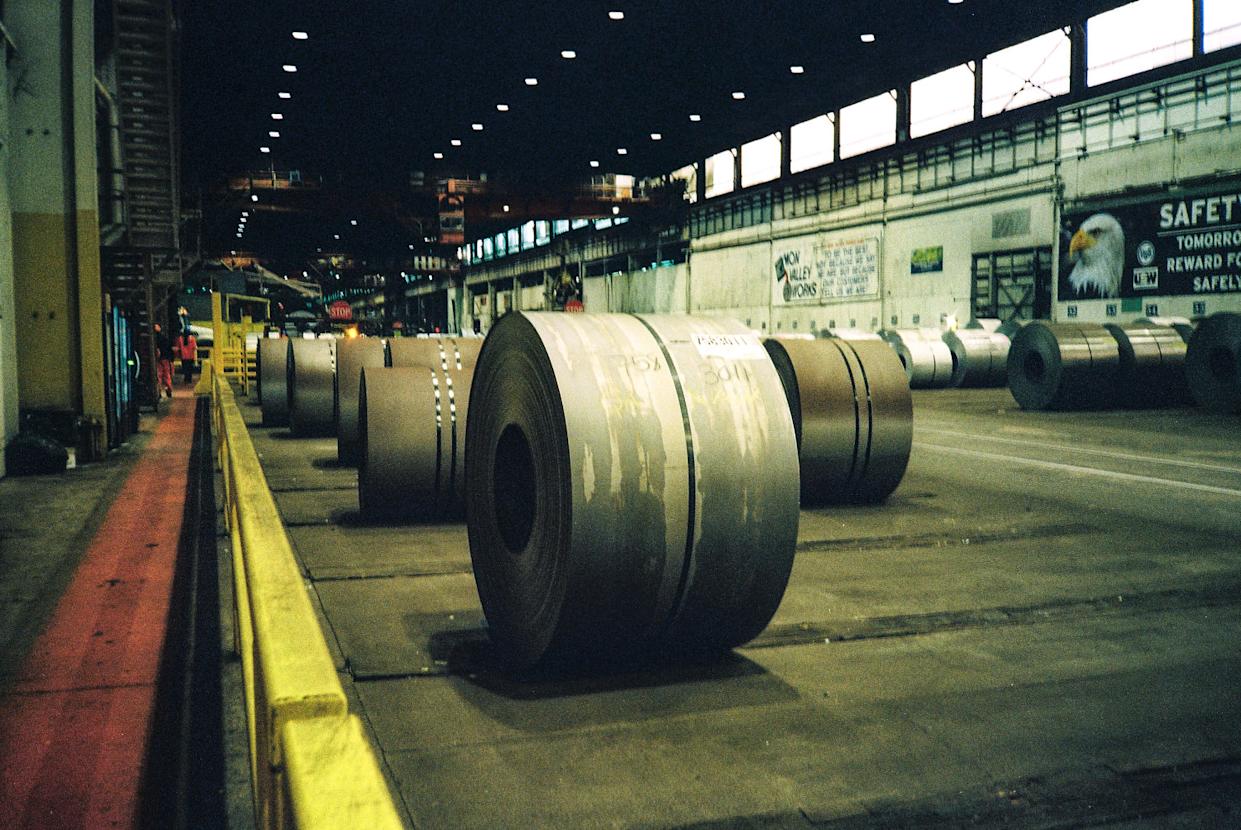
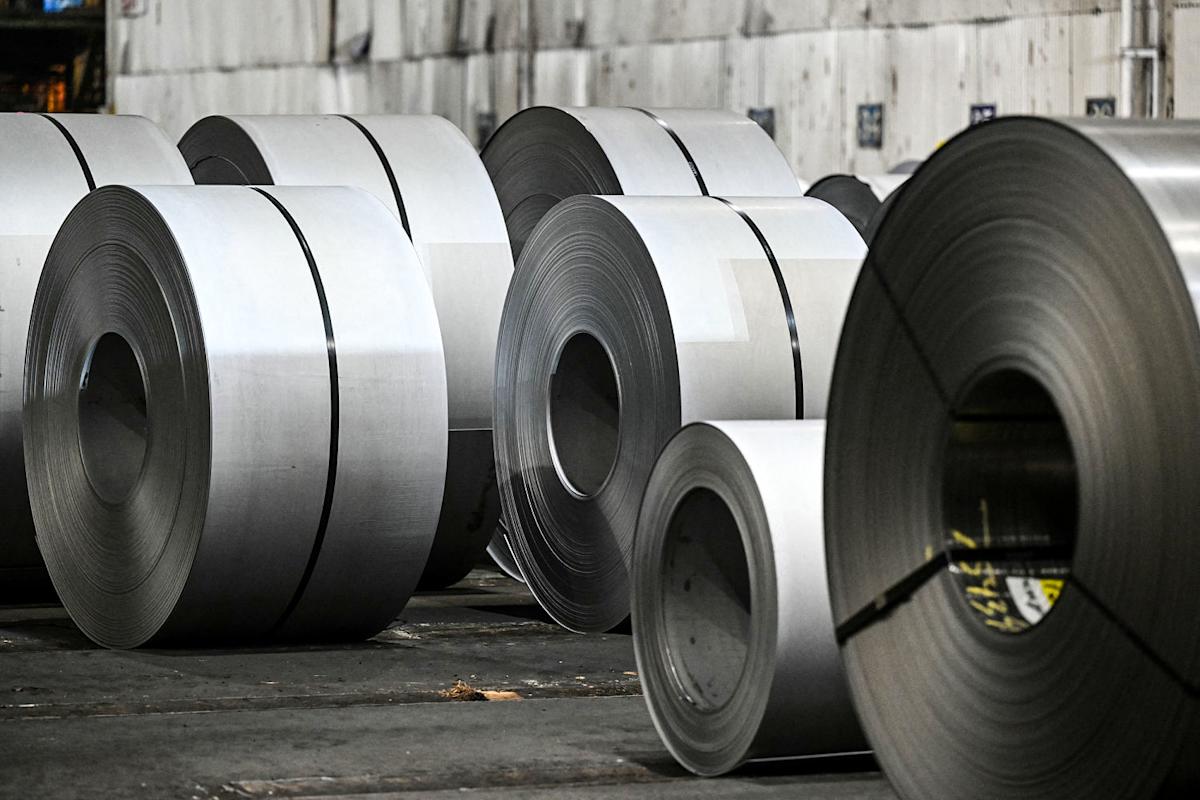
Steel coils sit on the floor of U.S. Steel’s Irvin Plant in West Mifflin, Pa. Each coil is 22,000 feet long. (Brian Cheung / NBC News)
(Brian Cheung)
The Deloitte Research Center for Energy & Industrials said in its 2026 manufacturing industry outlook that uncertainty around trade policy and tariffs were partly to blame for the rough past year, and that manufacturers should be prepared for multiple scenarios in 2026: a continuation of current market conditions or the possibility of new growth.
Trump’s tariff agenda aimed to spark a blue-collar job boom by enticing companies to reshore manufacturing. U.S. Steel says the 50% tariff on steel and aluminum under section 232 have been encouraging.
“It gave us the confidence to be able to make some investments in our facilities, knowing that we had a government that was really supporting onshoring more than anything,” Kopf said. “We have customers in the appliance industry that have already committed to onshoring production from China back into the U.S.”
The Supreme Court’s decision striking down most of Trump’s tariffs did not cover industry-specific tariffs like those on foreign steel.
But Hammack worries that the tight labor market, which she’s observed at other companies in the area as well as on her tour of the Irvin Plant, could still lead to high prices. For the Fed, visits like this give policymakers real life context to the data they see on how the economy is performing.
Hammack brushed off the noise over Trump’s attempts to coerce the Fed into lower interest rates, most notably by subpoenaing Fed Chair Jerome Powell over building renovations and attempting to boot Fed Governor Lisa Cook off the board.
“Every one of these attempts at undermining Fed independence only strengthens my resolve in how important it is to be out in the district, collecting information, talking to businesses, understanding their perspective, so I can add that texture to the underlying data,” Hammack said.