
The winning ideas include funding for immigrants’ legal defense, programs to expand access to healthy food, and initiatives supporting housing stability, workforce training, and youth financial literacy.
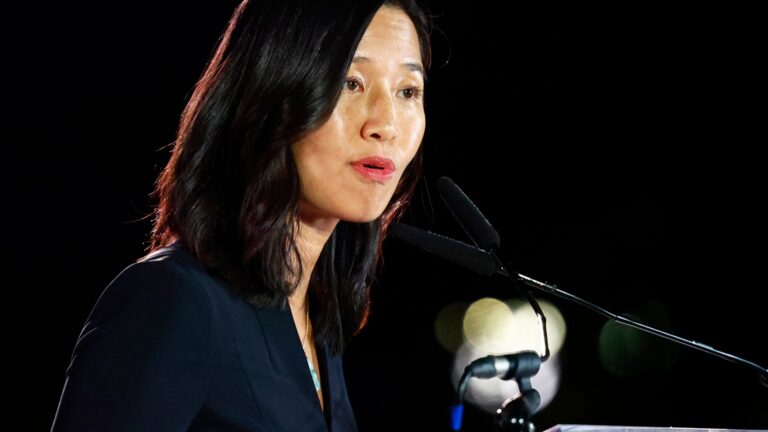
Boston Mayor Michelle Wu speaks to a crowd.
Danielle Parhizkaran / The Boston Globe
Boston residents decided how $2.2 million in city funding is spent this year, selecting projects that support immigrant legal defense, expand access to fresh food, and strengthen housing and workforce programs across the city.
Mayor Michelle Wu and the Office of Participatory Budgeting (OPB) announced last week the eight winning projects of the second cycle of Boston’s Participatory Budgeting Initiative, “Ideas in Action.” Collectively, these proposals will receive $2.2 million in this year’s budget.
From Jan. 15 to Feb. 15, more than 4,800 Boston residents voted online and in person to determine which projects would move forward, according to the city.
“We are grateful to every resident who participated and look forward to implementing these investments across our neighborhoods,” Wu said.
The participatory budgeting process starts with residents submitting ideas for how the city should allocate funds. Community members then collaborate with city staff to refine proposals before a public vote. The projects selected by residents will begin receiving funding this spring.
“Participatory budgeting continues to demonstrate what is possible when residents have a direct voice in shaping Boston’s future,” Wu said.
Each of the eight winning proposals will receive dedicated funding, with the relevant city departments overseeing implementation. OPB will coordinate with lead departments on next steps later this year, according to the city.
“We look forward to advancing implementation to ensure these investments are delivered effectively and translate into measurable progress across the city,” OPB Director Renato Castelo said.
Here are the winning proposals.
Department: Office of Immigration Advancement
Budget: $400,000
The proposal will fund immigration legal services, including consultations, application assistance, and legal representation for immigrants facing detention or deportation.
The measure comes amid increased immigration enforcement activity in New England. During “Patriot 2.0,” a month-long operation in September 2025, U.S. Immigration and Customs Enforcement arrested more than 1,400 people, according to ICE.
Neighborhood Fresh Food Access Initiative
Department: Office of Food Justice
Budget: $500,000
This initiative will provide grants to local organizations working to increase access to healthy foods in neighborhoods with higher rates of food insecurity. Funds may support food pantries, pop-up markets, farmers markets, food vouchers, and refrigerated food distribution, according to the proposal.
Similar efforts have taken shape in other Massachusetts municipalities. Last month, Cambridge endorsed the Plant Based Treaty, a global initiative aimed at promoting plant-based diets and more sustainable food systems.
Bridging the Gap: Assistance for Housing Stability
Department: Supportive Housing Division, Office of Housing
Budget: $200,000
Through grants to nonprofit organizations, the program will offer one-time financial assistance for housing-related costs, including storage fees, arrears, moving costs, start-up expenses, and basic furniture.
“We are very grateful not only to Mayor Wu for her leadership in creating the opportunity for residents to engage in the Participatory Budgeting Process, but to our neighbors, Boston’s residents, who have awarded the Mayor’s Office of Housing $200,000 for our proposal,” Sheila Dillon, chief of housing and director of the Mayor’s Office of Housing, said.
The funding pool is intended to help low-income families, people with disabilities, and those with intersecting marginalized identities secure or maintain stable housing.
Immigrant Career Pathways: Bridging Language and Employment
Department: Arts and Culture Cabinet, with support from Office for Immigrant Advancement
Budget: $300,000
According to a 2025 report from the Boston Planning Department, roughly 47% of Boston residents who are part of the city’s language access population are not U.S. citizens. The report also found that about 53% of residents with limited English proficiency speak English “not well” or “not at all.”
The Immigrant Career Pathways proposal combines English for Speakers of Other Languages (ESOL) classes with skills training in fields such as child care, construction, and small business development. The goal is to address language barriers while connecting immigrant residents to workforce opportunities, according to the proposal.
Department: Office of Green Infrastructure
Budget: $100,000
Green My Block will fund community-led greening projects on city-owned land, including spaces along roadways and sidewalks. Residents, schools, and community groups will receive resources and contracting support to maintain native plantings and improve neighborhood green space.
“We are often approached by neighborhood groups and residents who have a vision for underused city-owned spaces along roadways and sidewalks,” OGI Special Projects Manager Ronak Sathyanarayana said.
Sathyanarayana said there are dozens of sites across Boston that they have identified as potential spaces for community-led greening initiatives. The project will also launch a webpage for residents to view potential sites on a map, she said.
“We hope Green My Block will empower neighbors to meet each other and work together to beautify the streets and sidewalks we all share, fostering a sense of shared stewardship,” Sathyanarayana added.
Workforce Training Programs Focused on Trades
Department: Office of Workforce Development
Budget: $300,000
This initiative will expand access to vocational training in trades such as HVAC, automotive repair, computer skills, and culinary arts. The program aims to create pathways to higher-paying jobs while helping meet the city’s demand for skilled workers, according to the proposal.
“At a time when federal investments in job training are flat or declining, we need to keep moving forward to meet the needs of residents and employers at a local level,” the Worker Empowerment Cabinet shared in a statement. “These funds will allow us to provide critical training opportunities and meet the need for skilled workers in growing industries.”
Youth Financial Literacy and Empowerment Workshops
Department: Center for Working Families
Budget: $250,000
The workshops, designed for young people aged 14 to 24, will be offered at youth job sites, local events, and colleges. Topics include banking, credit, investing, budgeting, and career readiness.
Massachusetts has not required any formal financial education for students, according to the Worker Empowerment Cabinet. Therefore, many use social media or other free resources to expand their knowledge, which can contain misinformation or lead to predatory financial practices, the cabinet said.
“Youth in Boston deserve the opportunity to know how to manage their hard-earned wages and build a financially stable future for themselves and their families,” the cabinet said.
Small Business Development Resource Program
Department: Office of Economic Opportunity and Inclusion
Budget: $150,000
The program will provide technical assistance and other support to small business owners and aspiring entrepreneurs. According to the proposal, it will prioritize individuals who have not previously accessed city resources, with the goal of strengthening long-term financial stability and growth.
Sign up for the Today newsletter
Get everything you need to know to start your day, delivered right to your inbox every morning.