
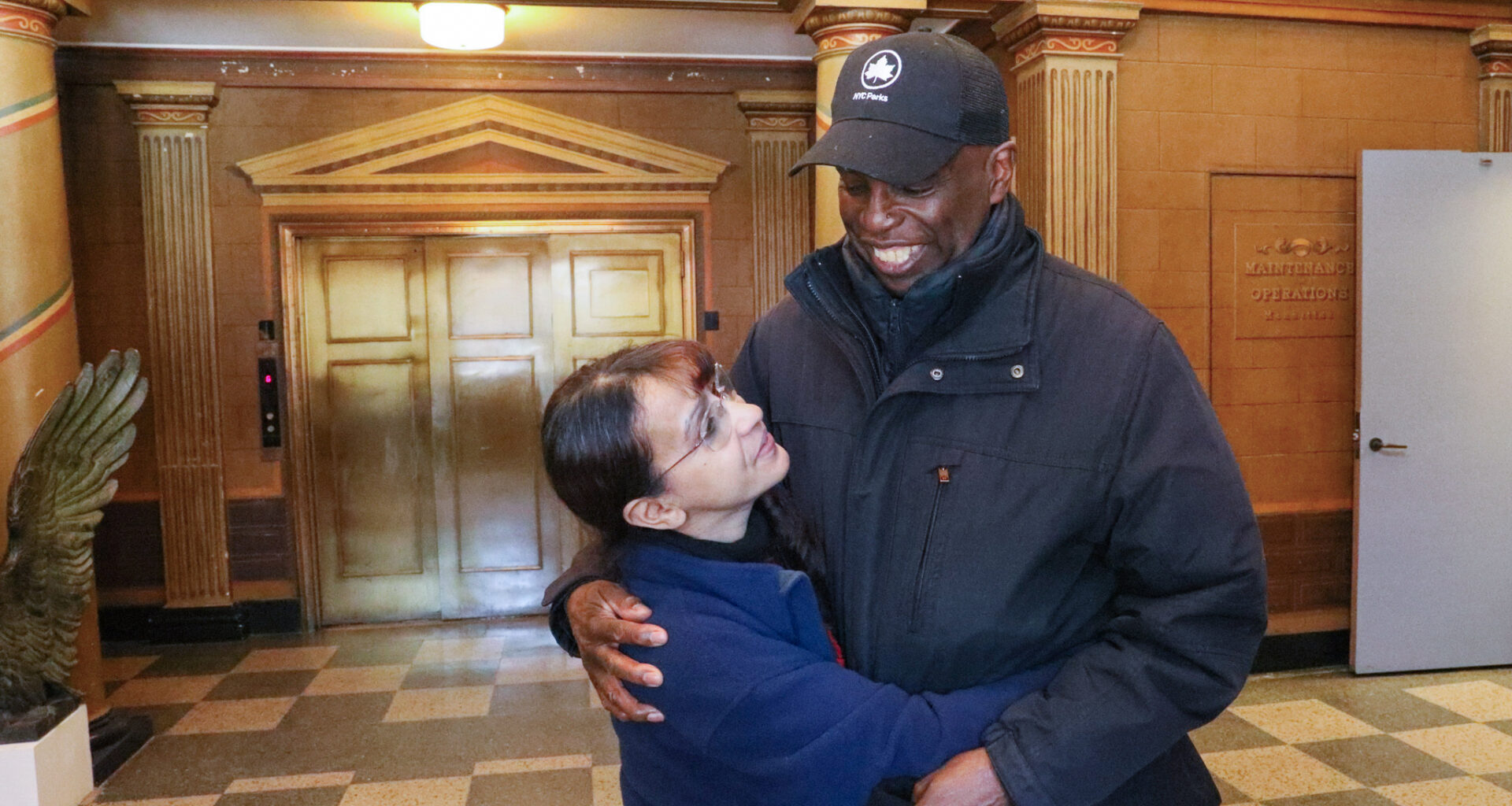
Malcolm Pinckney first became interested in photography as a kid in the Bronx who wondered how an image was captured.
That curiosity launched a 50-year career with New York City’s Parks Department, shooting ribbon cuttings and concerts and a changing city before he retires next month.
“I always had this curiosity of how an image is put on paper,” he said. “I just had to find out.”
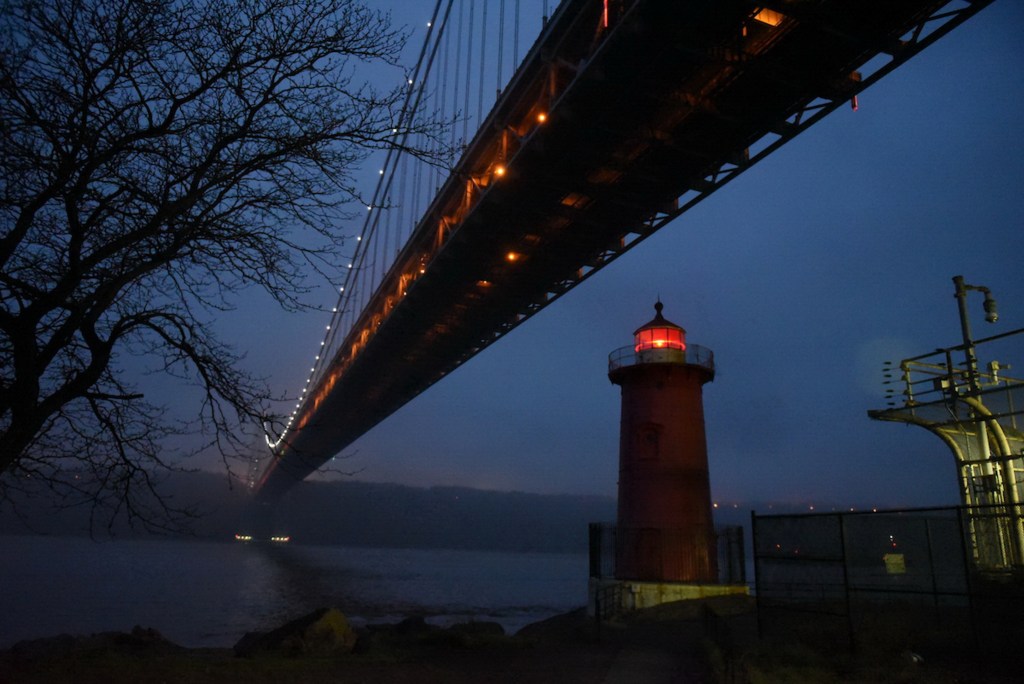 The Little Red Lighthouse helps illuminate the Hudson River under the George Washington Bridge, April 27, 2017. Credit: NYC Parks/Malcolm Pinckney
The curiosity grew for Pinckney when he started taking photography classes at Haaren High School in Manhattan, which closed in the late 1970s and now houses John Jay College.
Each student created their own pinhole camera and was then told to go out, take pictures, develop them, make a contact sheet and then create a print.
“It was a challenge,” said Pinckney, 71, who mostly captured landscapes and buildings outside because the pinhole camera needed a lot of light. He later bought his first camera, a Cavalier, at Willoughby’s camera store in Manhattan, which allowed his interest to grow, he said.
Pinckney’s career with the Parks Department began in the mid-1970s teaching basic photography to senior citizens at the newly-opened St. James Recreation Center in the Bronx.
Around the same time, he started taking classes at Bronx Community College. “What I learned on a Monday, I would teach them on a Wednesday,” he recalled with a laugh.
He would also photograph events inside the rec center, which was nearly brand-new at the time and built through community advocacy.
“When they came, they saw their picture on the wall,” he said of his students and other older adults who came through. “They felt like stars.”
While working as a recreation assistant he was sent down to Parks Department headquarters inside The Arsenal, a hulking office built inside Central Park in the 1800s as a storage repository for munitions.
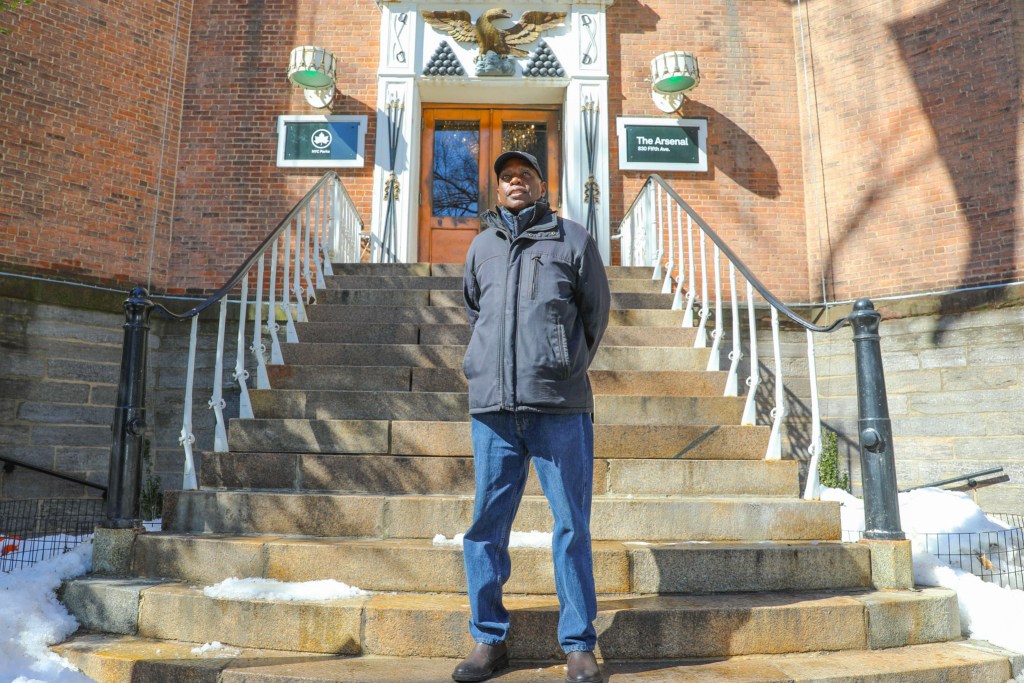 Malcolm Pinckney is retiring from the Parks Department photo team after 50 years, March 2, 2026. Credit: Alex Krales/THE CITY
Pinckney was picking up photos of the Robert Moses era at the archives when he saw his own future.
“Once I came down here and I saw the setup, I said, ‘This is the place I gotta be, I have to get down here some kind of way,’’ he said. “It took about 10 years before I actually ran it down here.”
Once hired as a staff photographer, he began modernizing the department’s work, at a time when they had three dark rooms and were expected to traverse the city capturing, developing, and distributing photos, mostly to news outlets.
He convinced the parks commissioner at the time, Henry Stern, that buying a newer, more modern machine to develop film could help them take more photos and distribute them faster.
Stern was famous for giving nicknames to Parks staff and others — more than 9,700 by the time he retired in 2001. But Pinckney picked his own “park name”: Cinema, short for cinematographer.
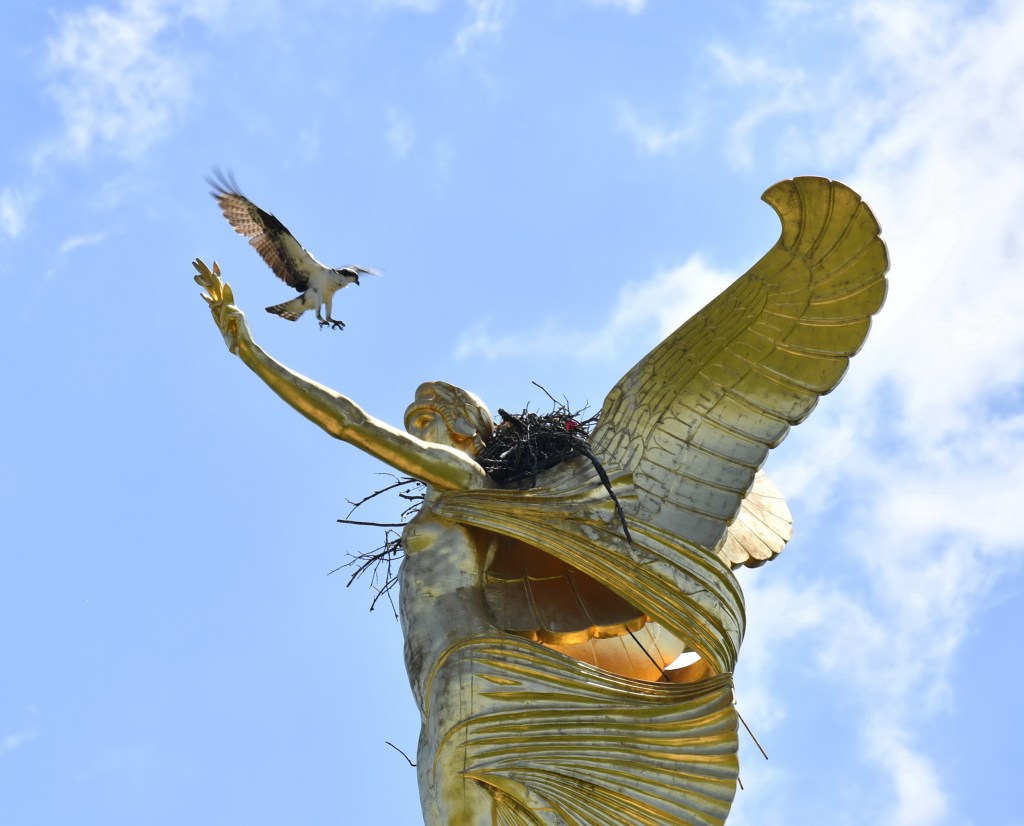 A hawk lands in a nest atop the Victory Memorial Column in The Bronx, Jan. 25, 2016. Credit: NYC Parks/Malcolm Pinckney
“A lot of people were afraid to stand up to him on that issue,” Pinckney said of the former commissioner. “But I wasn’t going to let him pick one for me.”
In the decades since, he’s watched the technology of photography change. The Parks Department always made sure he had updated equipment, but a photographer’s innate ability to capture a scene matters more, he said.
“The technology kind of makes the job easier, but photography is photography,” he said. “You can learn to operate several different types of cameras, but you still have to have an insight, and also a desire to do the work. We take advantage of the instrument that’s put out.”
While Pinckney counts W. Eugene Smith and Gordon Parks among his influences, he said he spends more time taking photos than looking at the work of others.
“When I go out, I get the basics. I know what the press office needs and what they’re going to be asked about,” he said.
“What I try to do is put a creative edge on it, try to present it in a more creative way.”
In addition to his work with the Parks Department, Pinckney spent two years as the nights and weekends photographer for Mayor David Dinkins, clocking out from his work with Parks to work at City Hall and Gracie Mansion.
It was how he had the opportunity to photograph one of his most memorable events: Nelson Mandela getting the key to the city at City Hall Park.
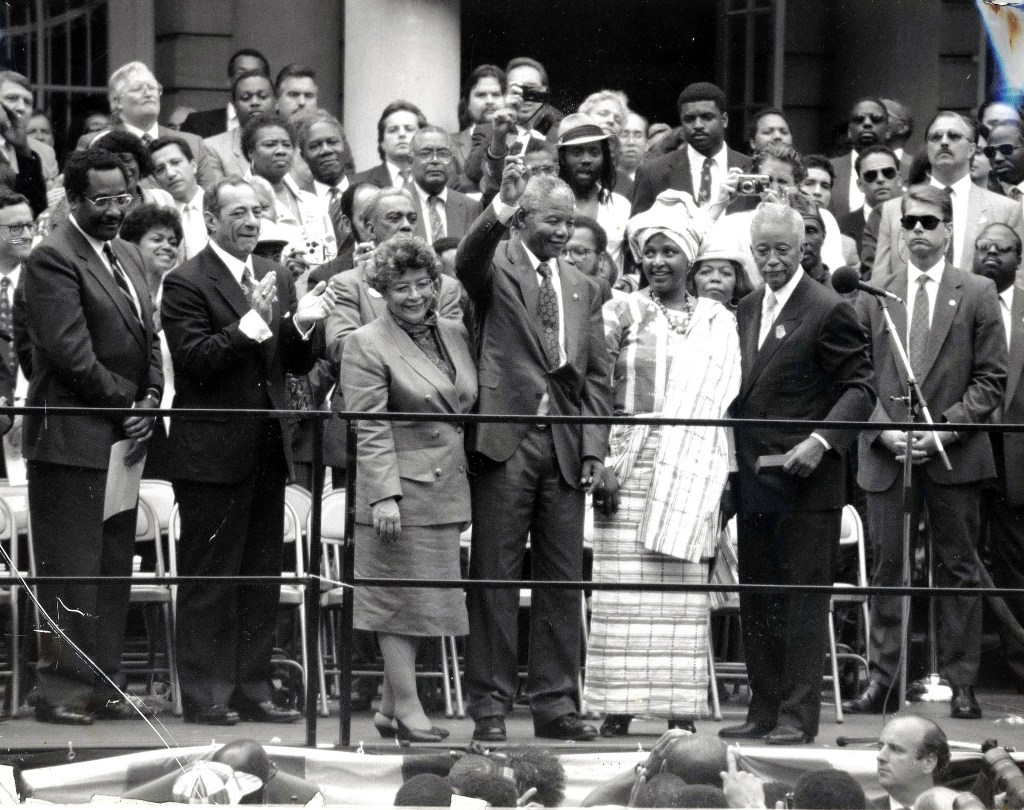 Then-Mayor David Dinkins gives Nelson Mandela a key to the city in 1990. Credit: NYC Parks/Malcolm Pinckney
His favorite assignments were pool and beach openings, he said. One memorable experience was finally capturing photos of High Bridge, which connects Manhattan and the Bronx and had been closed for 40 years before reopening in 2015.
And he loved the star-studded events and concerts, too.
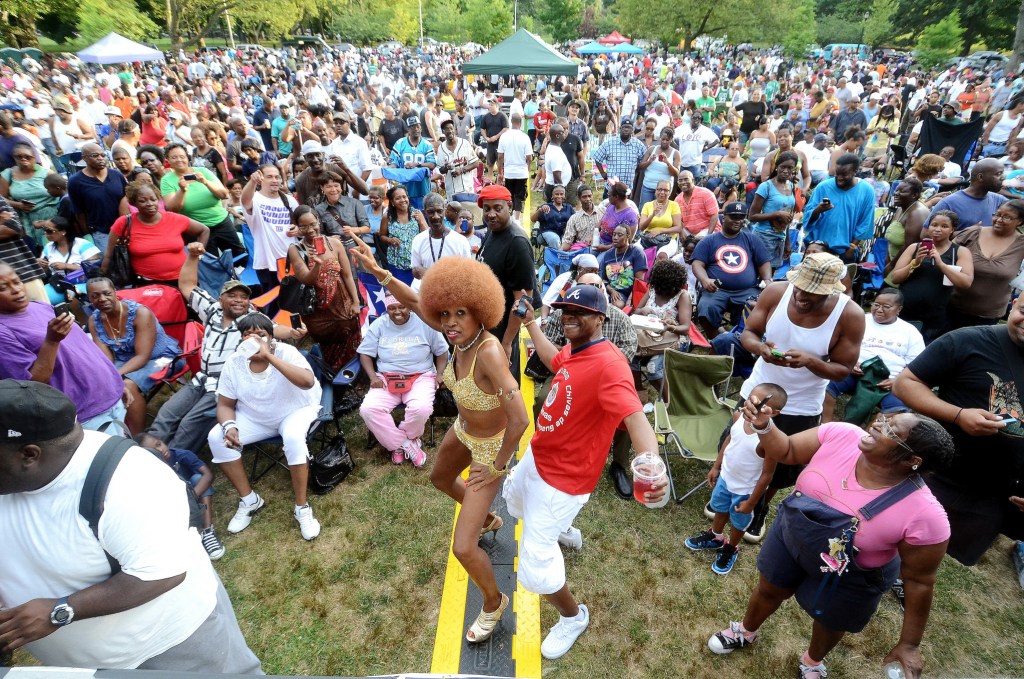 People dance a Summer Stage concert in The Bronx’s Crotona Park, July 20, 2012. Credit: NYC Parks/Malcolm Pinckney
“If it landed on Parks property, I have to get it,” he said. His favorite was photographing Parliament Funkadelic’s 2006 performance at Summer Stage, when the Mothership landed in Central Park.
He was there for challenging times, too, like after Hurricane Sandy wrecked countless Parks Department properties in 2012.
“When you’re a career Parkie, it hits you that so many people worked on getting this piece of land in a certain way for the citizens to enjoy,” he said.
“And then you see it’s totally torn up, and you know how long it’s going to take to get it back.”
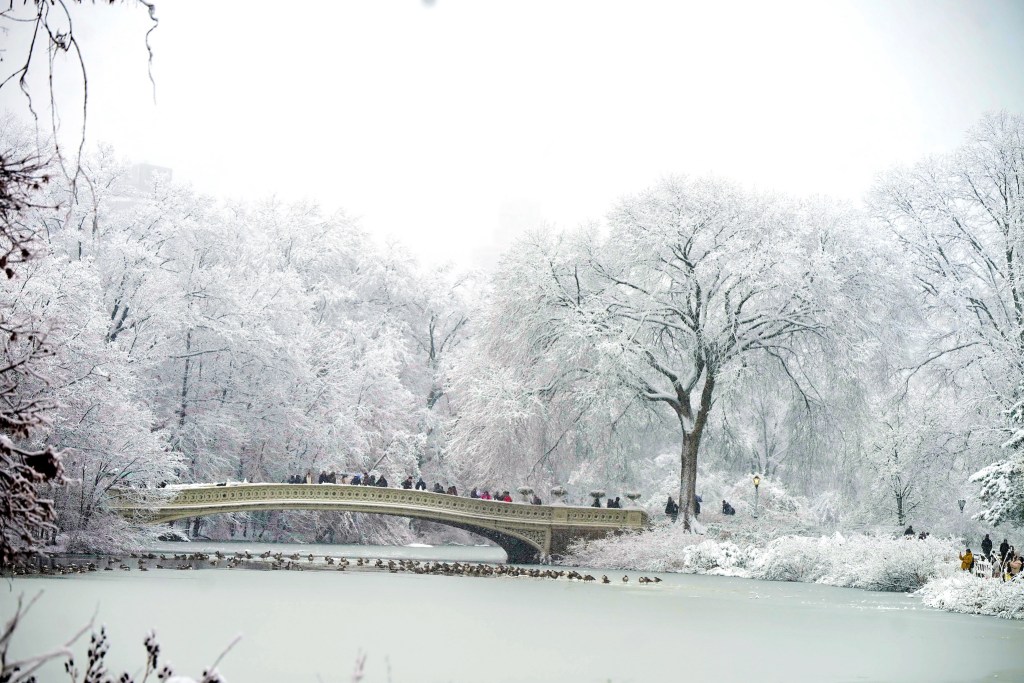 The first snow of the seasons blankets Central Park, Dec. 31, 2023. Credit: NYC Parks/Malcolm Pinckney
Pinckney hopes to continue taking pictures well into retirement, and also wants to learn video editing.
But his years as a Parkie will always mean a lot to him, he said.
“I’ll miss the whole thing.”
Related