
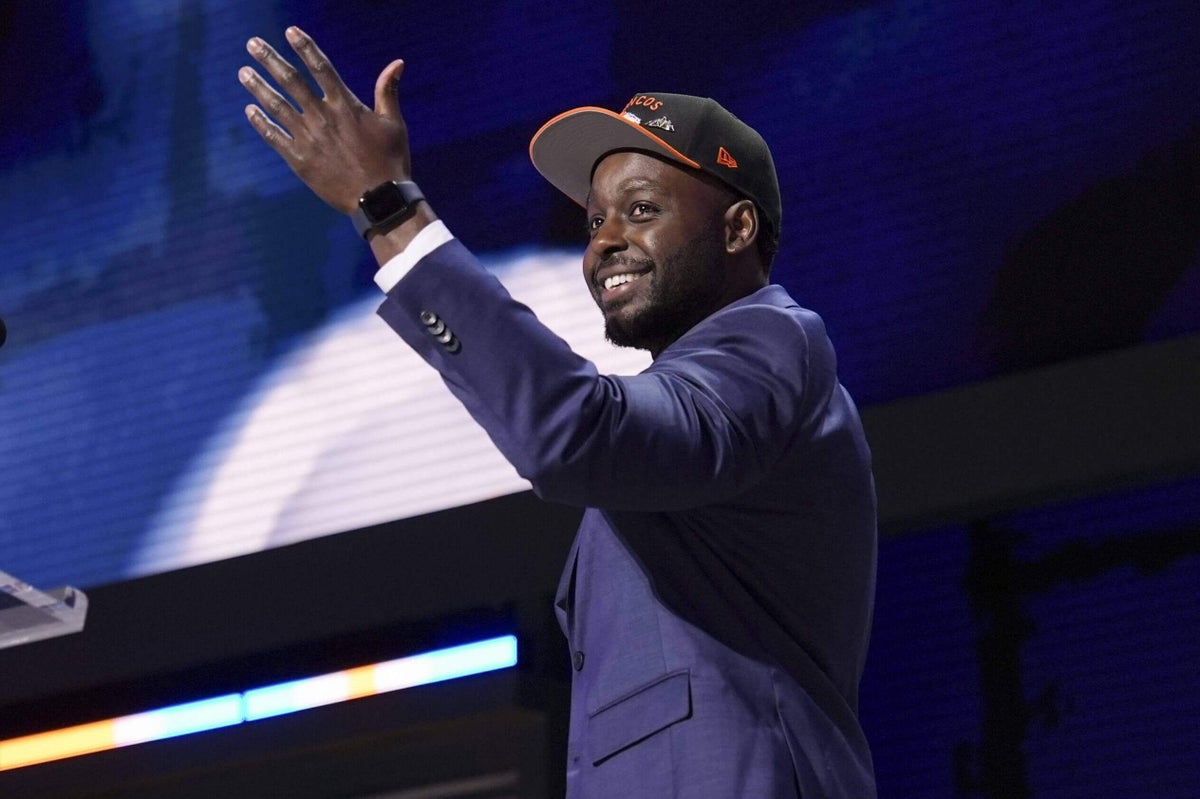
Montee Ball shed more happy tears in 2025 than in any other year in his life. More than his dynamite years at Wisconsin. Or as a Denver Broncos running back.
That year, on Jan. 15, Ball received a small congratulatory card. He set it down on the carpet and snapped a photo. It read: “Of the 5.78 million who have played and coached in college football since 1869, only 1,093 players and 233 coaches have been inducted into the College Football Hall of Fame. Welcome to the club, Montee!”
Then, in September, nine months later, Ball received notice he was also going to be inducted into the Rose Bowl Hall of Fame on New Year’s Day 2026.
“It means more to me,” Ball said, “because of the fall.”
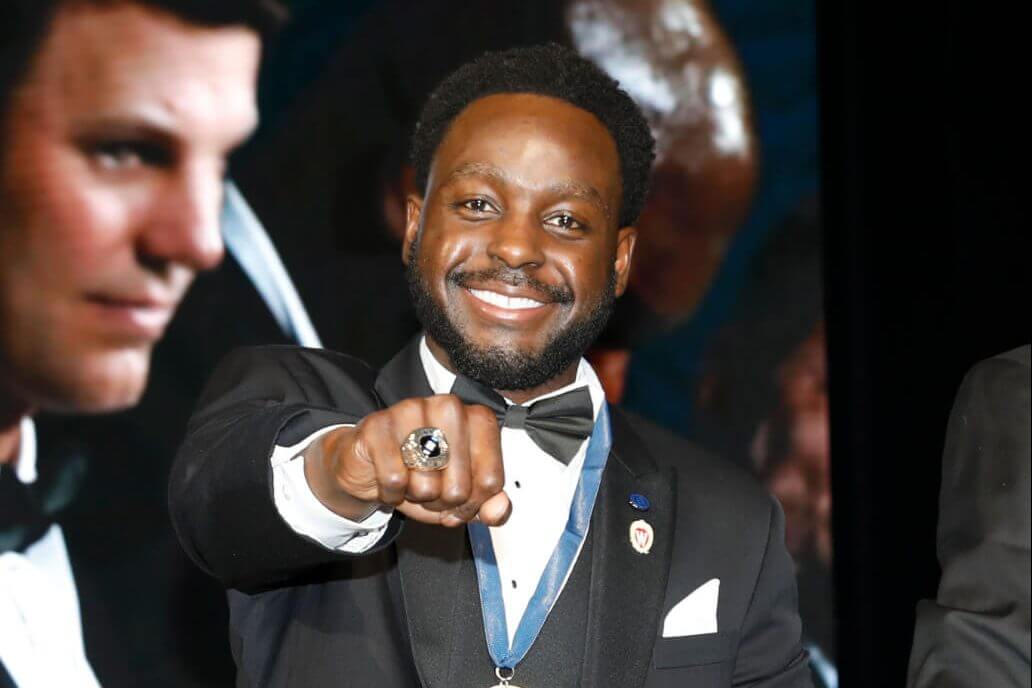
Ball said there was “no room for transparency” in football when he was playing. (Courtesy of Ball)
It’s the cold of the concrete floor he vows never to forget. It sent a sudden shiver up his spine, from the soles of his bare feet straight into his still-intoxicated mind.
In the early-morning hours of Feb. 5, 2016, the record-setting former Wisconsin star running back was being processed into a jail in Madison, Wis., after a physical altercation with an ex-partner in a hotel led to his arrest.
The cold concrete shocked his system. It’s where he went face to face with rock bottom, a meeting several years overdue after years of alcoholism. What eats at him still, all these years later, is how he responded in the altercation. He pushed his ex-partner, who hit a desk and cut her leg.
“I am not the victim,” he said. “I acted like a coward. And I walked away a coward.”
Four months before that arrest, Ball received a phone call from Broncos team president John Elway. The NFL Hall of Famer, who first called Ball in 2013 to draft him, was now calling to cut him. Elway had told him that his alcohol dependency, the frequenting of bars all around town every week, gave the organization no other choice but to move on.
“I was in denial,” Ball said, “and I didn’t believe any of it until my feet touched the floor of that jail.”
Two days after being arrested, the TV inside the jail aired Super Bowl 50. Ball spent the entire weekend at Dane County Jail. The Broncos, the team he had grown up dreaming of playing for one day, the team that eventually drafted him, were overwhelming the Carolina Panthers en route to victory.
Just two years prior, Ball was in the Broncos backfield against the Seattle Seahawks in Super Bowl 48. Now he was in a different shade of blue, in a crowded jail cell sharing a toilet, with a water fountain overflowing with spit and bile, with nothing but his mistakes, his alcoholism and his fragile, now-fractured ego crowding his mind.
“Your actions always lead you to where they’re going to lead you — and they’re your actions,” Ball said.
Now, more than 10 years later, Ball is a self-described open book. He has no other choice. It’s what got him away from the bottle, away from the miserable person he’d become under the influence of alcohol, and what has led him to where he is today — back in the Denver area, running his own nonprofit organization designed to educate coaches, administrators and parents on mental health and addiction coaching programs for young athletes.
Ball, 35, is also a board member of 5280 High School, a project-based learning school for teens in recovery from substance abuse. He’s in the process of lobbying for a bill at the Colorado State Capitol that would require youth coaches to take mental health training courses. His nonprofit, the Game Plan Life Foundation, is spearheading an event focused on athlete mental health on Sunday, March 8, in Broomfield, Colo.
The organization plans to start implementing these eight-hour events quarterly each year. They’re going to be free to whoever wants to participate, Ball said, and they’re scheduled to be funded entirely through his foundation.
“For people in recovery — and really everybody, too — the best medicine is service,” Ball said. “Giving back in some way, somehow.”
Rather than point fingers elsewhere, Ball took accountability and said that crucial step in recovery helped lead him down the path toward being an outlet for others.
College football fans remember Ball from his years as the centerpiece of Wisconsin’s always-punishing rushing attack. Ball rushed for 5,140 yards as a Badger — third all-time in school history — and in 2011 matched Barry Sanders’ NCAA single-season record for 39 touchdowns. He’s the only player in the history of the Rose Bowl to rush for 100 yards in three consecutive appearances.
As often as Ball could make blitzing linebackers miss with a sudden jump cut or bulldoze a safety down the field, there was no way to shirk the bouts of anxiety that led him to rely on alcohol. Jameson whiskey, he said, calmed those spells of anxiety that often percolated once he got to college.
That 2011 season — a historic one on the field — was one of his worst off the field.
He felt there was no room for transparency for what he was going through in the culture of football. He feared losing his spot at the top. More than anything, he feared exposing his anxieties and looking weak. Alcohol fed the ballooning ego that, for every shot, quelled the constant uneasiness he felt when sober. Which is why in the decade since his life changed in 2016, he has been working to implement guardrails for coaches and parents to pick up on warning signs for their student-athletes as they get older.
It pains one of Ball’s former teammates, Wisconsin fullback Bradie Ewing, to say it now, but he never noticed a red flag until Ball’s series of arrests was made public. “He did a really good job of separating those two parts of his life,” Ewing said. Ball’s addiction to alcohol became so pervasive that he consciously cut food out of his diet, knowing he was going to be drinking the calories he needed to remain at a certain weight.
“Since the beginning of time, the function of sports has been to entertain people,” said Dr. Mark Allen, a sports psychiatrist based in Denver who has done work with the Broncos, the Los Angeles Dodgers and professional wrestlers in the WWE. “And as a result, there’s a method where you want these athletes to truly be superheroes, and you forget they’re actually human beings off the field.”
Allen, who is writing a book with Ball about his journey, said there are currently more than 25 athlete mental health nonprofit organizations nationwide. The trend of helping athletes, regardless of age, understand their anxieties or triggers is better than it ever has been. But starting at the youth level, he says, is the right “long-term play” since athletes who are empowered to speak up from a young age will grow up more likely to feel comfortable being transparent.
It will always make Ball wonder how things might’ve turned out differently for him if he felt he could’ve voiced his anxieties at such a young age, rather than burying them deep within. It’s why he wants his own story to be able to shed light on how quickly things can tumble, no matter where you are in life.
During his time as a regular in the Broncos backfield, he was spending nearly $1,000 every two weeks at the liquor store near his home. The affinity for whiskey shifted to Everclear and Patrón tequila, which he was consuming as much as four to five nights a week during the season.
One practice, Ball jogged into the huddle and remembered Peyton Manning shaking his head as he recognized the reek of alcohol from the night before.
The addiction that overpowered his mind for so long wasn’t defeated that weekend in jail. Two months later, he violated his parole by being caught in a bar in Whitewater, Wis., and was arrested again that April. Former teammates wondered about Ball’s future. Former Broncos running back CJ Anderson posted on social media, “Praying 4 my brother MB man” with three prayer hand emojis.
Following his arrest in February 2016, a former girlfriend accused Ball of assault in 2014. In August 2016, he was sentenced to 60 days in jail and pleaded guilty to disorderly conduct and battery for his role in both domestic disputes. Ball also served 18 months of probation.
His last drink was in June 2016. In the decade since, he’s worked as a community outreach specialist in Madison. He lived in a Best Western for nine months, helping the unhoused community during the height of the COVID-19 pandemic. After moving back to Colorado in 2022, he worked as an account manager for Sandstone Care, which provides substance abuse and mental health treatment in Colorado, Maryland and Virginia.
Now his goal is to have more than 1,000 coaches and administrators attend the mental health seminar sponsored by his nonprofit over the next three years.
“It’s amazing how he’s willing to share his story to help not only himself, but hopefully others that have already gone through something like this or are going through something like this,” Ewing said.
One of Ball’s go-to football analogies makes sense considering the height of his stardom meant avoiding coughing up the ball at all costs. But he tells everyone he meets battling addiction that after you fumble, you can still reach down and pick the ball back up.
“I like to think I’m a pretty smart person, but goodness gracious, addiction can just blind you, man,” he said. “I beat the odds.”