
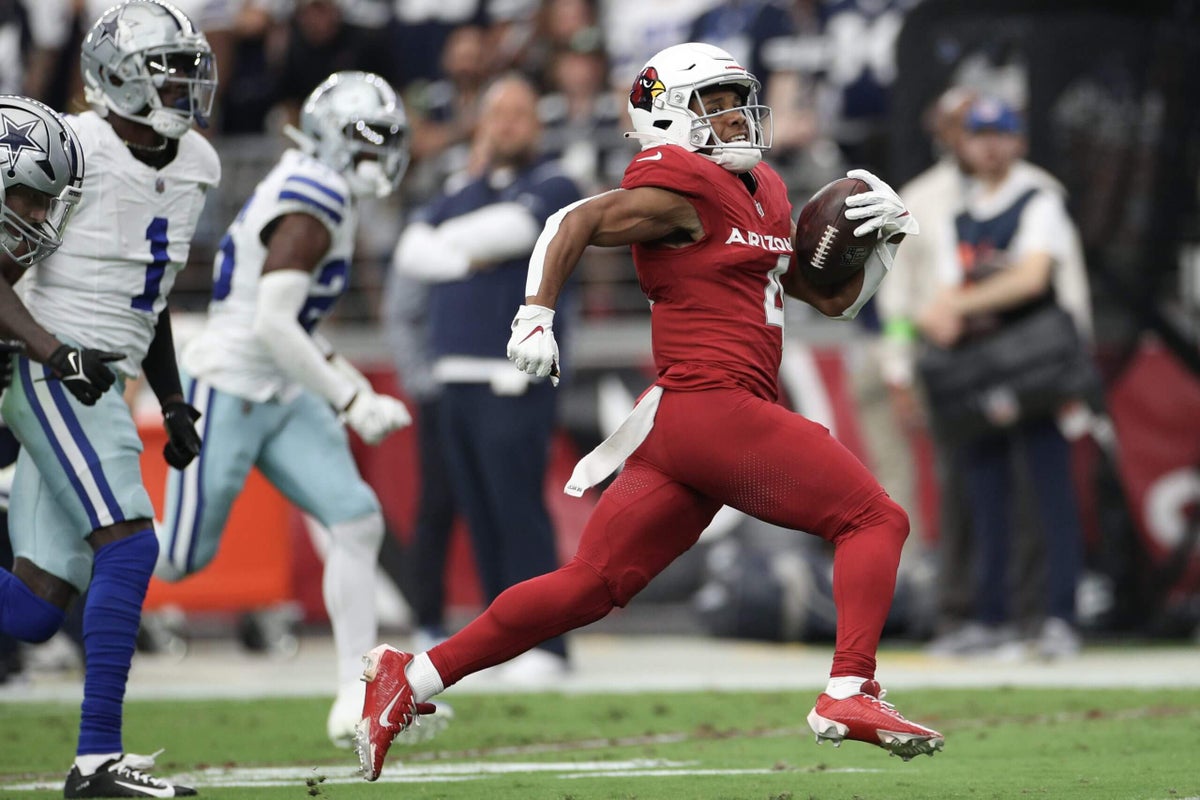
The memory hit JaMarcus Shephard while driving Thursday morning. Shephard, the new Oregon State football coach, let his emotions take him back eight years and three jobs. He was an assistant coach at Purdue again, recruiting a wide receiver named Rondale Moore.
Shephard, a straight shooter, met his match. He asked Moore: “How tall are you, really?”
Moore volleyed back an answer without hesitation.
“How tall is fast?”
As Shephard shared the story, Oregon State general manager Eron Hodges was sitting next to him. He mouthed the words along with the coach. How tall is fast? Hodges was at Purdue back then too. Moore’s line might as well be a song lyric.
Moore was listed at 5-foot-7 and 181 pounds. In a sport obsessed with the height, arm length and catch radius of wide receivers, Moore made the numbers irrelevant.
“If you were taller, he was going to jump higher,” Shephard said. “If you got out of breaks fast, he was going to do it faster. If you had the best hands, he was going to have better hands.
“And the football part of it is so small, so minute. If you love what he does as a player, he’s even more elite as a person.”
On Friday in New Albany, Ind., family and friends gathered in Moore’s hometown for his funeral. He was 25. He was supposed to make a remarkable comeback after losing two straight seasons to knee injuries. Until his final days, those closest to him believed he would do just that. He seemed wired for resilience.
Instead, he’s another bright young football player gone too soon.
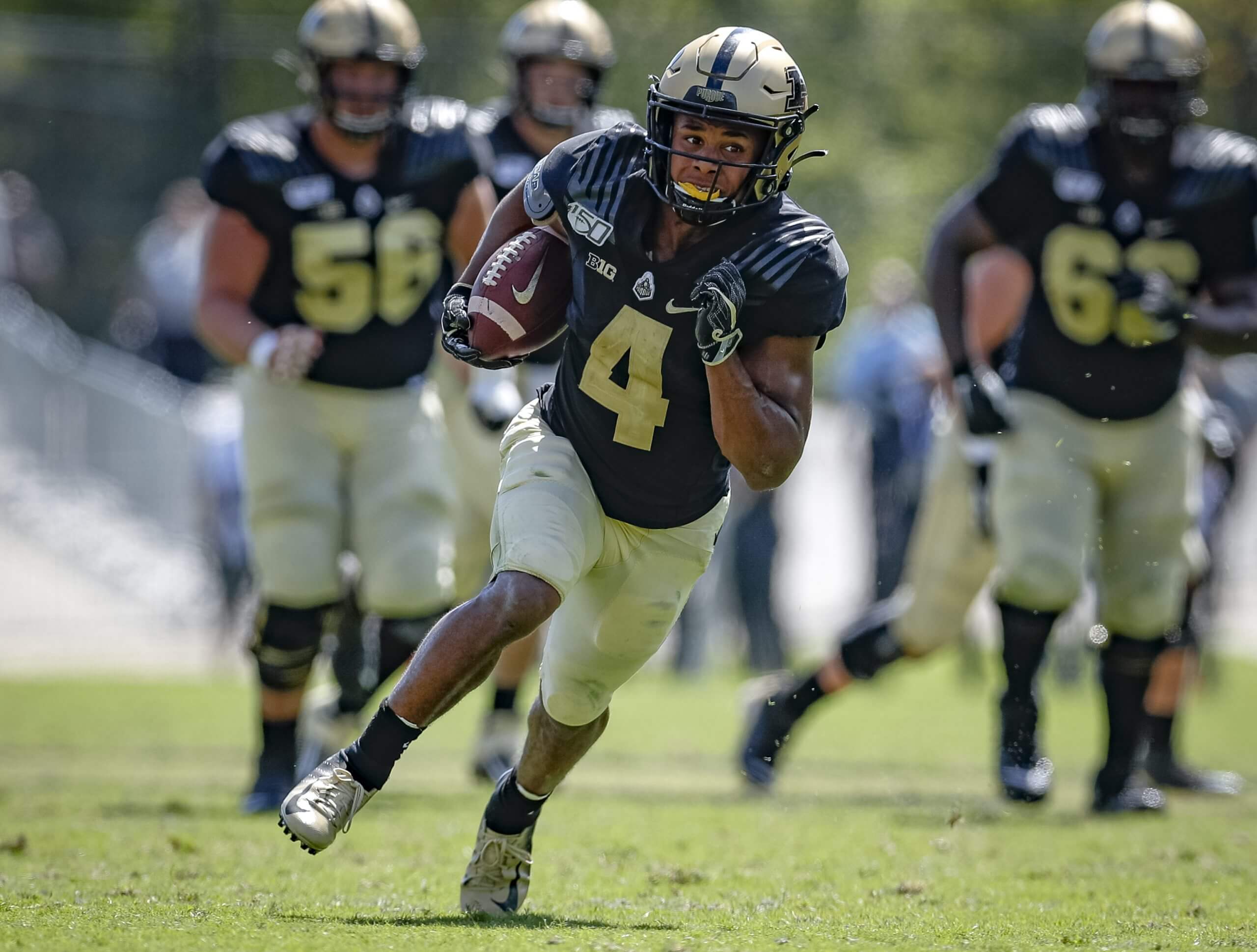
Rondale Moore shows off his speed after a catch in Purdue’s 42-24 victory against Vanderbilt in 2019. (Michael Hickey / Getty Images)
These men who play on turf, they keep getting buried too soon.
Eleven months ago, LSU announced the death of NFL Draft prospect Kyren Lacy. He was 24. His father posted a public plea about mental health, urging families never to accept “I’m alright” when asking about a loved one. Months later, the Dallas Cowboys confirmed the death of Marshawn Kneeland. He was 24. His girlfriend was pregnant with their first child. His locker turned into a memorial with flowers and handwritten notes.
Different cities. Same shock.
Strong bodies. Fragile lives.
Overall, it has been a devastating year of loss for the NFL and college football, with nearly a dozen high-profile deaths. The incidents that police have investigated as suicides are particularly haunting.
Moore, who authorities say suffered a self-inflicted gunshot wound, was laid to rest Friday. At Purdue, his speed made Saturdays electric. In his collegiate debut, he amassed 313 all-purpose yards against Northwestern in 2018. The Arizona Cardinals selected him in the second round of the 2021 NFL Draft. Superstar pass rusher Maxx Crosby, who played against Moore while at Eastern Michigan, called him “the coldest dude I’ve ever been on the field with” and considered him the college version of Tyreek Hill.
Injuries limited Moore to 39 games over five professional seasons. Still, his talent and character resonated so much that Minnesota Vikings head coach Kevin O’Connell called him “one that got away” in tribute.
In 2025, Moore didn’t get to play a regular-season game for the Vikings. But his life mattered.
“It’s been tough to kind of work through that,” O’Connell told reporters in Minneapolis recently.
His name should be on a depth chart, not in an obituary. As NFL free agency is set to begin next week, as draft rumors and speculation about trades and signings dominate attention, let’s pause to remember Moore. In doing so, perhaps we can offer compassion and remind athletes fighting through pain and striving under suffocating pressure that they aren’t alone.
The league calendar keeps moving, but the mournful gatherings keep happening. These lives are larger than the statistics attached to the names.
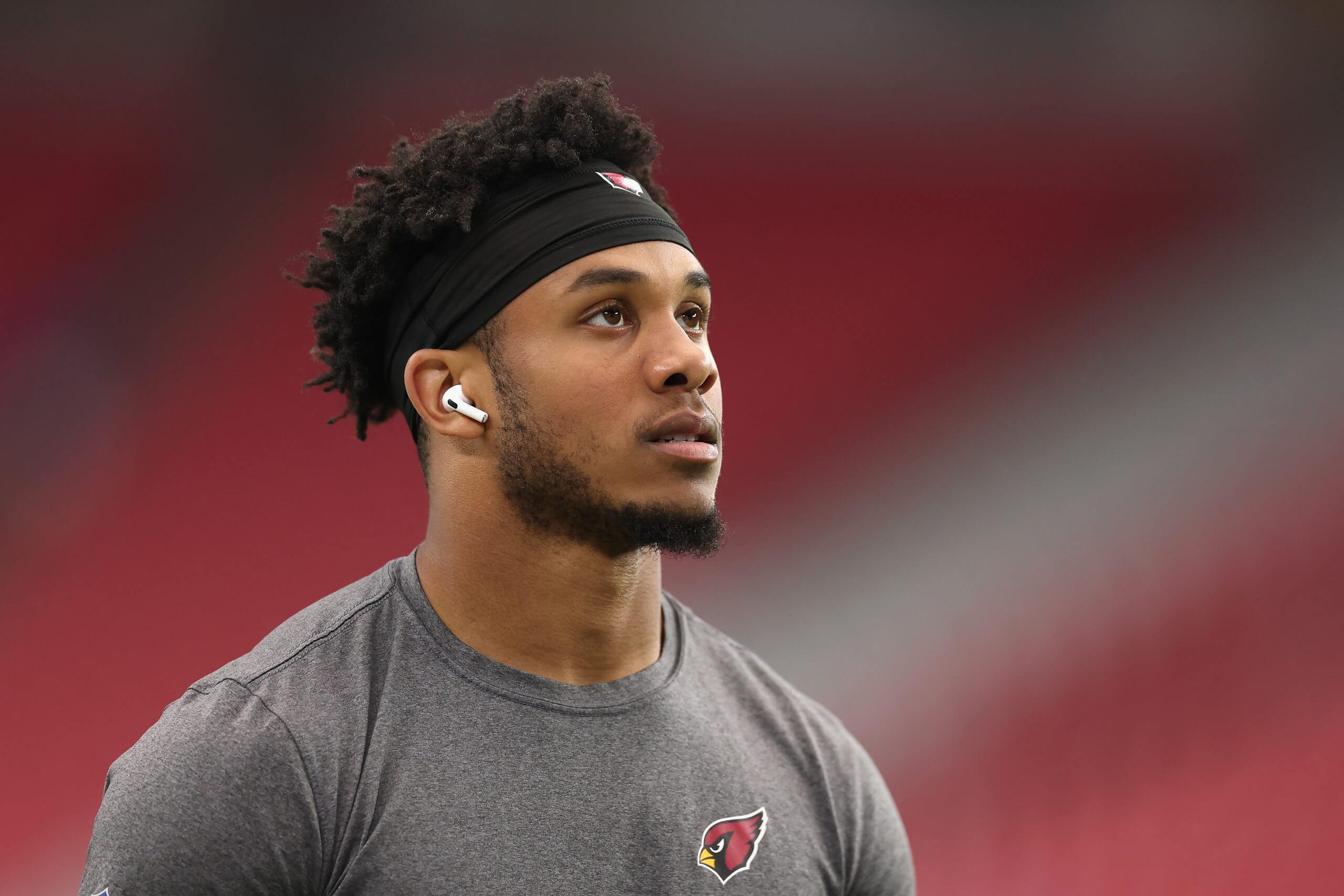
When news of Moore’s death spread, the grief rippled through his extended circle. “That’s big bro,” former Purdue receiver David Bell wrote. (Christian Petersen / Getty Images)
Moore’s life began with a fight. He was born five weeks premature. He spent his first days being fed through a nasal tube. Doctors weren’t sure he would make it. He was such a little baby. His will was bigger than that.
Moore grew up the youngest of four children in a single-parent household in New Albany. His mother, Quincy Ricketts, raised them on a limited income. Football became his path and his promise. He vowed to elevate his family.
“Everything he did was for his mom,” Shephard said. “He didn’t go out drinking. He didn’t smoke. He wanted to make sure he could do everything he needed to do for his mom.”
When Moore signed his first NFL contract, he bought her a house.
At Purdue, his former coaches and teammates praised his discipline and work habits. “He would do all his homework on Sunday and Monday,” Shephard said, “so the rest of the week he could just focus on football.”
Shephard kept a Jugs machine — the football-throwing device that players use to practice catching — at his home. Moore visited often, hoping to catch 500 extra balls a day. He would stay to play video games with the coach’s son, Jaylan, laughing and joking like another member of the family.
“He knew when to laugh,” Shephard said. “That’s important. He knew when to laugh. He always took time to take care of people.”
The relationship grew so strong that it stretched the usual boundaries that separate a coach and player.
“I confided in Rondale when I probably shouldn’t have,” Shephard admitted.
When news of Moore’s death spread, the grief rippled through his extended circle.
Shephard’s entire family “cried vehemently.” Jaylan, who seldom wears jewelry, bought a bracelet engraved with Moore’s name.
Shephard’s phone keeps pinging with late-night messages. Former Purdue receiver David Bell wrote simply, “That’s big bro.” At 2 a.m. recently, Amad Anderson Jr. wrote a stream of memories to Shephard. Rome Odunze, now with the Chicago Bears, sent Shephard a note saying he felt as though he knew Moore. The two never played together, but at Washington, Shephard coached Odunze for two years. It was clear how influential Moore was to Shephard developing a reputation as one of the best teachers in the college game.
“He set a standard,” Odunze wrote.
Grief moves however it wants. It comes in quiet messages sent long after midnight. It arrives during car rides. When the noise of the day fades, reality settles in. The game lost someone who made an incredible impression.
“I think sometimes we lose the human element of who these people are,” Shephard said. “We are so wrapped up in results.”
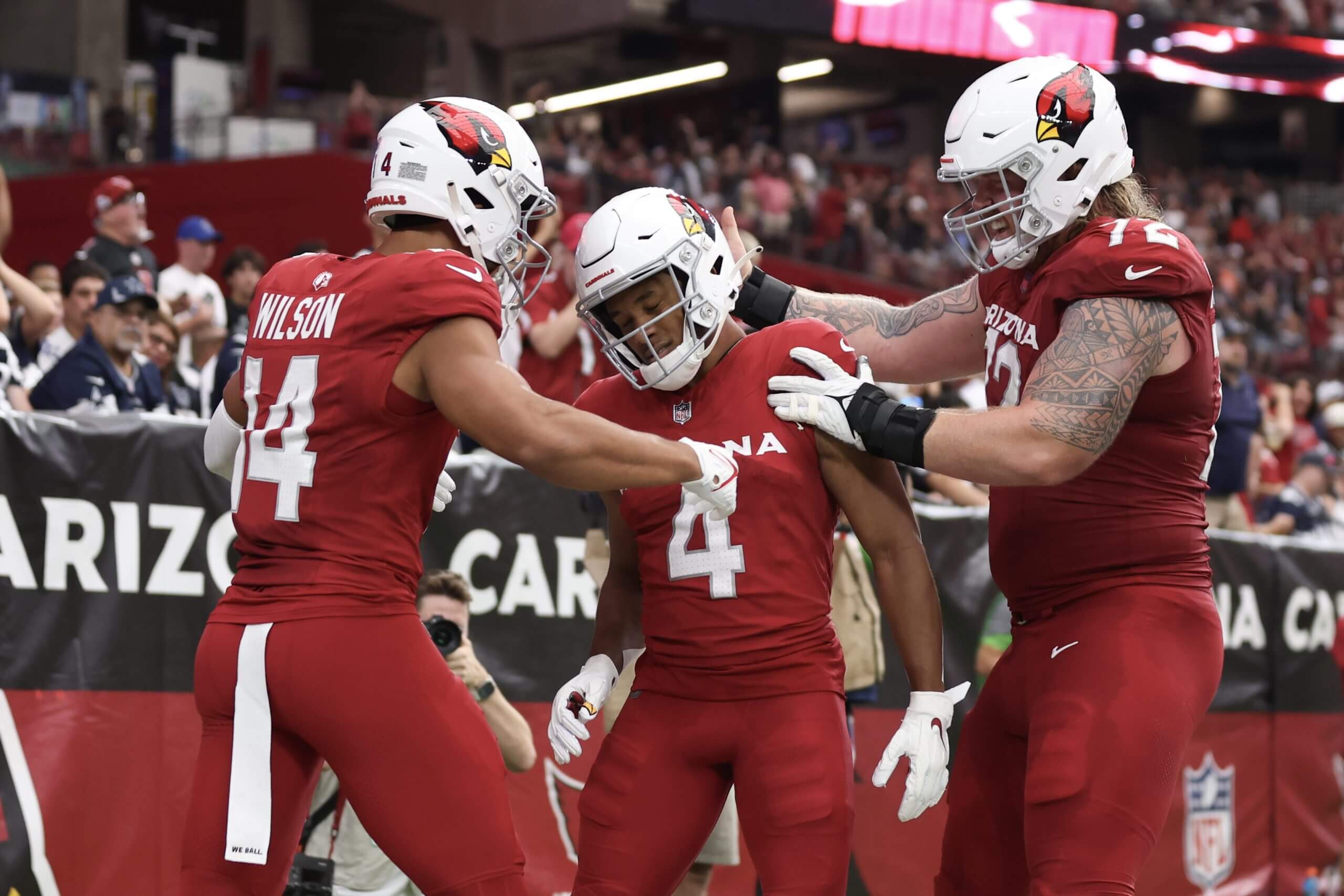
Rondale Moore (4) celebrates a touchdown with Cardinals teammates Michael Wilson and Hjalte Froholdt in 2023. (Christian Petersen / Getty Images)
Sports can be cruel that way. Statistics become shorthand for worth. Social media ignores the journey and reduces your existence to highlights and criticism.
“What do you do on Instagram?” Shephard asked. “Like a post. What do you do on Twitter? Like a post. Well, don’t worry about who likes you. Worry about who respects you.”
Moore proved plenty during a career that ended too soon. But the climb can be relentless. Injuries test patience. Expectations mess with the mind. The process of recovery, physically and mentally, requires more than what we realize.
“When you haven’t been at that level, it’s hard to even fathom,” Shephard said.
In the days since Moore’s death, Shephard keeps thinking about how we remember people, how fleeting memory is. Football, with its “next man up” demand, moves on so quickly. He wants to press pause.
“Just a few years from now, no one will remember Rondale Moore,” he said softly. “And it’s sad.”
He took a few seconds.
“When they’re here, instead of appreciating them, we tear them down,” he said. “And five years later, they’re forgotten.”
On Friday in New Albany, life slowed. Family members gathered. Teammates and coaches returned. Moore was remembered not for the yards he gained, but for the lives he changed.
Maybe, for a moment, the rest of us can pause, too.