
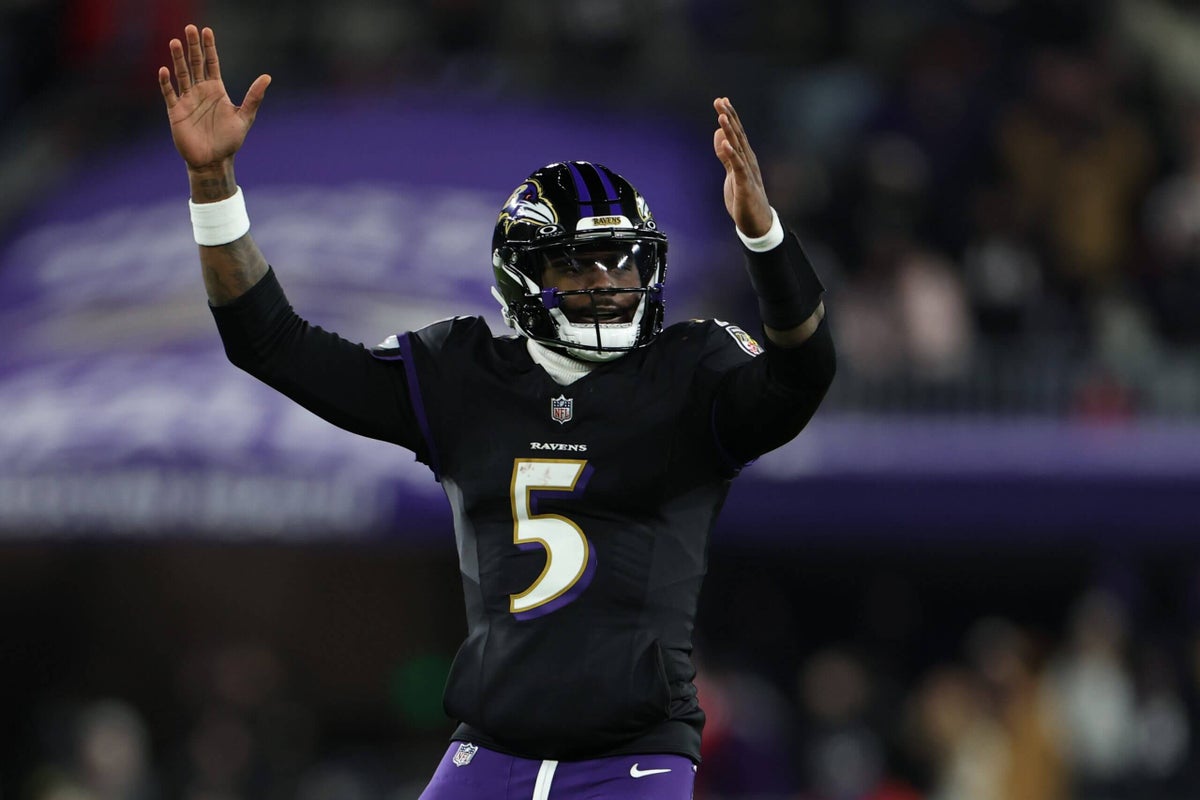
Quarterback Tyler Huntley has agreed to a deal to return to the Baltimore Ravens, a team source confirmed to The Athletic. The agreement is for two years and $5 million, with an additional $6 million available in incentives.
The 28-year-old has spent five of his six NFL seasons as a backup with the Ravens. His lone season elsewhere came with the Miami Dolphins in 2024, when he started five games in relief of Tua Tagovailoa. He also spent portions of the 2024 and 2025 offseasons with the Cleveland Browns.
For his career, Huntley has started 16 games and appeared in 30 over six seasons, throwing for 3,212 yards, 13 touchdowns and 10 interceptions with a 66.2 percent completion rate. He has also rushed for 795 yards and five touchdowns.
Huntley went undrafted out of the University of Utah in 2020 and signed with the Ravens, appearing in two games as a rookie. Over the next three seasons, he became a reliable fill-in during periods when quarterback Lamar Jackson was injured. From 2021 to 2023, he played an average of six games per season and started in nine.
What this means for the Ravens
This is a smart move for the Ravens, who have never shown any interest in investing heavily in the backup quarterback spot. The $2.5 million per year for Huntley is on the cheaper side, and it comes after a season where the 28-year-old played well in relief of an injured Lamar Jackson and led the Ravens to victories over the playoff-bound Chicago Bears and Green Bay Packers.
In a league where the demand for quality backup quarterbacks far exceeds the supply, Huntley probably could have done better on the open market. However, he’s comfortable in Baltimore, and he’s one of Lamar Jackson’s closest friends. The Ravens appreciate his poise and professionalism. It also helps that he’s able to step in and run an offense designed for Jackson’s skill set without major adjustments to the game plan.
One byproduct of Huntley’s return is the likely release of veteran Cooper Rush. Huntley was elevated over Rush as Baltimore’s primary backup after Rush played poorly in two starts in place of Jackson, who was sidelined with a hamstring strain. Rush threw four interceptions and no touchdown passes in those two games.
Cutting Rush would create just over $450,000 of salary cap space, so it’s more of a football decision than a financial one. — Jeff Zrebiec