
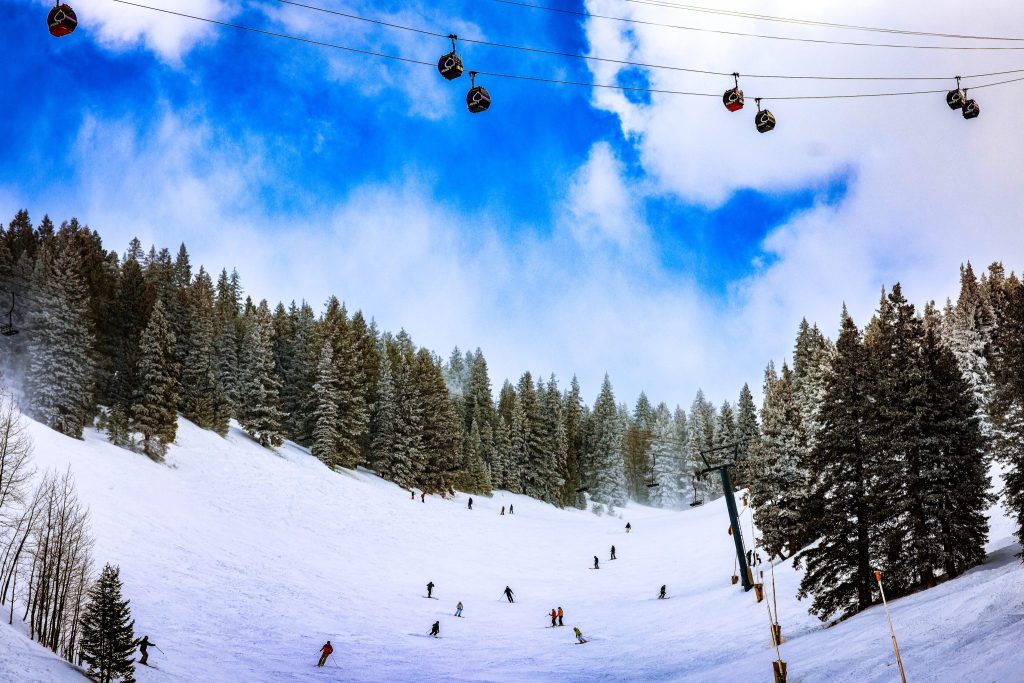
 Colorado’s outdoor recreation economy grew slightly slower than the industry did on average nationwide in 2024, according to federal economic data for the industry released Thursday, March 5, 2026.
Austin Colbert/The Aspen Times
The outdoor recreation industry has continued to grow across the country, and in Colorado, according to the latest economic data published this week by the U.S. Department of Commerce’s Bureau of Economic Analysis.
The outdoor recreation statistics show the industry generated $1.3 trillion in economic output across the U.S., created 5.2 million jobs and accounted for about 2.4% of the nation’s gross domestic product in 2024. The bureau published the statistics on Thursday, several months later than usual due to the government shutdown last fall.
“Today’s data announcement really underscores that the outdoor recreation industry remained a huge economic driver,” Outdoor Recreation Roundtable President Jessica Turner said in a press briefing announcing the statistics.
The Outdoor Recreation Roundtable is a national nonprofit coalition of thousands of trade associations, businesses and other organizations that aims to promote the growth of the outdoor recreation economy and outdoor activities.
The outdoor recreation industry — which includes everything from boating and fishing to biking, skiing, camping, hunting, horseback riding, off-roading and much more — added just shy of $700 billion in value to the nation’s economy in 2024, according to the federal data. That’s up 2.7% from the previous year, adjusted for inflation.
 The U.S. Department of Commerce’s Bureau of Economic Analysis released data on Thursday, March 5, 2026 showing that the nation’s recreation economy grew about 2.7% in 2024 compared to the year before.
In the U.S., the top five outdoor recreation activities for economic value added were boating and fishing, which produced $38 billion; recreational vehicle camping, which produced about $27 billion; hunting, shooting and trapping, which produced more than $16 billion; motorcycling and off-roading, which produced $11 billion; and climbing, hiking and tent camping, which produced about $7 billion.
The economic data shows the fastest growing activities were hunting, shooting and trapping, which grew by 16.5% year-over-year; climbing, hiking and camping, which grew by 6.5%; recreational flying, which grew by 5.2%; bicycling, which grew by 3.4% and motorcycling and off-roading, which grew by 1.8%.
California, Florida and Texas had the three biggest outdoor recreation economies in 2024, with the industry adding about $88 billion, $65 billion and $59 billion in value, respectively, according to the data. Colorado had the tenth largest outdoor recreation economy, with the industry adding about $18 billion in value.
While the nationwide outdoor recreation sector continued to grow, Turner noted the rate of growth declined in 2024 compared to other recent years, such as 2023, when the outdoor recreation saw 5.3% growth. She said the outdoor recreation industry has seen a “slowing down” since a surge in interest during the COVID-19 pandemic.
Speaking to the challenges the industry is facing, she said the slowing growth, “tracks with the headwinds we’ve all felt and still feel from inflation and high interest rates, supply chain friction and shifting household budgets.”
Colorado’s outdoor recreation industry grew slower than than national average
 A map of the U.S. shows the outdoor recreation value added as a percent of each state’s gross domestic product in 2024. In Colorado, the outdoor recreation industry made up about 3.3% of the state’s gross domestic product in 2024, according to the federal economic data published Thursday, March 5, 2026
Colorado’s outdoor recreation industry grew slower than the industry as a whole in the U.S. in 2024, according to state-level data from the federal government. While the outdoor recreation industry as a whole grew at about 4%, not adjusted for inflation, Colorado’s outdoor economy grew only 3.6% compared to the previous year, the data shows.
The statewide data — which were not inflation-adjusted — shows the outdoor industry accounted for about 3.3% of Colorado’s gross domestic product in 2024. The industry produced about 138,000 jobs in Colorado, or about 4.5% of the state’s total wage and salary jobs that year, according to the data.
“Outdoor recreation is one of the cornerstones of Colorado’s economy and culture,” Conor Hall, the director of the state’s Office of Outdoor Recreation Industry, said in a statement. “Whether it’s hiking local trails, paddling our rivers or spending a weekend under the stars, these experiences support businesses, sustain jobs and strengthen communities across the state.”
Snow activities like skiing and snowboarding produced more economic output in Colorado than any other state. In Colorado, snow activities accounted for more than $1.5 billion in value added to the economy in 2024, according to the data. That’s 20% of the economic activity produced by snowsports nationwide that year.
The second and third biggest outdoor recreation activities in Colorado were boating and fishing, which added about $736 million in value to the state’s economy and RVing, which added $582 million, according to the data.
The data shows the outdoor recreation industry provided 36,500 jobs in retail, 31,600 jobs in arts, entertainment and recreation, and 32,500 jobs in accommodation and food services in Colorado in 2024.
While outdoor recreation employment remained flat from 2023 to 2024, the data shows compensation in the industry increased 5% in 2024. Average compensation per job in Colorado outdoor recreation industries was $68,274 in 2024, compared with $96,339 for all salaried jobs in the state, according to the data.
Hall described the latest data from the federal government as “a clear reminder that protecting access to the outdoors and investing in responsible recreation is critical to keeping Colorado’s economy strong.”
Outdoor recreation industry has seen significant growth in past decade
In Colorado and across the nation, the outdoor recreation industry has seen significant growth in the past decade. Not adjusted for inflation, the nationwide outdoor recreation economy has increased by about 78% since 2014, while Colorado’s outdoor recreation economy grew by about 92% over that time, according to the data.
Adjusted for inflation, the data shows the national outdoor recreation industry has grown 32% in the past decade. The Bureau of Economic Analysis did not have inflation-adjusted statistics at the state-level.
 A table shows the top 10 outdoor activities for value added to Colorado’s economy in 2024. The U.S. Department of Commerce’s Bureau of Economic Analysis released outdoor recreation industry data on Thursday, March 5, 2026, several months later than usual due to the government shutdown last fall.
Kent Ebersole, the CEO of the Outdoor Industry Association that represents more than 450 outdoor organizations, in a statement described the federal government data as “one of the clearest and most credible measures of the outdoor recreation economy’s role in the United States.”
“It helps demonstrate not only the scale of our industry, but also why continued investment in outdoor access, recreation infrastructure and participation matters for local communities, rural economies and public health,” Ebersole said. “Outdoor recreation is more than a consumer category. It’s a major contributor to the U.S. economy, a source of jobs in communities of every size and an engine for rural development.”
Despite its growth, the outdoor recreation industry has faced challenges. Outdoor businesses have struggled with the uncertainty around tariffs, which have raised prices for consumers, including in the ski industry. Under President Donald Trump’s administration, the public lands that support much of outdoor recreation have also lost thousands of employees through mass firings and voluntary resignation programs.
In Colorado, a historically low snowpack and record-hot winter have made this season a tough one for the ski industry, with impacts that appear likely to linger into the spring and summer and could impact rafting, camping and other activities.
All the while, affordability remains a concern in Colorado and across the country.
“We know that in 2024, the demand to get outside remained high, with positive participation trends across all forms of recreation, but affordability and uncertainty weighed on purchases and trips,” Turner said. “These trends are still being experienced today. Wallets are thinner, trips are shorter and purchases are fewer.”