
Goals from corners have been arriving at an unprecedented rate in the Premier League this season.
The importance of these set pieces has been rising in recent years, and has reached its highest impact on the attacking game in the 2025-26 campaign.
Since it began last August, teams have been focusing on a specific type of corner: an in-swinger towards a crowded six-yard box. This has decreased the diversity of corners in English football’s top flight but innovative routines which don’t solely depend on putting it into this new mixer do still exist.
In this piece, The Athletic breaks down the 10 most innovative corners we’ve spotted this season. To narrow down the selection from more than 2,500 to 140, only those that resulted in goals were in contention. Additionally, the idea of the corner alone doesn’t put it into the top 10, its execution and applied principles also factor into the equation.
Let’s begin…
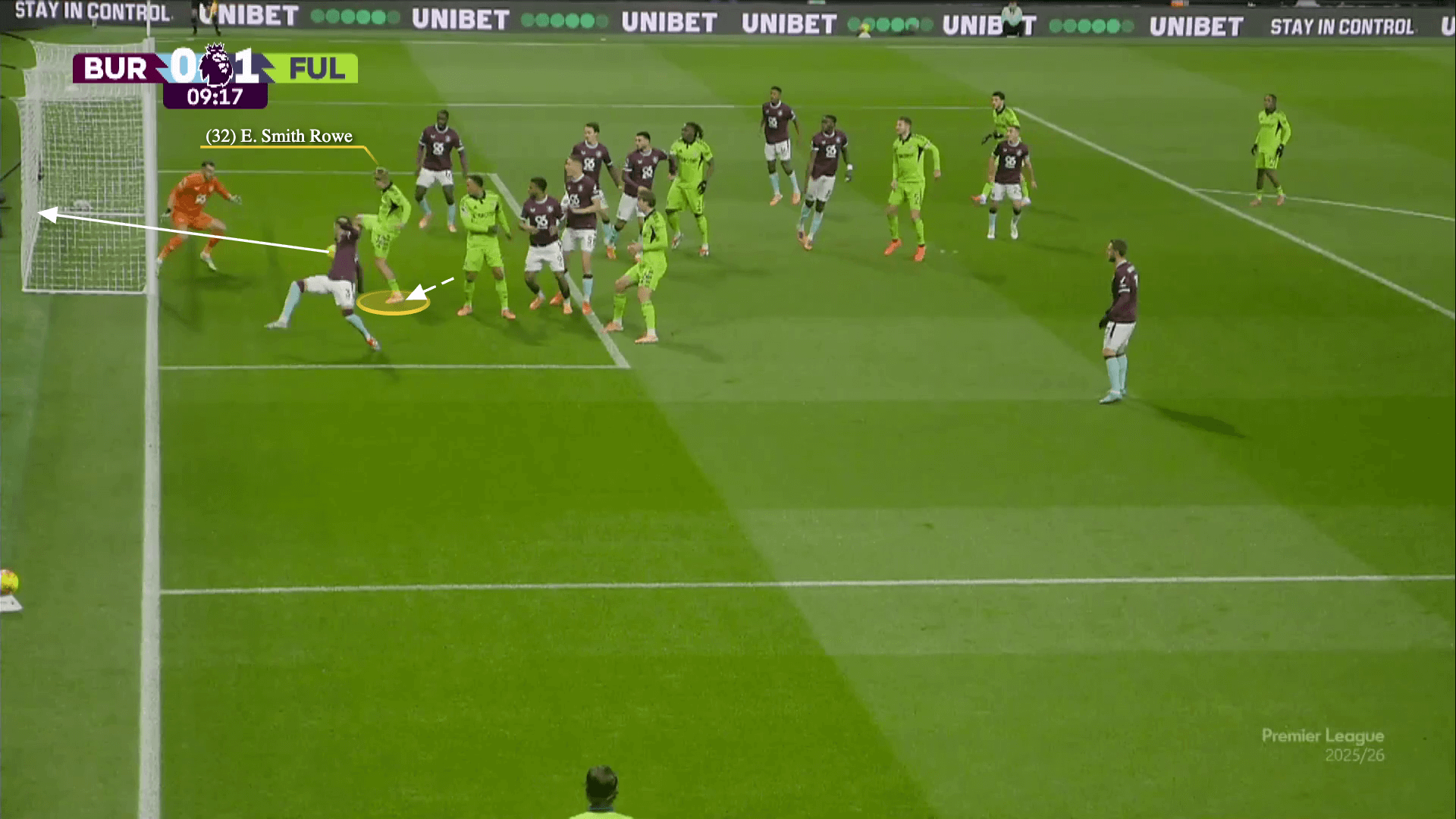
Emile Smith Rowe vs Burnley (December 13)
Defensive setup: Five zonal defenders, with Lyle Foster and Quilindschy Hartman towards the near post, three man-markers (red) on Calvin Bassey, Raul Jimenez and Joachim Andersen, and two players (highlighted by the white dots) to protect against the short corner and late runners.
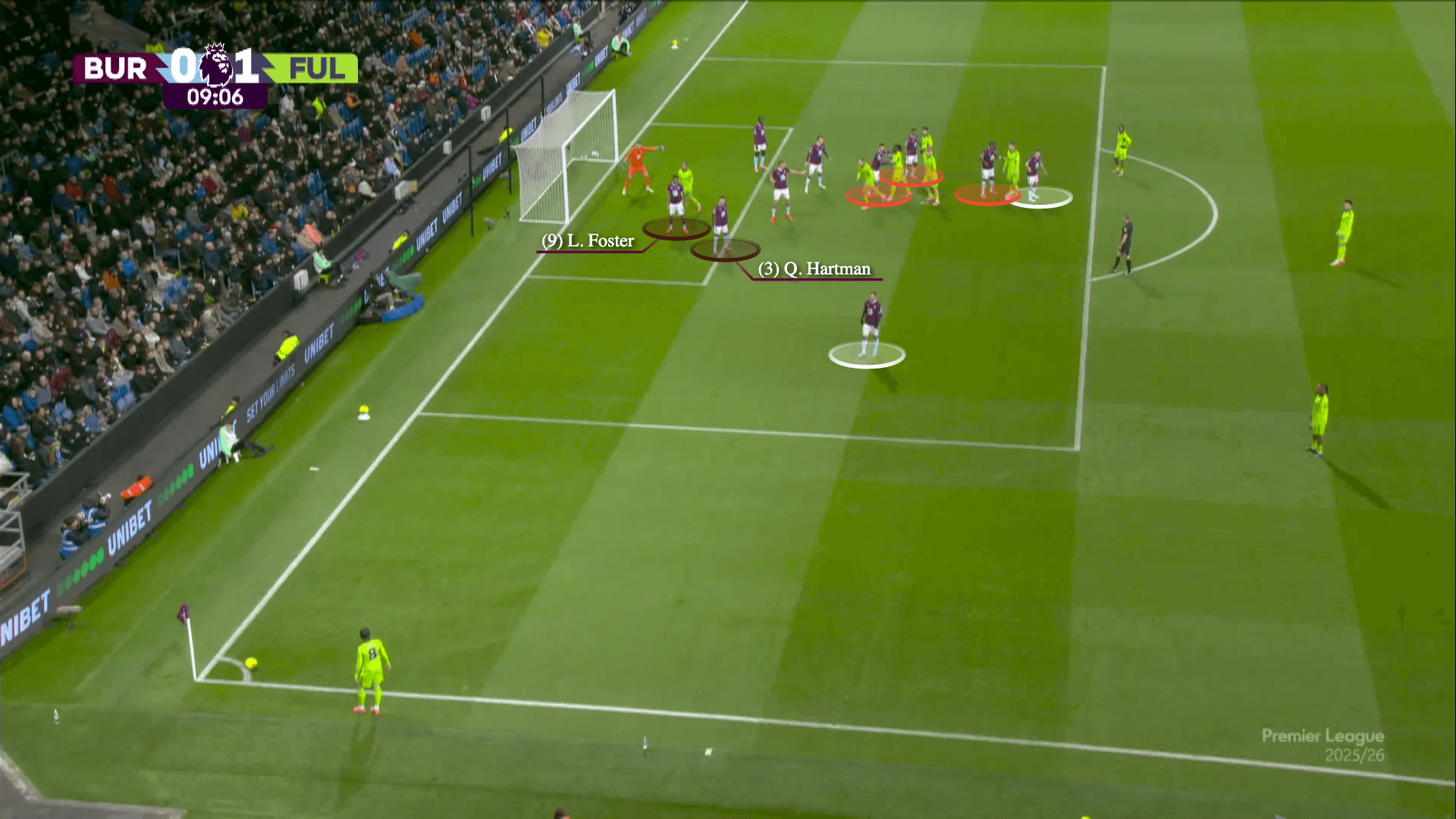
Initially, Fulham’s organisation looks normal, with Bassey, Jimenez and Andersen as runners, Smith Rowe next to them, Sander Berge moving towards the near post and Kenny Tete inside the six-yard box.
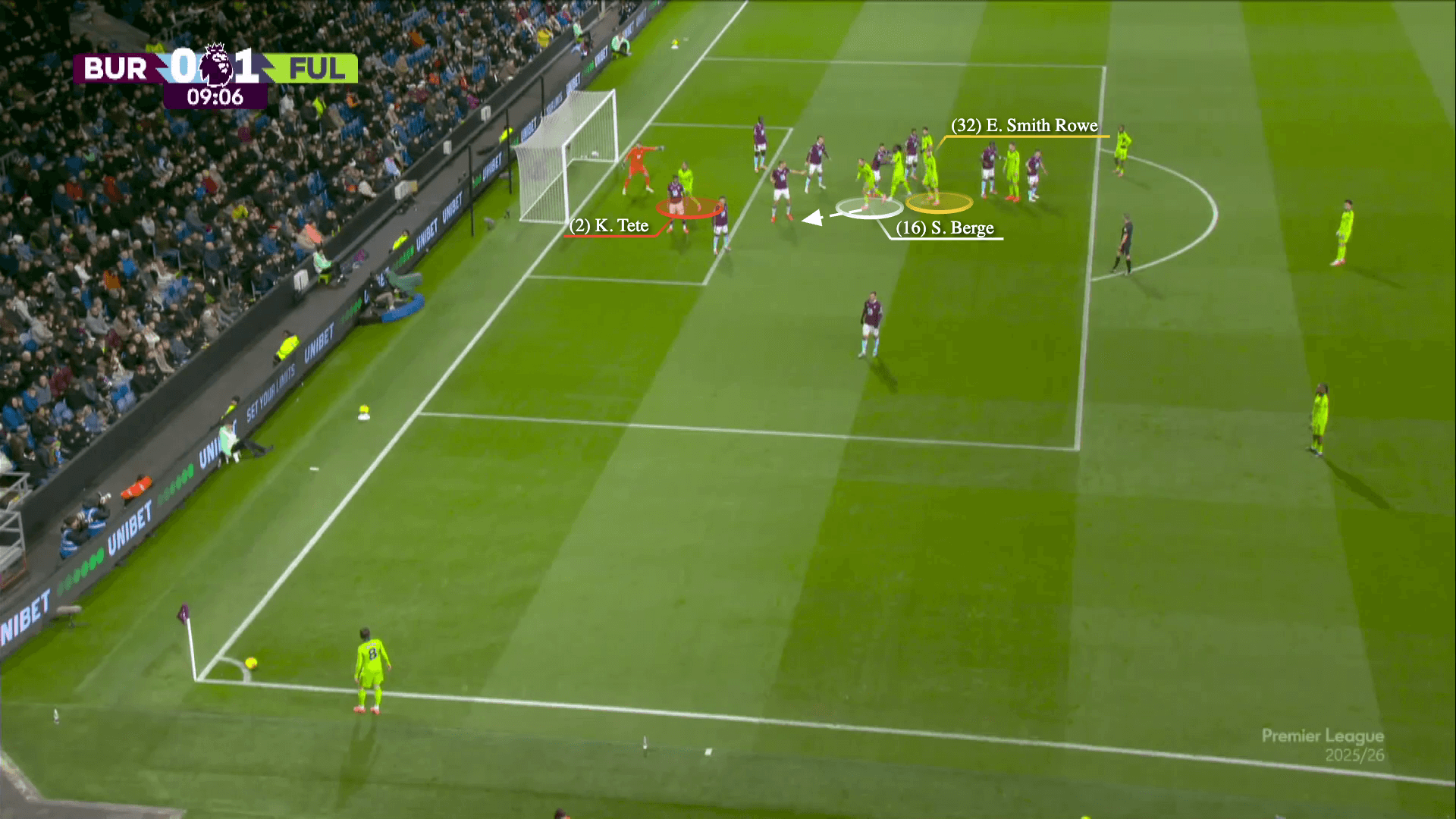
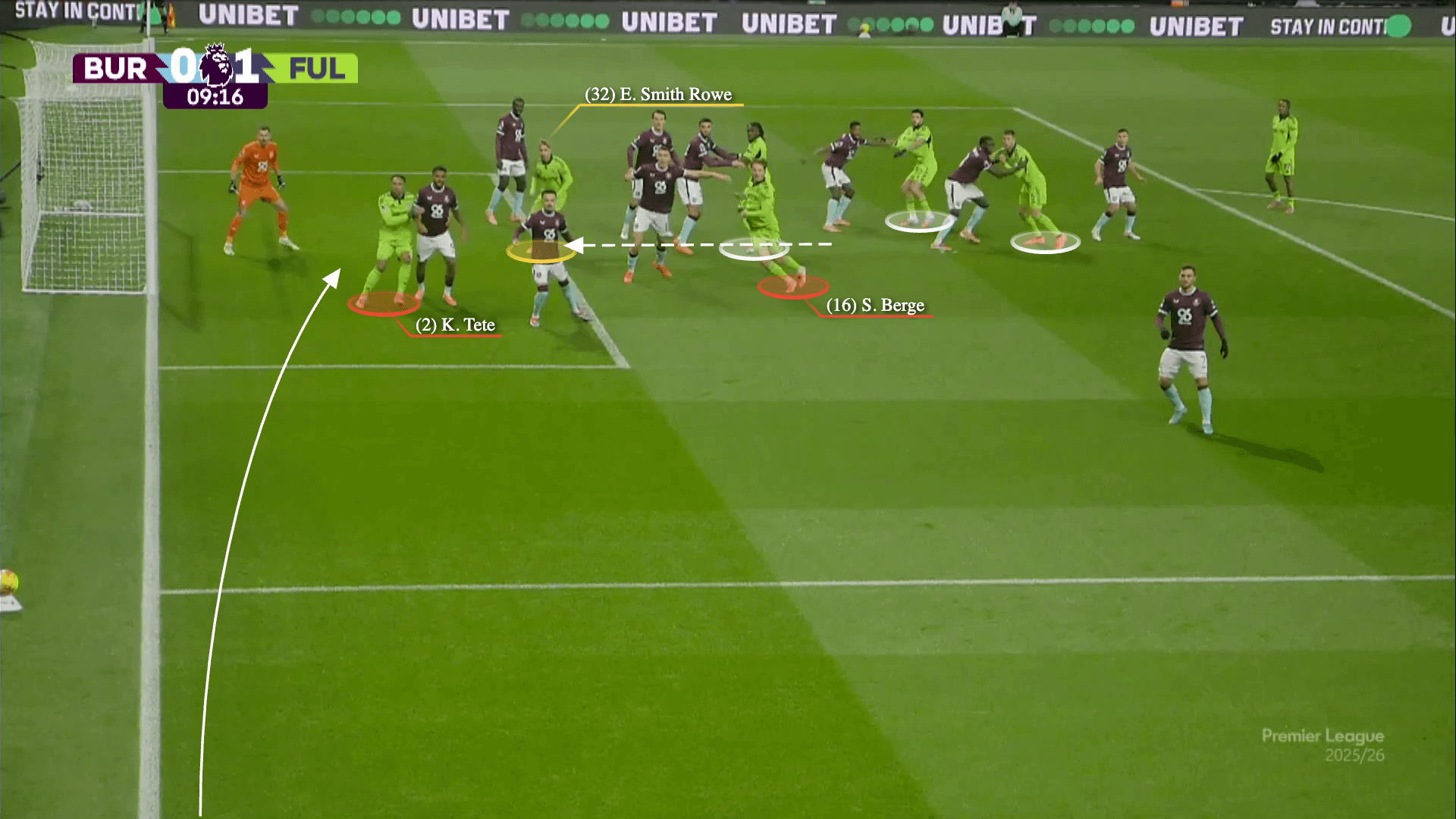
However, Smith Rowe (yellow dot) makes a surprise early run behind Burnley’s zonal markers as Harry Wilson is preparing to take the out-swinging corner.
The roles of the other Fulham players inside the penalty area in maintaining this space for Smith Rowe are vital.
Bassey, Jimenez and Andersen, who are supposed to be attacking the cross, hold their positions and prevent their man-markers from dropping deeper. Meanwhile, Berge occupies Burnley’s central zonal defender, Maxime Esteve, and Tete (red) takes a couple of steps to block Foster and clear the path of the ball to Smith Rowe.
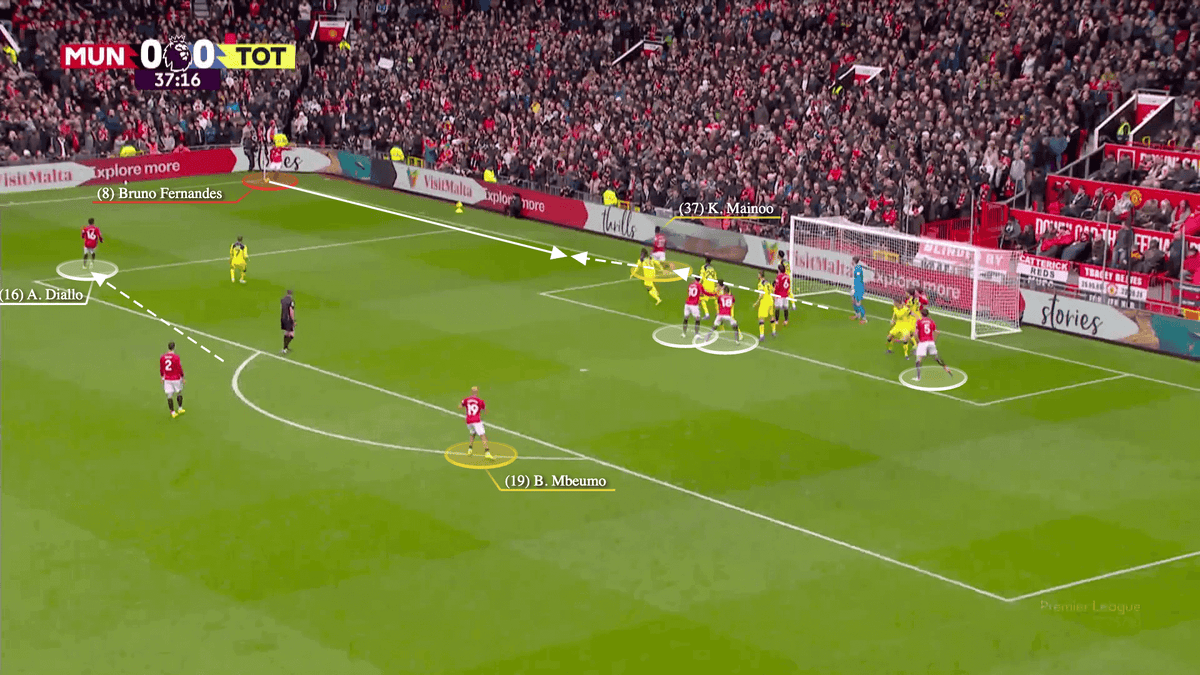
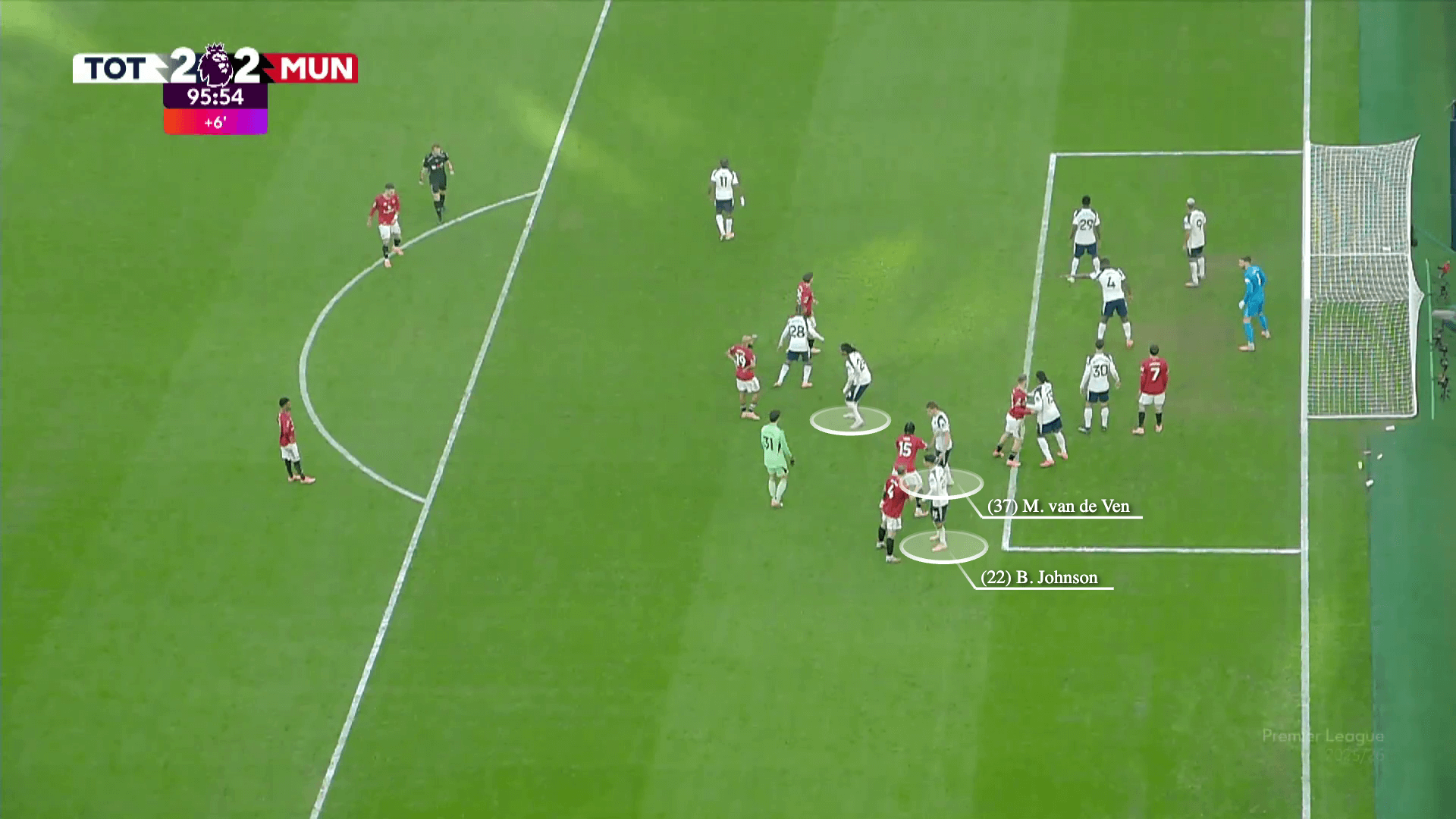
Matthijs de Ligt vs Tottenham Hotspur (November 8)
Defensive setup: Mathys Tel is near the penalty spot to defend the short option or any late runners, Wilson Odobert protecting the space outside Tottenham’s six-yard area, five zonal defenders inside it and three man-markers (white) towards the back post.
Djed Spence is keeping an eye on Bryan Mbeumo, while Micky van de Ven and Brennan Johnson are respectively marking Leny Yoro and De Ligt.
On the other hand, Manchester United’s pack starts from the back post — Luke Shaw and Mason Mount (red) are inside the six-yard area, and the main targets, Yoro and De Ligt, are just behind them.
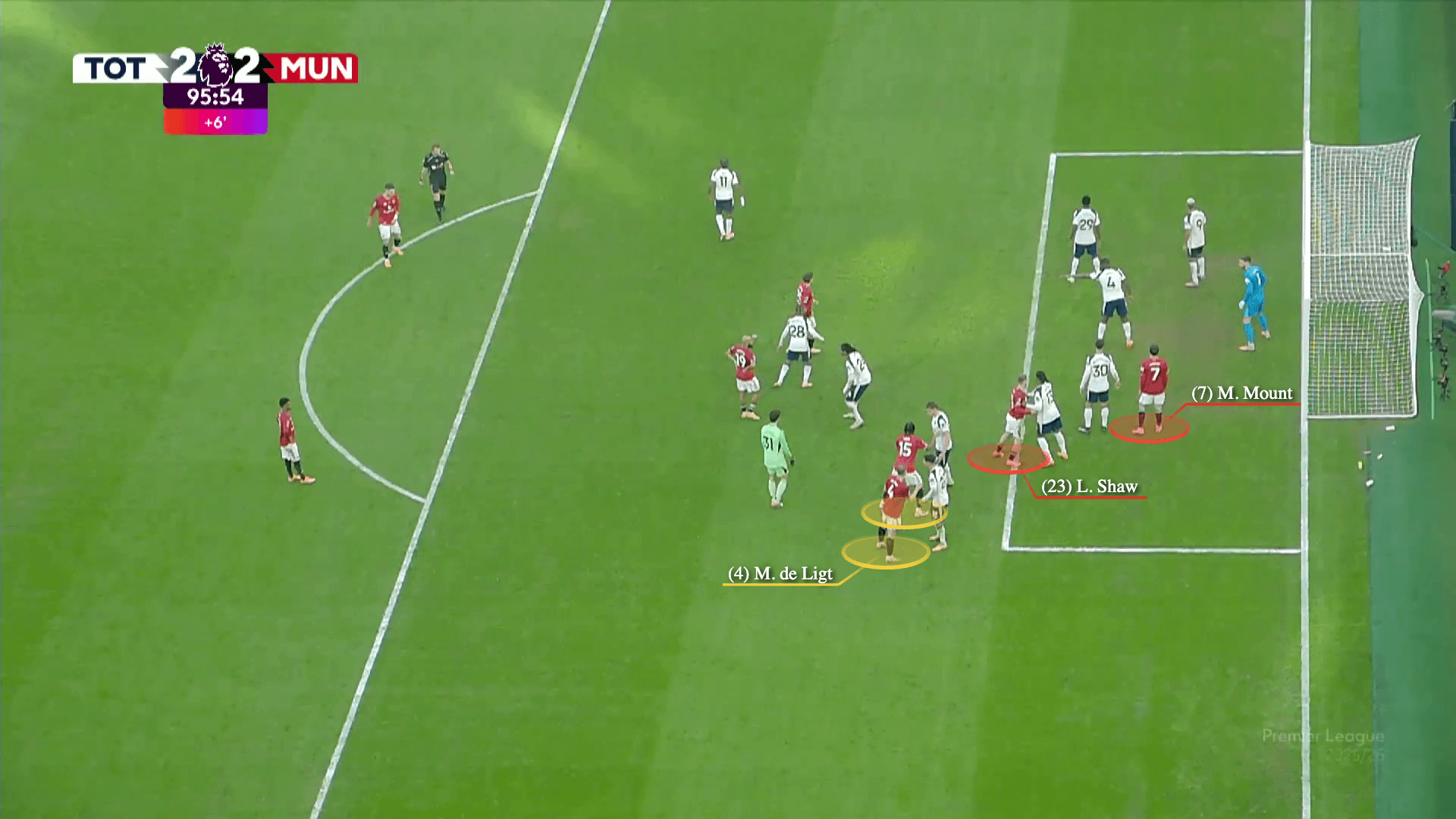
Before Bruno Fernandes starts his run, De Ligt makes a dummy move and uses goalkeeper Senne Lammens as a screen to separate himself from Johnson.
Once United’s captain plays the corner, De Ligt changes direction towards the back post, Yoro moves to the central area and Mount positions himself in front of goalkeeper Guglielmo Vicario.
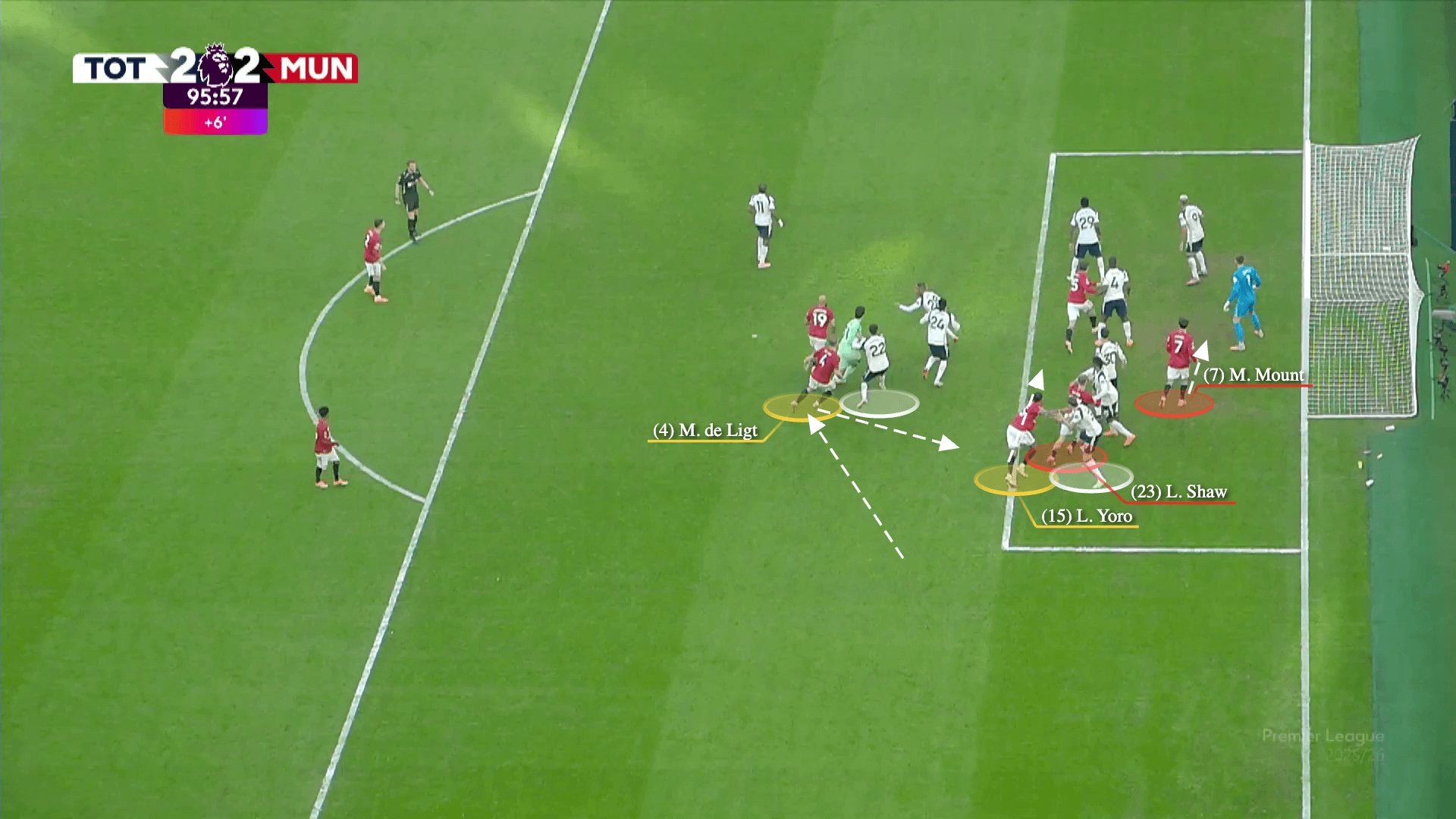
Yoro’s movement drags Van de Ven away from the back-post area and makes sure United have a target in the central zone.
Meanwhile, Mount prevents Vicario contesting the cross and Shaw blocks Rodrigo Bentancur, who is one of Tottenham’s zonal defenders at the back post.
This way, United create space for De Ligt, who is unmarked at the back post…
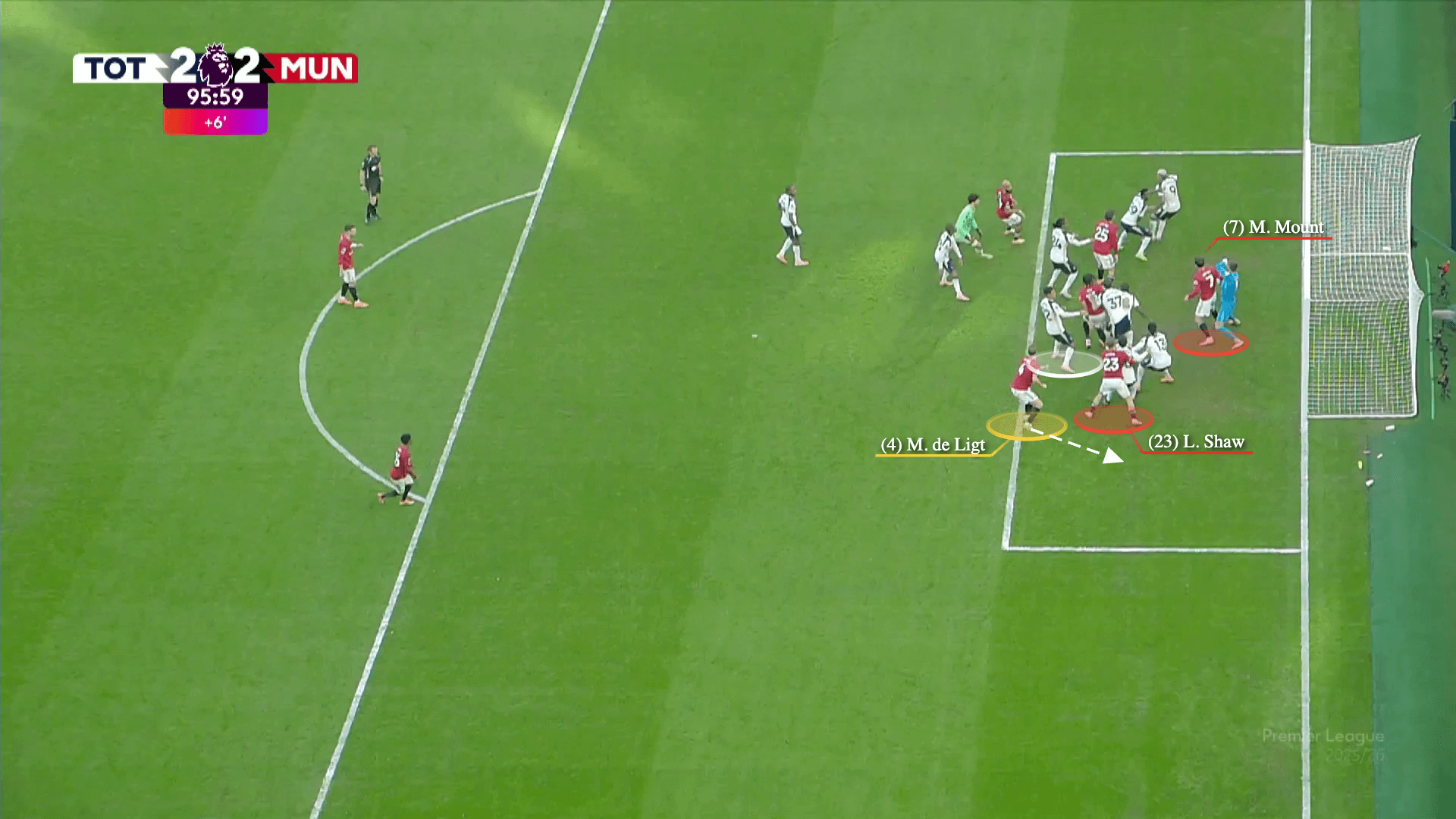
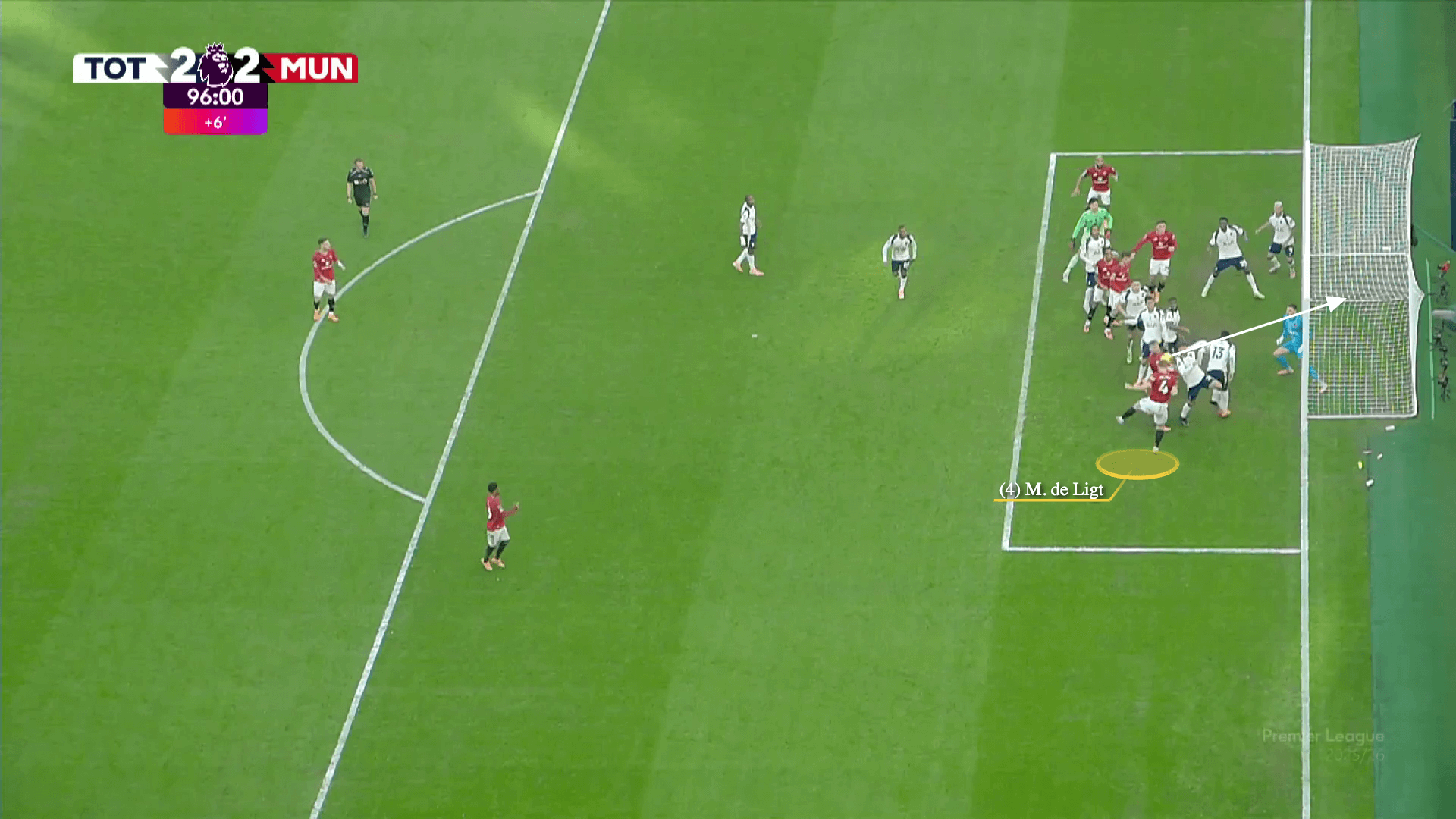
… and the Dutch centre-back heads Fernandes’ cross into the top corner.
Matty Cash vs Sunderland (September 21)
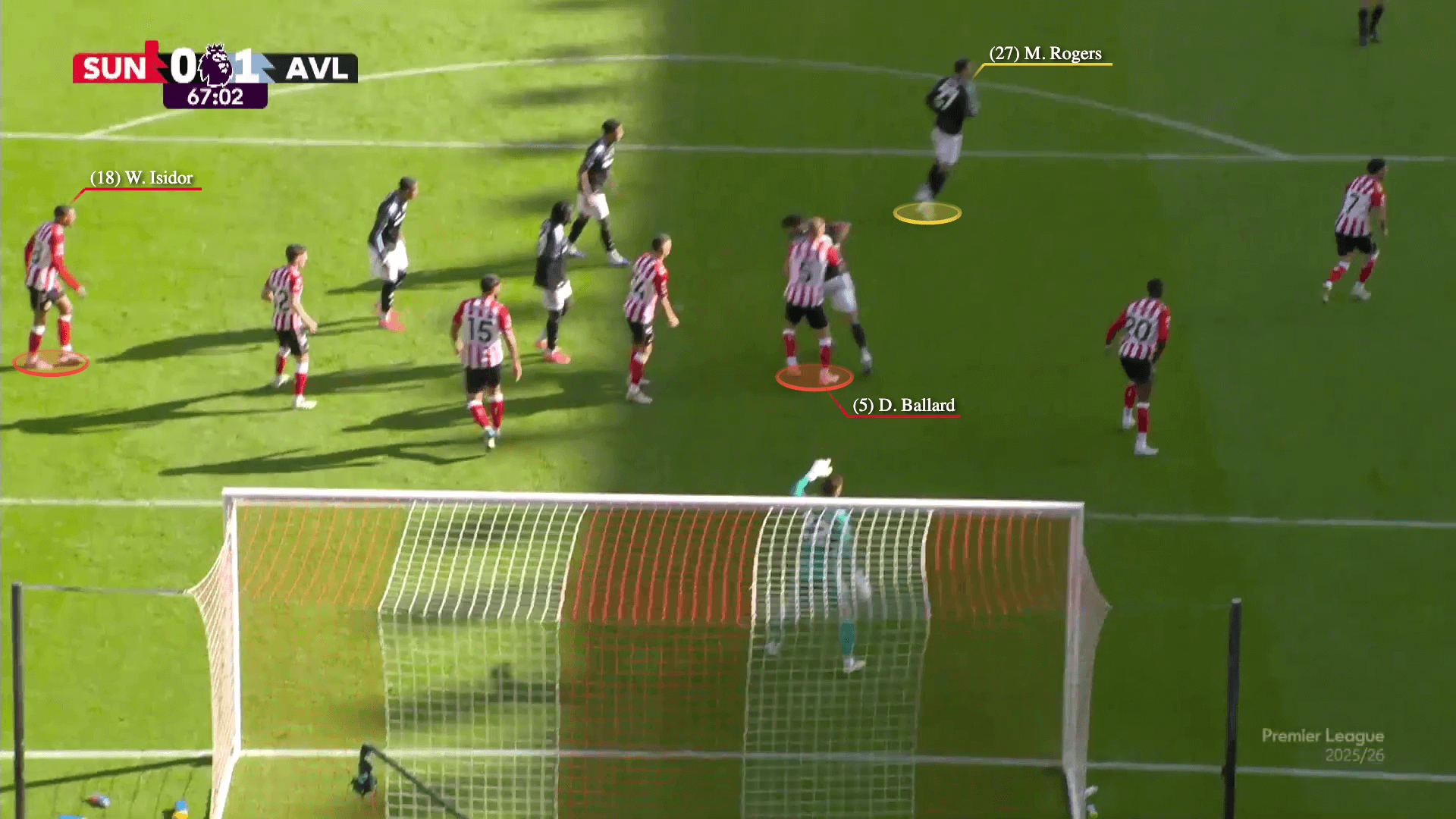
Defensive setup: Before going into Sunderland’s organisation on the goal, it’s important to understand how they reached that setup in the first place, because Reinildo’s sending-off altered the original approach.
On Aston Villa’s first corner of the game, Reinildo, Chris Rigg and Wilson Isidor (red) were man-marking Tyrone Mings, Ollie Watkins and Morgan Rogers. Behind them, Sunderland had four zonal defenders around the six-yard line, and the remaining players (white) were defending the short corner or a late runner.
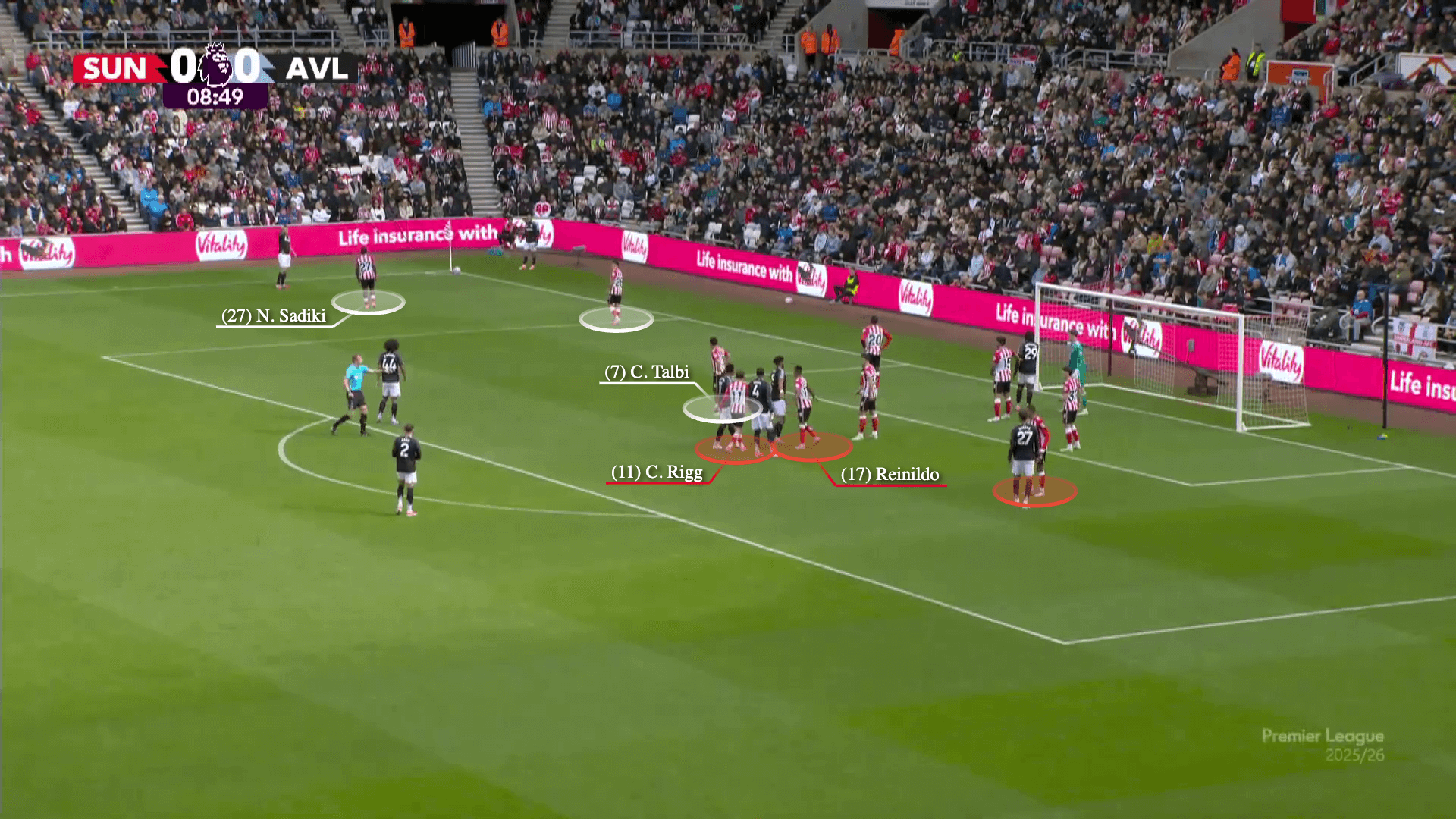
After going down to 10 men midway through the first half, Sunderland head coach Regis Le Bris introduced 6ft 1in defender Daniel Ballard instead of 5ft 8in midfielder Rigg and changed how they faced Villa corners — Ballard picked up fellow centre-back Mings and striker Watkins was left for the zonal defenders.
On the corner that leads to Cash’s goal, Noah Sadiki, Enzo Le Fee and Chemsdine Talbi (white) are in position to defend the short ball, with Ballard man-marking Mings. However, Isidor is peculiarly not marking Rogers.
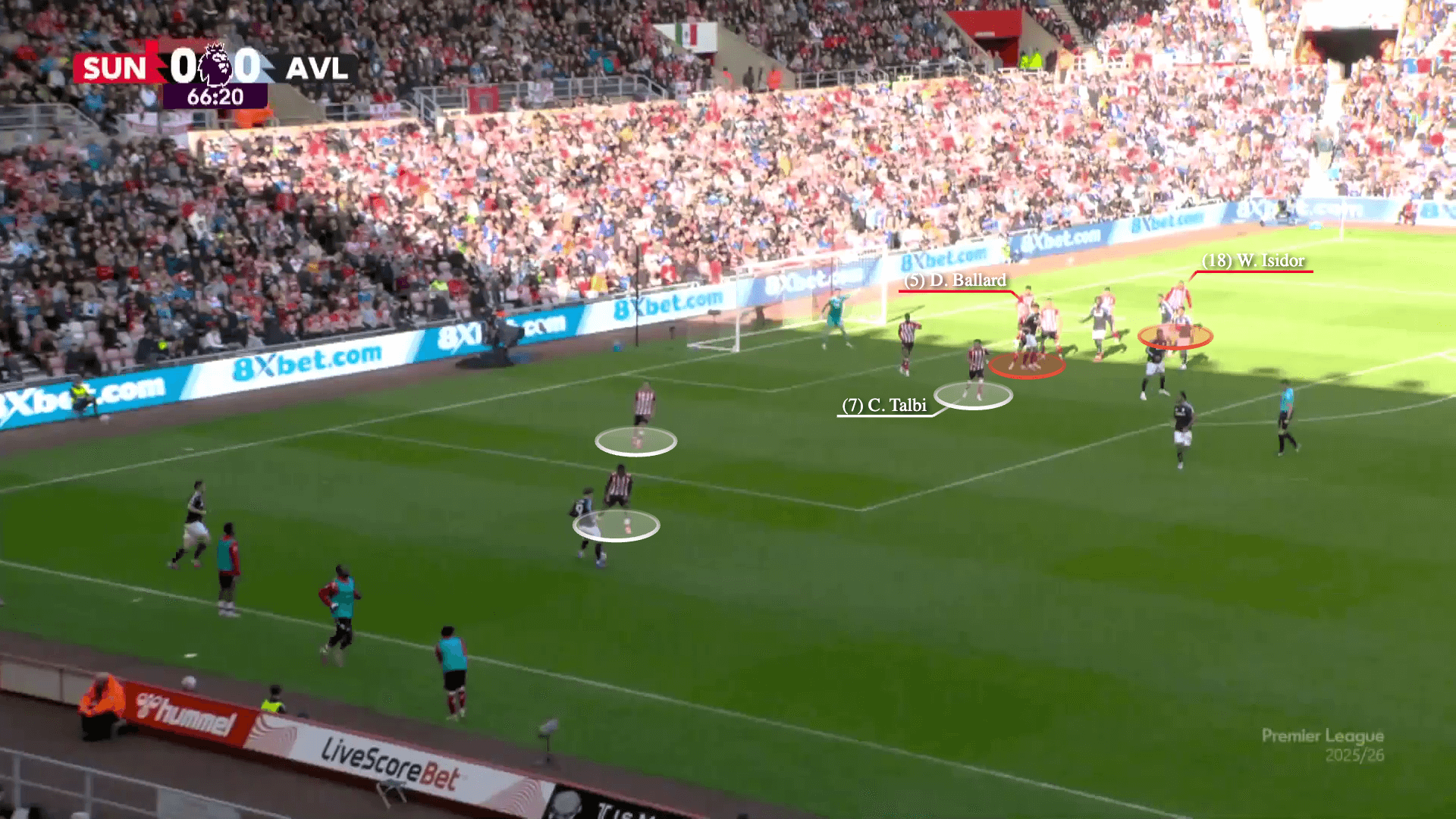
On the three previous Villa corners, Rogers was positioned towards the back post and marked by Isidor.
Here, Rogers takes a different starting position and the Sunderland centre-forward doesn’t follow him.
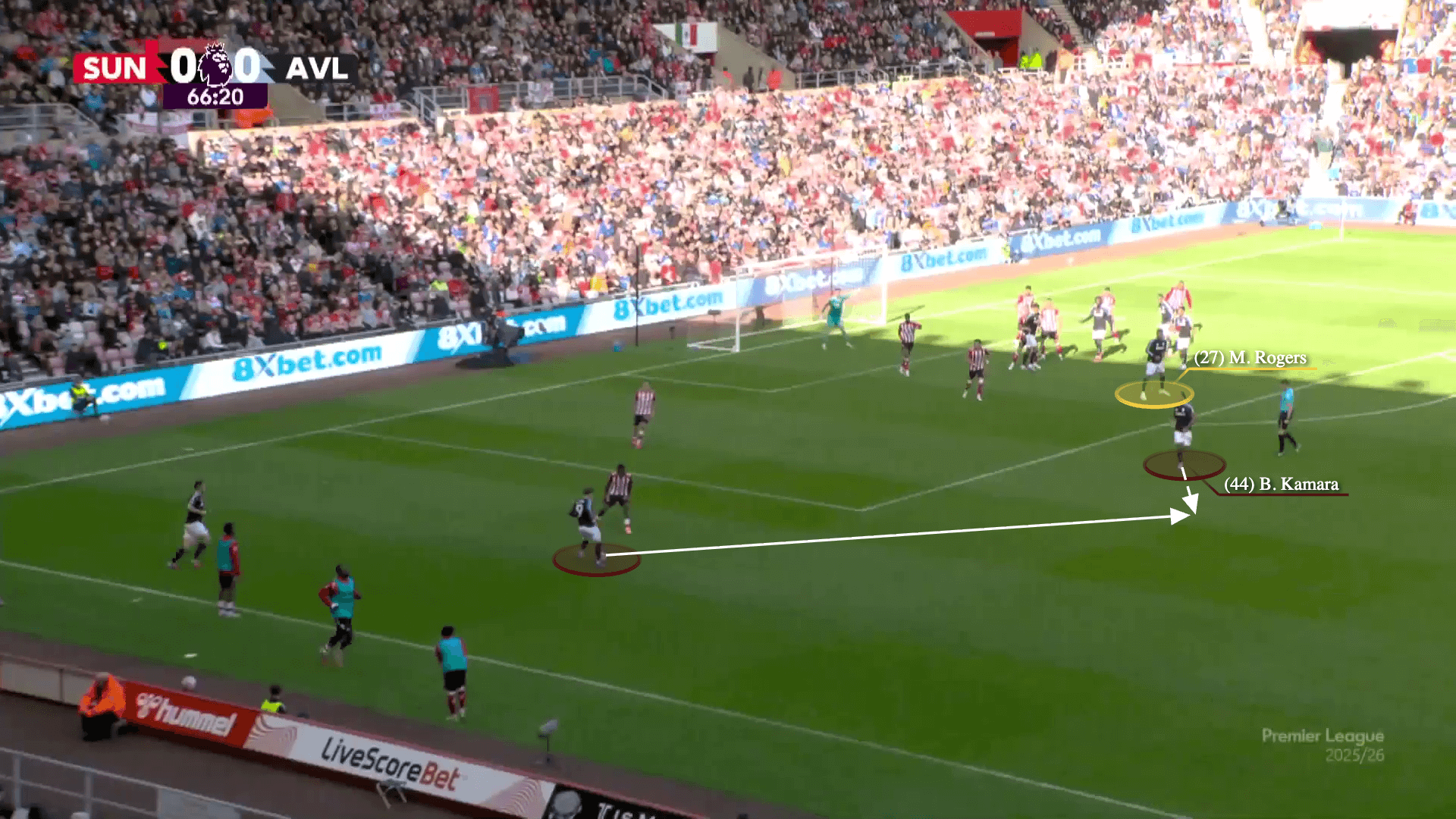
When John McGinn and Harvey Elliott play the quick short corner to find Boubacar Kamara by the edge of the penalty area, Sunderland are theoretically covering these options with Sadiki, Le Fee and Talbi.
Yet, Rogers’ different positioning and the movement of the Villa players towards the back post pin Sunderland inside their 18-yard box.
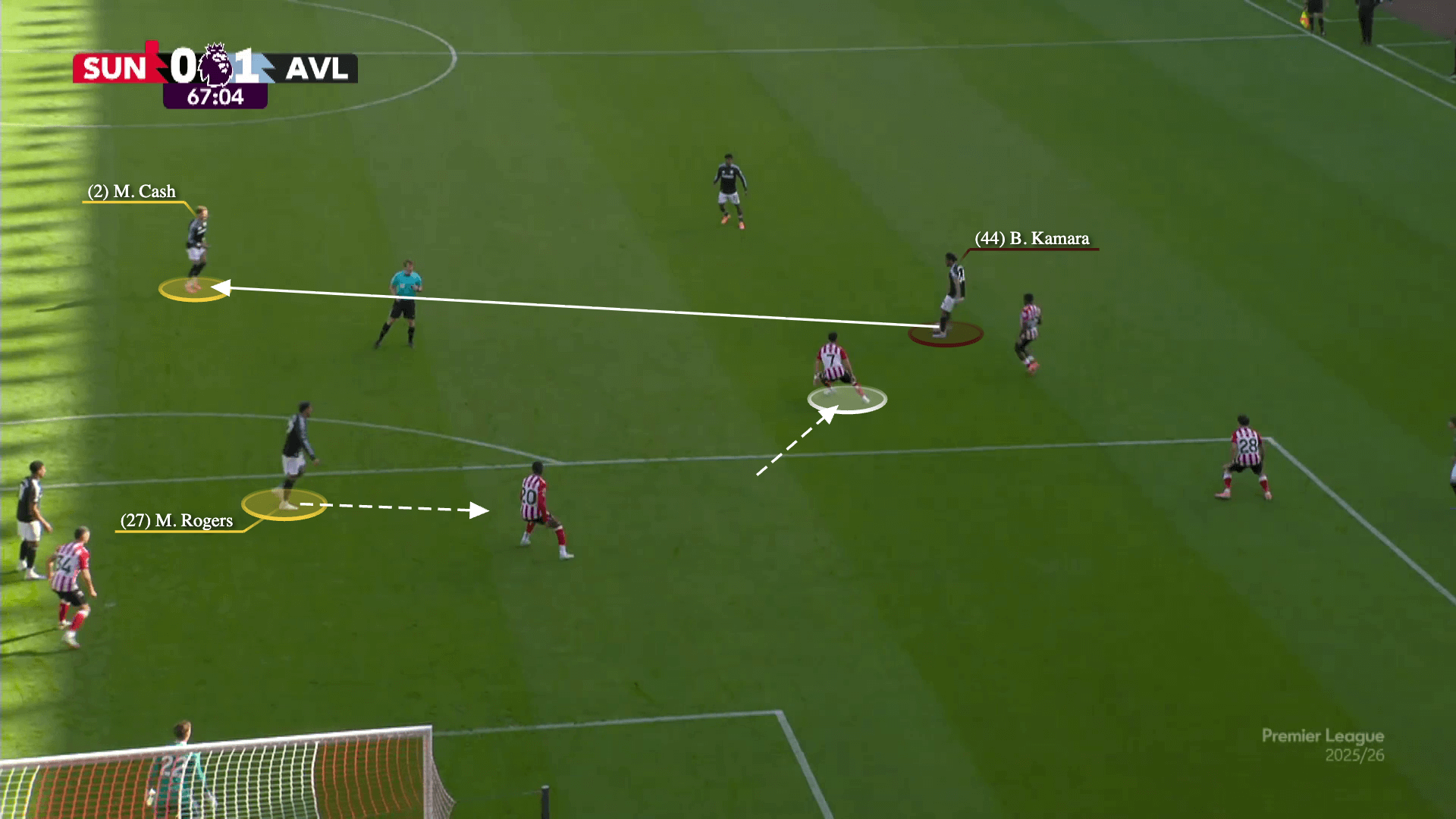
When Kamara plays the ball to Cash, Rogers dashes towards the near post and prevents Nordi Mukiele (Sunderland No 20) from moving up to defend Villa’s right-back.
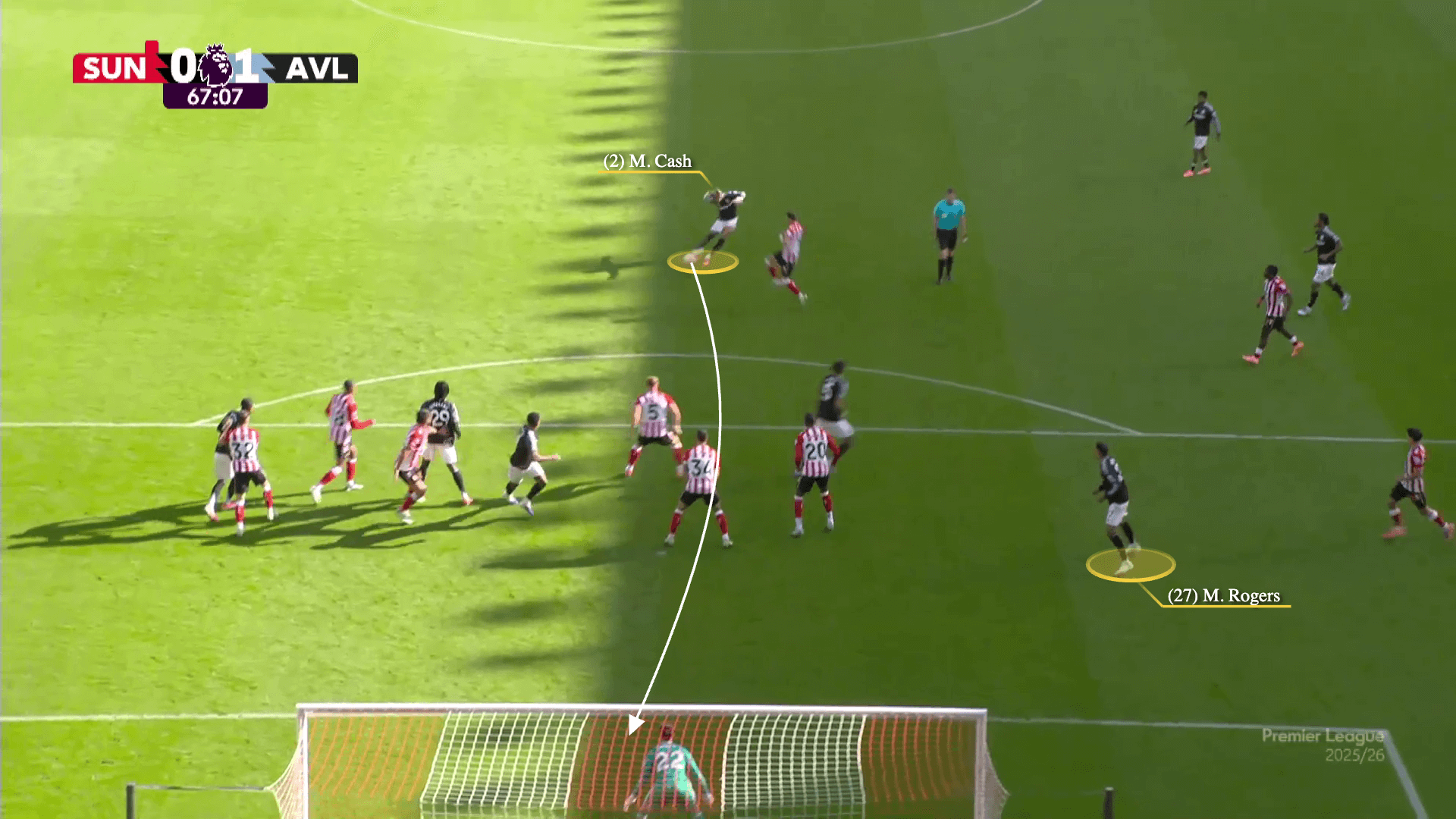
Talbi tries to do that, but is unable to stop Cash’s thunderous strike.
Micky van de Ven vs Everton (October 26)
Defensive setup: Six zonal defenders across the six-yard area, Iliman Ndiaye and Idrissa Gueye (white) defending the short corner and the penalty-spot zone, Jack Grealish (red) man-marking Van de Ven, and Kiernan Dewsbury-Hall (orange) in a hybrid role.
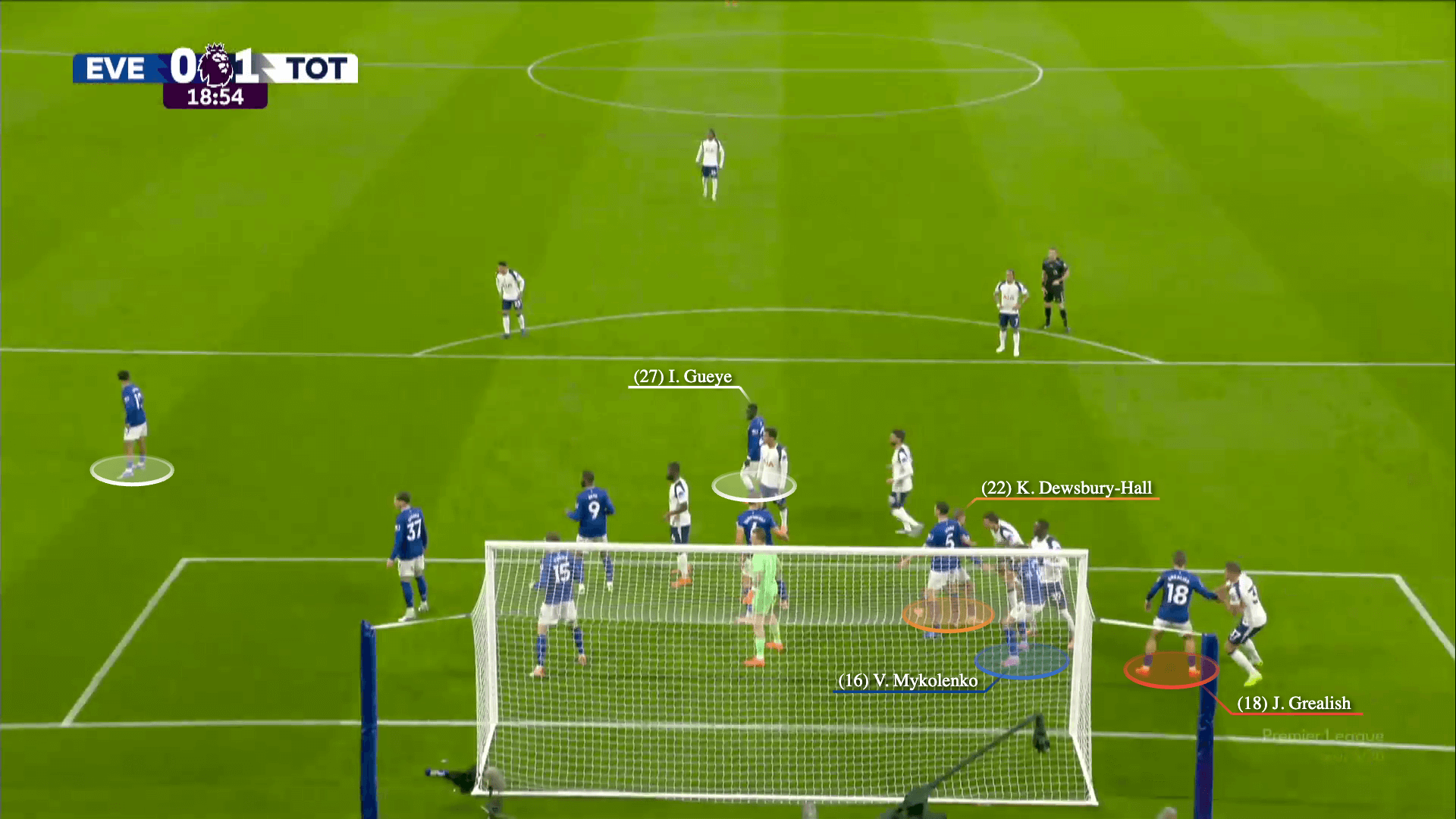
Here, Johnson and Bentancur start from a central position, with Joao Palhinha, Randal Kolo Muani (red) and Van de Ven at the back post.
Before Mohammed Kudus begins his run to deliver the corner, Van de Ven (white) dashes towards the central zone…
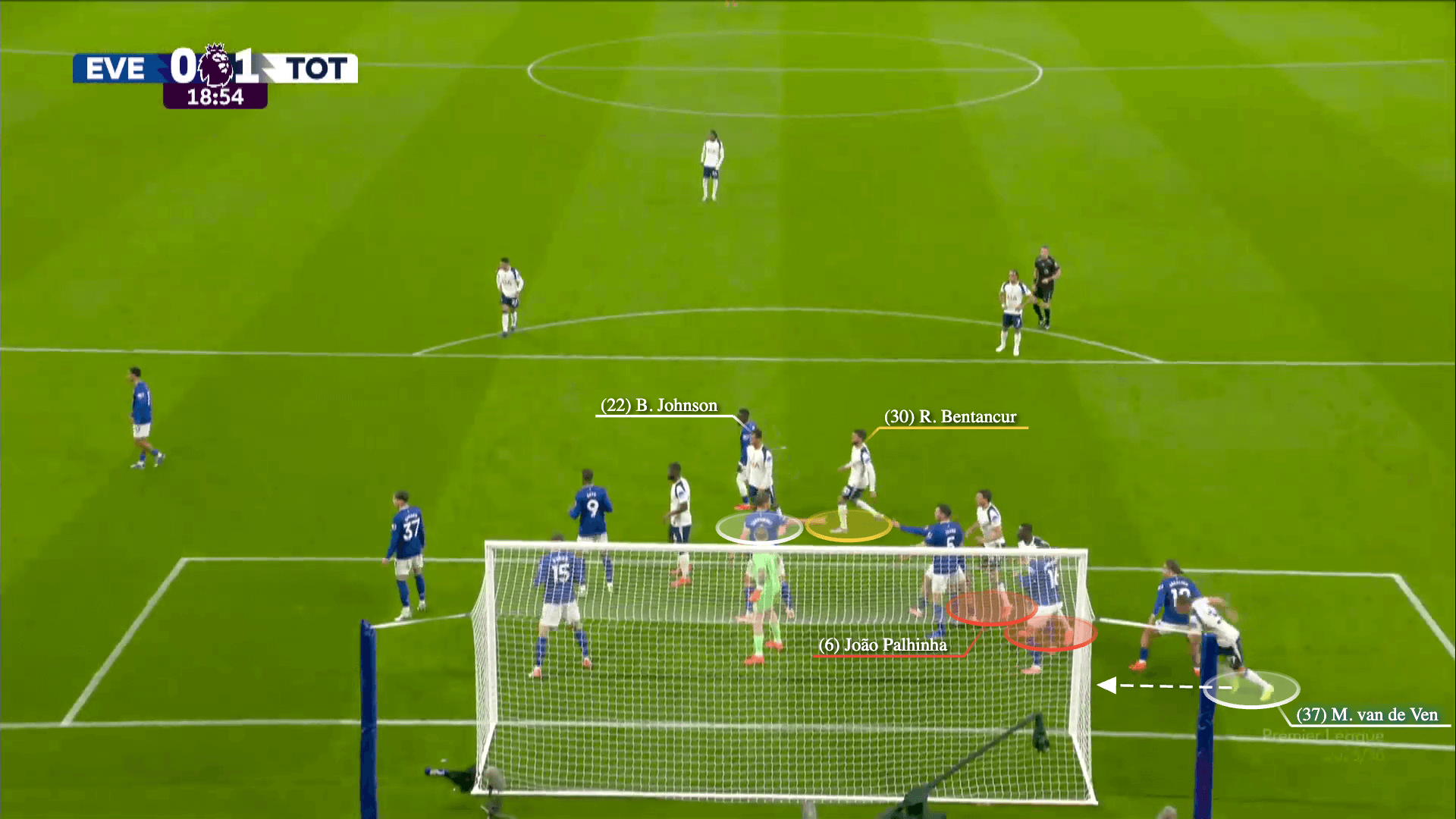
… dragging Grealish with him and vacating the back-post area.
Then, as Kudus is striking the ball, Johnson (white) makes a dummy run towards the near post, and Bentancur (yellow) adjusts his position to be able to attack the back post.
This is helped by Van de Ven (red) disrupting Jordan Pickford, Palhinha blocking Michael Keane and Dewsbury-Hall, and Kolo Muani occupying Vitalii Mykolenko.
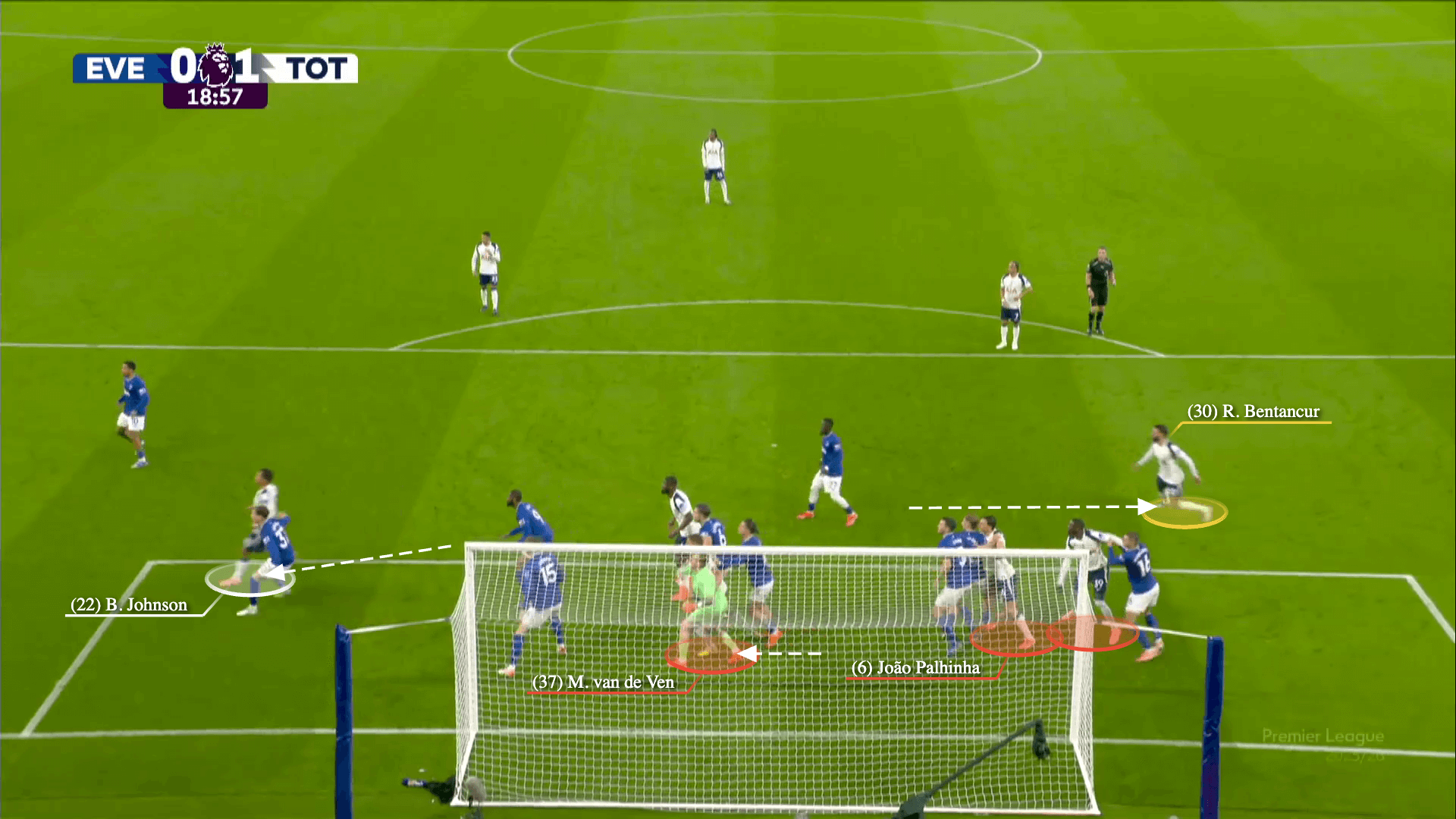
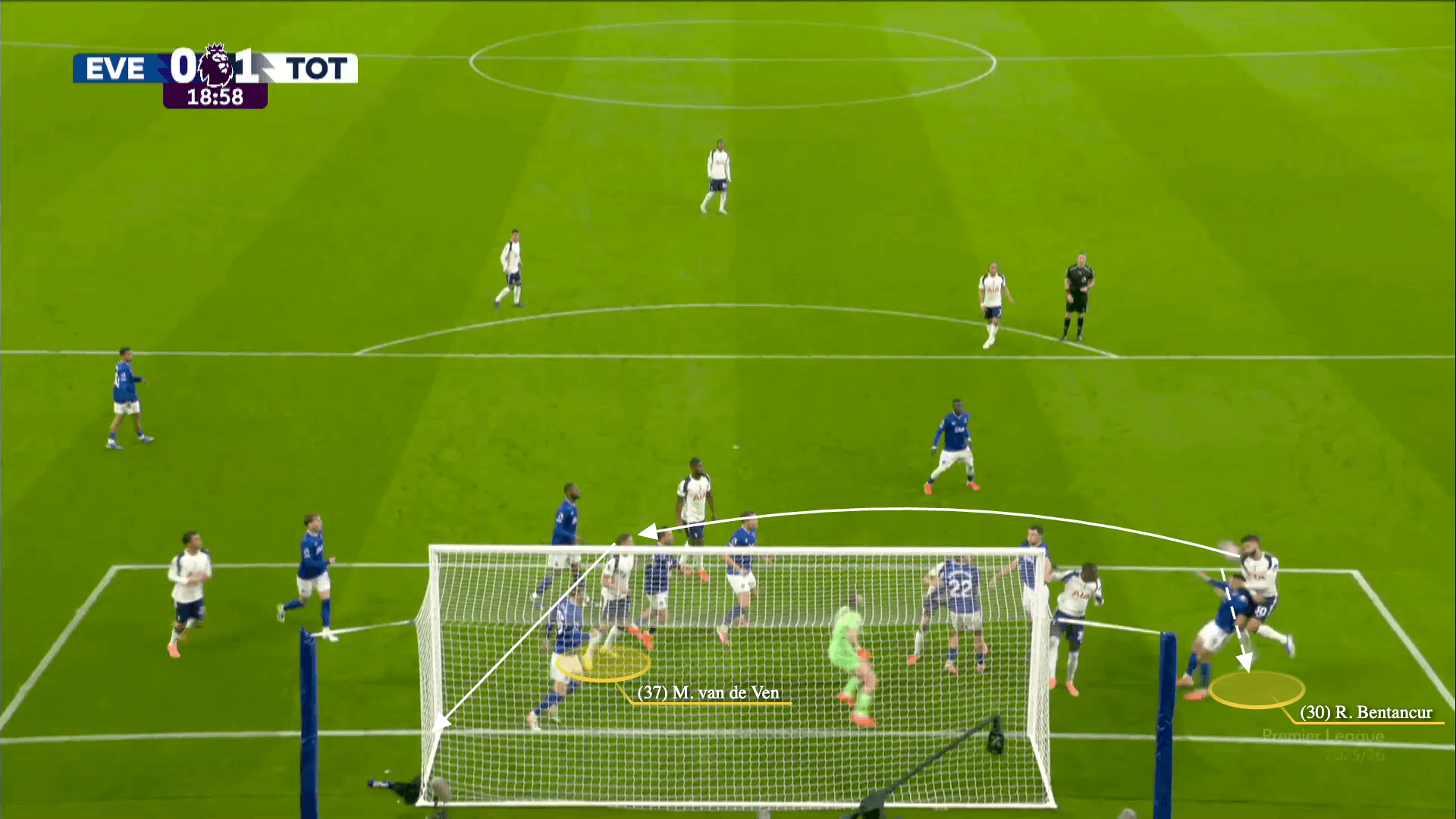
Bentancur then plays the ball across goal with his shoulder to Van de Ven — who is on his third role of this Tottenham corner (framing the goal) — and the Dutch centre-back heads into the net.
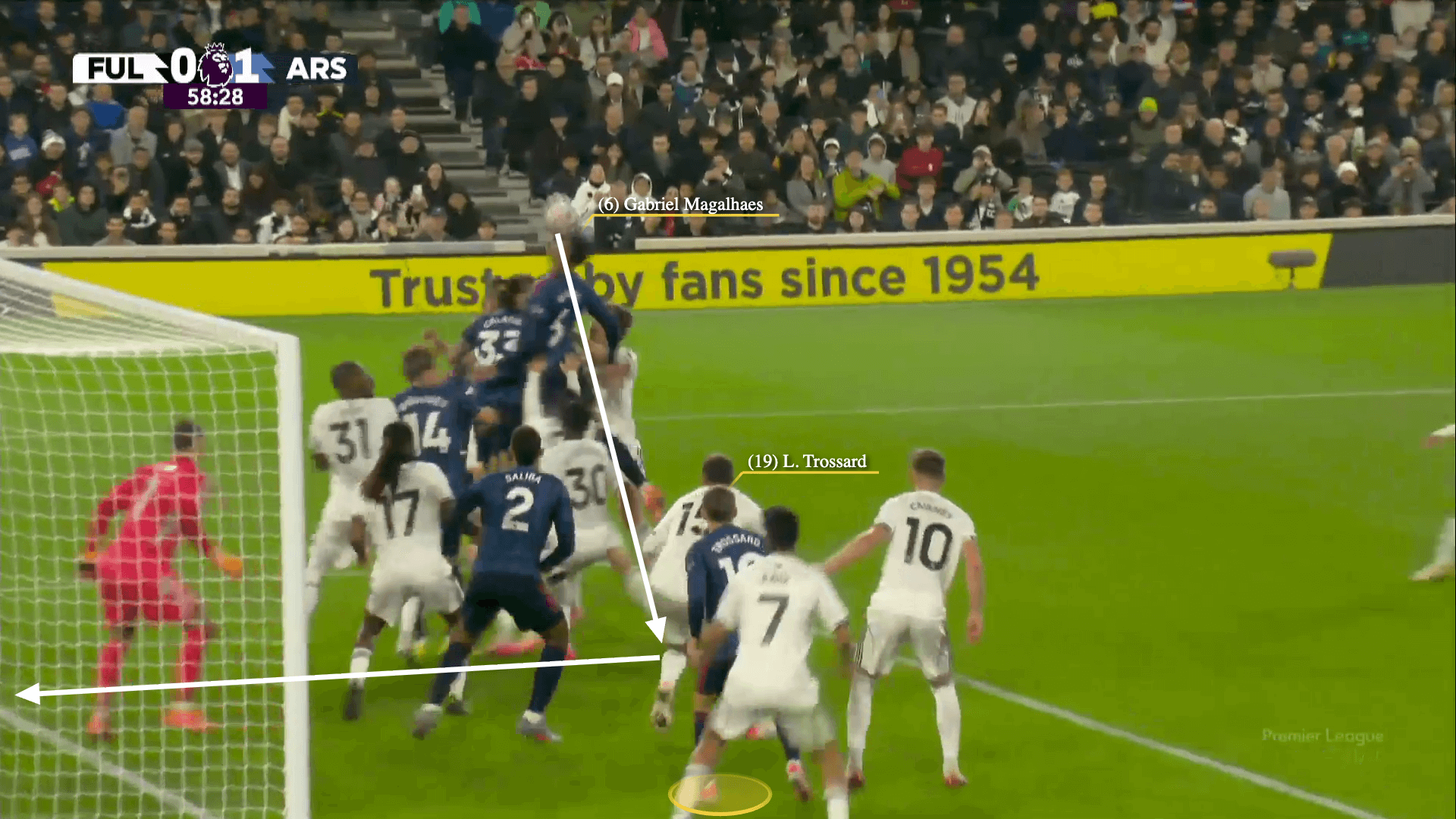
Leandro Trossard vs Fulham (October 18)
Defensive setup: Joshua King (white) defending against the short option or a late run, Ryan Sessegnon man-marking Gabriel, six zonal players in the six-yard area, and Tom Cairney and Wilson (yellow) in hybrid roles that depend on the situation.
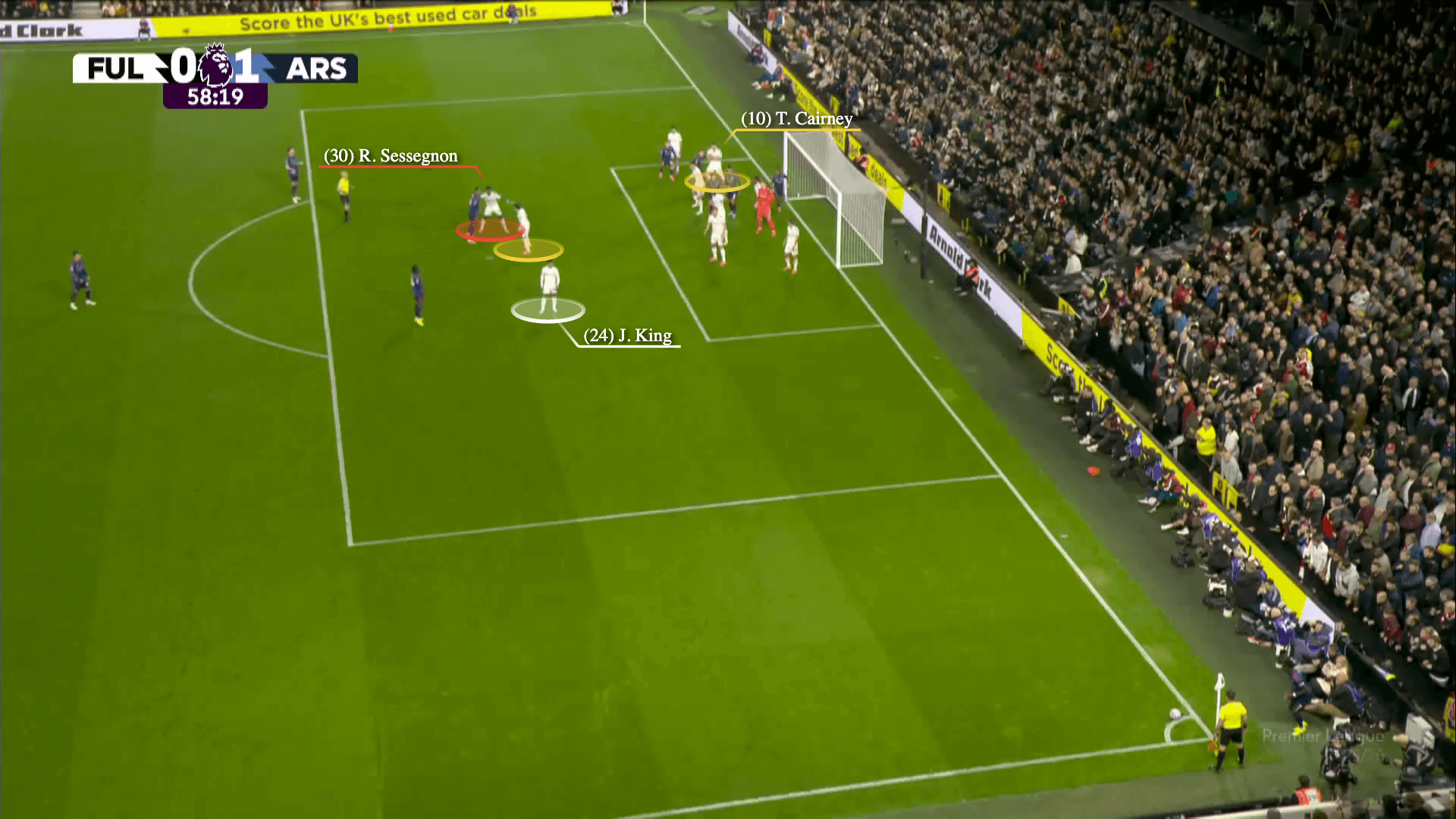
Arsenal’s routine starts with Jurrien Timber (white) moving across goal towards the near post, while Leandro Trossard lingers at the back post.
Fulham’s main focus is rightly on Gabriel.
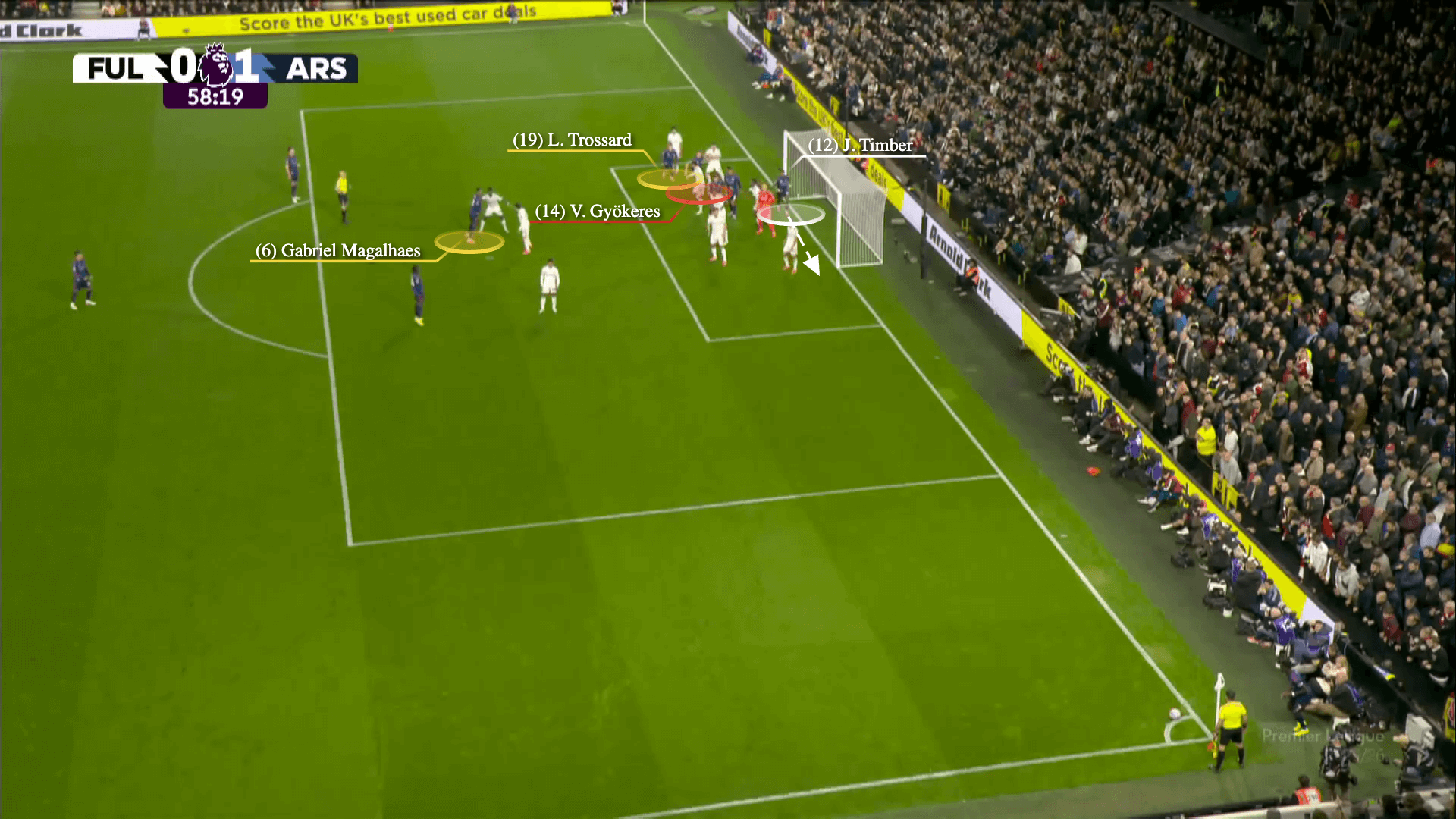
The Brazil international centre-back escapes Wilson and Sessegnon, and Timber (white) occupies Timothy Castagne while Viktor Gyokeres (red) blocks Issa Diop to create space towards the near post for Riccardo Calafiori and Gabriel.
Trossard’s position acts as a safety option to potentially score from the rebound or in case Calafiori or Gabriel only manage to flick the cross on.
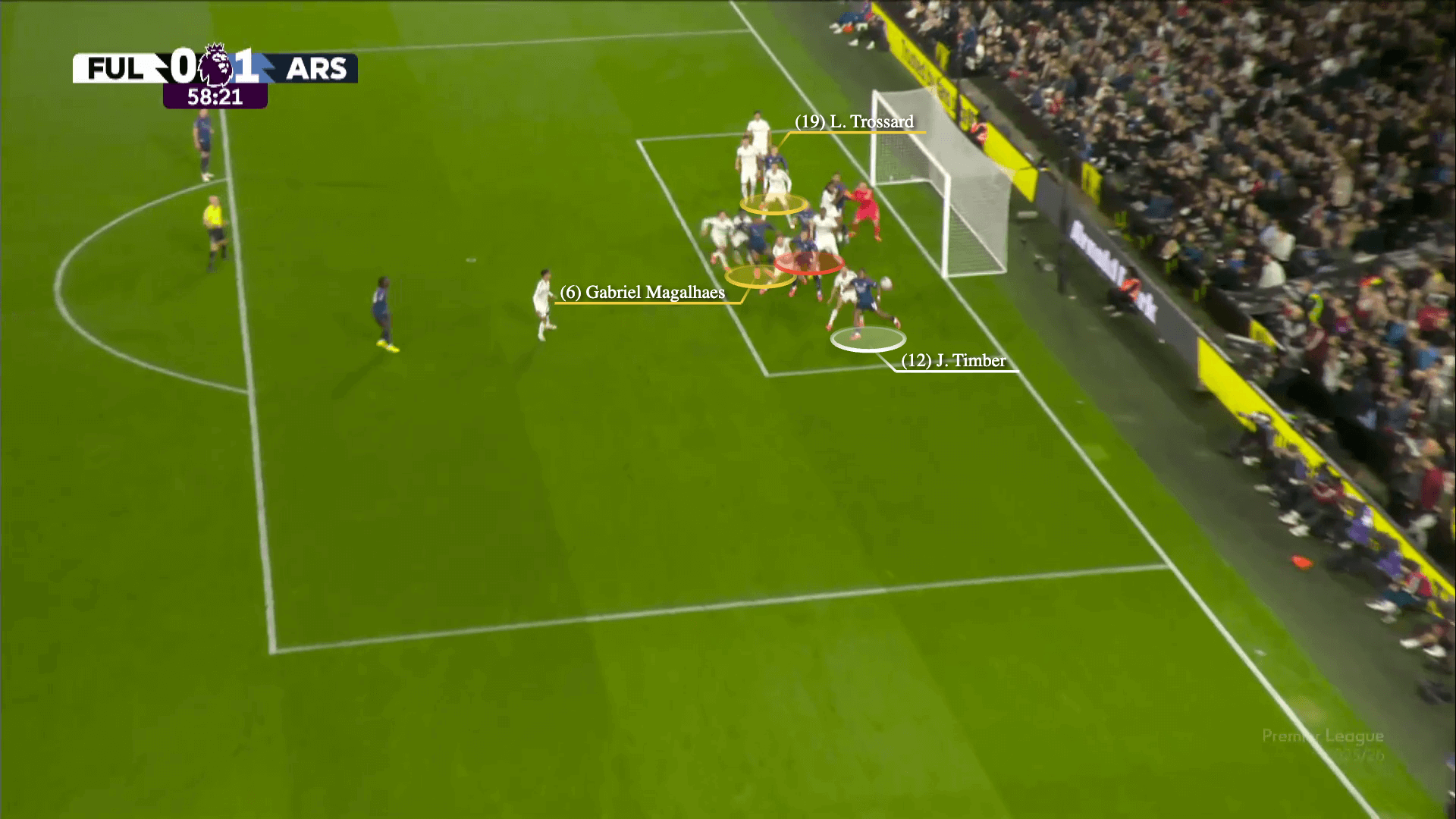
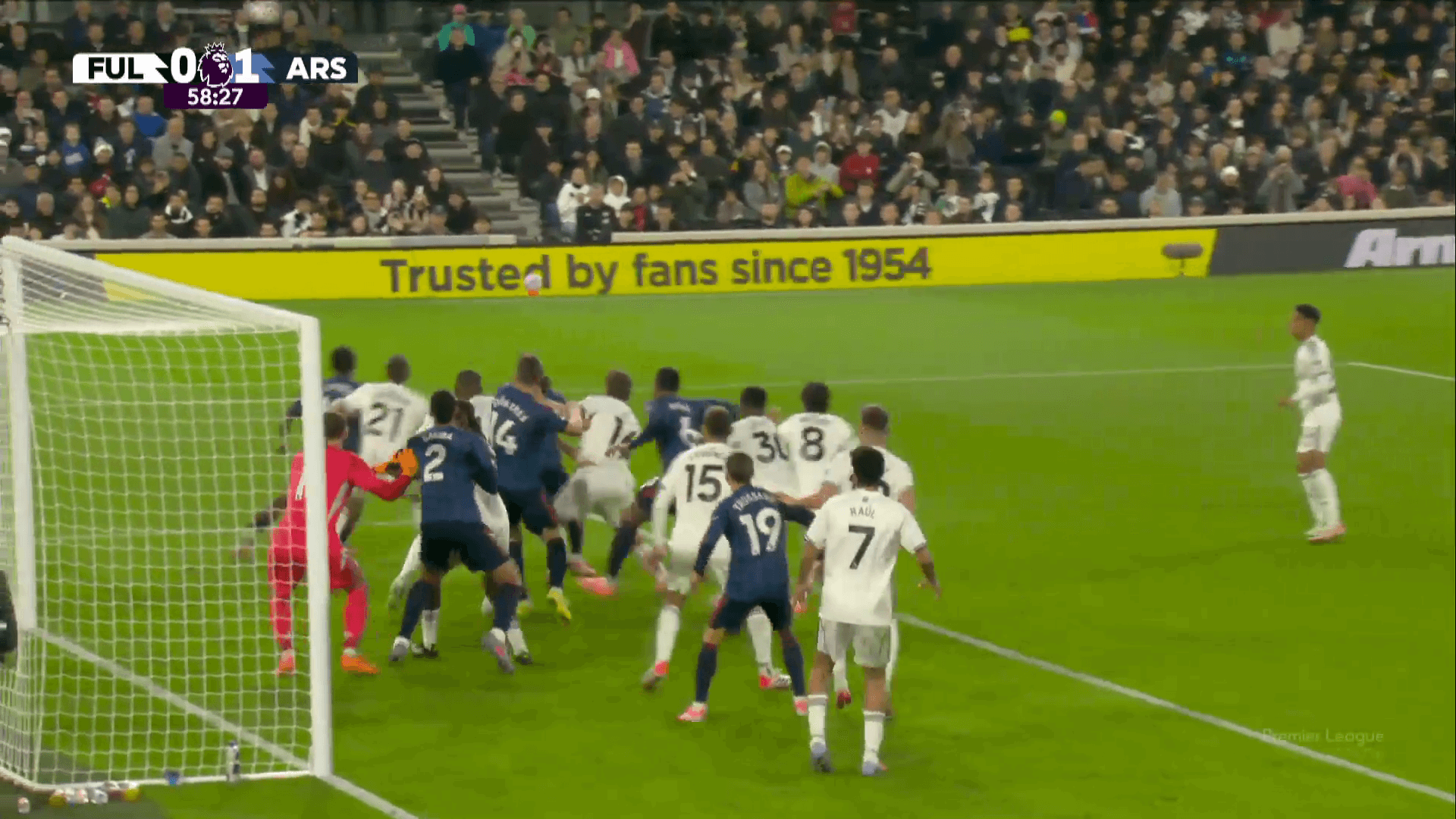
This proves fruitful when Gabriel can’t get his header on target but heads the ball on towards the back post, where Trossard is in position to capitalise.
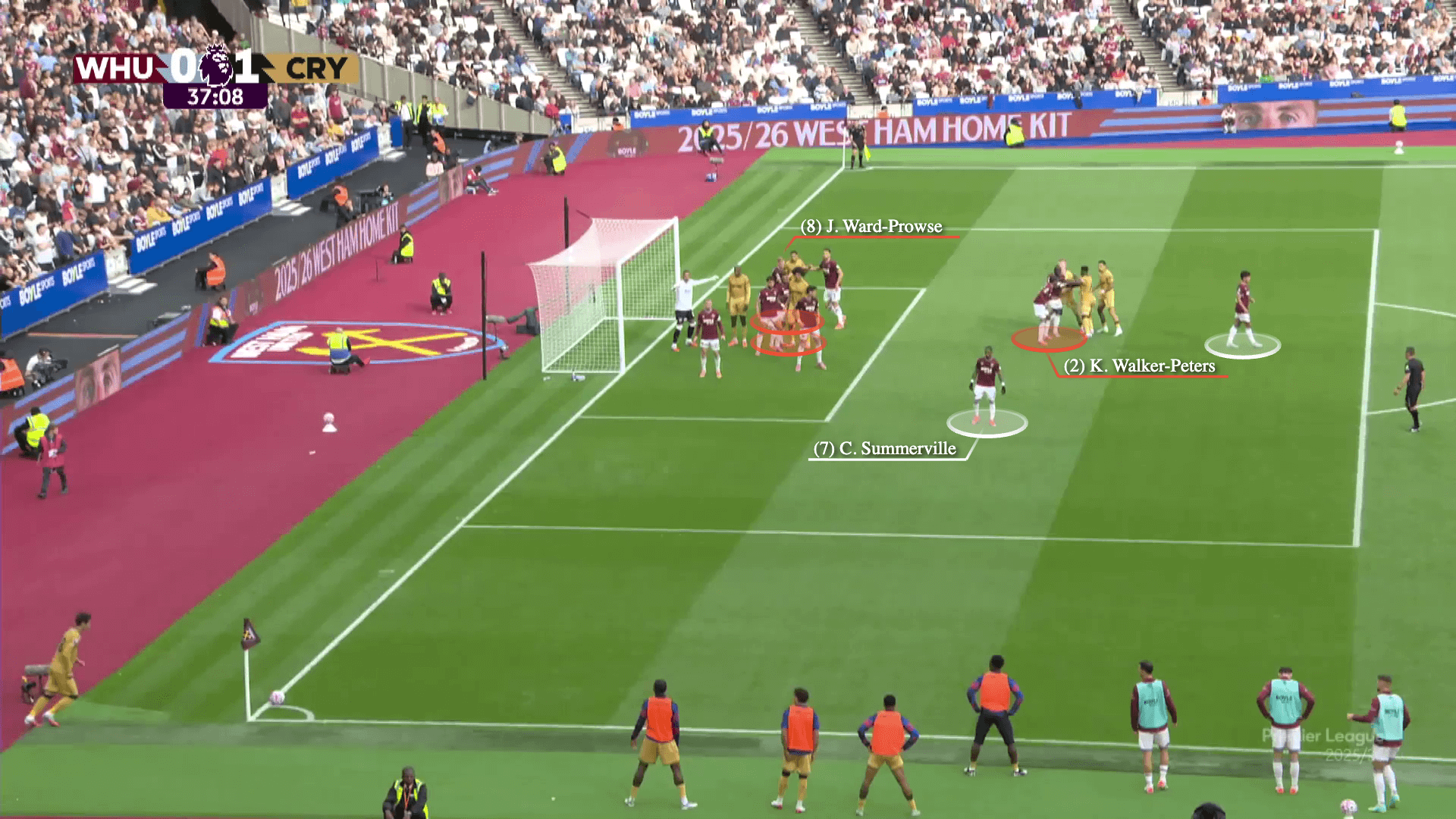
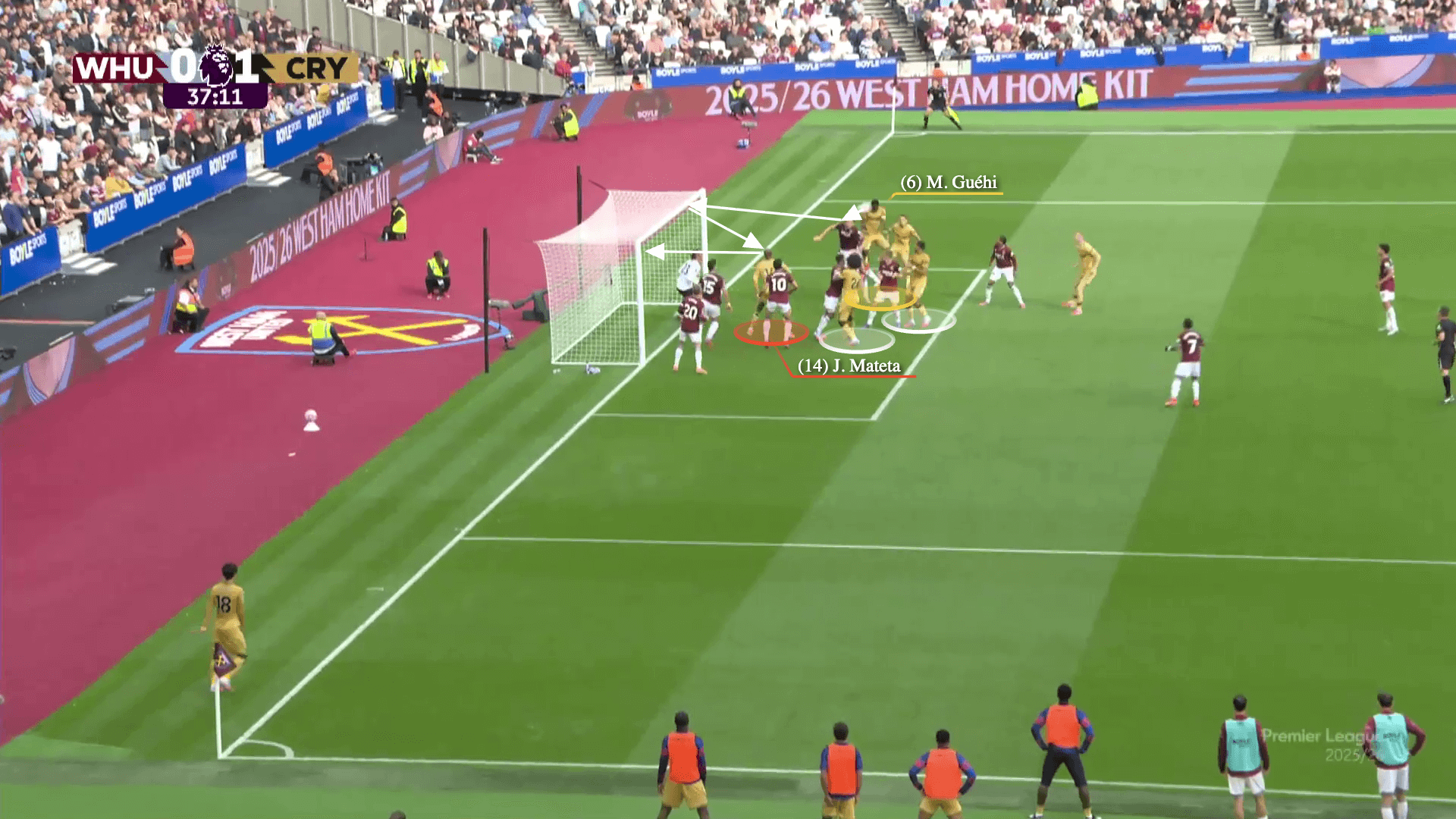
Jean-Philippe Mateta vs West Ham United (September 20)
Defensive setup: Crysencio Summerville and Mateus Fernandes (white) defending the short option and players outside the penalty area, four zonal players inside the six-yard box, and four man-markers (red): Callum Wilson and James Ward-Prowse sticking tight to Chris Richards and Maxence Lacroix, while Kyle Walker-Peters and El Hadji Malick Diouf are keeping an eye on Daniel Munoz and Marc Guehi.
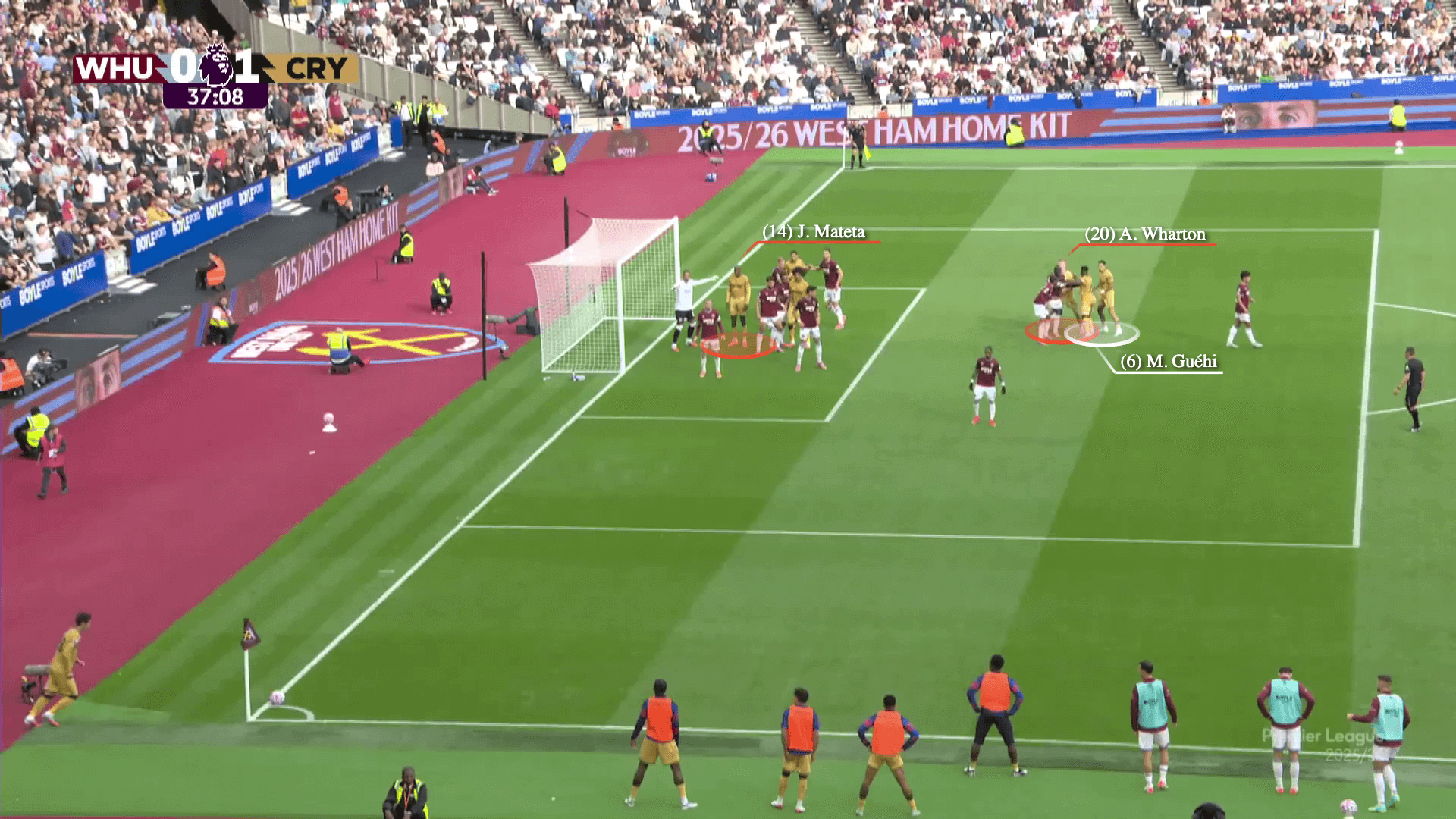
In this example, Crystal Palace are using a blocker outside the six-yard box to enable a centre-back’s run — Adam Wharton’s role (red) in this routine is to create space for Guehi by blocking Diouf.
In terms of the target area, Daichi Kamada is crossing the ball towards the back post, which is left empty by Palace on purpose. Richards and Lacroix (white) are in a central position, and Mateta (red) is preventing goalkeeper Alphonse Areola from defending the cross.
This way, the visitors vacate the back post for Guehi, who can make a free run because Wharton blocks his marker, Diouf.
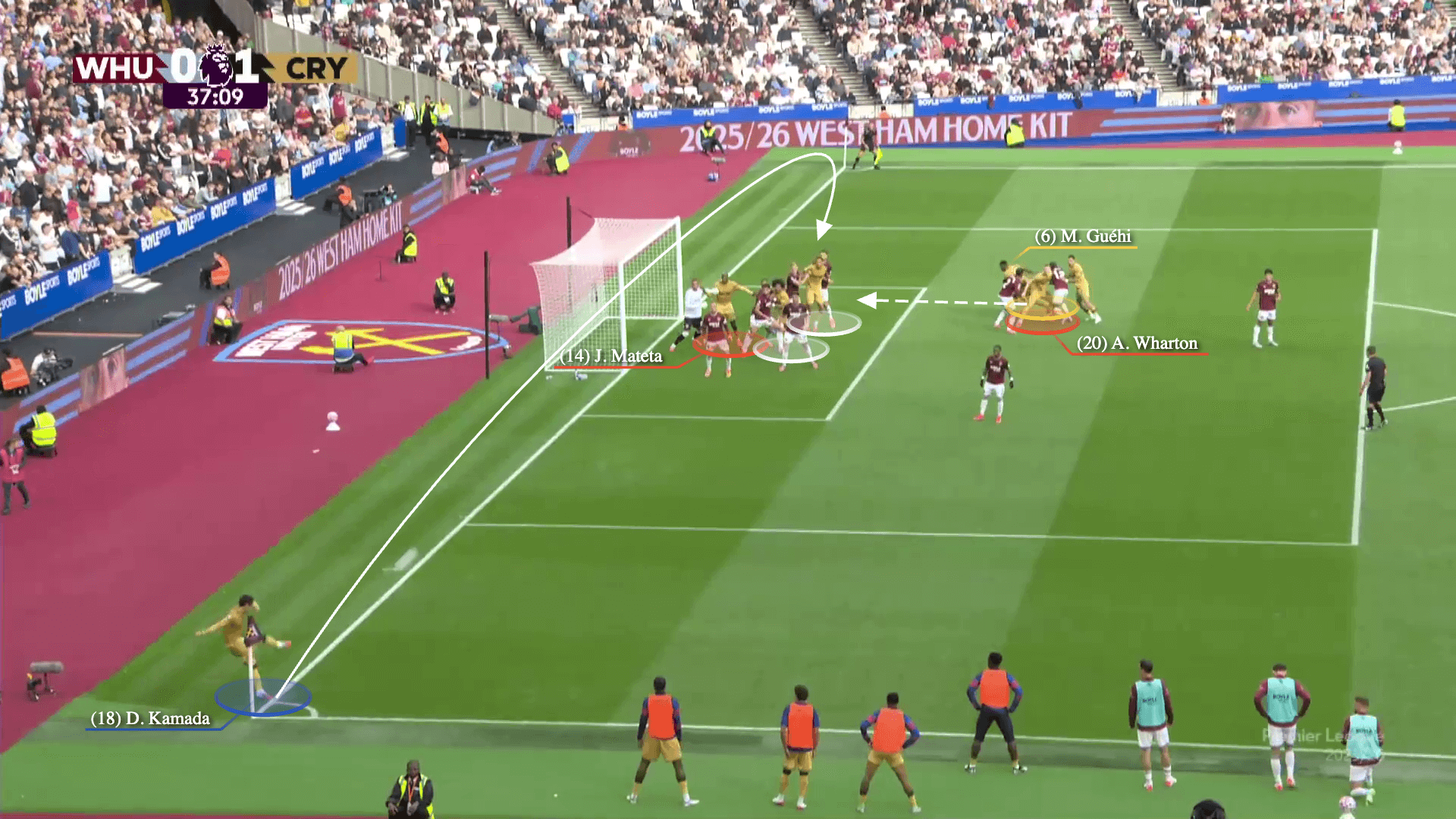
As a result, Palace’s centre-back leaps higher than Maximilian Kilman and his header deflects off the West Ham defender, onto the bar, but Mateta is in position to score from the rebound.
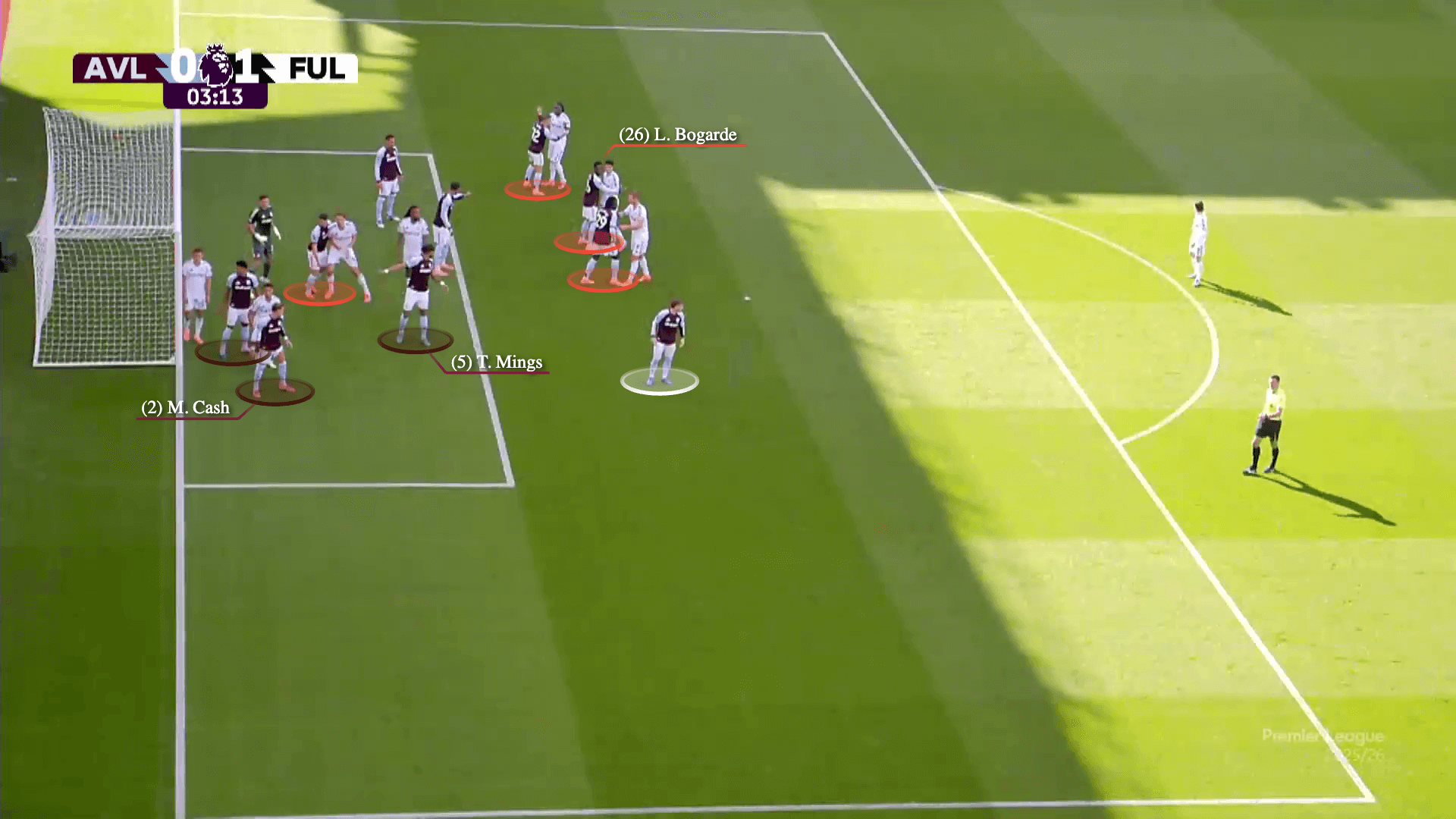
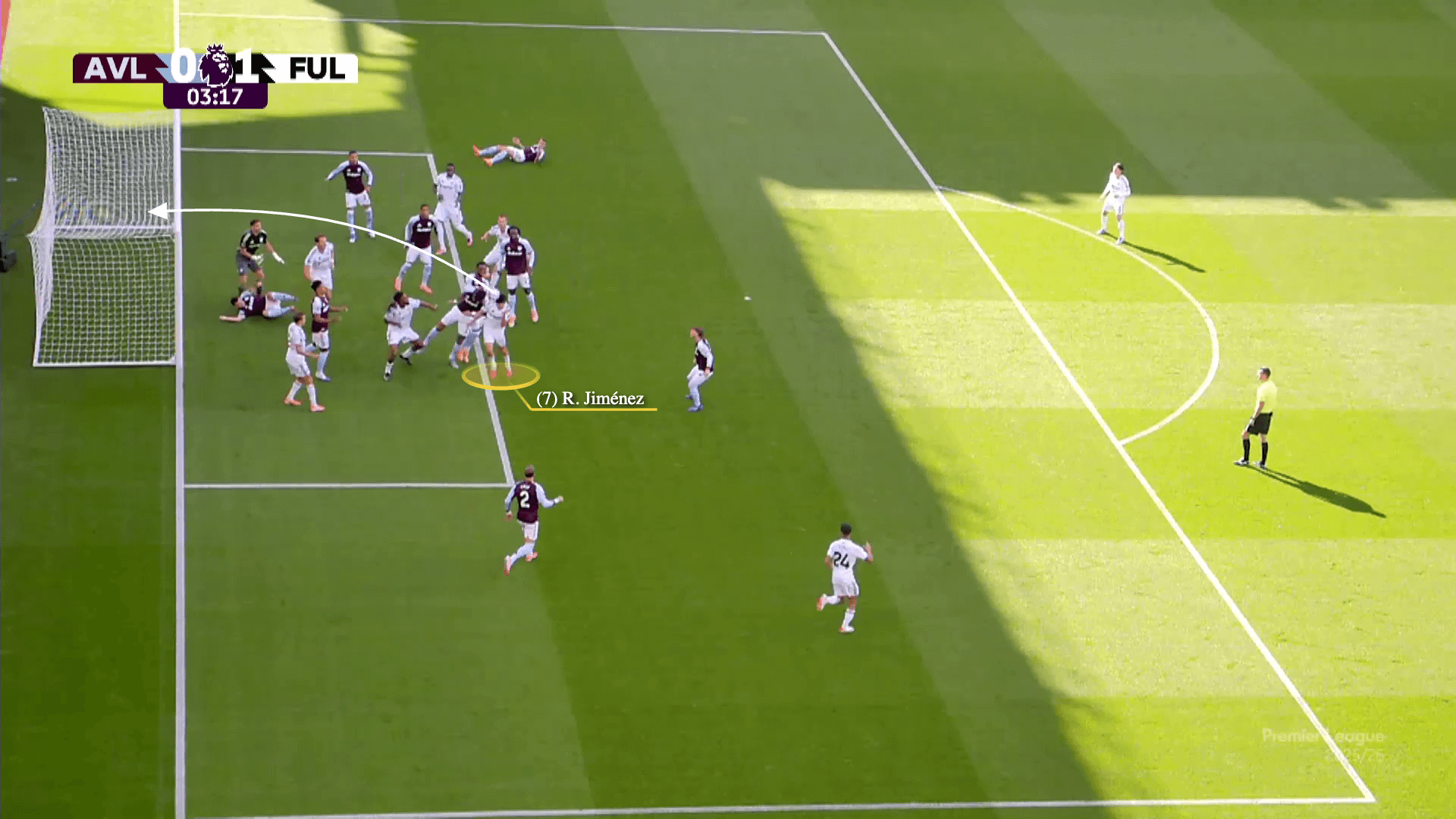
Raul Jimenez vs Aston Villa (September 28)
Defensive setup: Four man-markers (red) tracking Berge, Bassey, Jimenez and Andersen, Elliott (white) defending the players outside the penalty area, and five zonal defenders across the six-yard box, with Watkins, Cash and Mings towards the near post.
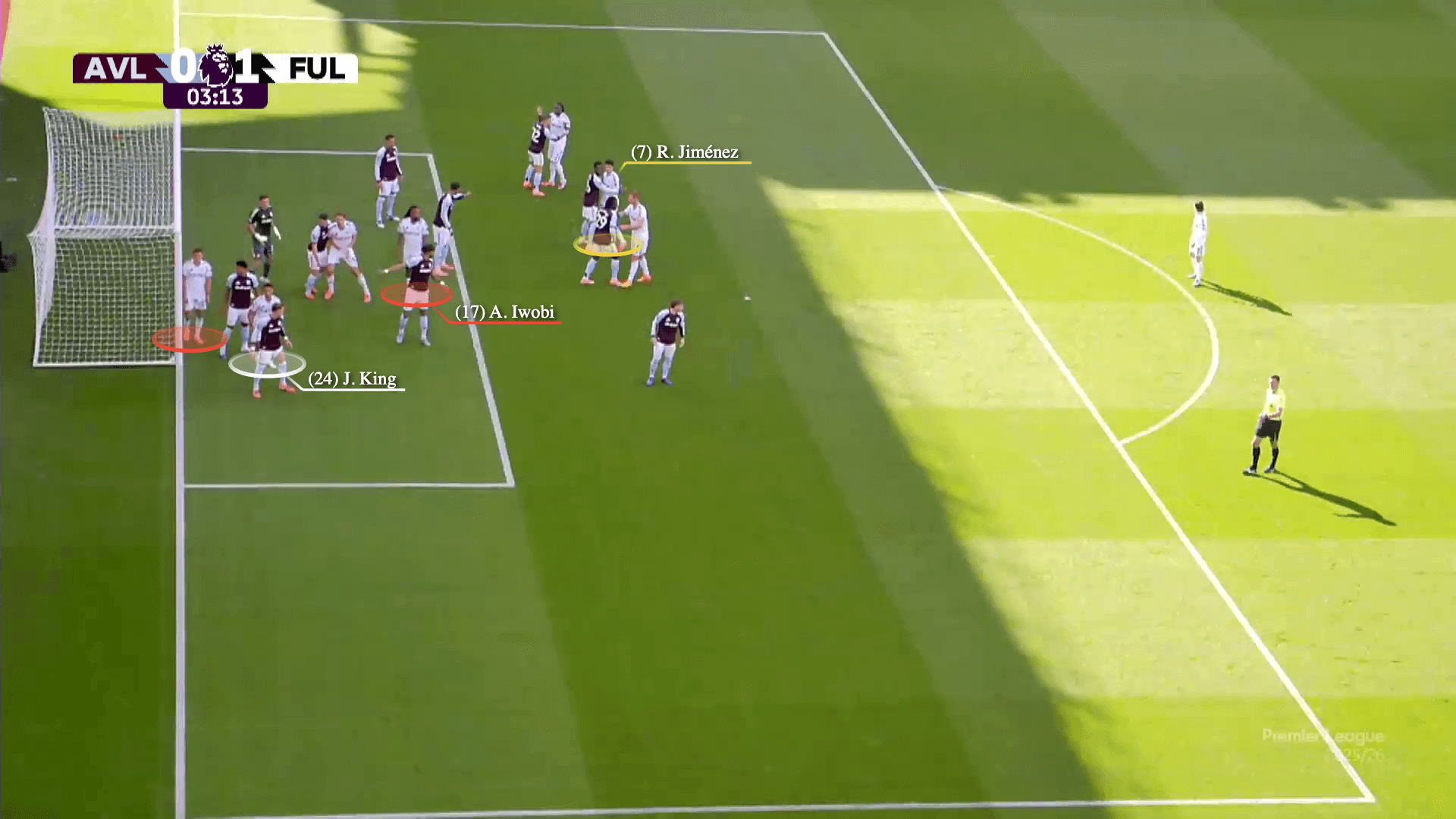
As for Fulham, they have their usual runners in place, Alex Iwobi (red) in a central position, and King (white) towards the near post.
First, King makes a dummy run to move Cash out of position. Then, as Sasa Lukic is taking the corner, Iwobi (red) moves in front of Mings to block the opposition’s most important zonal defender, and Castagne (red) occupies Watkins — by doing this, Fulham take Villa’s three near-post zonal defenders out of action.
The beneficiary is Jimenez, who uses Evann Guessand as a screen to escape from Lamare Bogarde and attack the near post.
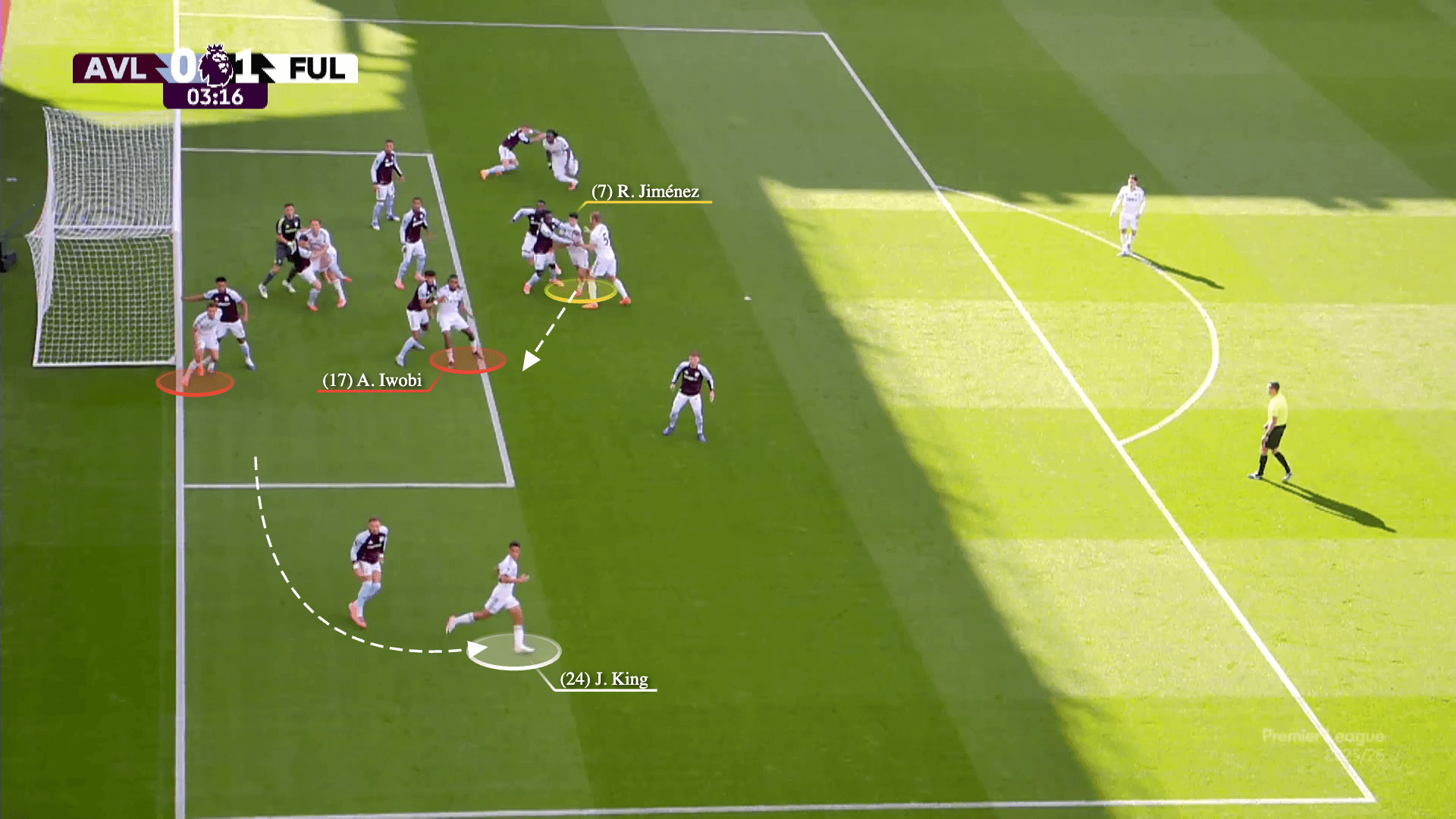
With Mings delayed by Iwobi, Jimenez connects with Lukic’s cross and heads the ball into the far corner.
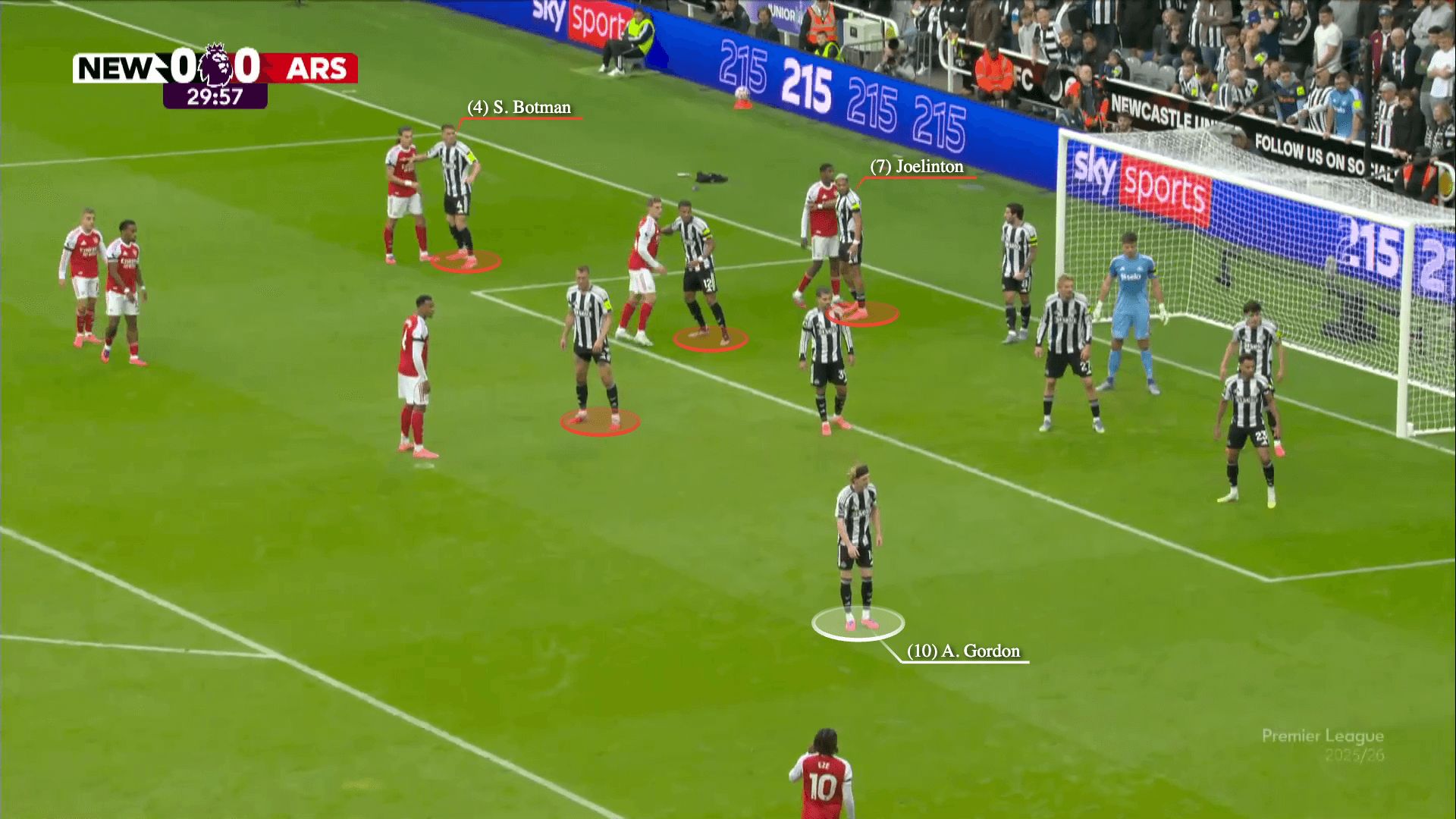
Mikel Merino vs Newcastle United (September 28)
Defensive setup: Before the managers made multiple substitutions, Newcastle had Anthony Gordon (white) defending the short corner, four man-markers (red), and five zonal defenders around the six-yard area: Sandro Tonali at the back post, Nick Woltemade central, Bruno Guimaraes in front of him, and Tino Livramento and Jacob Murphy at the near post.
In the second half, Arsenal ditched their back-post routine and changed their focus towards the near post and short corners. The first one played short caught Newcastle by surprise and manipulated their zonal defenders.
Arsenal played an inswinger and outswinger — because Bukayo Saka had just been substituted — before going short with their 10th corner of the match. Again, it caught Newcastle’s near-post zonal defenders (black) out, and the run from Trossard towards that area proved vital.
In this example, the quick short corner creates a momentary overload when Eberechi Eze finds Martin Odegaard before Guimaraes is in position to defend the Norway midfielder. It also moves Kieran Trippier and Will Osula out of the near-post zone, creating space for Trossard (yellow) to attack.
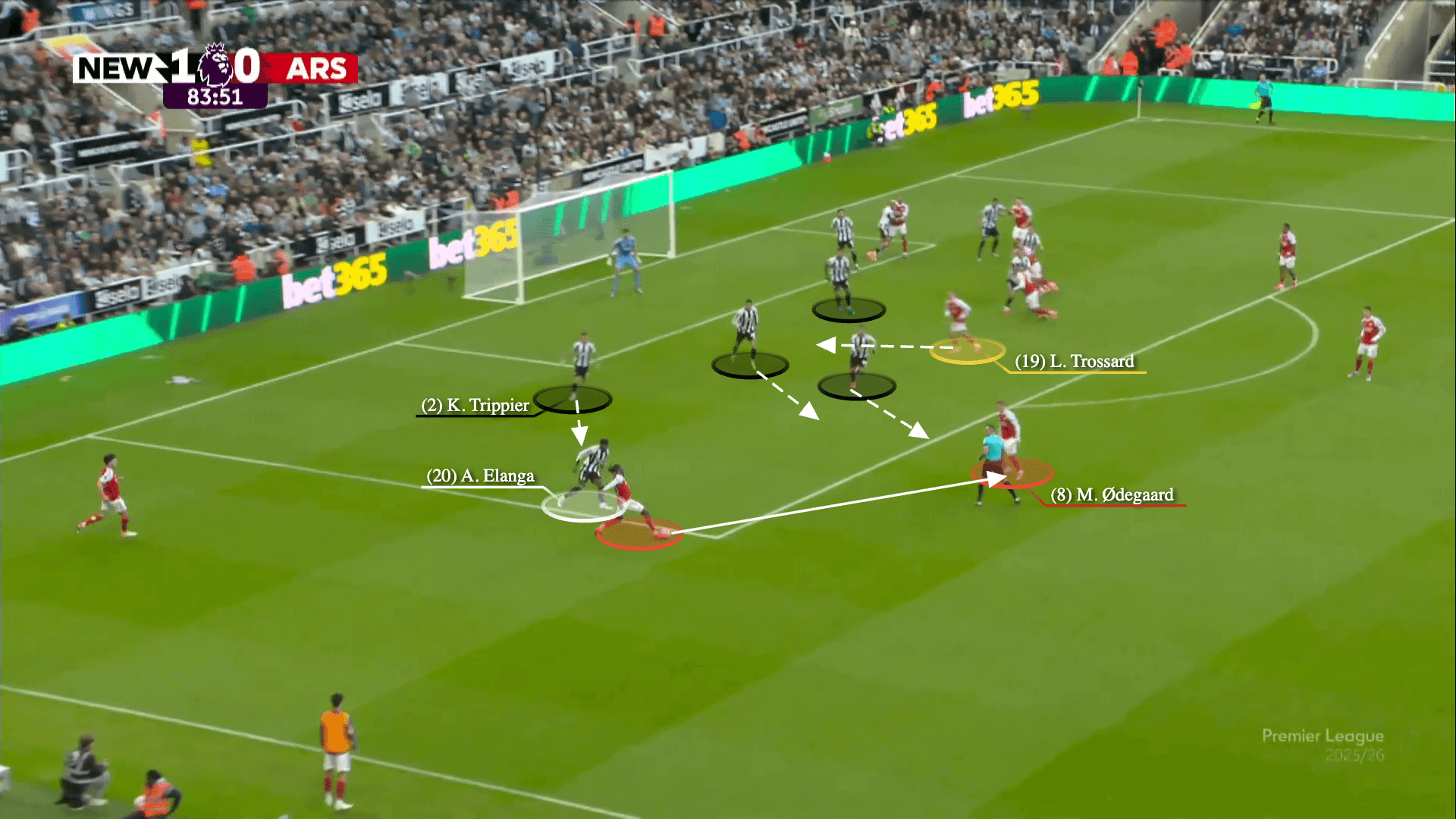
The time Odegaard has on the ball is complemented by Eze’s movement, which pins Trippier and Anthony Elanga and allows Arsenal’s captain to find the free Declan Rice.
Meanwhile, three of Newcastle’s four zonal defenders (black) around the near post and central area are dragged out of position, and Jamaal Lascelles is marking Trossard.
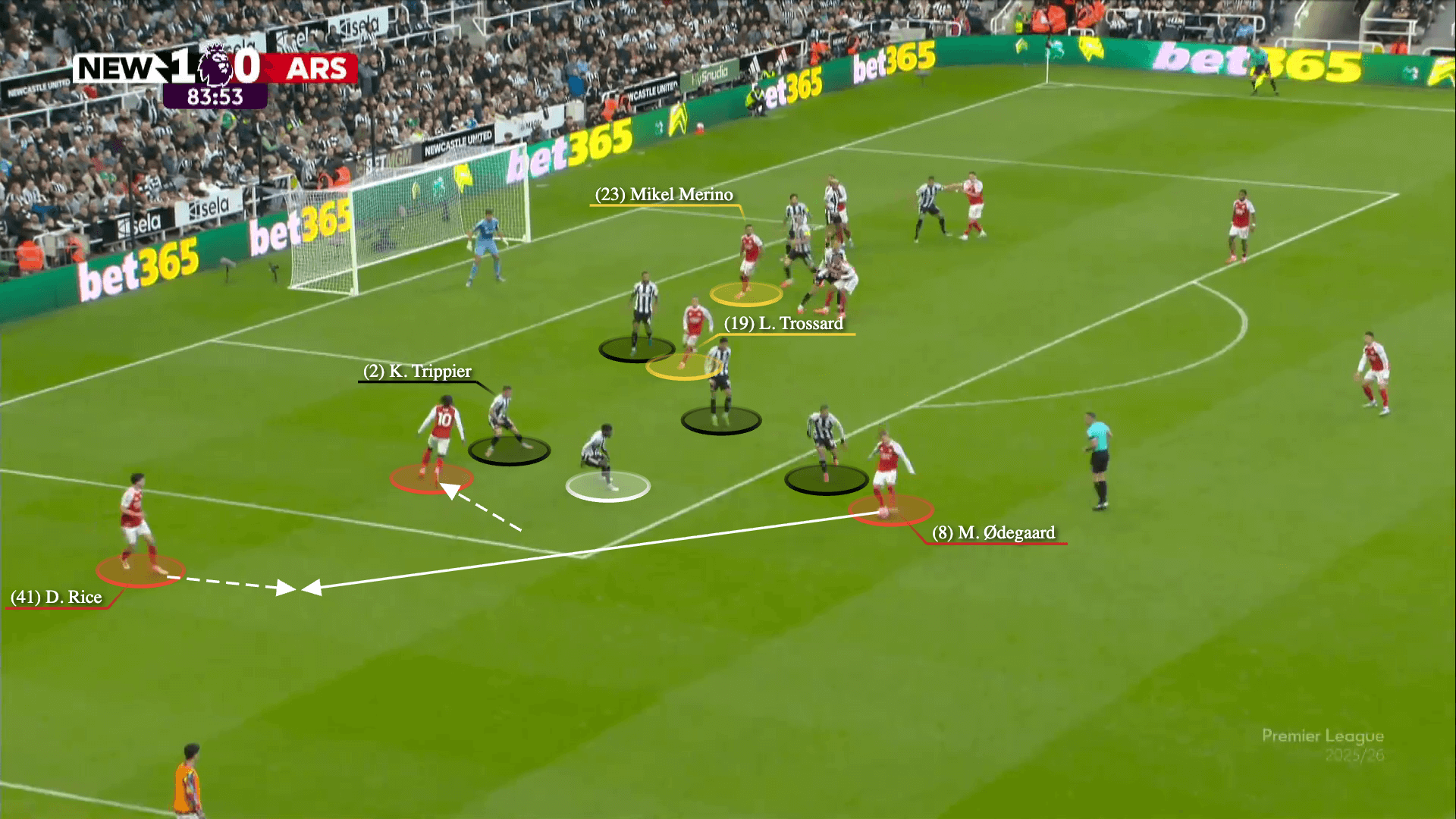
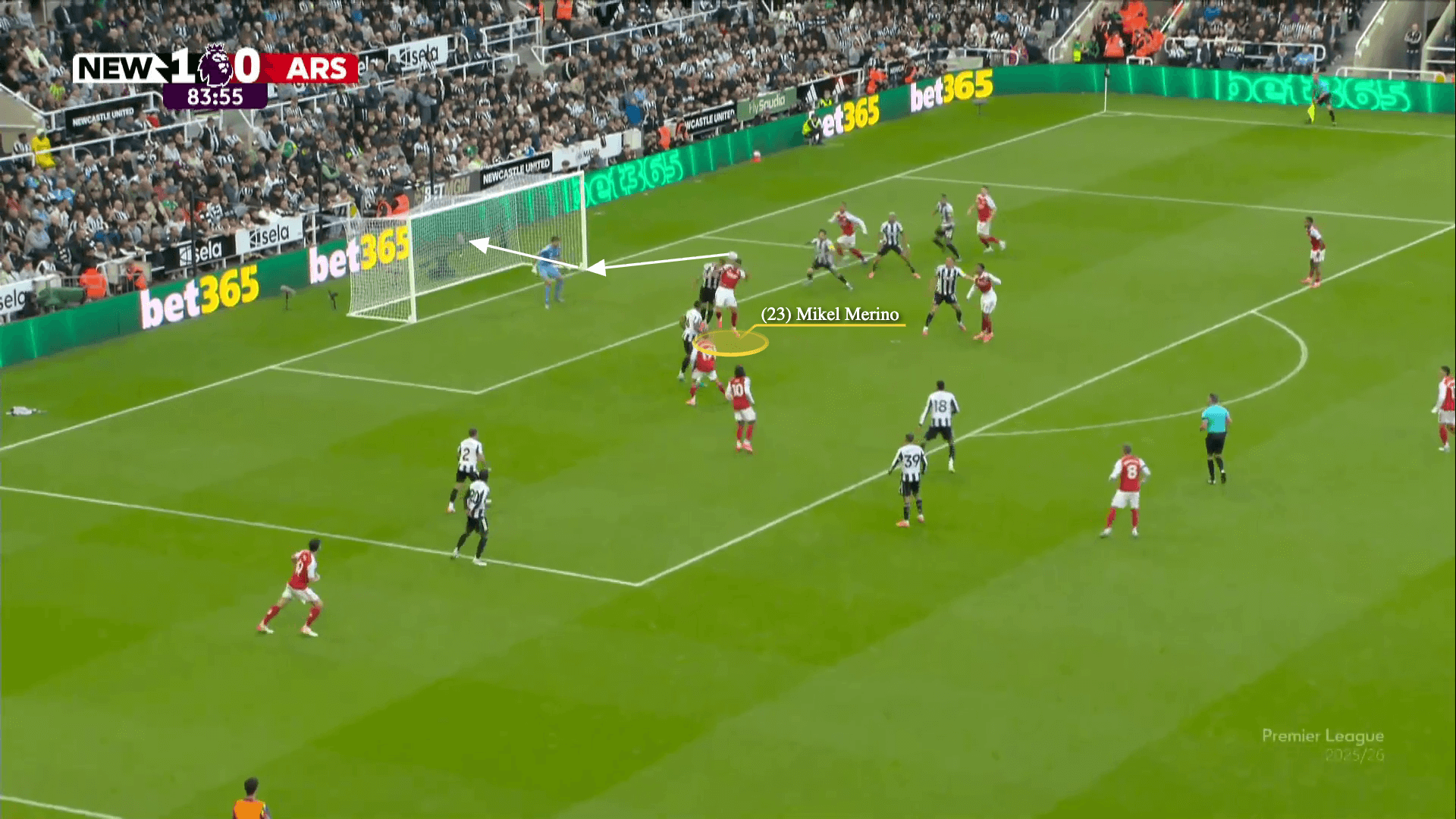
This occupation of Lascelles isolates Merino against Sven Botman, and now that Rice can deliver the cross under no pressure, Arsenal can create a favourable one-vs-one situation…
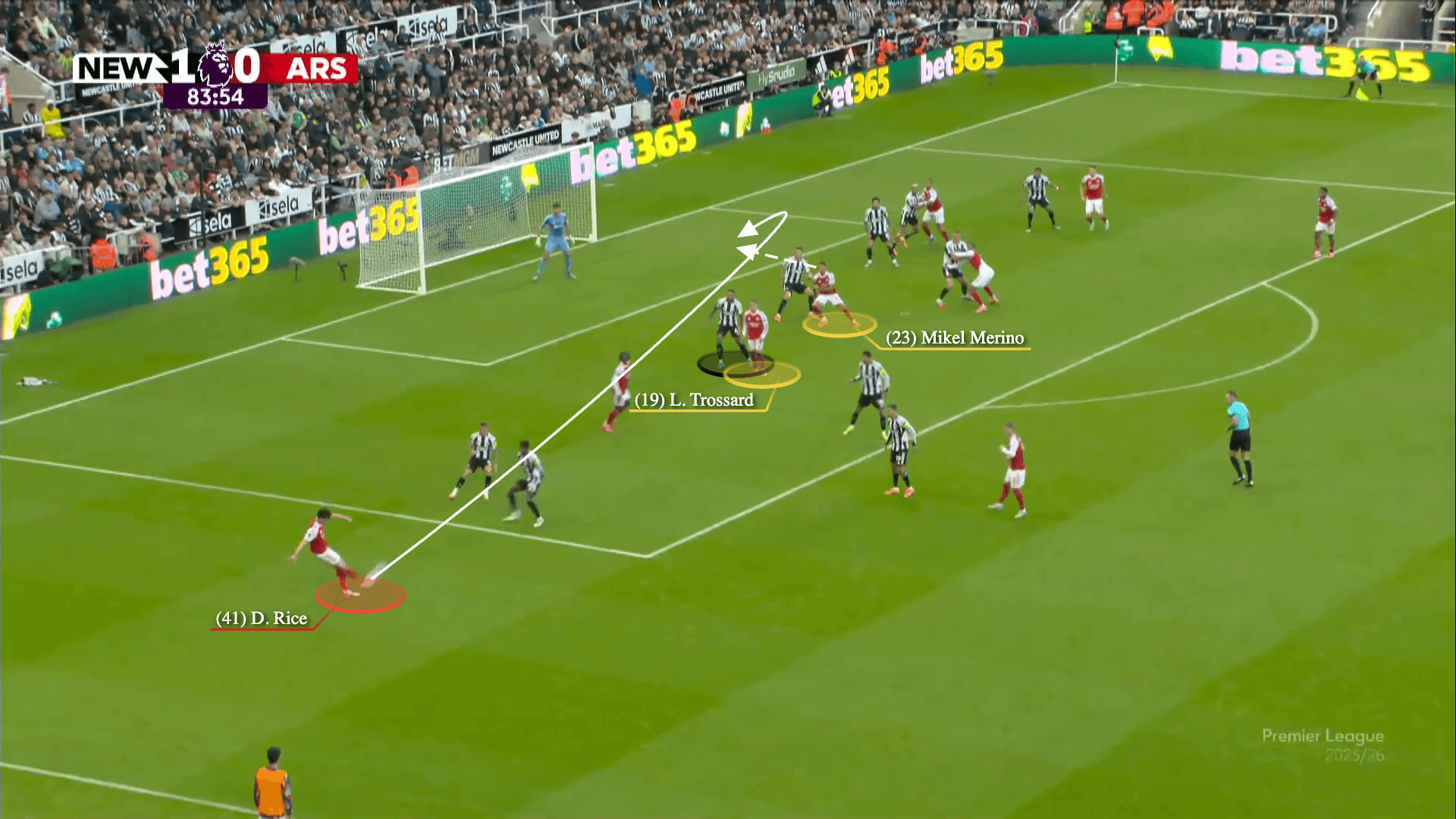
… and the Spain midfielder’s clever header finishes the move.
Bryan Mbeumo vs Tottenham (February 7)
Defensive setup: Five zonal defenders inside the six-yard area. Archie Gray is marking Casemiro, Van de Ven and Conor Gallagher are in hybrid roles depending on the space Harry Maguire attacks, and Xavi Simons is there to watch for the short corner.
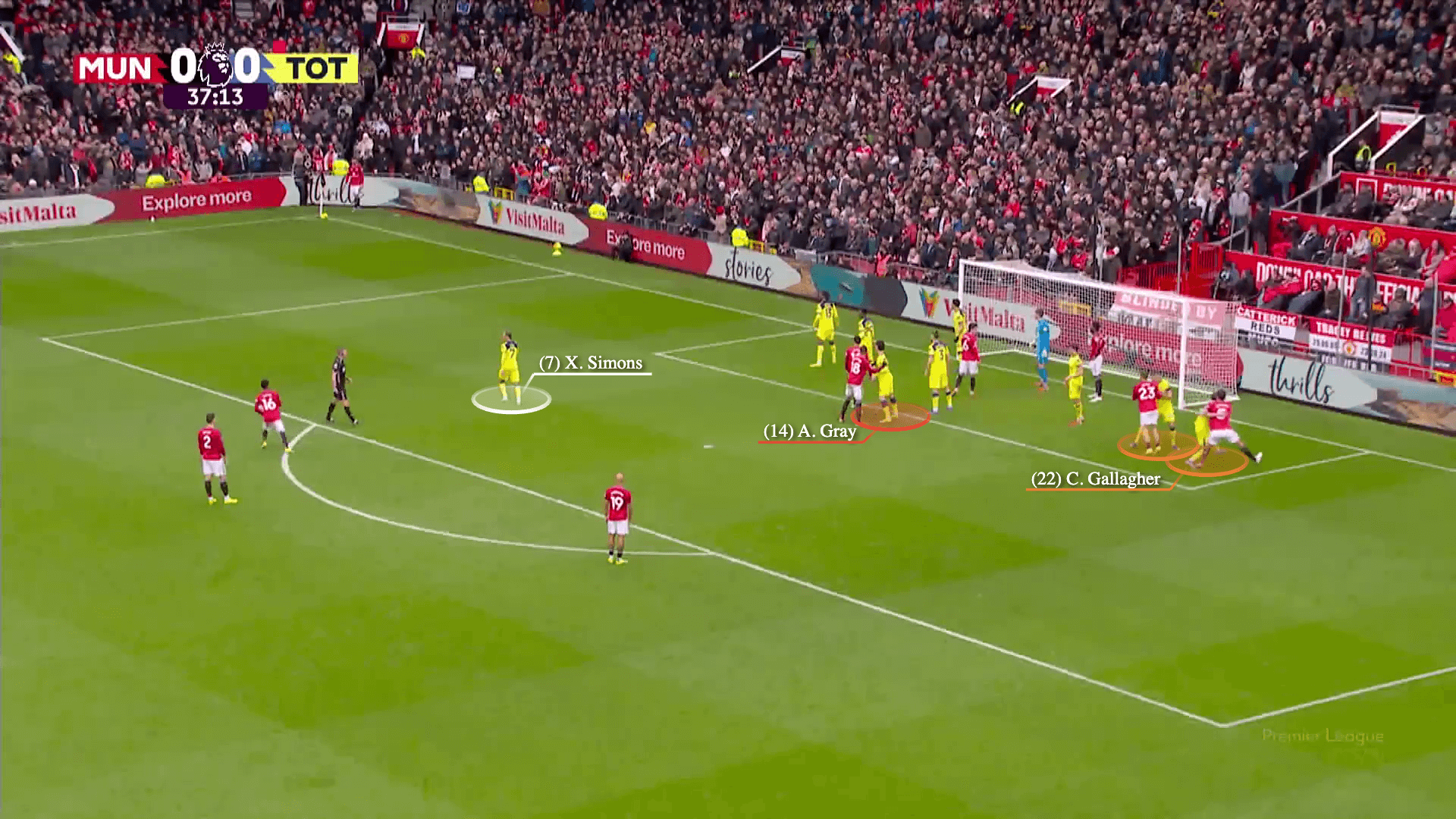
Initially, Maguire’s movement and the positioning of Kobbie Mainoo and Shaw (red) hint that United are going to attack the back post. Shaw is the team’s main blocker, and Mainoo is in position to block Vicario — a method United had successfully used to score their late equaliser through De Ligt in the reverse fixture.
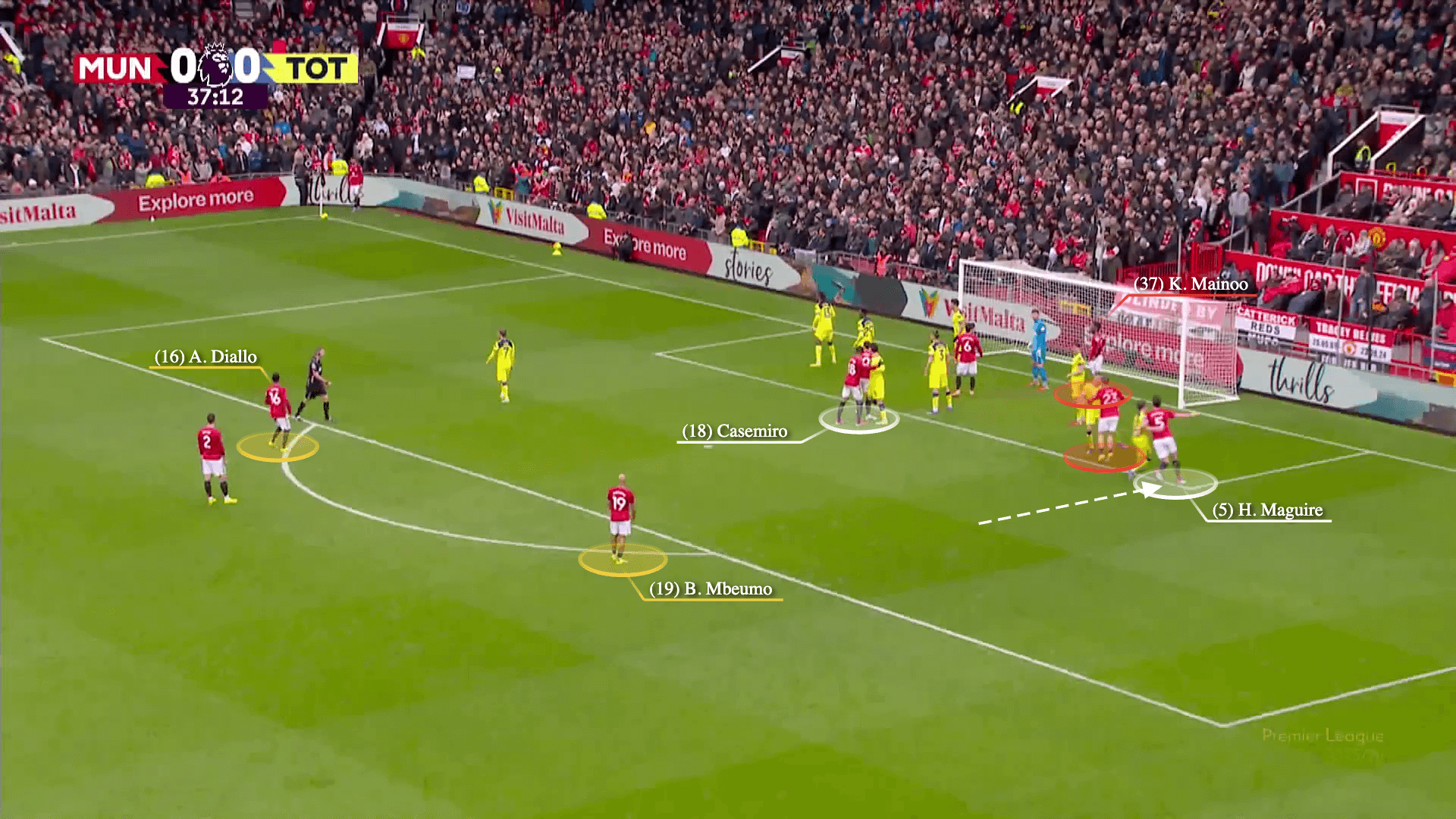
Amad makes a run to provide the short option, but to the surprise of Tottenham’s players, it’s Mainoo who sneaks past the near-post defenders to connect with Fernandes’ pass.
That dummy movement by Amad has another purpose as well. By moving Simons, the passing lane to Mbeumo is open and the Cameroon forward has a bigger space to attack, which is helped by Matheus Cunha, Casemiro and Maguire (white) maintaining their positions to pin their nearest markers.
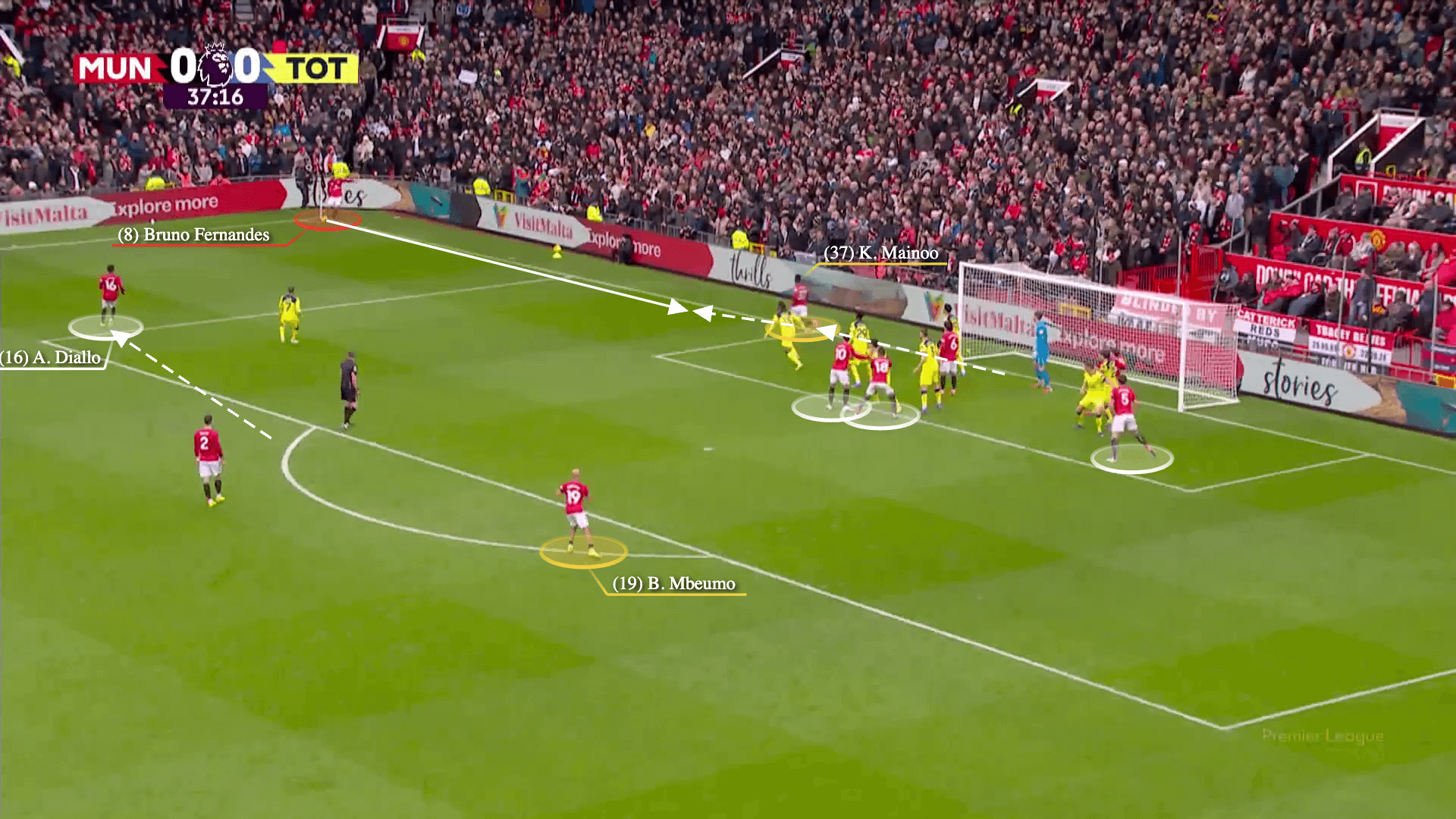
Accordingly, Mainoo finds Mbeumo’s run into the penalty area…
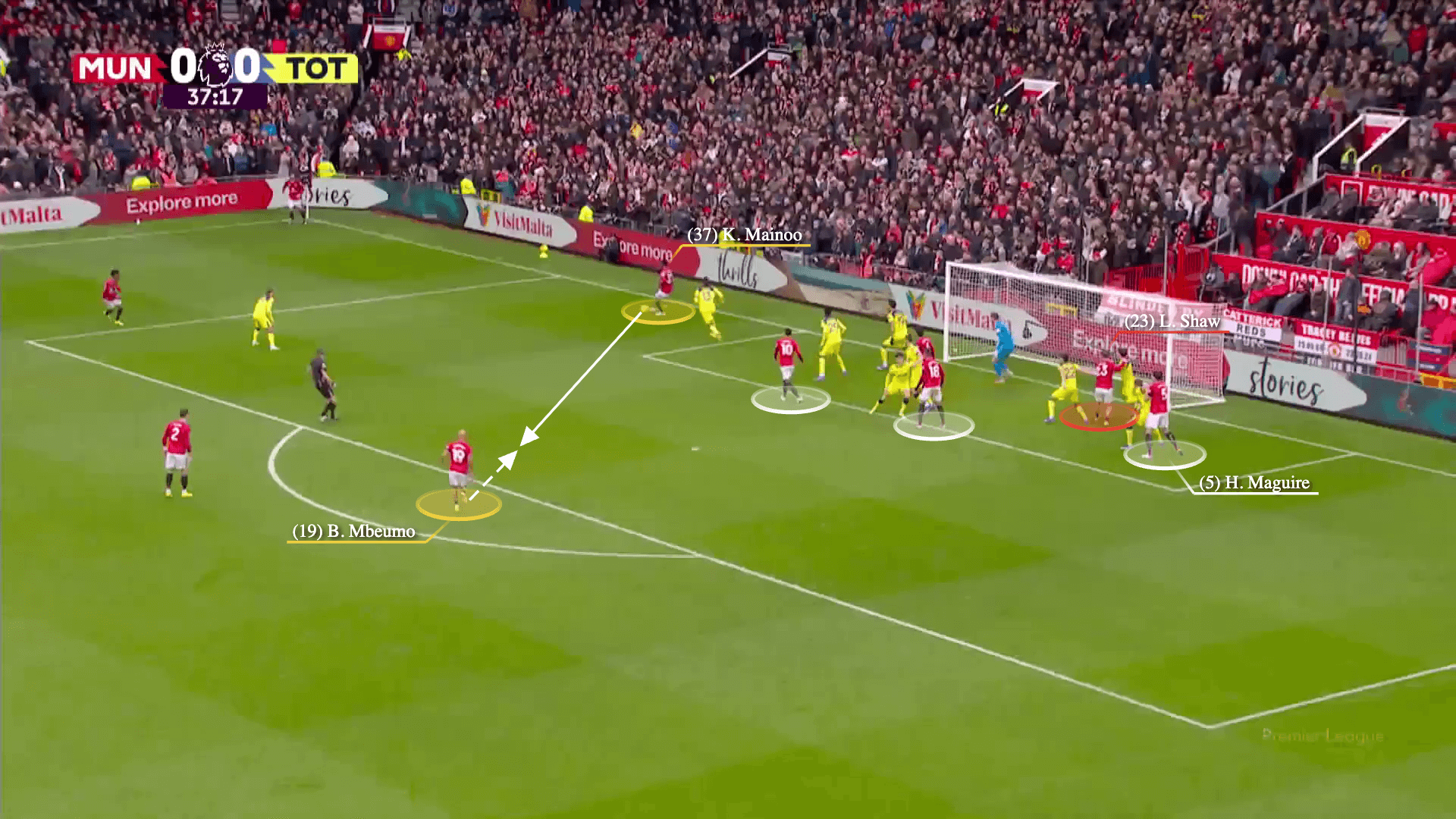
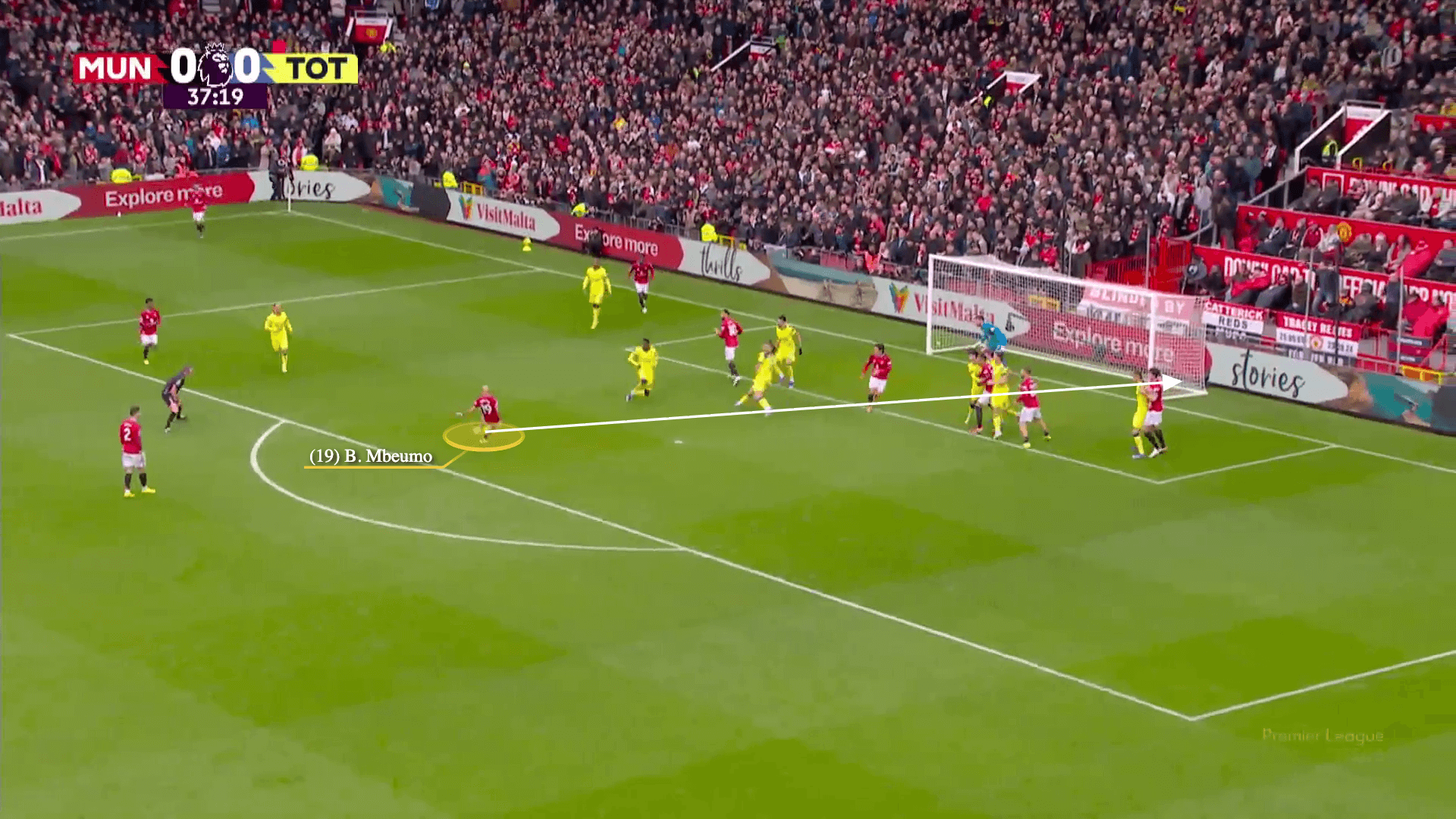
… and he slots the ball into the bottom corner.
Mikkel Damsgaard vs Burnley (February 28)
Defensive setup: Josh Laurent and Ward-Prowse (red) man-marking Igor Thiago and Sepp van den Berg, six zonal defenders inside the six-yard area, Jacob Bruun Larsen defending the short corner, and Hannibal Mejbri near the penalty spot.
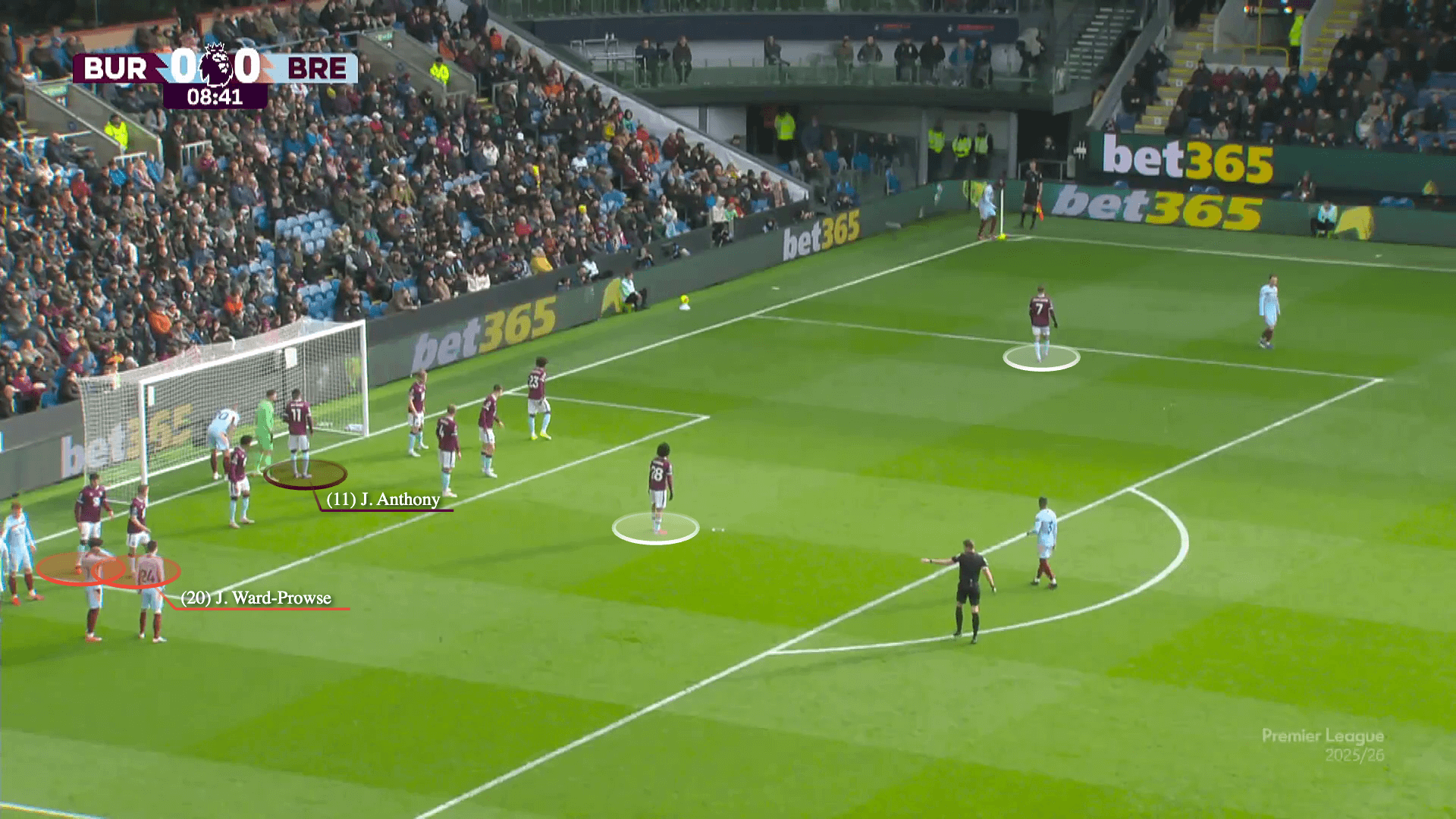
Brentford’s players start from the back post, with Kristoffer Ajer (red) trying to prevent goalkeeper Martin Dubravka from dealing with the in-swinging cross.
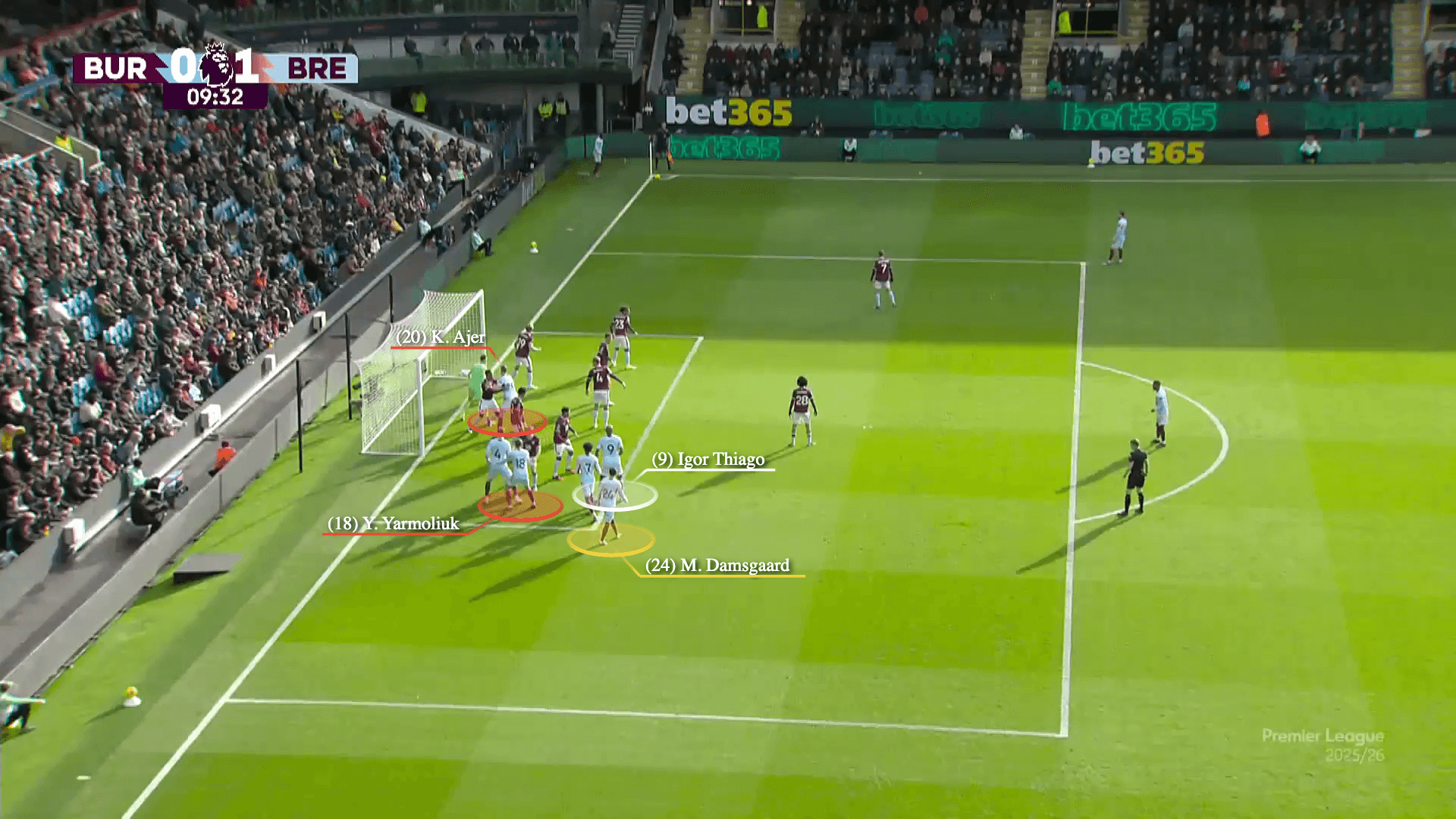
As Dango Ouattara delivers the corner, Thiago and Van den Berg (white) move towards the near post and central area to drag their markers away from the target zone.
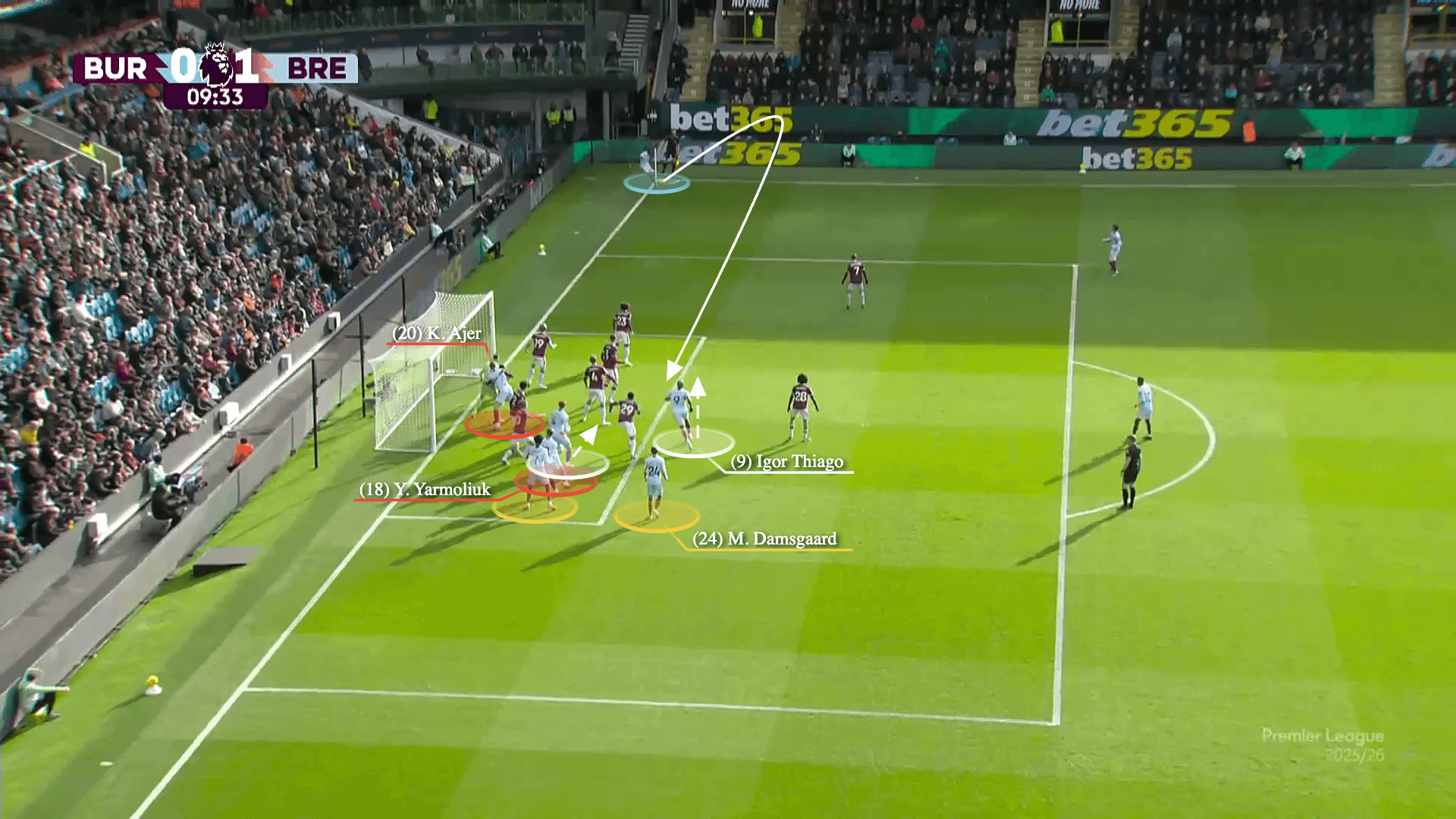
The idea on this set play is to create space for Kevin Schade and Damsgaard at the back post, which is achieved by Thiago and Van den Berg’s dummy runs (white), and Ajer and Yehor Yarmoliuk’s blocking roles (red).
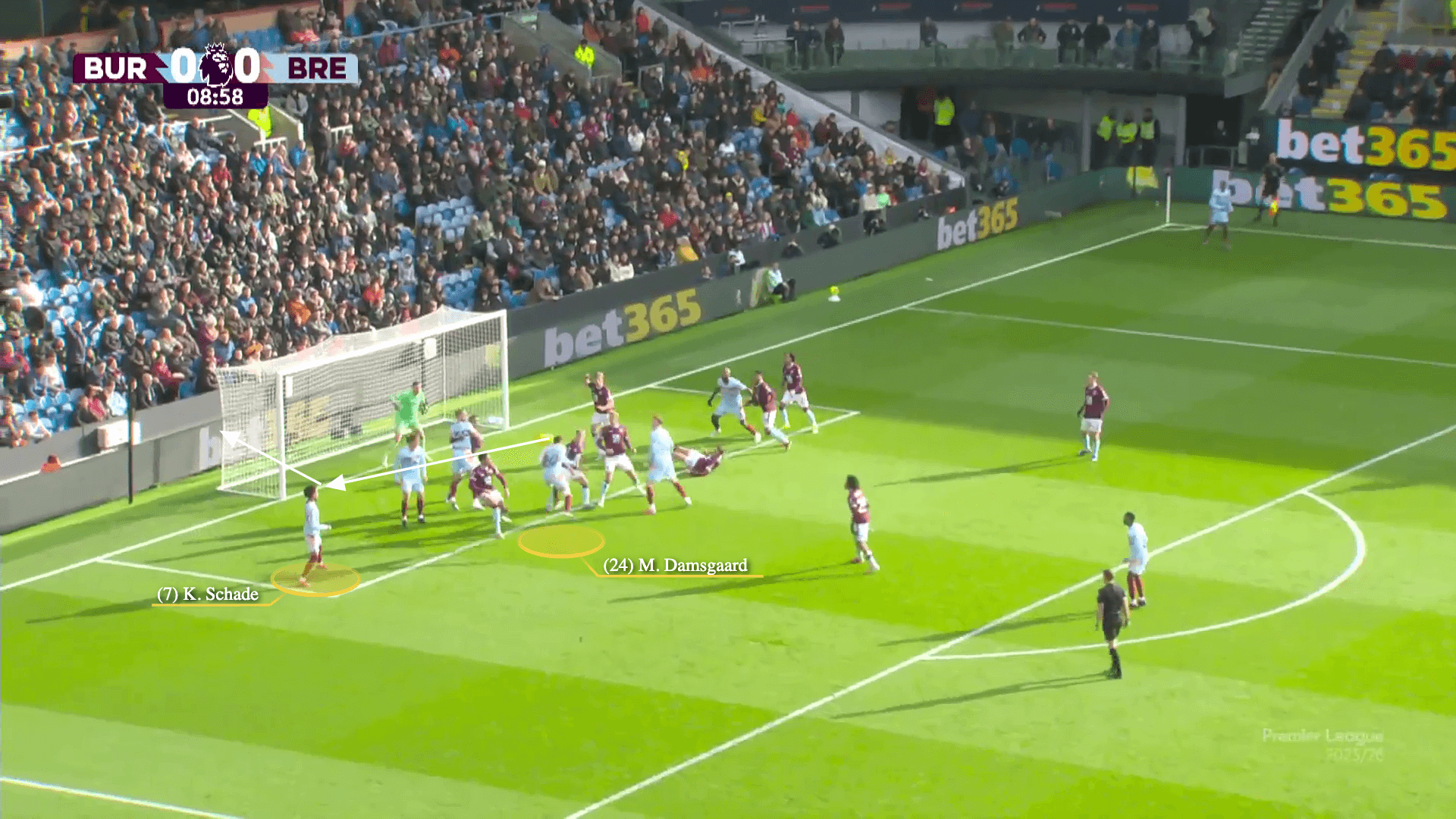
When the ball is in the air, Van den Berg also blocks Burnley’s central zonal defender, Joe Worrall, which means that Damsgaard and Schade (yellow) are free because Yarmoliuk prevents Bashir Humphreys defending the back-post area.
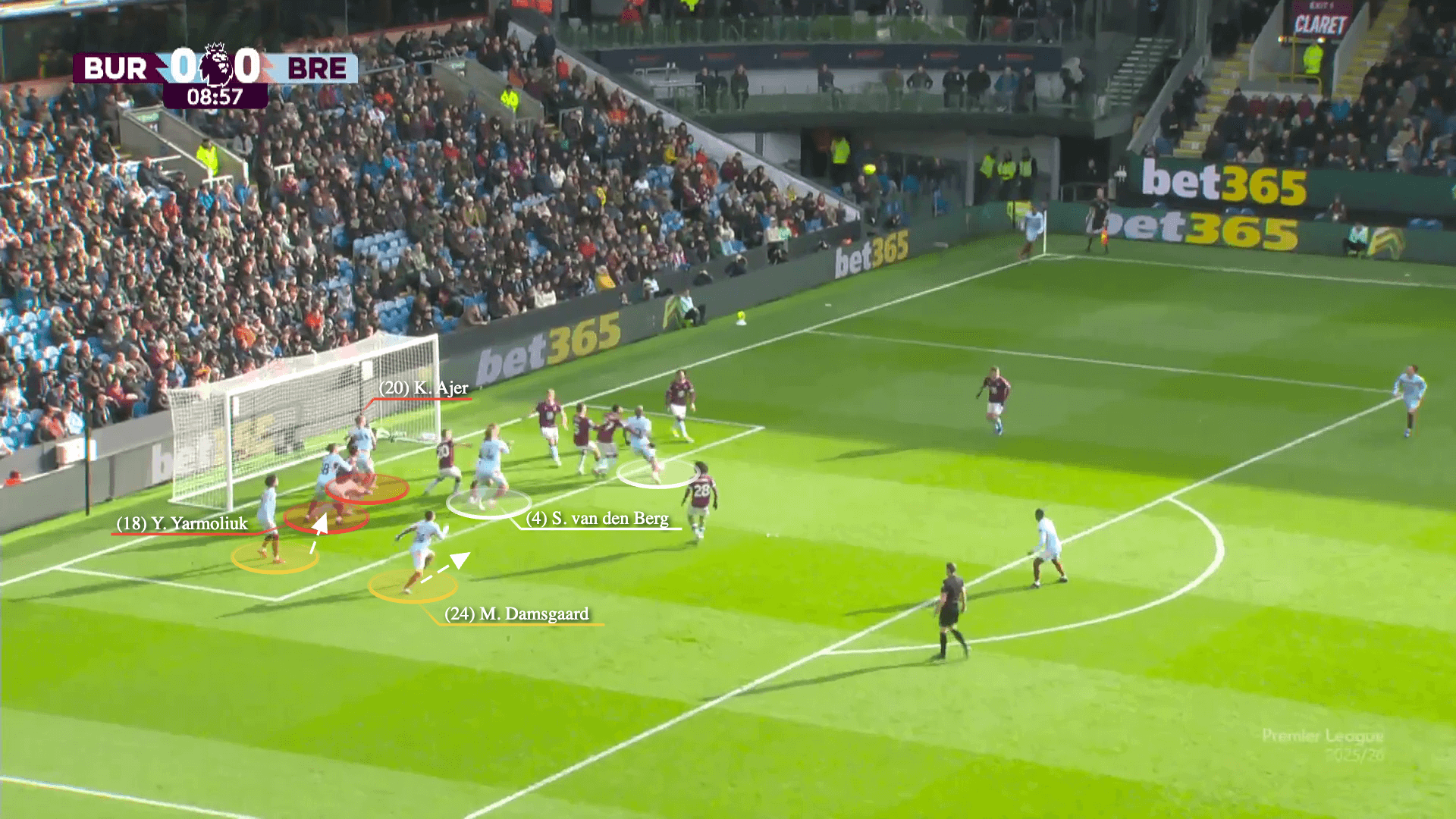
The space is created, the ball is delivered accurately and Damsgaard heads it into the net.
Bonus!
Who doesn’t love a neat olimpico goal, though? Marcus Tavernier of Bournemouth and Newcastle’s Guimaraes have both scored directly from a corner this season against Nottingham Forest and Burnley respectively.