
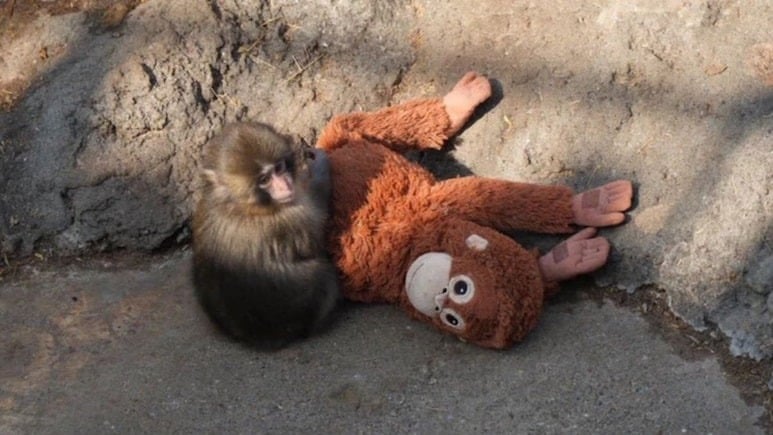
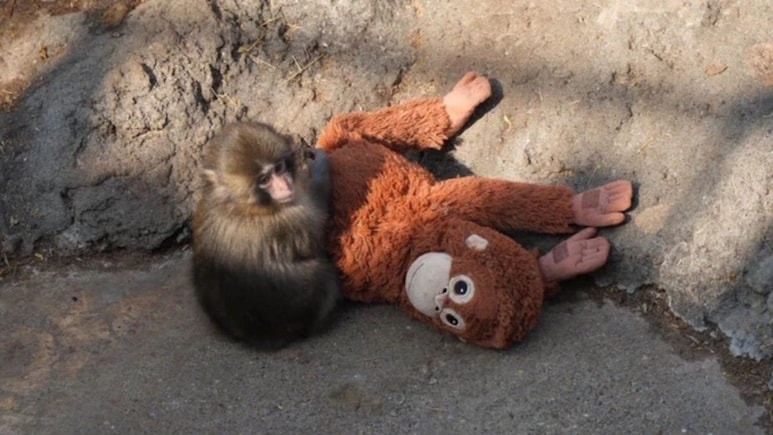
 Punch-kun and his stuffed orangutan (Credit: Ichikawa City Zoo/ CC BY-SA 2.0)
Punch-kun, a baby Japanese macaque at Ichikawa City Zoo in Japan, and his orangutan plushie have taken the internet by storm. Heartwarming videos of him clutching his plush toy have inspired fan art and caused a surge in sales of orangutan plush toys worldwide.
Punch was born at the zoo on July 26, 2025. He was rejected by his mother, so zookeepers hand-raised him for a few months. Once Punch was old enough, they placed him in the monkey enclosure, hoping he would bond with the other macaques. But Punch struggled to fit in and was often pushed or ignored by the other monkeys. To comfort him, his caretakers gave him a large orangutan plushie. The stuffed toy quickly became Punch’s constant companion.
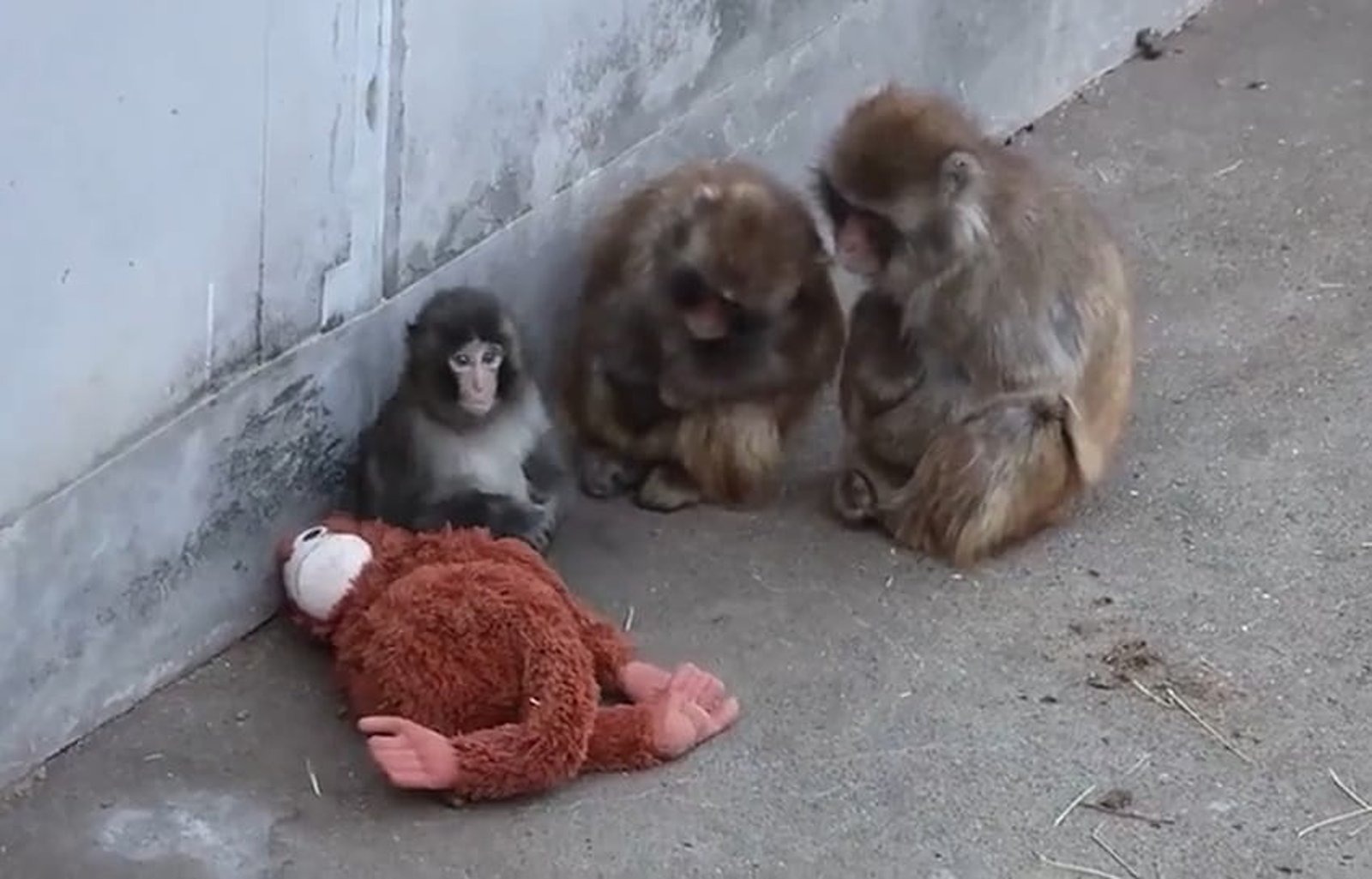 Punch has begun to make friends at the zoo (Credit: Ichikawa City Zoo/ CC BY-SA 2.0)
Videos of Punch with his toy were shared on social media under #HangInTherePunch, and soon went viral. Many fans gushed over his bond with the plushie. Others playfully offered to “adopt” him after seeing him struggle to make friends.
However, the zoo’s staff assures fans that no rescue is needed. According to his caretakers, Punch is resilient. He has also been gradually making friends with other young macaques. Recent videos show him playing, grooming, and exploring with his peers. This suggests he is slowly being accepted by the other monkeys.
Meanwhile, Swedish retailer IKEA, where the plushie was purchased, has been an unexpected beneficiary of Punch’s fame. The orangutan has sold out in stores in most countries and now appears at high prices on resale markets.
About Japanese macaques 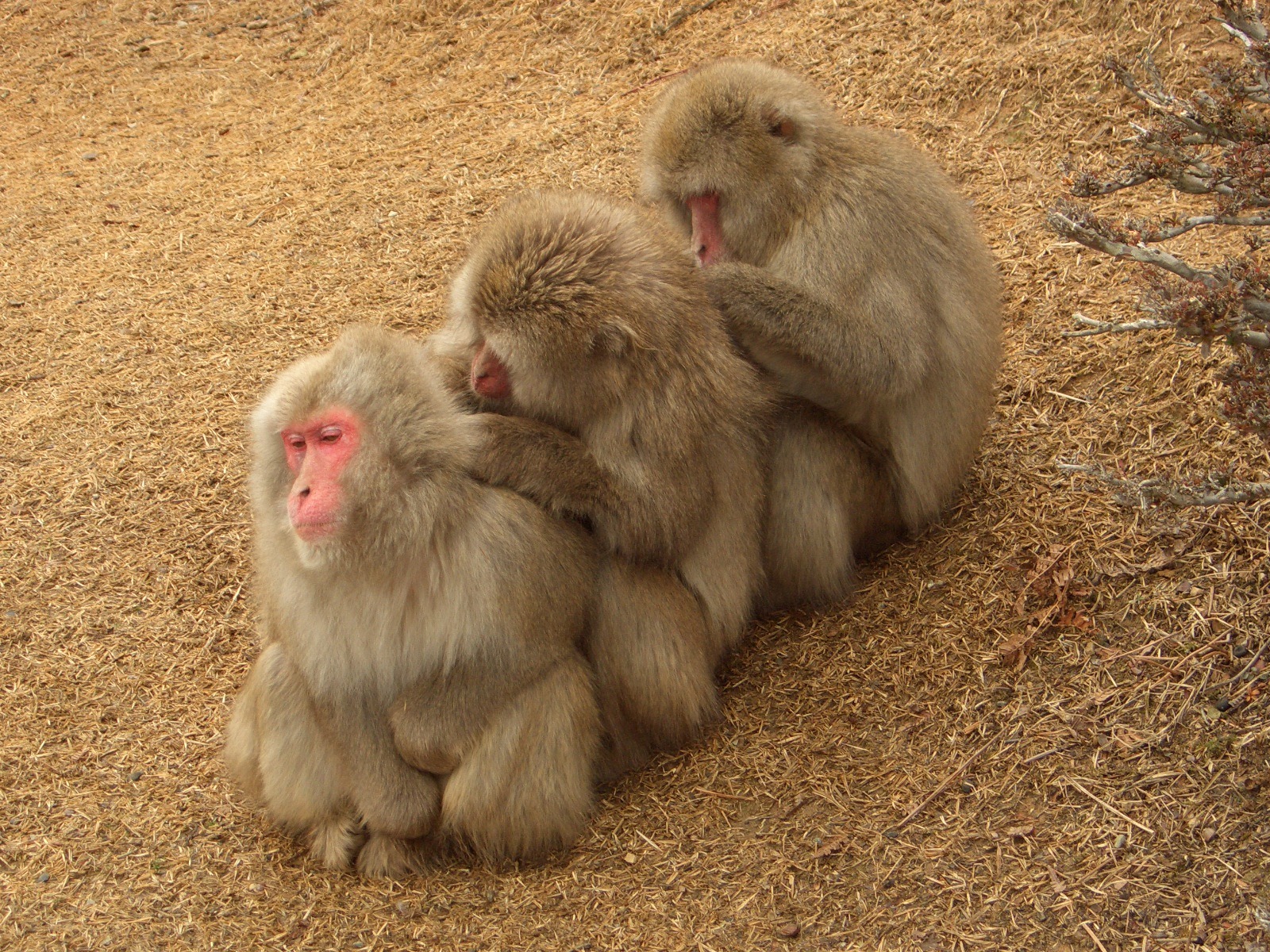 Japanese macaques can be found across Japan (Credit: Noneotuho/ CC BY-SA 3.0/ Wikimedia Commons)
Also called snow monkeys, Japanese macaques live in forests and mountains across Japan. They feed on fruits, leaves, seeds, insects, and sometimes small animals. These monkeys live together in groups called troops. Each monkey has a position in the group that determines who leads, who follows, and how they interact. This social structure helps macaques stay organized and safe.
Young macaques stay close to their mothers for protection and to learn important skills. Mothers teach them how to find food, groom, and behave in the troop.
There are currently about 100,000 to 115,000 Japanese macaques in the wild. While not endangered, some local groups have been affected by habitat loss and human activity.
Resources: CNN.com, Wikipedia.org, NDTV.com